

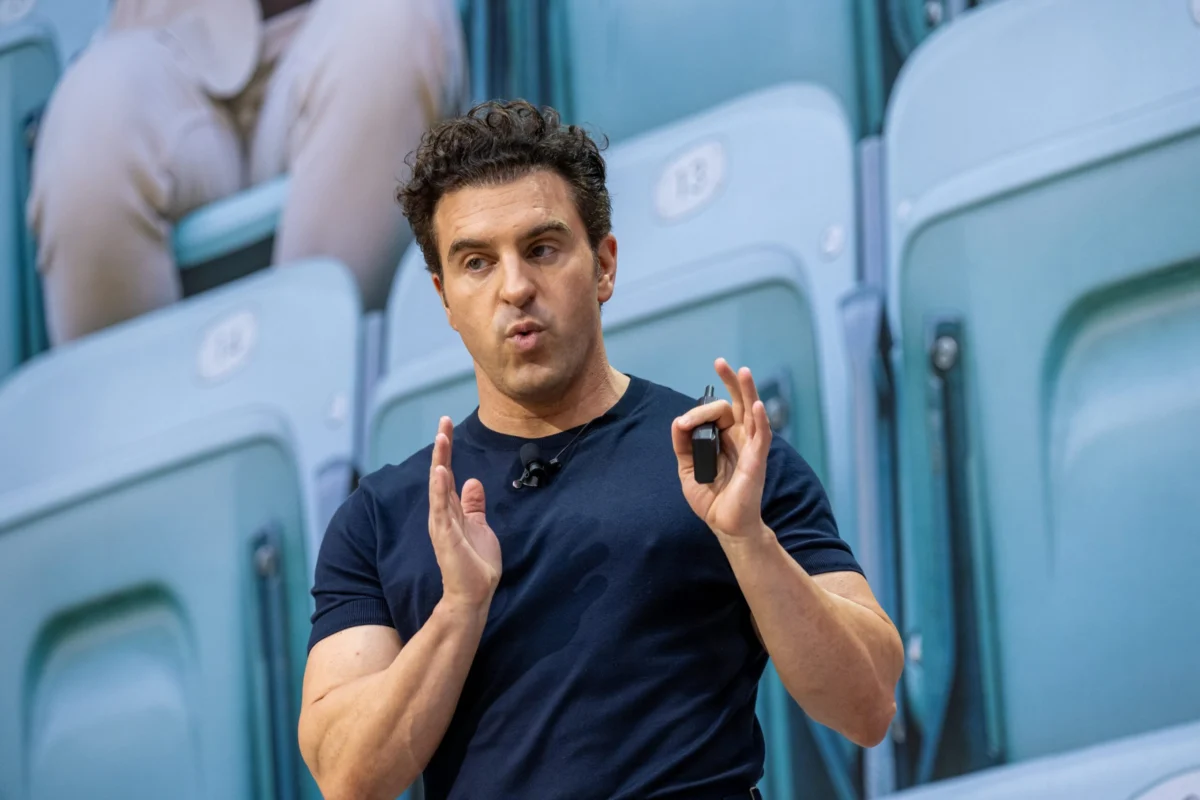
In an era where the average professional is tethered to their digital tether by a relentless stream of notifications, the traditional email inbox has become a site of chronic anxiety. For millions, the day begins not with a cup of coffee, but with a pre-dawn triage of messages—a "snooze-or-delete" battle that persists long after the sun sets. Yet, inside the C-suite of Airbnb, a radical experiment in communication is taking place. CEO Brian Chesky has effectively declared war on the email, claiming he can barely recall the last time he drafted one.
Chesky’s stance is not merely a personal quirk; it is a fundamental shift in how leadership interacts with a workforce of 8,200 employees. By demoting email to the bottom of his priority list, he is challenging the corporate norms that have governed the professional world since the mid-1990s. But as Chesky pivots toward the immediacy of text messaging and face-to-face interaction, he finds himself at the center of a growing ideological divide between the executive class—who view "work-life blending" as a badge of honor—and a younger workforce that increasingly views such intrusion as a fireable offense.
The Hierarchy of Communication: Why Email is Failing
For Brian Chesky, the primary grievance against email is its structural inefficiency. "I just find it inferior to almost every other form of communication," Chesky stated in a recent interview with Time. His critique is rooted in the fundamental nature of the medium: email is subject-based, rigid, and clinical. It creates a psychological barrier where the sender is forced to formalize intent, leading to long-winded, often performative exchanges that lack the organic flow of human connection.
"Text message is person-based," Chesky explains. "Text messages are much faster. It’s contextual. You feel a deeper connection. The person doesn’t have a subject line. When you get a text message, it doesn’t feel like work to respond."
This philosophy has led to a strictly defined hierarchy within Airbnb’s leadership circle. Chesky ranks communication mediums in descending order of efficacy:
- In-person: The gold standard for clarity and nuance.
- Zoom/Video calls: The necessary digital surrogate for physical presence.
- Text messaging: The primary tool for speed and operational agility.
- Email: The distant, often inefficient fourth option.
By prioritizing texts, Chesky claims he is more likely to reach his staff, bypassing the "inbox rot" that plagues most modern corporations. While he admits to responding to emails daily—a necessity of modern business infrastructure—the act of initiating a conversation via email has become a relic of his past.
Chronology of the "Always-On" Culture
The shift toward constant digital availability did not happen overnight. To understand the current friction, one must look at the evolution of the executive persona over the last decade.
- The Pre-Smartphone Era: Communication was siloed. When an employee left the office, they were largely unreachable until the following morning.
- The BlackBerry Revolution: The mid-2000s introduced the "always-on" expectation. The device made email portable, and executives were the first to adopt the habit of checking messages during dinner or while commuting.
- The Rise of Instant Messaging (2015–2020): Platforms like Slack, Microsoft Teams, and WhatsApp blurred the lines between internal project management and personal messaging.
- The Pandemic Pivot (2020–2022): The total transition to remote work removed the physical office boundary. The "workplace" became wherever a laptop or smartphone was located, leading to a massive spike in after-hours digital communication.
- The Post-Pandemic Resistance (2023–Present): A growing movement among younger demographics (Gen Z and Millennials) to reclaim boundaries has pitted them against a "hustle-culture" leadership that still equates responsiveness with dedication.
The CEO Perspective: Blending Work and Life
Chesky is far from an outlier in his rejection of traditional work-life separation. He openly admits that his own life is "more blended than the average person," a sentiment shared by several of his peers in the global executive tier.
Jonathan Recanati, the founder and CEO of the fast-casual chain Farmer J, has taken this to the extreme, famously never turning on an out-of-office auto-reply, even during his honeymoon. For Recanati, the distinction between "on" and "off" is artificial. Similarly, Anna Lundstrom, CEO of Nespresso’s U.K. and Ireland business, has been candid about her philosophy of "work-life fluidity."
"I think I’d always rather know something than not," Lundstrom told Fortune. For her, the phone is a constant companion from the moment she wakes up, and she maintains an open-channel policy where she is reachable via WhatsApp, LinkedIn, Teams, and email.
Perhaps the most controversial figure in this debate is Uber CEO Dara Khosrowshahi. On the Diary of a CEO podcast, Khosrowshahi laid out a stark expectation for his employees: weekend responsiveness is not a favor; it is a requirement. His strategy of sending a follow-up question mark on a Sunday if a Saturday email remains unanswered serves as a litmus test for his staff’s commitment. "Don’t come here if you want to coast," he suggests, framing the 24/7 connectivity as an essential component of high-performance culture.
Supporting Data: The Disconnect
While CEOs like Khosrowshahi and Chesky argue that their methods drive performance and speed, the workforce tells a different story. The data regarding employee retention and burnout provides a sobering counterpoint to the "blended life" philosophy.
According to a comprehensive study by the recruitment platform Reed, the tolerance for after-hours digital intrusion is at an all-time low. The implications for talent retention are severe:
- 25% of millennial workers stated they would quit their jobs if their boss contacted them outside of work hours, even once.
- 59% of respondents aged 18 to 34 indicated they would be willing to move to a new company specifically to protect their work-life balance.
This data suggests that while CEOs may feel more "connected" via text, they are inadvertently creating a high-turnover environment. The speed of a text message, while efficient for a CEO, can be perceived as an act of aggression by an employee trying to decompress. When the boss’s name pops up on a phone during a Saturday evening, it triggers a stress response that, for many younger workers, is the beginning of a job search.
Implications for the Future of Work
The divide between the executive view of communication and the employee demand for boundaries is creating a new corporate landscape. As companies navigate this, three primary implications emerge:
1. The Rise of "Right to Disconnect" Policies
Globally, legislatures are beginning to catch up. Countries like France, Portugal, and several others have introduced "Right to Disconnect" laws that legally protect employees from being penalized for ignoring work communications outside of contracted hours. As Gen Z gains more influence in the workforce, we can expect similar pressure to mount in the U.S. and U.K.
2. The Polarization of Corporate Culture
We are witnessing a bifurcation of the job market. Companies will increasingly define themselves by their communication culture. Firms that prioritize "always-on" access, like Uber, will attract a specific type of high-intensity, high-reward seeker. Conversely, companies that adopt "asynchronous communication"—where responses are expected only during core hours—will become the preferred destination for top-tier talent seeking longevity and mental well-being.
3. The Death of the "Urgency" Myth
Chesky’s argument that text is better than email is essentially an argument about speed. However, research into deep work suggests that constant speed is the enemy of high-level output. By demanding immediate responses to texts, CEOs may be inadvertently training their staff to be "reactive" rather than "proactive." The future of successful leadership may not be who can text the fastest, but who can create an environment where employees are given the space to not check their phones.
Conclusion
Brian Chesky’s transition away from email is a fascinating case study in executive preference, but it also highlights a profound lack of synchronization in the modern workplace. While the CEO sees a path to faster, more human-centric communication, the employee often sees an endless tether to a job that never stops asking for more.
As we look toward the future, the challenge for leaders will not be finding the fastest way to reach their employees, but rather discerning when that reach is actually necessary. In the battle between the "always-on" efficiency of the boardroom and the "work-life balance" demand of the cubicle, the ultimate victor will likely be the company that realizes that the most effective form of communication is the one that respects the recipient’s time. Until that balance is struck, the inbox—and the text notification—will remain a battleground for the soul of the modern company.
