

As meteorological agencies confirm the arrival of a historic "Super El Niño"—a weather phenomenon driven by record-breaking surface temperatures in the Pacific Ocean—communities across the globe are bracing for unprecedented atmospheric instability. For the United States, this signifies a period of extreme climatic divergence: northern regions face warmer, unpredictable winters, while the southern tier prepares for an onslaught of severe, repetitive storms and significant flooding.
For the modern motorist, these conditions represent more than just a commute-time inconvenience; they are a genuine threat to personal safety. In response to the growing urgency, we have synthesized expert advice, community-sourced wisdom from experienced drivers, and safety protocols to create the definitive guide to navigating the roads during this era of volatile weather.
Understanding the "Super" El Niño Phenomenon
To understand why road conditions are becoming increasingly treacherous, one must first understand the mechanism at play. El Niño is characterized by a weakening of trade winds, which allows warmer water to accumulate in the central and eastern Pacific. This shift displaces the jet stream, forcing it into patterns that bring excessive moisture to the southern United States.
When these systems collide with urban environments, the result is often "atmospheric river" events—narrow regions in the atmosphere that transport most of the water vapor outside of the tropics. These events drop vast quantities of rain in short periods, overwhelming drainage systems and turning suburban streets into treacherous waterways. The intensity of this specific Super El Niño, marked as the strongest in recorded history, necessitates a fundamental shift in how we approach the act of driving.
The First Line of Defense: Situational Awareness
The most effective way to avoid a weather-related accident is, quite simply, to avoid the weather altogether. While this may seem self-evident, human nature often compels us to "push through" a storm to reach our destinations.
The "Stay Home" Doctrine
Veteran drivers and road safety advocates emphasize that if a storm appears particularly violent, the safest vehicle is the one parked in your driveway. "My top driving tip in any time of extreme weather is don’t do it," notes reader ODDseth. "Stay home and don’t put yourself and others in danger, including the people that have to rescue you when something does go wrong."
This is not merely a matter of personal comfort; it is a civic duty. Emergency responders are often stretched thin during severe storms, and every unnecessary vehicle on the road complicates their ability to reach true emergencies.
Timing Your Travel: The Oil Slick Hazard
A critical, often overlooked detail of driving in desert or urban environments during the onset of a storm is the "first-flush" phenomenon. As Xavier96 points out, "In cities like Los Angeles, San Diego, and Phoenix, all of the built-up oil residue on the pavement tends to float at once during the first few minutes of rain. This wrecks wet-weather grip, even on vehicles equipped with high-performance tires."
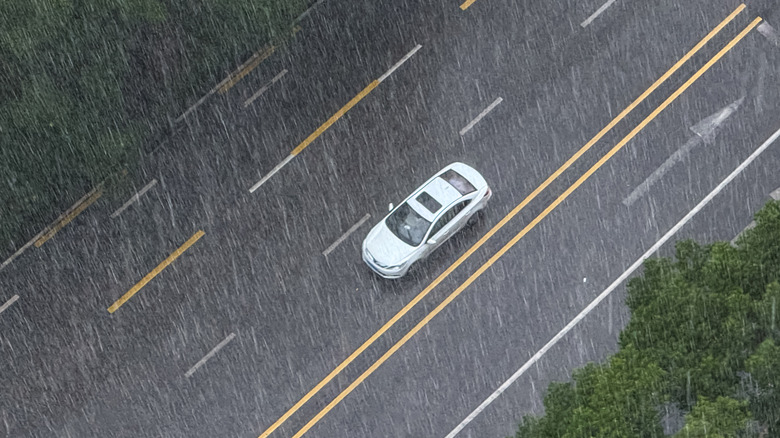
Drivers should exercise extreme caution during the first 30 to 60 minutes of a rainfall event. During this window, the roads are arguably at their most dangerous. If you can delay your departure until the initial runoff has cleared the surface, you significantly reduce your risk of hydroplaning.
Tactical Driving Techniques for Heavy Precipitation
When you absolutely must travel, the rules of the road change. Defensive driving is no longer a suggestion; it is a requirement for survival.
Distance and Visibility
- Maintain Space: Increase your following distance to at least double what you would use on a dry day. Wet pavement requires significantly longer stopping distances, and your tires’ ability to evacuate water is compromised as speed increases.
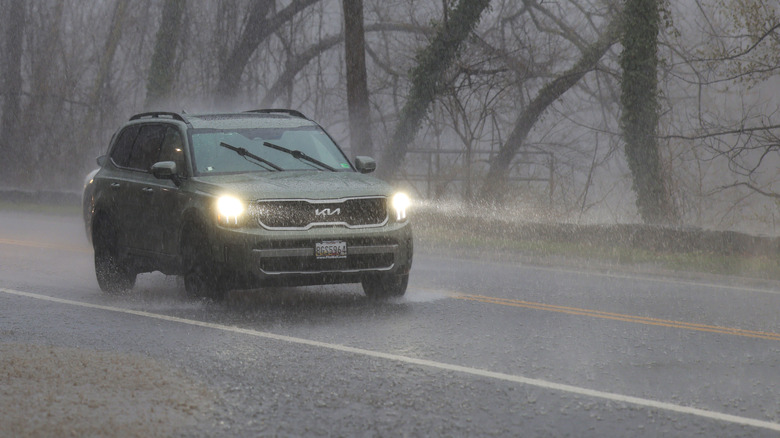
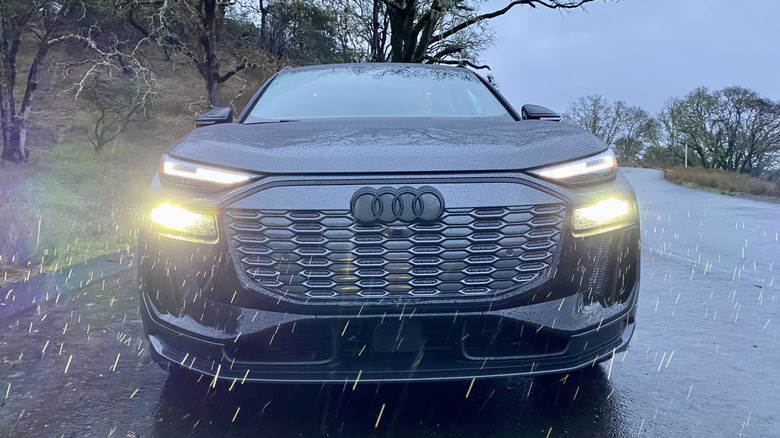
- The "Headlight" Mandate: There is no scenario in which driving in rain with your lights off is acceptable. Turning on your headlights serves two purposes: it allows you to see the road markers and hazards, and—more importantly—it ensures other drivers can see you.
- Identify Road Markers: If you find yourself in a downpour where the lane lines, reflectors, and road edges are no longer visible, you have reached a critical threshold. If you cannot see the road, stop. Driving blind is a primary cause of vehicles drifting into medians or oncoming lanes.
The Hazard Light Controversy
A common point of contention among drivers is the use of hazard lights (four-way flashers) while moving in the rain. Experienced motorists strongly advise against this practice. Hazard lights are designed to signal that a vehicle is stationary or experiencing a mechanical emergency. Using them while driving at speed creates confusion, as it makes it difficult for other drivers to determine if you are moving or stopped. Use your low beams; save your hazards for when you have safely pulled off the road.
Mechanical Preparedness: The Role of Your Vehicle
A car is only as safe as its maintenance status. Before the peak of the Super El Niño arrives, your vehicle should undergo a "wet-weather audit."
Windshield and Visibility Systems
- Hydrophobic Treatments: Products like Rain-X are highly recommended by seasoned drivers. By causing water to bead and roll off the glass, these treatments dramatically improve visibility, particularly at night when glare from oncoming headlights is amplified by raindrops.
- Wiper Integrity: If your wipers are streaking, they are failing. Replace them before the storm hits. A clear field of vision is the single most important factor in your ability to react to hazards.
The Dangers of Modern Driver Aids
Many modern vehicles come equipped with advanced cruise control and lane-keep assist systems. In heavy rain, these systems can be liabilities.
- Cruise Control: Never use cruise control on wet roads. If your car hydroplanes while cruise control is engaged, the system may try to compensate for the sudden wheel-speed change, causing the vehicle to lose traction and potentially spin out.
- Lane-Keep Systems: These systems rely on sensors that can be obscured by heavy spray or standing water. Relying on them to keep you in your lane during a downpour is a dangerous gamble.
Implications for Public Safety and Infrastructure
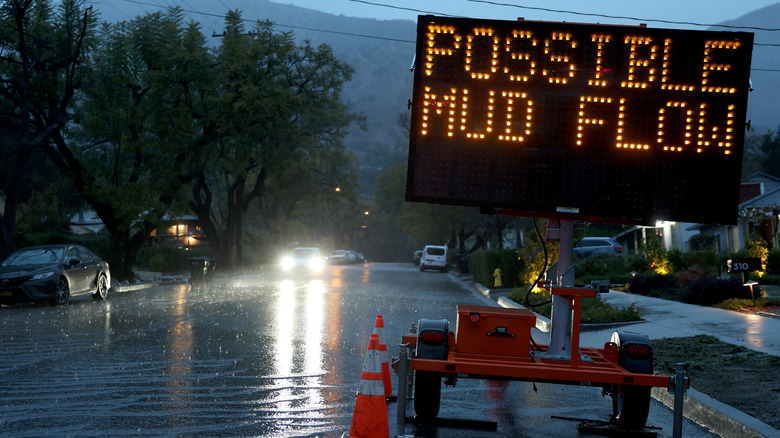
The current Super El Niño is not just a driver-education issue; it is a challenge to infrastructure. In regions like Southern California, the combination of heavy rain and fire-scarred hillsides leads to the immediate threat of mudflows and debris slides.
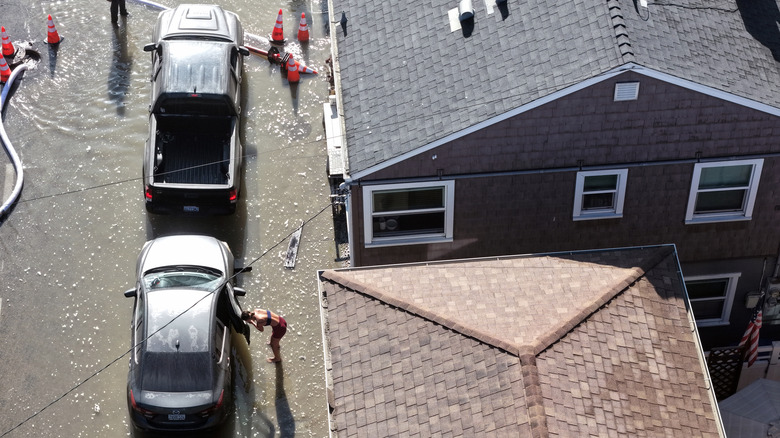
Official responses from departments of transportation emphasize that drivers must respect all road closures and detour signs. "Don’t take risks on treacherous roads," is the universal mantra of safety officials. When road signs warn of potential mudflows, they are not suggestions; they are indicators that the geography of the road itself has become unstable.
Conclusion: The "Motorcycle Ethos"
Perhaps the most pragmatic advice for any driver, regardless of the weather, comes from the motorcycle community: "Everybody’s out to kill me." This mindset—while seemingly cynical—is the ultimate defensive driving strategy. It assumes that other drivers are distracted, their vehicles are poorly maintained, and they are not paying attention to the road.
By giving yourself extra travel time, ensuring your vehicle is in peak condition, and accepting that some journeys are simply not worth the risk, you can navigate the challenges of this historic Super El Niño. The road is a shared space, and during times of environmental crisis, our collective behavior determines our collective safety. Stay dry, stay alert, and prioritize your arrival over your schedule.
