

In an era defined by corporate belt-tightening and the relentless pursuit of lean operations, the American workforce has found itself in a precarious position. As tech giants, federal agencies, and retail conglomerates announce sweeping headcount reductions to appease shareholders and hedge against economic uncertainty, one century-old institution is charting a fundamentally different path.
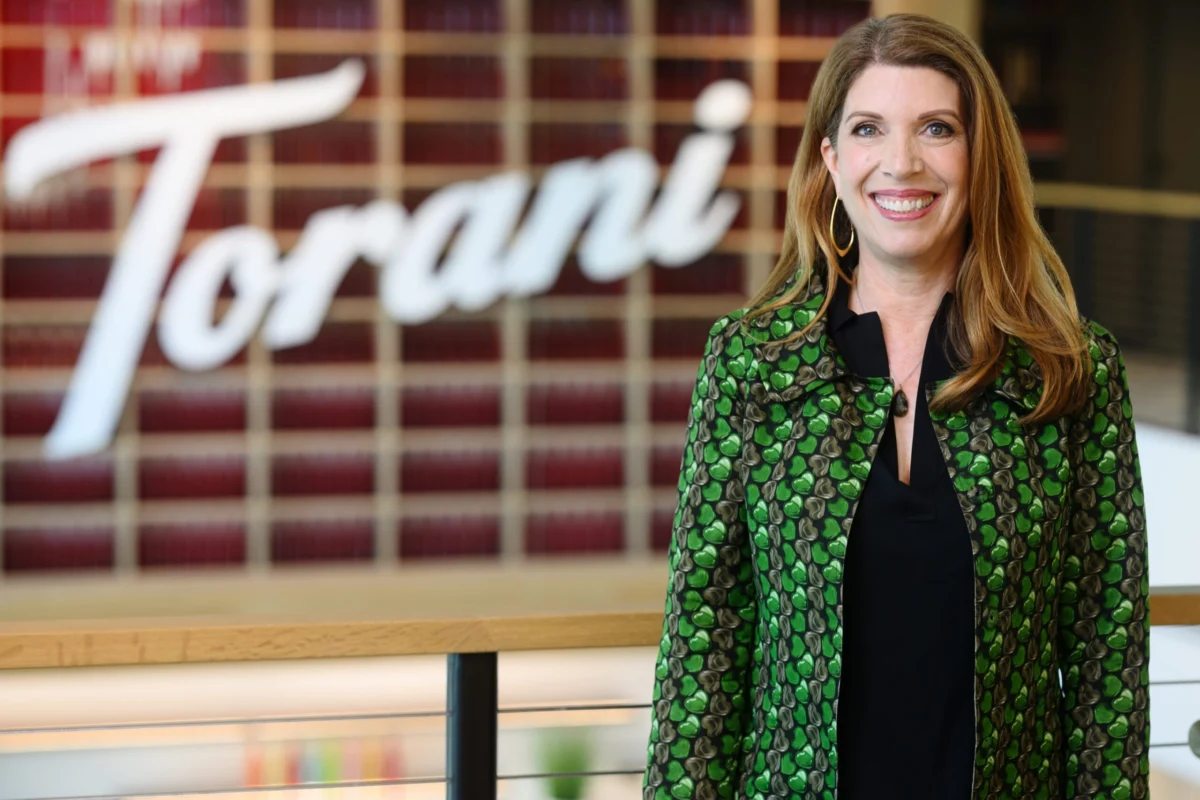
Torani, the iconic flavored syrup manufacturer, has remained a steadfast outlier in a corporate landscape increasingly addicted to the "layoff as a financial lever" philosophy. Under the leadership of CEO Melanie Dulbecco, the 101-year-old company has maintained a strict "no-layoff" policy—a commitment that has held firm even during the extreme pressures of the COVID-19 pandemic and the volatile market fluctuations of the mid-2020s. As major employers across the U.S. slash hundreds of thousands of jobs, Dulbecco’s approach serves as a provocative case study on whether the traditional "reduction in force" (RIF) is a business necessity or a failure of long-term vision.
The Philosophical Divide: Are Layoffs a Choice?
For many executives, layoffs are treated as a mathematical inevitability—a necessary sacrifice to maintain margins when growth stalls. Melanie Dulbecco, however, rejects this binary. In a recent interview, she articulated a perspective that contrasts sharply with modern Wall Street expectations.
"It’s very easy for us to say layoffs are not our approach. I think layoffs are a choice," Dulbecco stated. She argues that unless a company is facing terminal insolvency or bankruptcy, mass layoffs are essentially a "financial exercise" that prioritizes short-term balance sheet aesthetics over the long-term resilience of the organization.
According to Dulbecco, the true engine of any company is its team. By treating employees as disposable line items rather than as the core repository of institutional knowledge and momentum, companies inadvertently sabotage their ability to rebound when the market inevitably turns. "You regain momentum with a team," she emphasizes. "If you break that trust, you break the machine."
A Century of Stability: The Torani Chronology
The commitment to job preservation at Torani is not a new strategic pivot; it is a historical constant. Since its founding 101 years ago, the company has never conducted a mass layoff. This legacy was put to its most significant test during the early months of 2020.
The 2020 "Defining Moment"
In March 2020, as the world began to lock down, Torani was in the midst of a massive logistical transition: moving its operations to a new facility in San Leandro, California. The company had taken on significant debt to build its new "Flavor Factory," creating a high-stakes environment where financial pressure was immense.
Rather than shrinking the workforce to offset the risks of the pandemic, Torani did the opposite. The company prioritized retaining 100% of its staff. To achieve this, Dulbecco’s team took a granular approach to fiscal responsibility:
- Data-Driven Relocation: The company mapped the ZIP codes of all its employees to ensure the new factory location was within a reasonable commute, prioritizing the retention of existing talent over proximity to raw material supply chains.
- Scrappy Cost-Cutting: To avoid salary or headcount reductions, the company paused all travel, scrutinized every non-essential expense, and slashed marketing and advertising budgets.
- Strategic Pivoting: Recognizing that coffee shops—a primary revenue stream—were shuttering, Torani rapidly shifted its distribution strategy to emphasize online retail and grocery channels.
The result was a remarkable financial performance. By the end of 2020, despite the global turmoil, Torani reported a 15% year-over-year revenue spike. It was a vindication of their "people-first" philosophy.
The Macro Landscape: A Tsunami of Job Cuts
To understand the rarity of Torani’s stance, one must look at the broader U.S. labor market. The last two years have been among the most brutal in recent history for the American worker.
The 2025 Workforce Bloodbath
According to data from Challenger, Gray & Christmas, the year 2025 proved to be a watershed moment for job losses. A staggering 1.2 million job cuts were announced throughout the year, representing a 58% increase over the 760,000 cuts in 2024. This level of reduction was the highest seen since the 2008 financial crisis.
The carnage was distributed across two primary sectors:
- The Public Sector: The federal government saw historic reductions, particularly due to the aggressive, politically-driven cost-cutting measures associated with the Department of Government Efficiency (DOGE). Key agencies, including the Department of Education and USAID, were hollowed out, contributing to the loss of over 308,000 federal roles.
- The Tech Industry: In the private sector, the tech industry led the charge, with 154,000 roles slashed in 2025. The dual drivers were a market correction following pandemic-era overhiring and the rapid, often desperate, integration of Artificial Intelligence.
The "Wait-and-See" Period of 2026
While the rate of layoffs has slowed in late 2026—with roughly 573,195 cuts announced in the first nine months—the climate remains defined by uncertainty. Andy Challenger, an expert in workplace trends, notes that employers are currently in a "wait-and-see" mode. High energy costs, geopolitical instability (including tensions in Iran), and rising interest rates have created a climate where businesses are hoarding cash and hesitant to commit to long-term hiring.
The AI Dilemma: Automation vs. Human Value
Perhaps the most significant factor driving modern layoffs is the emergence of AI. While Torani has not been immune to the necessity of technological adoption, its application of AI highlights a fundamental difference in corporate culture.
For many firms, AI is a tool for replacement. For Torani, it is a tool for augmentation. Dulbecco acknowledges that automation has allowed the company to operate more efficiently, handling tasks that previously required more manual labor. However, the company focuses its AI efforts on:
- High-Volume, Low-Mobility Tasks: Automating repetitive manual labor to free up staff for higher-level work.
- Analytical Support: Using AI for complex market research, sales forecasting, and demand planning.
The CEO reports that the workforce does not fear the "robot takeover" because they operate under a culture of transparency. "Our team doesn’t get worried about things like AI because they trust that we will both automate and elevate the work," Dulbecco notes. By promising to "elevate" the work rather than eliminate the worker, Torani maintains a high level of employee morale and buy-in that its competitors lack.
Implications for Corporate Strategy
The Torani model suggests that the modern obsession with lean, layoff-prone operations may be a form of corporate myopia. By averaging 20% annual growth for 35 years and projecting revenue to exceed $800 million, the company provides empirical evidence that investing in people is not a charitable act—it is a winning business strategy.
1. Retention as a Competitive Advantage
In a tightening labor market, the companies that retain their talent are the ones that maintain their "tribal knowledge." When competitors lay off staff during a downturn, they lose the institutional memory required to pivot quickly when the market recovers. Torani’s ability to move into new retail channels during the pandemic was only possible because they had the experienced team on hand to execute that strategy.
2. The Cost of "Scrappy" vs. The Cost of "Firing"
While layoffs are often sold as cost-saving measures, they incur massive hidden costs: severance packages, loss of productivity, recruitment and training costs for new hires, and the degradation of company culture. Torani’s approach of cutting travel and advertising instead of people proves that executives often have more fiscal flexibility than they are willing to admit.
3. Cultural Resilience
A company that never lays off its employees creates a culture of loyalty that is impossible to buy. Employees who feel secure are more willing to innovate, take risks, and work toward the long-term success of the company. In the current economic climate, this psychological safety is a potent, underutilized asset.
Conclusion: A Blueprint for the Future
As the American economy continues to grapple with the disruptive potential of AI and the lingering effects of high-interest rates, the pressure to "lean out" will only increase. Yet, the story of Torani serves as a vital reminder that the "layoff" is not a law of physics; it is a management choice.
By rejecting the trend of quarterly-driven downsizing, Melanie Dulbecco and her team have proven that it is possible to grow, innovate, and thrive without sacrificing the very people who build the product. In a century of operation, Torani has shown that the path to long-term success is not found by shedding human capital, but by investing in it. For other CEOs watching their headcount with a nervous finger on the "delete" key, Torani stands as a testament that a company’s most resilient asset is the one it chooses to keep.
