

By Nora DeLigter
In the landscape of New York City real estate, the term "impossible" has long been a foundational pillar, but as of late October 2026, the threshold for what constitutes a manageable housing search has shifted. We are currently witnessing an era where even the most utilitarian studios command prices that would have, just a few years ago, secured a sprawling family home in the outer boroughs. As lines of prospective tenants stretch down brownstone stoops and bidding wars become the standard for rentals, the search for a new home has become less of a logistical exercise and more of a test of emotional fortitude.
Yet, for the optimist—or perhaps the strategically deluded—the hunt remains an essential ritual of the city-dweller. This week, we bypass the "god-awful" listings to highlight the properties that offer genuine character, architectural merit, and the occasional, elusive "good deal" that makes the slog worthwhile.
The State of the Market: A Data-Driven Reality Check
To understand the current rental and sales climate, one must confront the numbers. For renters, the $4,000 threshold for a two-bedroom apartment has become less of an outlier and more of a baseline. On the sales side, the $1.5 million mark for a modest two-bedroom co-op or condo is similarly becoming the new floor in desirable neighborhoods.
For those looking to buy, the market is currently saturated with houses hovering around the $2 million mark, particularly in the Brooklyn strongholds of Crown Heights and Bed-Stuy. This price point often triggers a familiar, albeit expensive, internal monologue: the "renovator’s fantasy." It is a peculiar psychological phenomenon where, after the monumental effort of scraping together a multi-million-dollar down payment, one looks at a dated kitchen and convinces themselves that a $150,000 renovation is a trivial hurdle. It is, of course, a total fallacy, but it is one that keeps the market moving.
Chronology of a Search: From Studio Dreams to Townhouse Fantasies
The search for housing in New York is rarely linear. It begins with the practical and often descends—or ascends—into the aspirational.
- Early Week: Analysis of rental stock confirms a tightening of supply. We observe a continued trend of "developer-beige" renovations that prioritize efficiency over character, often stripping prewar apartments of their original crown molding and parquet flooring.
- Mid-Week: The focus shifts to unique listings. We find a studio at 213 Hancock Street for $2,750, which serves as a reminder that if one must live in a small space, the presence of an ornate, turn-of-the-century fireplace is not just a luxury; it is a necessity for morale.
- Late Week: The hunt expands to sales. Properties like the $1.75 million conversion on Hicks Street show signs of price volatility, with a $46,000 reduction signaling a potential cooling in the developer-led condo market.
Supporting Data: Selected Market Snapshots
Below are selected listings that define the current spectrum of the New York City market:
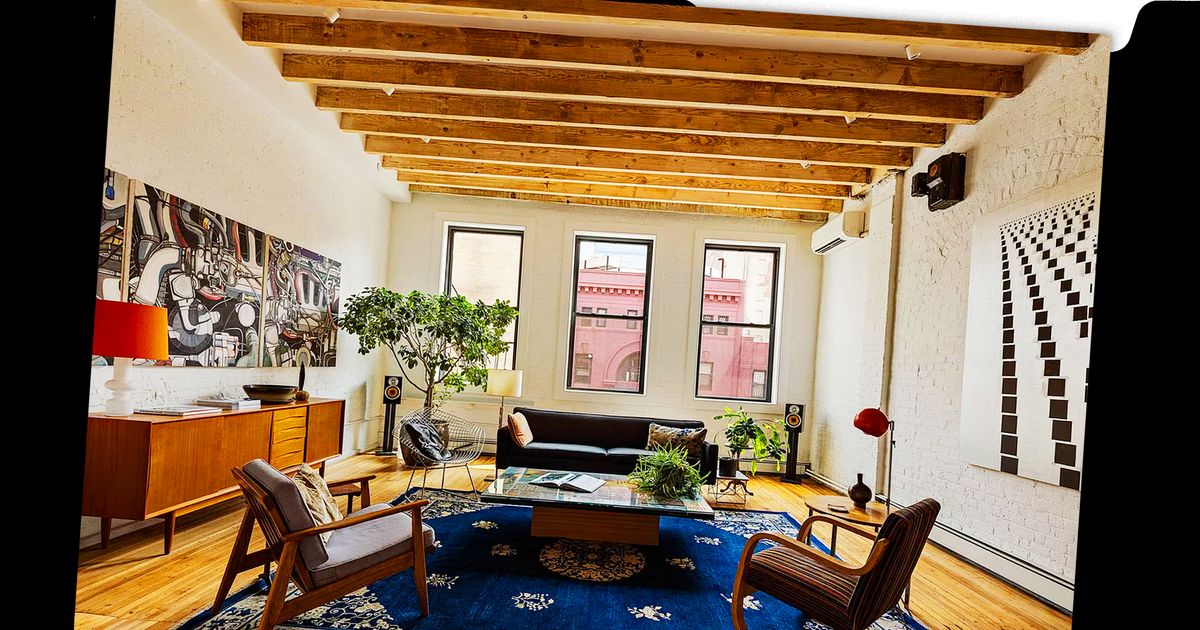
Rentals of Note
- 213 Hancock Street ($2,750): A masterclass in maximizing limited square footage with high-impact décor.
- 313 Macon Street ($2,900): A one-bedroom that proves real estate photography can be the enemy of a sale. The kitchen is abysmal, but the sun-drenched, parquet-floored living area is the hidden reward for those who look past the initial photos.
- 182 Bennett Avenue ($3,450): A two-bedroom featuring a sunken living room—a architectural detail that remains one of the most effective ways to command a premium in the eyes of a romantic renter.
- 47 West 84th Street ($3,600): A handsome one-bedroom balancing original prewar detail with modern finishes. The terra-cotta tiling in the bathroom is a rare, aesthetic win in a market often dominated by sterile white subway tile.
Sales of Note
- 885 West End Avenue ($1.65 Million): A three-bedroom property that defies logic by remaining on the market. With double-height ceilings and near-perfect parquet, it is a testament to the current buyer hesitancy despite high quality.
- 712 Broadway ($3.4 Million): A property that raises existential questions about the "spirit of Noho." While marketed as a quintessence of the neighborhood, the interior suggests a subterranean Roman bathhouse, highlighting the eccentricities of high-end listings.
- 1094 Park Place ($3.495 Million): A Gilded Age mansion that suffered a heavy-handed, HGTV-style renovation. The good news: the mahogany built-ins and stained glass survived the process, waiting for a buyer to undo the damage.
Official Responses and Professional Perspectives
Real estate brokers and analysts have noted that the current market is defined by a "wait-and-see" approach from both sides. While interest rates remain a hurdle, the lack of inventory continues to keep prices elevated.
"We are seeing a disconnect between the seller’s expectation and the buyer’s reality," says a representative from a leading Manhattan brokerage. "The buyers are smarter than ever. They are looking at the ‘bones’ of the house. They don’t want the developer’s quick flip; they want the original details. When a property doesn’t have them, or has been ruined by a bad renovation, it sits."
Conversely, the rental market is described by management firms as "unrelenting." With vacancy rates in the city still hovering near historic lows, landlords face little pressure to incentivize tenants, which explains why we see such aggressive pricing for apartments lacking basic amenities like in-unit washers and dryers.
Implications: What Does This Mean for the Future?
The long-term implications of this market are significant. First, we are seeing a homogenization of interior design. As developers prioritize "Instagrammable" finishes to justify high rents, the city is losing the varied, lived-in aesthetic that once defined its neighborhoods.
Second, the barrier to entry for homeownership is creating a bifurcated city. Those who can afford to buy are increasingly focused on "preservationist" properties—townhouses and prewar condos that require significant capital to maintain but offer a hedge against the blandness of new construction. This leaves the middle class in a permanent state of rental flux, constantly moving to stay ahead of rent hikes.
Lastly, the psychological toll of the search cannot be understated. As we look at $4 million studios and "hostile" furniture choices in otherwise beautiful brownstones, we are reminded that New York City housing is a unique ecosystem. It is a market where the "fantasy" of a home often requires a suspension of disbelief, a healthy dose of optimism, and, occasionally, the ability to ignore a truly hideous kitchen in favor of a beautiful fireplace.
As we move toward the end of the year, the advice remains the same: keep your expectations grounded, your finances ready, and your eyes open for those rare, beautiful spaces that remind us why we endure the madness of this market in the first place. Whether it’s a sunken living room or a perfectly preserved mahogany staircase, there is still beauty to be found if you are willing to look—and, of course, if you are willing to think positive thoughts.
