

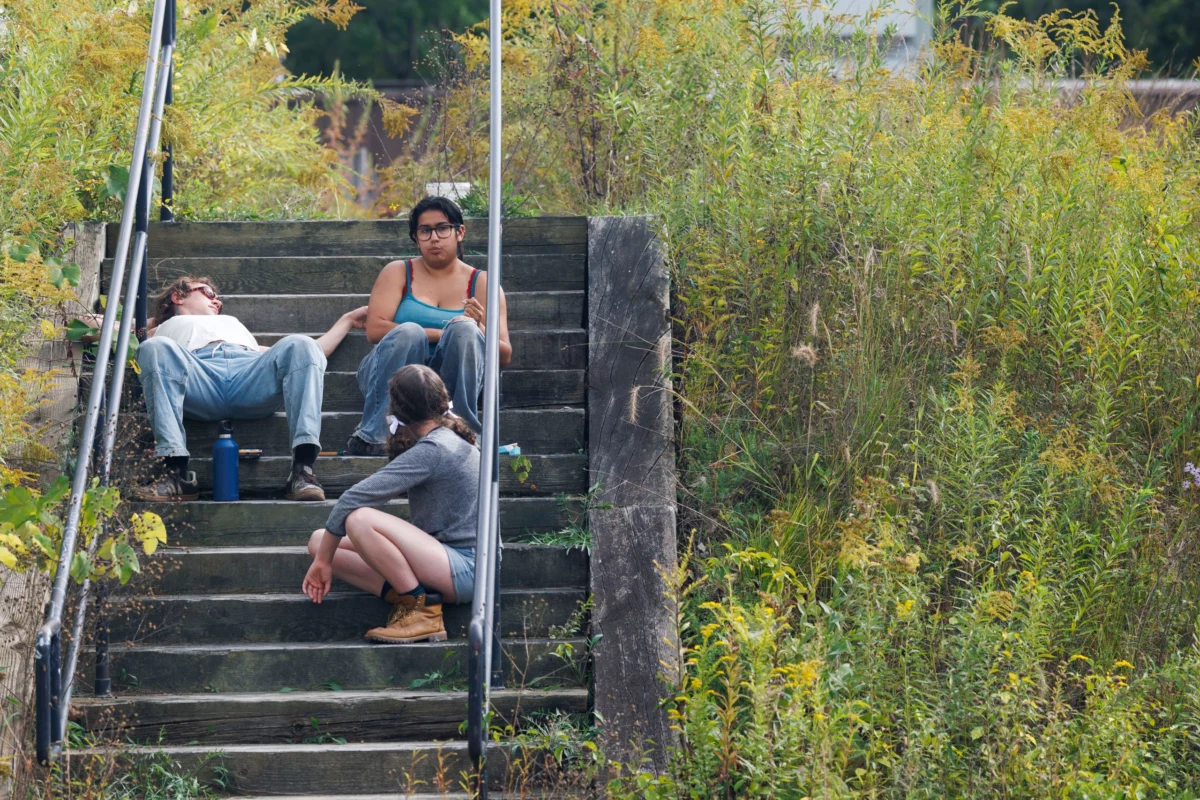
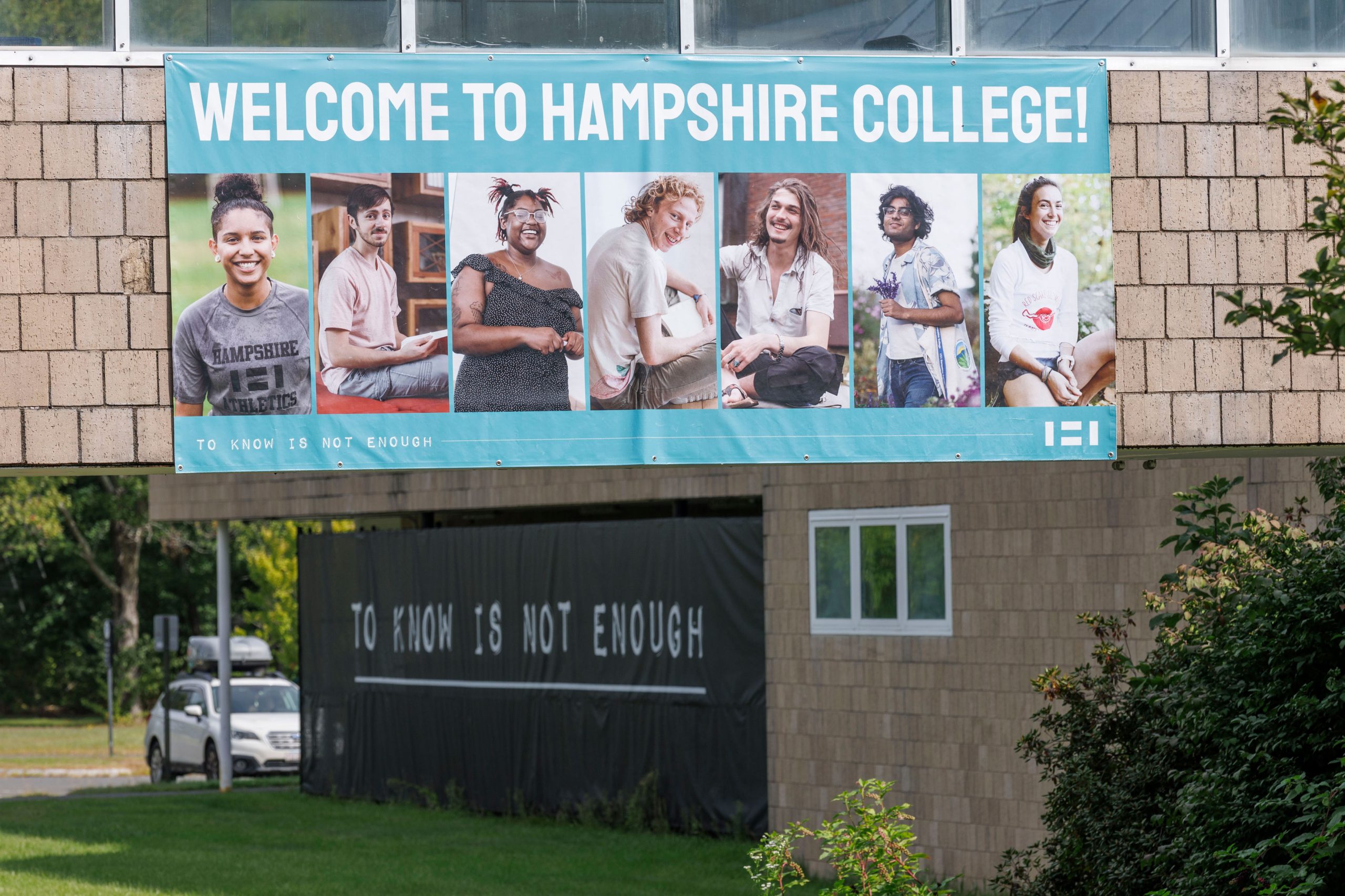
The parking lots at Hampshire College in Amherst, Massachusetts, are hauntingly vacant. Inside the once-vibrant liberal arts institution, buildings that once echoed with intellectual debate are now locked and dark, housing little more than dying plants and dust. The only sign of life on the expansive 800-acre campus is the rhythmic drone of a riding mower, operated by a man tending to the grass as if by habit.
This is not the scene of a shuttered factory or an abandoned office park; it is the final act of a celebrated college, which will close its doors for good in December. Hampshire’s demise is not an isolated incident. It is the latest casualty in a rapidly accelerating trend that is fundamentally reshaping the landscape of American higher education. Across the country, colleges are closing or merging at an unprecedented rate—a pace that, as of last year, reached the equivalent of nearly one institution every three weeks.
The Anatomy of an Industry in Collapse
Experts in the field now characterize higher education as an industry in deep crisis. The symptoms mirror the industrial downturns of the 20th century—the rust-belt mills and idled auto plants that left once-thriving communities in economic and social decay. As these "knowledge factories" close, the collateral damage is profound: diminished access to education, particularly in rural regions, and a looming deficit in the workforce skills required to replace a generation of retiring baby boomers.
Peter Stokes, a managing director at Huron Consulting Group, offers a sobering assessment of the path ahead. "Everyone is shocked to hear that more than a quarter of our private colleges could be gone in the next decade," he says. His research projects that 442 of the nation’s 1,700 remaining private, nonprofit universities are currently at risk of closure or merger. We are no longer talking about a few fringe outliers; we are witnessing a systemic contraction of the American collegiate model.

A Chronology of Decline: From Expansion to Contraction
For six decades following World War II, American higher education experienced an era of uninterrupted, seemingly limitless growth. It was a "golden age" where demand for degrees grew alongside an expanding population. However, that era ended abruptly.
The turning point occurred around 2011, marking the start of what experts now call 30 years of significant decline. This downturn is not a temporary dip caused by cyclical economic factors; it is a structural shift. Enrollment has dropped by 2 million students since that 2011 peak, and the forecast for the next two decades suggests the decline will continue through at least 2041.

The catalysts for this decline are multifaceted:
- Demographic Shifts: The number of 18-year-olds in the U.S. population is shrinking, creating a "demographic cliff" that leaves fewer prospective students to go around.
- Changing Aspirations: The percentage of high school graduates opting for college has plummeted from 70 percent in 2016 to 63 percent in 2024, according to the Bureau of Labor Statistics.
- International Barriers: Once a reliable source of revenue and enrollment, the number of international students is falling due to increasingly complex visa processes, political climate changes, and heightened uncertainty.
Supporting Data: Who Is Most At Risk?
The crisis is highly stratified. While large public flagship universities and elite, highly selective private institutions continue to thrive—bolstered by massive endowments and global brand recognition—the "middle" and the "bottom" are failing.

Kevin McElrath, director of the College Crisis Initiative at Davidson College, describes the current environment as a "sink-or-swim" reality. The institutions currently failing share common traits: they are typically small, regional, and lack the financial safety net of large endowments. Many of these schools compounded their problems by taking on heavy debt to build new, flashy facilities in a desperate bid to attract students, while simultaneously relying on unsustainable tuition discounting strategies.
Geography plays a significant role as well. The Northeast and Midwest, regions historically dense with small, private colleges, are the hardest hit. John Thelin, author of A History of American Higher Education, notes that many of these towns were built around their colleges. "Every group founding a town—before they had clean water, before they had public schools—would seem to build a college," he explains. "It gave a legitimacy, a stature, a sense of purpose." The collapse of these institutions is now turning those towns into ghost towns, eroding the social and economic fabric of entire regions.

The Human Cost: Students and Faculty in Limbo
The most poignant victims of this crisis are the students. At Hampshire, which in 2010 boasted an enrollment of over 1,500, fewer than 170 students remain. Among them is Chloe De Lisle, who reflects on the eerie atmosphere of her final semester. "It feels like we’re still waiting for the student body to arrive," she says.
For students like De Lisle, the closure is not just a logistical inconvenience—it is a loss of a community that defined their identity. Hampshire was designed as an alternative, "hippie-paradise" model of self-directed study, favoring narrative evaluations over grades. For many who attended, it was the only environment where they felt they could succeed.

Research by the State Higher Education Executive Officers Association reveals a bleak reality for those displaced by closures: fewer than half of these students ever enroll in another institution, and of those who do, less than half go on to earn a degree. The educational journey for these individuals is effectively severed, leaving them with debt and no credential to show for it.
Official Responses and Institutional Desperation
Behind the closed doors of college administrations, the panic is palpable. Brian Weinblatt, founder of HCS Strategy, reports that his firm is constantly fielding inquiries from smaller, struggling colleges seeking merger partners or "white knights" to absorb them. "The more troubled institutions are going to the relatively stable ones saying, ‘Would you consider taking us in?’" Weinblatt explains. For many, by the time they reach out, it is already too late.

Hampshire College President Jen Chrisler admits that the institution simply ran out of time. Her warning is directed at the rest of the country: "What is happening here at Hampshire is something I think other institutions are likely to be facing. And that’s going to be bad for us as a country."
The loss of public trust is a central pillar of this crisis. Gallup surveys show that public confidence in higher education has dropped from 57 percent in 2015 to just 38 percent today. As Musbah Shaheen, an assistant professor at UMass, notes, "It comes down to this lack of public faith—that a liberal arts college is not going to take you where you want to go."

Implications for the Future
As the dust settles on the "Hampshire model" and others like it, the implications for American society are vast.
- Economic Impact: Colleges are frequently the largest employers in their respective towns. When they shutter, the ripple effects—lost jobs, decreased tax revenue, and a decline in local consumer spending—can devastate rural economies for generations.
- Workforce Readiness: With a record number of baby boomers retiring, the economy requires a steady stream of graduates. A reduction in the number of colleges inherently limits the "pipeline" of talent, potentially leading to long-term stagnation in key industries.
- The Loss of Institutional Memory: Each college that closes takes with it a unique culture, a specific pedagogical approach, and a history of community engagement that cannot be replicated.
For current students like Madeline Keating, the future involves mourning a place that will no longer exist. She is already organizing alumni groups, knowing that when she leaves, there will be no campus to return to for reunions. "We’ll throw a Frisbee or something," she says, "whatever Hampshire people do."

The era of unchecked collegiate expansion has definitively ended. What remains is a challenging period of consolidation, where only those institutions that can prove their value and maintain financial agility will survive. For the hundreds of campuses currently on the brink, the silence of the library and the vacancy of the parking lot are not just markers of a bad financial year; they are the warning signs of a national infrastructure that is, piece by piece, disappearing.
