

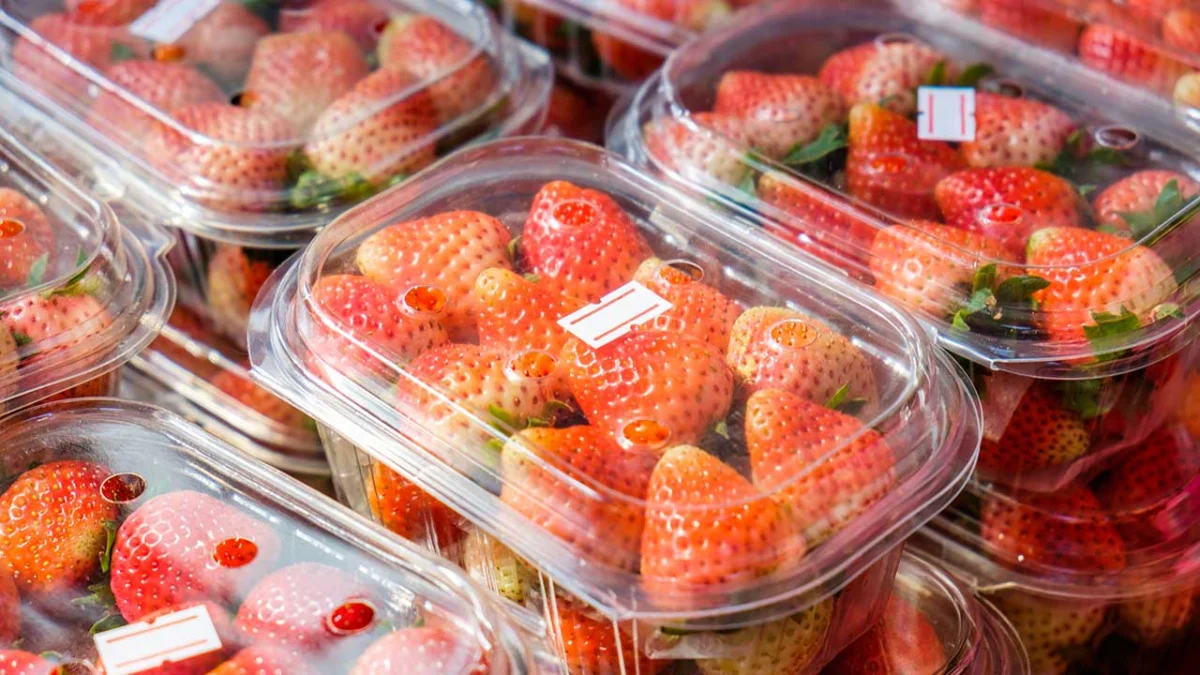
By 2028, the aisles of your local grocery store will likely look fundamentally different. You may find your favorite organic berries nestled in cardboard punnets rather than the ubiquitous clear plastic clamshells, or notice that your microwaveable meals are shifting from opaque black plastic to clear or white containers. These are not merely aesthetic branding choices; they are the tangible, front-line results of California’s Senate Bill 54 (SB 54), a landmark legislative overhaul that has begun the process of decoupling consumer convenience from environmental degradation.
While the law is a California mandate, its influence is national—and potentially global. As major manufacturers grapple with the logistical complexity of maintaining different packaging lines for different states, many are opting to reformulate their products for the entire U.S. market. This transition marks the most significant shift in American packaging policy in a generation, turning the tide on decades of "take-make-waste" industrial practices.
The Magnitude of the Problem: Why Change Was Inevitable
To understand the weight of SB 54, one must look at the data. For decades, plastic has been the default material for the global supply chain—cheap, lightweight, and durable. However, this convenience has come at a staggering cost. According to the U.S. Environmental Protection Agency (EPA), plastic waste comprised a mere 0.4% of municipal solid waste in 1960. By 2018, that figure had skyrocketed to 12.2%.
Packaging is the primary culprit in this trajectory. Research from Greenprint suggests that 36% of all manufactured plastic is dedicated to packaging, and a staggering 85% of that material ultimately concludes its life cycle in a landfill. The environmental externalities—ranging from microplastic contamination in our water tables to the energy-intensive production of virgin resins—have prompted a regulatory response that shifts the financial burden of this waste away from the public and onto the producers.
The Mechanism: Extended Producer Responsibility (EPR)
At the heart of SB 54 lies the concept of Extended Producer Responsibility (EPR). Historically, the cost of managing the end-of-life cycle for packaging—collection, sorting, and disposal—fell upon local governments and, by extension, taxpayers. Under the EPR model, that financial liability is transferred to the companies that produce the packaging.
This shift creates an immediate, powerful financial incentive. When a company is responsible for the cost of disposing of its own packaging, "cheap" plastic suddenly becomes an expensive liability. Consequently, manufacturers are now incentivized to design for circularity: using less material, selecting materials that are easier to recycle, and avoiding additives that render packaging toxic or non-recyclable.
Chronology of Compliance: A Multi-Year Roadmap
The transition mandated by SB 54 is not a sudden cliff, but a multi-year phased rollout designed to give the manufacturing sector time to innovate.
- May 2026: The official regulatory framework took effect. Producers were required to register with the Circular Action Alliance or CalRecycle, marking the formal start of the accountability era.
- January 2027: The program moves into full implementation. Single-use plastic packaging must be reduced by 10% compared to the 2023 baseline. Companies failing to align with these plans face significant restrictions on selling goods within California.
- January 2028: The recycling requirement tightens. 30% of all covered single-use plastic packaging and food service ware must be actually recycled, not merely theoretically recyclable. This will force a shift toward materials that are compatible with modern infrared sorting technology.
- January 2030: The goalpost moves again, requiring a 40% recycling rate and a 20% reduction in total source material.
- January 2032: The final, ambitious target: a 25% source reduction, a 65% recycling rate, and a requirement that 100% of all covered packaging is either recyclable or compostable.
The Materials Facing Extinction: A Market Shift
The law specifically targets "problematic" materials that currently clog our recycling infrastructure.
1. Polystyrene Foam (EPS)
Often referred to by the brand name "Styrofoam," expanded polystyrene is the enemy of efficient recycling. It is largely composed of air, making it prohibitively expensive to transport, and it is notoriously prone to breaking into micro-fragments that contaminate high-value plastic bales. Beyond the waste crisis, health organizations have linked styrene exposure to increased risks of lymphoma and leukemia. Under SB 54, the industry is transitioning toward molded fiber and paper-based alternatives.
2. Black and Dark-Colored Plastics
For years, the "black plastic" used in sushi trays and frozen meals has been a recycling failure. Modern Material Recovery Facilities (MRFs) rely on near-infrared (NIR) optical sorters to identify plastic types. Because black pigment absorbs NIR light, the machines essentially "see" these containers as nothing, causing them to be rejected and landfilled. The new regulations are pushing brands toward clear or light-colored PET plastic, which is easily detected and highly valuable in the secondary market.
3. PVC Clamshells and Blister Packs
Polyvinyl chloride (PVC) is a major contaminant. A single piece of PVC can ruin a massive batch of recycled PET, rendering it useless for future manufacturing. Furthermore, the phthalates used to make PVC flexible have raised significant health concerns. Brands are increasingly moving toward rPET (recycled PET) clamshells, which provide the same clarity and protection without the contamination risks.
4. Oxo-Degradable Plastics
Perhaps the most important aspect of the law is the crackdown on "greenwashing." Oxo-degradable plastics—which contain additives that cause them to fragment into smaller pieces when exposed to light—have long been marketed as eco-friendly. In reality, they do not biodegrade; they simply become microplastics more quickly. SB 54 effectively bans these, ensuring that "compostable" claims meet rigorous, verifiable scientific standards.
Official Responses and Industry Friction
The implementation of such a massive law has not been without controversy. On June 2, 2026, a coalition of environmental advocacy groups—including Oceana, the Natural Resources Defense Council (NRDC), and the Californians Against Waste Foundation—filed a lawsuit in the San Francisco Superior Court.
The plaintiffs argue that the finalized regulations include too many loopholes, specifically regarding exclusions for large categories of plastic and the potential for producers to claim "indefinite exemptions." They contend that the current regulations fail to sufficiently restrict the technologies the original legislation was designed to curb. This litigation highlights the ongoing tension between environmental activists, who demand aggressive, immediate reform, and industry representatives, who argue for a more flexible, phased-in approach to avoid supply chain disruptions.
Implications for the Consumer
For the average shopper, the impact of SB 54 will be felt in every aisle of the supermarket.
- Fresh Produce: Expect to see a decline in the plastic clamshells that dominate the berry and salad sections, replaced by ventilated cardboard or molded fiber punnets.
- Prepared Foods: The "sea of plastic" in deli sections is being replaced by fiber-based bowls. While these may require a slight adjustment in how you store leftovers at home, they represent a significant step toward a compostable future.
- Personal Care: Brands are under pressure to provide refillable options. From concentrate pods to in-store refill stations, the era of buying a new, virgin-plastic bottle for every refill is coming to an end.
- Online Shopping: The "void fill" industry—bubble wrap and air pillows—is being rapidly replaced by paper-based solutions like crumpled kraft paper and die-cut cardboard, which are easily handled by standard curbside recycling programs.
Conclusion: The Ripple Effect
SB 54 is not an isolated experiment. It is a catalyst. With states like New York, Colorado, Maine, and Oregon enacting their own forms of EPR, a "patchwork" of regulations is emerging. For national corporations, the cost of navigating fifty different state packaging laws is prohibitive. The market reality is that California’s standard is becoming the de facto national standard.
By 2032, if the goals of SB 54 are met, we will see a fundamentally redesigned economy. It is a vision of a "circular" system where waste is designed out of the process, materials are kept in use, and the burden of our consumption is finally being borne by the entities that profit from it. As consumers, our role is to remain vigilant—supporting brands that innovate, demanding transparency, and recognizing that while the transition is complex, the path toward a sustainable future is finally being paved.
