

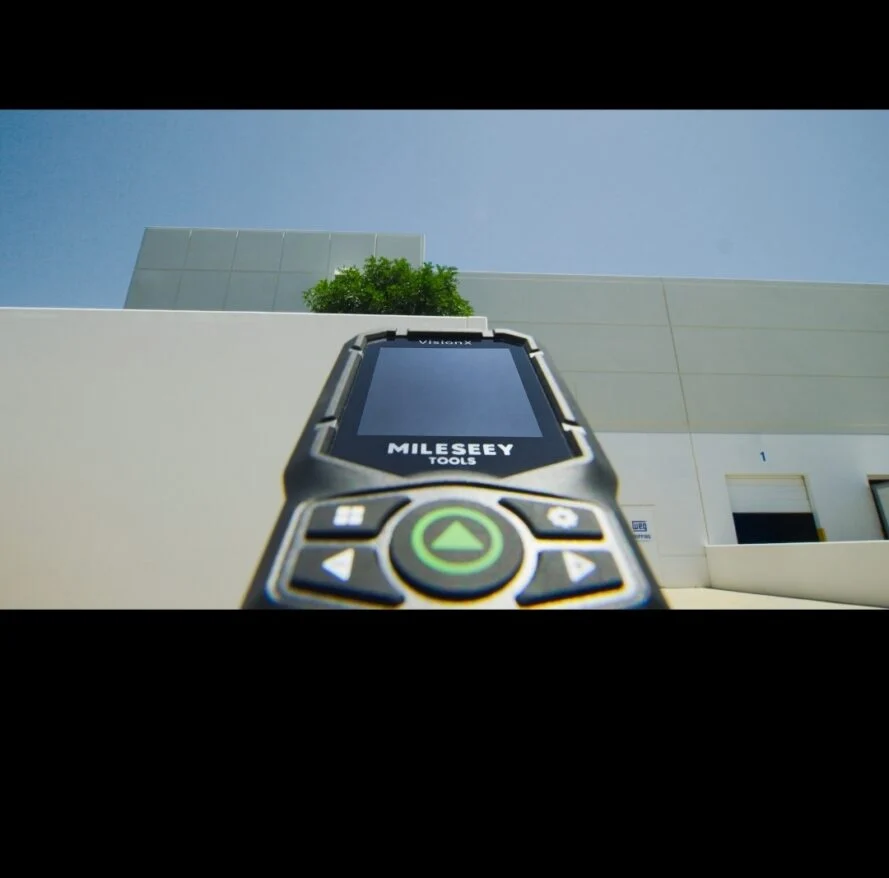
The construction and renovation sectors are undergoing a quiet but seismic shift. As the built environment pivots toward sustainability and resource efficiency, the demand for high-fidelity data has never been greater. In this landscape, the tools used to capture site information—once simple, isolated devices—are being transformed into essential nodes within a larger, interconnected digital ecosystem. At the forefront of this evolution are the MILESEEY S50 and S50C, two laser measurement devices that promise to move the industry away from error-prone, fragmented workflows toward a model of unified project intelligence.
The Foundation of Efficiency: Why Accurate Measurement Matters
Sustainability in architecture is often discussed in terms of high-performance insulation, renewable energy integration, or low-carbon building materials. However, the most critical sustainability decisions are made during the initial site assessment, long before the first shovel hits the dirt. The quality of information gathered during these early phases dictates the trajectory of a project’s lifecycle.
Inaccurate site records act as a catalyst for systemic waste. When measurements are imprecise or lack proper context, they lead to a ripple effect of inefficiencies: incorrect material orders, unplanned structural modifications, project delays, and the inevitable "rework" that plagues the industry. Each instance of rework is not merely a financial burden; it is an environmental one, consuming excess labor, fuel for transportation, and raw materials that eventually end up in landfills.
By digitizing the measurement process, professionals are effectively "de-risking" the project. When dimensions are captured with laser precision and integrated into cloud-based platforms, they create a "single source of truth" that architects, contractors, and clients can reference in real-time. This is the core value proposition of the MILESEEY S50 and S50C: moving from isolated data points to a cohesive, digital record of the built environment.

Chronology of a Digital Transformation
The evolution of measurement tools can be traced through three distinct eras:
- The Analog Era (Pre-1990s): Measurement relied on physical tape measures and handwritten notes. Information was siloed in physical notebooks, making collaboration difficult and prone to human error.
- The Laser Integration Era (1990s–2015): The introduction of laser distance meters allowed for faster, more accurate single-point measurements. While this improved speed, the data remained isolated; it had to be manually transcribed into digital software, leaving room for transcription errors.
- The Connected Ecosystem (2016–Present): We are currently in the era of "smart measurement." Tools like the MILESEEY S50 and S50C serve as input devices for BIM (Building Information Modeling) and CAD software. Measurements are no longer just numbers; they are metadata attached to photographs, floor plans, and cloud-based project management platforms.
Supporting Data: The Cost of Inaccuracy
Industry reports consistently highlight that construction rework—often stemming from poor site documentation—accounts for roughly 5% to 10% of total project costs. In large-scale developments, this equates to millions of dollars in wasted materials and stalled progress.
A study by the Construction Industry Institute (CII) suggests that projects with high-quality, digitized documentation experience:
- A 30% reduction in RFI (Request for Information) traffic.
- A 15% increase in site-to-office communication efficiency.
- Significant decreases in material over-ordering, as digital measurements allow for precise cut-lists that account for actual site dimensions rather than theoretical blueprints.
The MILESEEY S50 and S50C address these statistics by digitizing the "capture" phase. By enabling Bluetooth-enabled data syncing, these devices ensure that the measurement captured on-site is the exact figure that appears in the contractor’s digital app or the architect’s Revit model.

Official Perspectives: The MILESEEY Approach
The development of the S50 and S50C series was driven by a specific design philosophy: Contextual Measurement.
"For too long, the tool and the project file have been separate entities," notes a representative for MILESEEY. "A measurement is useless if you can’t remember what it was for two days later. The S50 and S50C are designed to bridge that gap. By integrating camera-assisted targeting and app-based data logging, we are giving professionals the ability to attach visual evidence to their numeric data. You aren’t just measuring a room; you are documenting the state of a project."
The S50 is optimized for interior, high-frequency use, offering a compact form factor that fits into a pocket, making it the tool of choice for contractors who move constantly between sites. Conversely, the S50C addresses the limitations of outdoor measurement, where harsh light and long distances typically render traditional laser meters ineffective. Its high-resolution camera and digital viewfinder allow users to verify target points accurately, even under direct sunlight, ensuring that data integrity is maintained regardless of environmental conditions.
Implications for the Future of Architecture
The integration of smart measurement tools into the mainstream has profound implications for how we design and build.

1. Collaborative Intelligence
When measurements are instantly uploaded to a shared cloud platform, the "silo" between the office and the job site begins to dissolve. An architect in a studio can review a site’s dimensions in real-time as a contractor captures them on-site. This eliminates the "ping-pong" effect of unanswered questions and conflicting assumptions.
2. The Rise of the "Digital Twin"
The ultimate goal of modern architecture is the creation of a "Digital Twin"—a virtual replica of a physical building. The S50 and S50C feed this model from the ground up. As these tools become more sophisticated, they will likely integrate with AR (Augmented Reality) platforms, allowing professionals to overlay digital measurements onto the real world, further reducing the margin for error.
3. Sustainability as a Default
By minimizing the margin of error, smart measurement supports a "lean construction" philosophy. When architects know the exact dimensions of an existing space, they can design modular components that fit perfectly, reducing the need for on-site trimming, which produces sawdust, waste, and chemical off-gassing. It is a subtle but powerful lever for environmental stewardship.
Conclusion: A Shift in Perspective
While the MILESEEY S50 and S50C are undeniably impressive pieces of hardware, their true impact lies in their role as catalysts for a cultural shift. We are moving toward a future where the "built environment" is managed with the same level of precision as the digital environment.

Technology alone will never be the panacea for the construction industry’s environmental challenges. Factors such as material science, energy-efficient HVAC design, and ethical labor practices remain the pillars of sustainable development. However, these pillars require a foundation of accurate information to stand tall.
By prioritizing the "quiet work" of documentation—the precise measuring, the methodical recording, and the clear communication of site conditions—professionals are building a future where efficiency is not an afterthought, but a starting point. As we continue to refine our tools, we are not just measuring distances; we are measuring our impact on the world, one click at a time. The transition to a more connected, data-driven construction process is not just an opportunity for progress; it is an imperative for a more sustainable, resilient, and intelligent built environment.
