

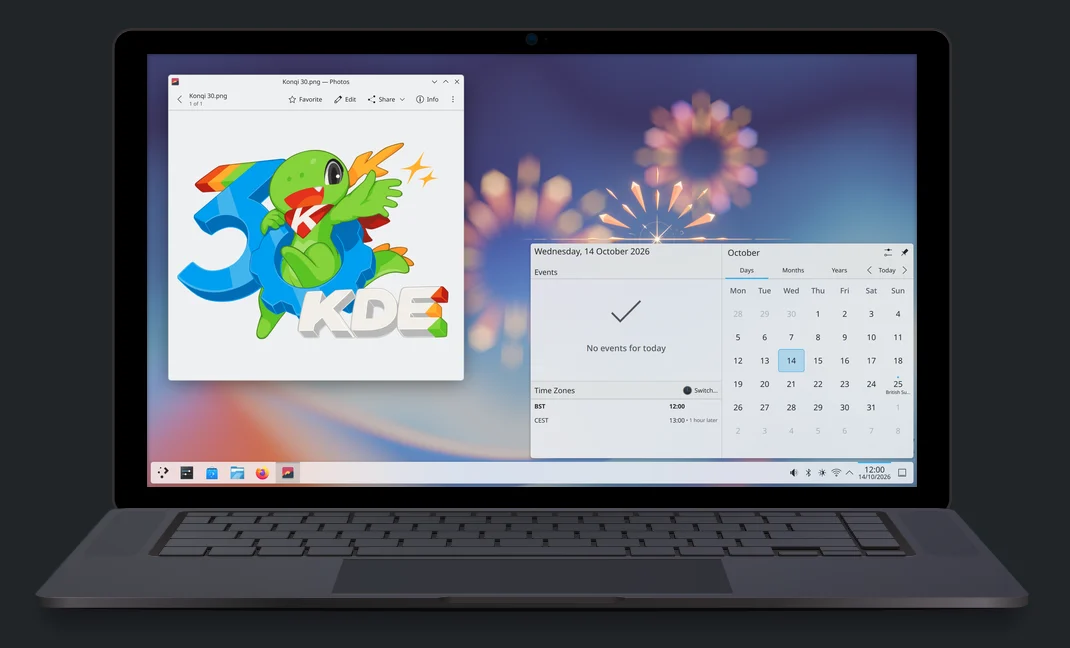
On October 14, the open-source world turned its collective gaze toward a milestone three decades in the making. KDE, the venerable software project that has served as a cornerstone of the Linux desktop experience since its inception in 1996, celebrated its 30th anniversary with the release of Plasma 6.8. Dubbed the "30th Anniversary Edition," this update represents far more than a mere collection of bug fixes or aesthetic tweaks; it signals a definitive shift in the architectural trajectory of the Linux desktop, marked by the formal retirement of native X11 session support in favor of the modern Wayland display protocol.
The release, accompanied by the debut of a commemorative documentary film, serves as a poignant reminder of KDE’s endurance. Yet, as the community celebrates its past, the technical focus remains firmly fixed on the future, characterized by a transition that has been years in the making.
Main Facts: The "30th Anniversary Edition"
Plasma 6.8 is defined by its bold embrace of modernization. While the anniversary festivities have dominated the headlines, the technical core of the release is its commitment to the Wayland ecosystem. By officially deprecating the native X11 session, KDE is aligning itself with the broader industry trend—a transition that is essential for the long-term stability and performance of Linux graphical environments.
Key highlights of the Plasma 6.8 update include:
- The X11 Sunset: Native X11 sessions are no longer supported for new installations. Users are encouraged to utilize the Wayland protocol, with legacy X11 applications remaining fully functional via the XWayland compatibility layer.
- Nvidia Triple Buffering: In a significant win for high-refresh-rate users and those utilizing proprietary drivers, Nvidia triple buffering is now enabled by default, promising a smoother, stutter-free desktop experience.
- Enhanced Customization: The release introduces improved support for third-party window decorations, allowing for more consistent shadows, rounded corners, and blur effects across non-KDE applications.
- Union Theming: A more streamlined implementation of the Union theming system allows for greater aesthetic cohesion throughout the desktop environment.
- Kup Integration: The KDE backup utility, Kup, has been moved from an external peripheral tool to an integrated component of the Plasma ecosystem, simplifying data protection for the average user.
- kscreenctl: Power users and system administrators now have a dedicated, powerful command-line interface for managing complex display configurations, bridging the gap between graphical settings and automated scripting.
A Chronology of Progress: From 1996 to the Wayland Era
To understand the significance of Plasma 6.8, one must look back at the origins of the project. Matthias Ettrich’s 1996 announcement on Usenet, proposing the "Kool Desktop Environment," was a radical call for a user-friendly, consistent interface for Unix-like systems. Over thirty years, KDE evolved from a fledgling project into a global powerhouse, influencing the way millions interact with their computers.
The X11 Legacy
For 42 years, the X Window System (X11) served as the foundation for almost all Linux graphical interfaces. It was a marvel of its time, designed in an era when network transparency was the primary goal. However, as the demands of modern hardware—such as variable refresh rates, fractional scaling, and high-fidelity compositing—grew, the X11 protocol became increasingly strained.
The Shift to Wayland
The decision to migrate to Wayland was not made overnight. It began with years of experimental support, followed by a gradual shift in the Plasma 5 lifecycle, and finally, the full-throated adoption in the Plasma 6 series.
- 2014-2020: The experimental phase, where developers began building the Wayland backend for KWin (KDE’s window manager).
- 2021-2024: The "Road to Wayland" initiative, focused on feature parity and addressing edge-case bugs.
- 2025: The broader industry consensus, highlighted by GNOME’s decision to drop X11, cemented the shift as an industry standard.
- October 2026: Plasma 6.8 marks the formal conclusion of the transition, effectively retiring the native X11 session within the KDE project.
Supporting Data: Why the Transition Matters
The move away from X11 is not merely a preference for "newness"; it is a reaction to the technical limitations of a protocol that predates the modern GPU.
Performance Metrics and Architecture
The Wayland protocol operates on a much simpler communication model than X11. In X11, the "X Server" acts as a middleman between the application and the graphics hardware, often leading to screen tearing and input latency. Wayland removes this middleman, allowing the compositor (KWin) to talk directly to the hardware.
Internal testing by the KDE development team suggests that the full transition to Wayland has resulted in:
- Reduced Latency: Input lag has been measurably decreased, providing a more "snappy" feel to window dragging and UI responsiveness.
- Compositing Stability: By controlling the buffer management directly, Wayland eliminates the "tearing" issues that historically plagued X11 users without requiring complex workarounds like "TearFree" configurations in Xorg.
- Power Efficiency: With the default inclusion of Nvidia triple buffering and optimized compositor pathing, mobile users are seeing a marginal but notable improvement in battery life during heavy window usage.
The XWayland Safety Net
The developers have been careful to reassure the user base: the removal of the X11 session does not mean the end of X11 applications. Through XWayland, the system provides a seamless translation layer. Legacy software, which has not yet been ported to native Wayland, will continue to function exactly as it did before. The primary difference is that the "infrastructure" of the desktop—the compositor, the input handling, and the display management—is now running on modern, secure, and performant code.
Official Responses and Developer Insights
In the official announcement, the KDE development team emphasized that this transition is about "preparing Plasma for the future."
"For 30 years, we have built on the foundations laid by those who came before us," stated a lead maintainer in the anniversary blog post. "But to continue providing a world-class experience, we must be willing to let go of the architectures that no longer serve us. X11 was the home of our childhood, but Wayland is the foundation of our future."
The community response has been largely supportive, though not without the expected friction associated with such a fundamental change. Veteran users have expressed concerns regarding specific niche display configurations, but the inclusion of kscreenctl has been widely praised as a direct response to these concerns, providing a "power-user escape hatch" that allows for granular control over display outputs.
Regarding the Nvidia support, the response has been overwhelmingly positive. The long-standing friction between the Linux kernel’s open-source ethos and Nvidia’s proprietary driver stack has historically made KDE a difficult environment for gamers. By enabling triple buffering by default, the KDE team is signaling that they are prioritizing the needs of their users over the ideological conflicts of the past.
Implications: The Future of the Linux Desktop
The release of Plasma 6.8 carries significant weight for the broader Linux ecosystem. KDE’s adoption of these standards effectively dictates the "best practices" for the desktop, and by setting the standard here, they are forcing other smaller desktop environments to accelerate their own modernization efforts.
1. Standardization of the Linux Desktop
With both GNOME and KDE now firmly committed to Wayland, we are moving toward a more standardized desktop experience. Developers creating applications for Linux can now rely on a consistent display protocol, reducing the number of environment-specific bugs they must address. This "coalescing" of the Linux desktop is essential if the platform hopes to gain further ground in the professional and creative sectors.
2. The Power User Advantage
The addition of kscreenctl and the deeper integration of Kup suggest that KDE is doubling down on its identity as the "power user’s desktop." While many modern operating systems are trending toward "simplified, locked-down" interfaces, KDE is taking the opposite approach: they are modernizing the underlying tech (Wayland) while simultaneously expanding the depth of the configuration tools available to the user.
3. A Sustainable Roadmap
By retiring X11, the KDE team is significantly reducing their maintenance burden. Maintaining two massive, disparate display protocols is a monumental task that drains resources from new feature development. By focusing entirely on Wayland, the team can reallocate those developer-hours toward better HDR support, improved color management, and more robust Wayland-native features, such as advanced input gestures.
4. The 30-Year Milestone as a Catalyst
Finally, the 30th anniversary is more than a party; it is a declaration of longevity. In an industry where software projects are often abandoned or superseded within a few years, KDE has demonstrated an incredible ability to adapt, survive, and thrive. The release of Plasma 6.8, with its daring architectural pivot, proves that the project is not just resting on its laurels but is as ambitious today as it was in 1996.
Conclusion
As we look toward the next decade of computing, the significance of Plasma 6.8 cannot be overstated. It is a bridge between the historical foundations of Unix-like systems and the demands of modern high-resolution, high-performance computing. For the casual user, the update promises a faster, more stable, and more beautiful experience. For the technical community, it represents the closing of a long chapter and the opening of a new one.
KDE has survived for 30 years by being willing to innovate, and with Plasma 6.8, they have ensured that they remain at the bleeding edge of desktop technology. The X11 session may be heading to the history books, but the desktop environment it helped build is more vibrant, capable, and future-ready than ever before. Whether you are a long-time user or someone looking to move away from the restrictive paradigms of proprietary operating systems, there has never been a better time to engage with the KDE Plasma ecosystem.
