

In a landmark decision that could redefine the regulatory landscape of the internet in the United States, a three-judge panel of the 11th U.S. Circuit Court of Appeals has ruled in favor of the State of Florida, allowing the state to proceed with enforcing one of the nation’s most stringent social media bans for minors. The ruling, delivered Wednesday, marks a significant shift in the ongoing legal battle between state legislators concerned about child welfare and technology industry groups asserting First Amendment protections.
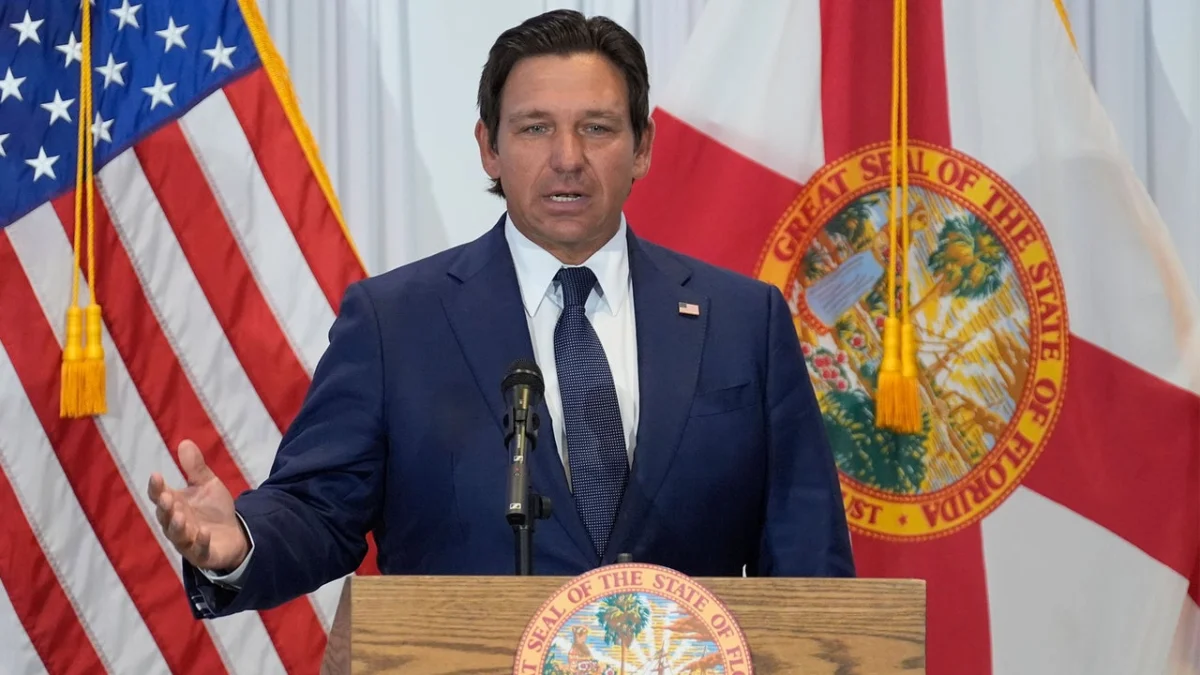
The law, signed by Governor Ron DeSantis in 2024, establishes strict age-based limitations on social media usage. Specifically, it prohibits children under the age of 14 from holding social media accounts and mandates parental consent for minors aged 14 and 15. The appellate court’s unanimous 3-0 opinion suggests that the state’s interest in shielding children from the potential harms of algorithmic addiction outweighs the immediate First Amendment concerns raised by technology giants.
A Chronology of the Legal Conflict
The journey of this legislation from a policy proposal to a federal court battle has been fraught with contention.
- March 2024: Governor Ron DeSantis signed the bill into law, framing it as a necessary measure to protect children from the “perils” of social media platforms designed to keep them addicted.
- The Industry Response: Shortly thereafter, major tech trade groups—including the Computer & Communications Industry Association (CCIA) and NetChoice—filed a federal lawsuit. They argued that the law constituted an unconstitutional overreach that infringed upon the free-speech rights of both the platforms and their users.
- The 2025 Injunction: A federal judge in Tallahassee sided with the plaintiffs, issuing a preliminary injunction that halted the law’s implementation. The court at the time expressed significant skepticism regarding the law’s constitutionality, suggesting it was too broad to pass First Amendment scrutiny.
- The Appeal: The State of Florida appealed the injunction to the 11th U.S. Circuit Court of Appeals. During the pendency of this appeal, the injunction was stayed, creating a period of legal uncertainty for platforms operating within the state.
- October 2024 (The Current Ruling): The 11th Circuit panel overturned the injunction, determining that the law likely does not burden more speech than is necessary to achieve the government’s compelling interest. The case now returns to the district court level for further proceedings.
Understanding the Scope of the Legislation
To understand the weight of this ruling, one must examine the precise mechanics of the law. The legislation does not apply to all websites or digital services. Instead, it specifically targets platforms that the state has determined "induce heavy use by children."
The law is narrowly tailored to apply only to platforms that incorporate both algorithmic feeds and specific "addictive features," such as infinite scrolling, push notifications, or metrics that reward frequent usage. This targeted approach was a focal point of the appellate court’s reasoning. The judges argued that because the law is restricted to these specific types of interactive, algorithm-driven experiences, it acts in a "content-neutral manner."
By targeting the mechanism of engagement rather than the content of the speech, the court found that the law is less likely to violate the First Amendment. The panel concluded that the state’s interest in protecting minors from digital addiction is "important," and that the regulations imposed are a reasonable "time, place, and manner" restriction designed to foster a safer environment for children.
Supporting Data and The Debate Over Addiction
The impetus for the law stems from a growing body of research suggesting that social media platforms are designed using psychological triggers that can lead to compulsive use among adolescents. Legislators in Florida and elsewhere have pointed to internal platform data and academic studies indicating that the "dopamine loop" created by likes, comments, and algorithmic content delivery can negatively impact the developing brains of children.
Proponents of the law argue that the digital environment has become a "wild west" where minors are exposed to predatory content, bullying, and psychological distress. They maintain that the state has a "parens patriae" interest—the power of the state to act as guardian for those who cannot care for themselves—to regulate these spaces.
However, critics, including the plaintiffs, argue that the science of "addiction" in the context of digital interaction is still evolving. They contend that by removing the agency of parents and teenagers to decide how they interact with the internet, the state is creating a "digital blackout" that restricts access to educational, social, and creative opportunities that are inherent to modern adolescence.
Official Responses and Stakeholder Positions
The ruling has drawn immediate reactions from across the political and technological spectrum.
The State of Florida: While the Attorney General’s office has remained relatively quiet immediately following the ruling, Governor DeSantis has consistently maintained that the law is a common-sense safeguard. His office has framed the battle as a fight against "Big Tech" that prioritizes corporate profits over the mental health of Florida’s youth.
NetChoice: The industry trade group, which has been the primary litigant against the state, expressed deep disappointment with the decision. Paul Taske, a lawyer representing NetChoice, stated: "We are currently evaluating all of our options as we continue the fight to ensure Floridians’ rights to free expression online are protected, and parents remain in the driver’s seat when it comes to making decisions for their families." NetChoice maintains that the law creates a "censorship regime" and that the government should not be the arbiter of what websites children can access.
Broader Implications: A New Era for Digital Regulation
The implications of this 11th Circuit ruling extend far beyond the borders of Florida. As several other states—including California, Utah, and Arkansas—have pursued similar legislation, the Florida case serves as a bellwether for the constitutionality of such measures.
1. The Precedent for Content-Neutral Regulation
By accepting the argument that the law is "content-neutral," the court has provided a potential blueprint for other states. If legislation can be crafted to target the architecture of an app (the algorithms and addictive features) rather than the topics discussed (political speech, personal opinions), it is significantly more likely to survive judicial scrutiny.
2. The Shift in Parental Rights
The debate over this law has highlighted a tension between state-mandated restrictions and parental autonomy. While NetChoice argues that parents should be the ones to decide when a child is ready for social media, the Florida law suggests that the design of the platforms themselves is so inherently addictive that parents are effectively powerless against the algorithms. This ruling reinforces the idea that the state has a legitimate role in providing a "floor" for digital safety that exists independently of parental oversight.
3. Future Litigation
The case is far from over. By sending the matter back to the district court, the appellate panel has opened the door for a full trial on the merits of the law. Both parties will likely attempt to bring in expert witnesses to testify on the neurological impacts of social media on children versus the chilling effect the law may have on free speech. Furthermore, given the national significance of the ruling, it is highly probable that the losing party will eventually seek an appeal to the U.S. Supreme Court.
Conclusion: Balancing Safety and Liberty
As we look toward the future of the internet, the Florida social media ruling stands as a defining moment. It forces a collision between two fundamental American values: the protection of the vulnerable and the preservation of free expression.
Whether this law effectively mitigates the mental health crisis among adolescents remains to be seen. What is certain, however, is that the era of unfettered access to social media for minors is facing its most significant legislative and legal challenge in history. As the case returns to the federal court in Tallahassee, the entire nation will be watching, waiting to see if Florida’s experiment becomes the new national standard for the digital age.
