

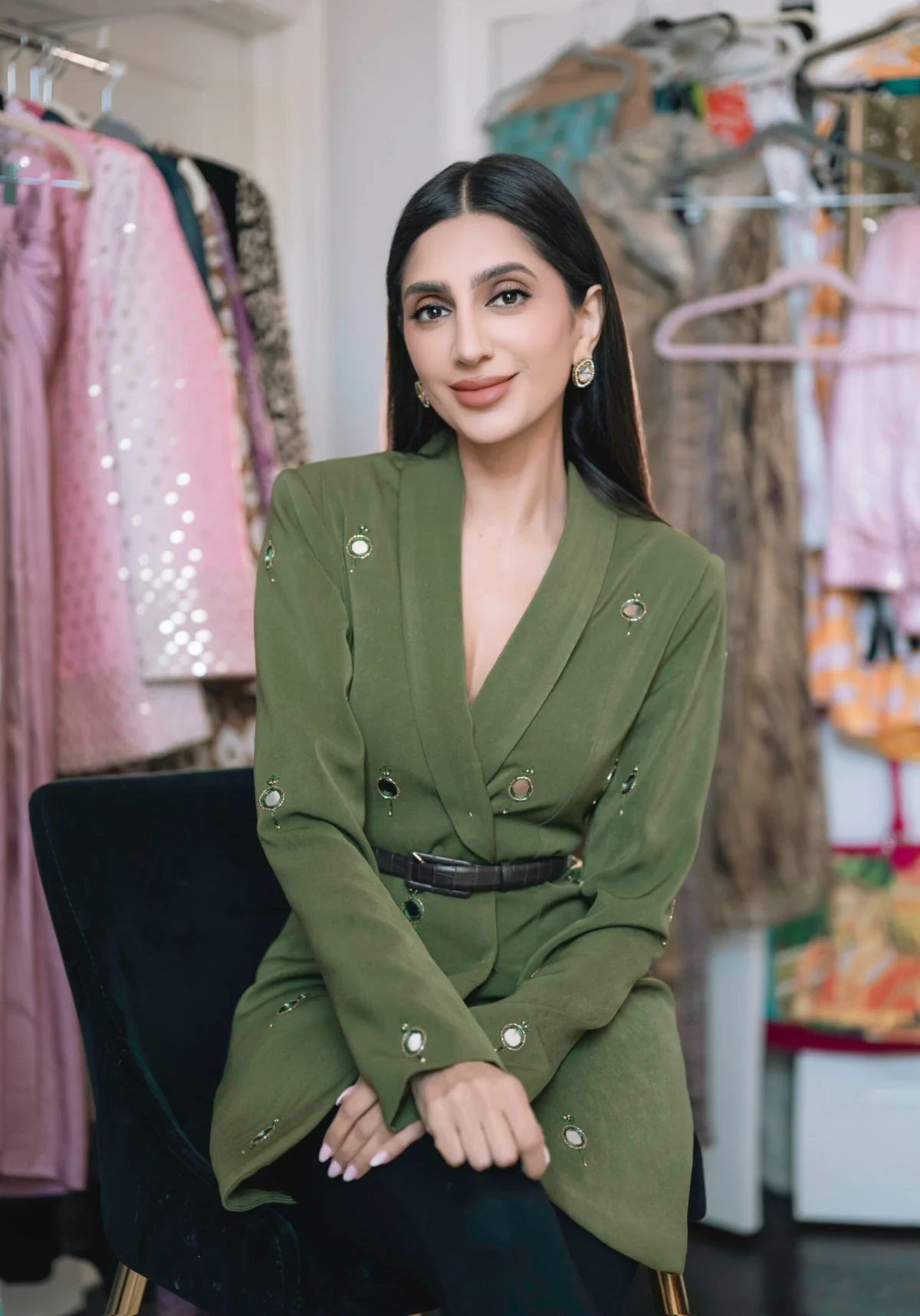
In the competitive landscape of modern fashion, few brands manage to bridge the gap between cultural heritage and contemporary commercial success as effectively as holiCHIC. Founded by Megha Rao, the label has evolved from a personal creative outlet into a seven-figure powerhouse. Following a successful decade of bootstrapping, the brand recently marked a new chapter in its trajectory: a $1.5 million seed funding round that underscores the growing market demand for inclusive, fusion-forward apparel.
Rao’s journey is not merely a tale of design; it is a masterclass in persistence, data-driven decision-making, and the strategic timing of capital infusion. By transforming her identity—rooted in her upbringing in Queens, New York—into a global retail presence, Rao has proven that niche cultural aesthetics possess mass-market appeal when executed with professional rigor.
The Genesis: A Decade of Bootstrapping
The roots of holiCHIC began in the intimate space of personal expression. For Rao, the daughter of South Asian immigrants, the mainstream fashion available in her youth felt disconnected from her dual identity. Her solution was to blend the traditional with the modern—deconstructing her mother’s silk saris to incorporate them into denim jackets and leather pieces.
What began as a personal wardrobe project quickly gained momentum among friends and family, eventually evolving into a full-scale business. For nearly ten years, Rao operated without the safety net of venture capital. This period was crucial; it forced the brand to achieve true product-market fit and operational efficiency. "Being bootstrapped is a rollercoaster," Rao explains. "You have one great month, and then the next month there’s a lull, and your profit is eaten up. At the same time, it’s your business. You take inputs from others, but you make the final call."
Chronology of a Retail Breakthrough
The pivot from a direct-to-consumer digital brand to a major retail player was not accidental. Recognizing that her target demographic overlapped significantly with the customer base of luxury retailers, Rao set her sights on Nordstrom.
The Cold-Call Catalyst
Securing a meeting with a retail giant like Nordstrom is a feat that stymies many founders. For months, Rao engaged in relentless cold calling and networking. Her tenacity paid off in 2023 when she secured a high-profile pop-up shop at the Nordstrom New York flagship location, strategically timed to coincide with Diwali.
The Success Metric
The results of the three-day pop-up exceeded all internal projections. This surge in sales provided the empirical evidence required to transition from a temporary activation to a permanent online partnership. By proving that her designs could resonate with a diverse, non-South Asian audience, Rao opened the door to national distribution.
Scaling Through Capital
By May 2026, with the business reaching a seven-figure annual revenue, the brand was ready for the next level. Raising $1.5 million in seed funding, the company saw an immediate 47% increase in sales, a testament to the effectiveness of applying capital to an already validated business model.
Data-Driven Growth: The Three Pillars of Scaling
As Rao transitioned from a bootstrapped founder to a venture-backed CEO, she identified three core questions that every entrepreneur must answer before seeking external capital.
1. Does the Business Have True Momentum?
Rao’s biggest fear regarding the Nordstrom partnership was not the lack of opportunity, but the potential inability to fulfill the resulting demand. After analyzing her data, she discovered that a substantial portion of her new customers did not identify as South Asian. This was the “aha” moment; the brand had moved beyond a cultural niche and into the realm of general-interest luxury. Recognizing this momentum, she felt confident that taking on funding would allow the company to keep pace with demand, especially when major players like Amazon Fashion began to express interest in the brand.
2. Strategic Partnership: The Case for Quality Over Quantity
When it came time to raise the $1.5 million seed round, Rao made a counter-intuitive decision. While many startups seek a syndicate of investors to maximize their networking reach, Rao opted for a single angel investor. After two productive meetings, the investor committed to the full amount.
Rao emphasizes that for her, this was the superior path. Managing a board of multiple investors can often lead to a fragmentation of vision and unnecessary operational friction. "Our angel investor understands our vision," she notes. "They respect and appreciate how we have grown our business steadily. It was really the right fit."
3. The Deployment of Capital: Fueling, Not Searching
The most critical takeaway from Rao’s approach is her philosophy on funding: "Don’t raise money to find momentum. Raise money to fuel it."
Rao did not use her seed round to "test" product-market fit; she had already spent ten years refining the product and the supply chain. Instead, the capital is being directed toward:
- Influencer Strategy: Increasing visibility through targeted digital campaigns.
- Channel Expansion: Focusing on Amazon Fashion and TikTok Shop to reach younger, high-intent demographics.
- Product Diversification: The expansion of "holiCHIC Men," recognizing that female shoppers often influence the purchasing decisions of their partners.
Implications: The Future of Global Fashion
The success of holiCHIC sends a powerful signal to the fashion industry: the future is multicultural. By moving into the U.K., India, and Middle Eastern markets, Rao is signaling that the "fusion" category is no longer a peripheral trend but a global economic force.
The Retail Landscape
The shift from exclusive, heritage-based luxury to accessible, high-quality fusion wear is changing how retailers curate their floors. Nordstrom’s decision to partner with holiCHIC reflects a broader industry movement toward inclusivity, where traditional ethnic aesthetics are recontextualized for a global consumer.
The Founder’s Long-Term Vision
Rao is not rushing for an exit or an IPO. Her focus remains on consistent revenue growth, expanding the internal team, and refining product lines. She has signaled that she will consider subsequent funding rounds only once revenue hits a 5x multiple of the current stage. This disciplined approach serves as a stark contrast to the "growth at all costs" mentality that plagued many startups in the previous decade.
Official Perspective and Reflection
Throughout the process, Rao has remained a vocal advocate for the "bootstrapping first" mentality. She admits that the early years were filled with mistakes regarding shipping, product design, and logistical fit. However, she argues that these mistakes were necessary "tuition." By making those errors early, she ensured that when the capital arrived, it was used to optimize a system that was already fundamentally sound.
For the aspiring entrepreneur, the holiCHIC story offers a roadmap that prioritizes longevity over speed. Whether it is through the careful selection of a single, aligned investor or the strategic timing of major retail partnerships, Megha Rao’s trajectory proves that the most successful businesses are those that build a solid foundation before inviting the world to participate.
As holiCHIC continues its global expansion, the brand serves as a bridge between cultures—not just in its aesthetic, but in its business philosophy. It is a reminder that in the modern economy, a strong cultural identity, when paired with rigorous financial discipline, is perhaps the most valuable asset a founder can possess.
