

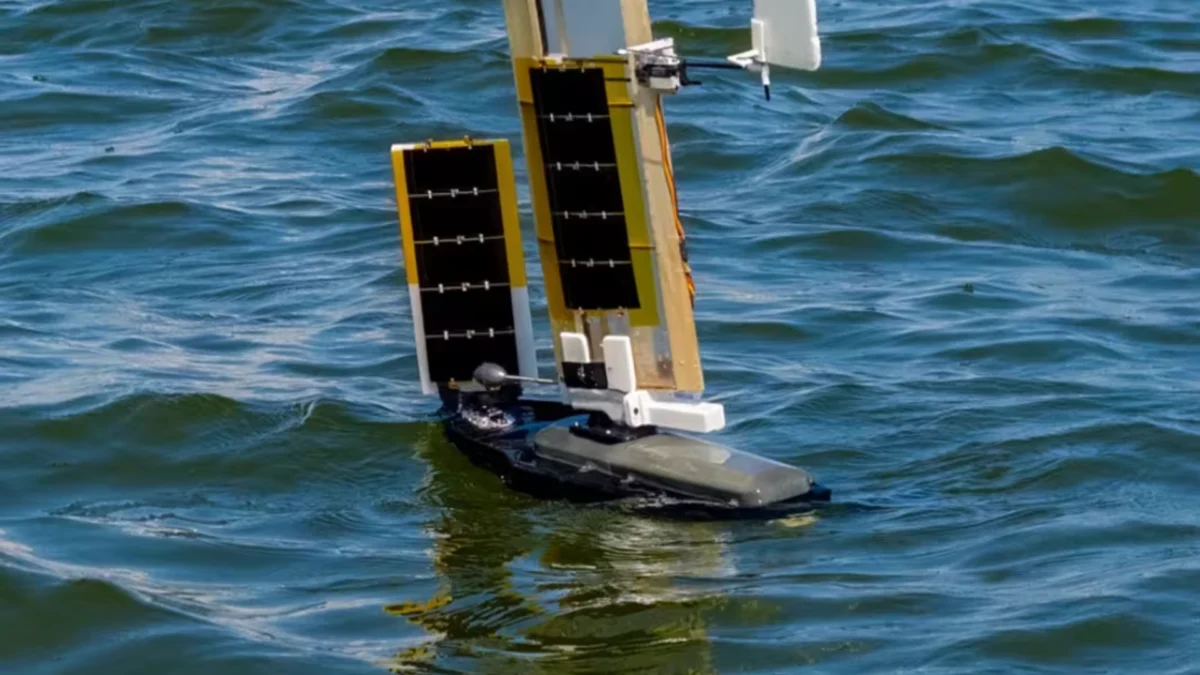
In an era where remote environmental monitoring is becoming increasingly vital, a team of seven innovative engineers from the Singapore University of Technology and Design (SUTD) has unveiled a breakthrough that blurs the lines between aerial and maritime robotics. Their creation, dubbed ALBATROSS, is a lightweight, hybrid drone designed for a unique mission profile: it is dropped from the skies to perform autonomous, long-range maritime surveillance.
By discarding the need for traditional landing gear, complex thrusters, or heavy fuel-based propulsion systems, the ALBATROSS represents a radical departure from existing drone technology. It is a machine that literally "drops before it sails," offering a cost-effective and highly mobile solution for oceanography, climate monitoring, and emergency response in rapidly changing aquatic environments.
The Core Concept: Aerial Deployment, Maritime Intelligence
The ALBATROSS is not a standard quadcopter or a traditional fixed-wing aircraft. Weighing in at a modest 1.107 kg, the prototype is built for efficiency rather than raw power. Its design philosophy centers on the transition from a high-altitude deployment to a low-impact water entry.
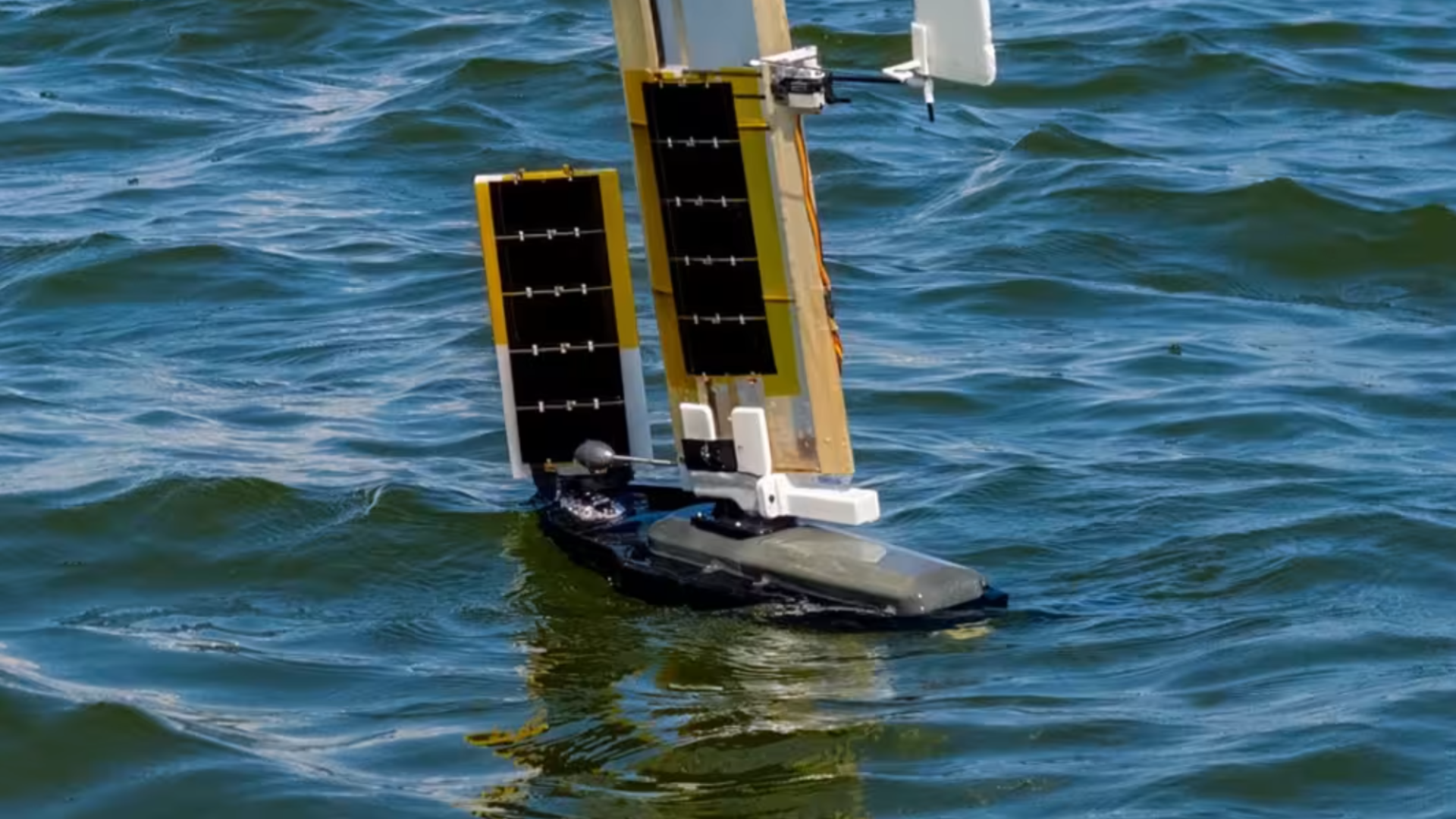
The drone utilizes specialized rigid wingsails to facilitate its descent. Rather than falling in a chaotic, unguided trajectory, the ALBATROSS enters a controlled state of autorotation. This spinning motion serves a dual purpose: it significantly reduces the terminal velocity of the craft and ensures a soft, low-impact landing on the water’s surface. By effectively turning its wings into a passive braking system, the SUTD team has eliminated the requirement for heavy, fragile landing hardware, allowing the drone to strike the water without risking structural integrity.
Once the craft makes contact with the water, it is engineered to automatically return to an upright position. This "self-righting" capability is a masterclass in passive mechanical design, requiring no complex hydraulic actuators or electronic correction to stabilize itself. Once upright, the craft transitions into its secondary mode: a wind-propelled vessel.
Chronology of Development and Design Evolution
The development of the ALBATROSS follows a trajectory of iterative design typical of high-level academic research.
The Conceptualization Phase
The project began with the identification of a significant "deployment gap" in maritime drone operations. Most autonomous sailing vessels, such as the well-known Saildrone or Sailbuoy, are launched from shore or from motherships, which limits their range and rapid-response capabilities. The SUTD team sought to address this by leveraging the portability of aerial vehicles.
The Prototype Phase
Early prototypes focused on the structural requirements for surviving a water entry from a significant height. Engineers had to balance the need for a rigid frame—to withstand the impact and the stress of wind-powered sailing—with the lightweight requirements for aerial carriage. The resulting 1.107 kg prototype is the culmination of dozens of wind-tunnel tests and simulated water-impact scenarios.
The Testing Phase
During the testing phase, the research team focused on perfecting the transition from autorotation to sailing. The challenge was twofold: ensuring the drone landed in a position that allowed the sails to catch the wind, and developing a steering mechanism that didn’t rely on a traditional boat propeller. The final integration of a "fish-tail" style rudder was the key breakthrough, allowing the vessel to generate thrust and directional movement using only the ambient forces of the water and the wind.
Supporting Data: Efficiency Through Minimalism
The engineering specifications of the ALBATROSS suggest a new benchmark for endurance in small-scale maritime drones.
- Operating Range: The research team claims an operating range exceeding 100 km. To put this in perspective, this is more than an order of magnitude higher than previous iterations of similar hybrid drones, such as the SailMAV, which reported a range of approximately 7 km.
- Mass and Portability: At just over 1 kg, the drone can be carried by a wide variety of existing UAVs (Unmanned Aerial Vehicles). This means that a standard drone fleet could be equipped with multiple ALBATROSS units, allowing for "swarming" deployments where several units are dropped across a wide area of the ocean to track phenomena like oil spills or storm surges.
- Energy Consumption: Because the ALBATROSS relies on wind for propulsion and passive mechanisms for stabilization, its energy consumption is focused almost exclusively on the onboard sensors and communication systems. This allows the craft to remain active in the field for extended periods, far outlasting battery-powered surface drones that must frequently return to port for charging.
Official Responses and Expert Commentary
The SUTD research team has been vocal about the unique advantages of their system, emphasizing the removal of "mechanical clutter." In a statement, the researchers noted:
"Unlike many hybrid aerial-marine systems, ALBATROSS eliminates the need for aerial propulsion, complex mechanical reconfiguration, or active stabilization during the air-water transition and can sail back to shore at the end of a mission."
By stripping away these complexities, the team has not only reduced the weight of the drone but also significantly lowered the failure points. In robotics, simplicity is often the most sophisticated solution; every actuator or motor removed is a component that cannot fail in the middle of a mission.
Independent observers in the aerospace and marine robotics communities have noted that the ALBATROSS succeeds where many "transformer" drones fail. Many previous attempts at hybrid craft have attempted to combine a propeller for air travel with a propeller for water travel, resulting in heavy, inefficient machines that struggle in both environments. By ignoring the "aerial travel" component—instead treating the air as a transport medium to get the drone to the water—the SUTD team has created a machine that excels at its primary objective: ocean-based data collection.
Implications for Industry and Environmental Science
The implications of the ALBATROSS extend far beyond the laboratory. As climate change continues to alter ocean temperatures and currents, the ability to deploy sensors rapidly and inexpensively is critical.
Rapid Response to Environmental Events
In the event of a chemical spill, a maritime disaster, or a sudden change in water salinity or temperature, the ALBATROSS could be deployed from a passing aircraft in minutes. This provides real-time data to researchers and emergency responders without the need to wait for a research vessel to reach the location.
A New Paradigm for Marine Robotics
The ALBATROSS suggests a future where maritime monitoring is decentralized. Rather than relying on a few, multi-million dollar autonomous vessels, agencies could deploy dozens of these low-cost drones. If a few are lost to the harsh realities of the open ocean, the financial and operational impact is minimal.
Challenges to Overcome
Despite the excitement surrounding the prototype, the research team acknowledges that further work is required. Translating the success of a controlled test environment to the unpredictable nature of the open ocean—with its swells, unpredictable wind gusts, and currents—is a significant hurdle. The reliability of the self-righting mechanism and the steering capability of the rudder in high-sea states will be the true test of the platform’s longevity.
Conclusion
The ALBATROSS is a testament to the power of lateral thinking in engineering. By reimagining the drone not as a hybrid aircraft, but as a "dropped" vessel, the team at SUTD has bypassed the technological bottlenecks that have hindered previous maritime robots.
As the technology matures, it is likely that we will see the ALBATROSS or its descendants becoming a standard tool in the arsenal of environmental scientists, naval surveyors, and disaster management teams. It is a reminder that sometimes, the most effective way to reach the future is to embrace the simplicity of the past—in this case, the age-old physics of sailing and the reliable, controlled descent of autorotation. Whether this drone will eventually become a commercial standard remains to be seen, but for now, the ALBATROSS stands as a significant, elegant leap forward in the field of autonomous exploration.
