

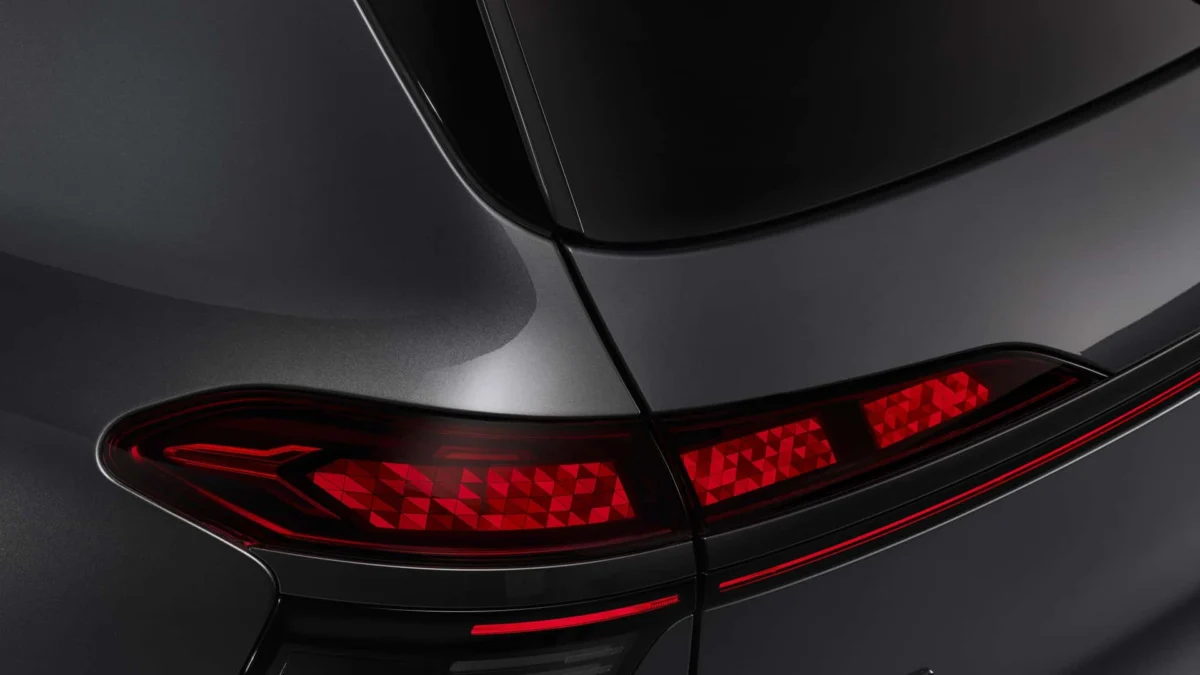
In the high-stakes world of automotive design, where aerodynamic efficiency and aesthetic identity often collide, Audi has once again asserted its dominance in lighting technology. With the unveiling of the new Q9 flagship SUV, the Ingolstadt-based automaker has introduced a world-first feature that blurs the line between traditional automotive lighting and high-definition digital displays: curved OLED taillights.
This isn’t merely a cosmetic upgrade or a brighter bulb; it represents a fundamental shift in how vehicle signals communicate with the surrounding environment. By moving away from the constraints of flat-panel geometry, Audi has unlocked a new dimension of light, safety, and personalization that sets a new industry standard.
The Technical Breakthrough: Engineering the Curve
For decades, the design of rear lighting has been shackled by the physics of glass and plastic substrates. Conventional LED taillights require a flat, rigid surface to house the light-emitting diodes, which inherently limits how much the light can "wrap" around the bodywork of a vehicle. To maintain a sleek design, engineers have typically had to compromise, ending light units abruptly where the body panel curves away from the rear fascia.
The Audi Q9 changes this paradigm by employing a revolutionary, flexible glass substrate. Measuring a mere 0.1 millimeters in thickness, these glass panels are thin enough to be physically curved to follow the precise contours of the Q9’s rear quarter panels. This is not just a stylistic choice; it is an engineering feat. The OLED layer, bonded directly to this ultra-thin glass, can maintain its integrity and performance even when bent, creating a seamless transition from the rear tailgate to the side of the vehicle.
The entire assembly, including the protective housing, measures only one millimeter in total thickness. This ultra-slim profile allows Audi’s design team to integrate lighting into the vehicle’s bodywork with unprecedented fluidity. The result is a continuous, wrap-around lighting signature that is visible not just from behind, but from the side, significantly enhancing visibility for cross-traffic and pedestrians in parking lots or at busy intersections.
Chronology: A Decade of Luminescent Evolution
To understand the magnitude of the Q9’s breakthrough, one must look at the decade-long journey Audi has taken to reach this point.
- The Foundation (2014-2016): Audi was the first manufacturer to introduce OLED technology in a production car, debuting the tech in the limited-edition TT RS. At that time, the technology was static, serving as a proof-of-concept for the deep, high-contrast black levels and crisp light distribution that only OLED can provide.
- The Digital Shift (2020-2022): With the introduction of the digital OLED (OLED 2.0) in the Q5 and other models, Audi moved from fixed lighting to segmented, software-controlled arrays. This allowed for customizable "signatures," enabling owners to choose between different lighting patterns upon startup and shutdown.
- The Integration Phase (2023-2024): Audi began experimenting with communication technology, such as the turn-signal projection system seen on the Q7, which uses the headlights to "paint" safety warnings on the road surface.
- The Apex (2025): The debut of the Q9 brings all these threads together. By combining the high-density segmentation of OLED 2.0 with the flexible, curved glass substrate, Audi has effectively turned the rear of the vehicle into a high-definition, three-dimensional communications screen.
Supporting Data: The 512-Segment Architecture
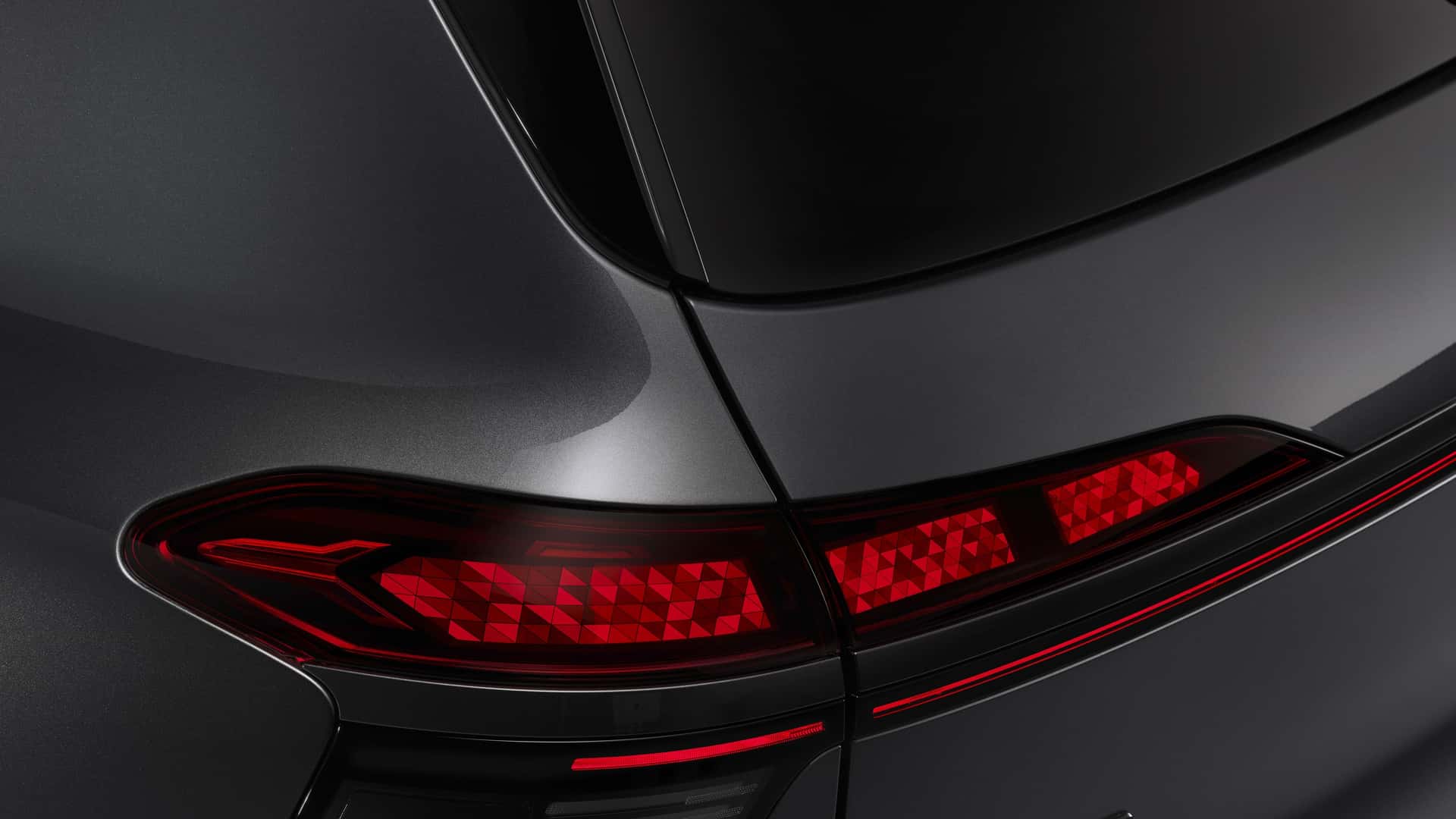
The sheer complexity of the Q9’s lighting system is best illustrated by its raw data. The system comprises six distinct panels—two inner, two central, and two outer—which work in concert to create a unified light show.
The breakdown of these 512 individually controllable segments is as follows:
- Outer Curved Panels: 99 segments each (198 total).
- Central Panels: 84 segments each (168 total).
- Inner Panels: 73 segments each (146 total).
Each of these 512 segments is connected to the vehicle’s central electrical control unit via a high-speed bus system. This is a critical technical distinction: unlike standard LED clusters that function as a single block of light, these segments can be illuminated or dimmed in real-time with millisecond precision. This allows for dynamic animations, complex turn signals, and adaptive braking warnings that can change their intensity or pattern based on the vehicle’s speed and the proximity of trailing drivers.
The outer panels, being the largest individual light units Audi has ever produced, serve a dual purpose. By extending the light around the corner of the vehicle, they maximize the "cone of visibility." Research suggests that such wrap-around designs reduce the likelihood of side-impact collisions in low-light conditions, as the brake signal is effectively broadcast to a much wider arc of the road.
Official Responses and Strategic Implications
Audi’s leadership has been vocal about the role of light in the future of mobility. During the Q9’s unveiling this past July, design executives described the lighting system as "the new chrome." In an era where vehicle profiles are becoming increasingly homogenized due to aerodynamics and EV battery packaging, lighting signatures provide the "fingerprint" that allows a brand to be recognized from hundreds of yards away in the dark.
From an industry perspective, the Q9 sets a high bar for competitors. While brands like Mercedes-Benz and BMW have experimented with light-up grilles and projection systems, Audi’s commitment to the structural integration of OLEDs represents a more expensive, high-complexity path.
However, there is a strategic trade-off. By controlling 512 segments, Audi creates a platform for future software-defined updates. As the Q9 matures, it is theoretically possible for the manufacturer to push over-the-air (OTA) updates that change the rear light signatures or add new safety communication protocols—such as displaying warning symbols to drivers behind the car in the event of an emergency stop.
Implications for the Future of Automotive Safety and Design
The implications of this technology extend far beyond the showroom floor.
1. The Death of the "Blind" Turn
By extending light output to the side of the vehicle, Audi is addressing a fundamental flaw in modern automotive design. As SUVs have grown larger and more boxy, the "blind spot" for traffic approaching from the side has become a significant safety concern. The Q9’s wrap-around OLEDs essentially act as a secondary set of side-repeaters that are far more visible than the small mirrors-mounted indicators, providing a clear visual cue to other road users.
2. The Rise of "Communication" Lighting
The integration of the Q9’s rear lights with its digital Matrix LED headlights is the beginning of what engineers call "V2X" (Vehicle-to-Everything) lighting. If the car can project turn signals on the road ahead for pedestrians, it can eventually project warning icons—such as a "caution" triangle or a "stop" sign—directly onto the asphalt. The Q9 serves as the mobile laboratory for these concepts.
3. Customization as a Premium Feature
Luxury buyers are increasingly demanding personalization. With 512 segments to play with, the possibilities for unique "welcoming" sequences—where the car animates as the owner approaches—are nearly infinite. We expect to see "signature stores" in the future where Audi owners can download new, certified lighting patterns for their vehicles, effectively allowing them to change their car’s "personality" with a few taps on a touchscreen.
Conclusion: The Road Ahead
While the automotive world waits for the final word on US-specific customization regulations and the official pricing structure for the Q9, one thing is certain: the era of the static tail light is over. Audi has successfully turned the rear of its flagship SUV into a high-tech canvas.
By leveraging 0.1-millimeter glass, 512 segments of light, and the ingenuity to bend them around the corners of a vehicle, Audi has achieved a design triumph that balances safety, aesthetics, and pure technological ambition. The Q9 is not just a car; it is a signal—a bright, curved, and highly sophisticated beacon that points toward a more expressive, and ultimately safer, future on the road. As we look toward the next generation of luxury transport, it is clear that in the game of automotive illumination, Audi has just moved the goalposts.
