

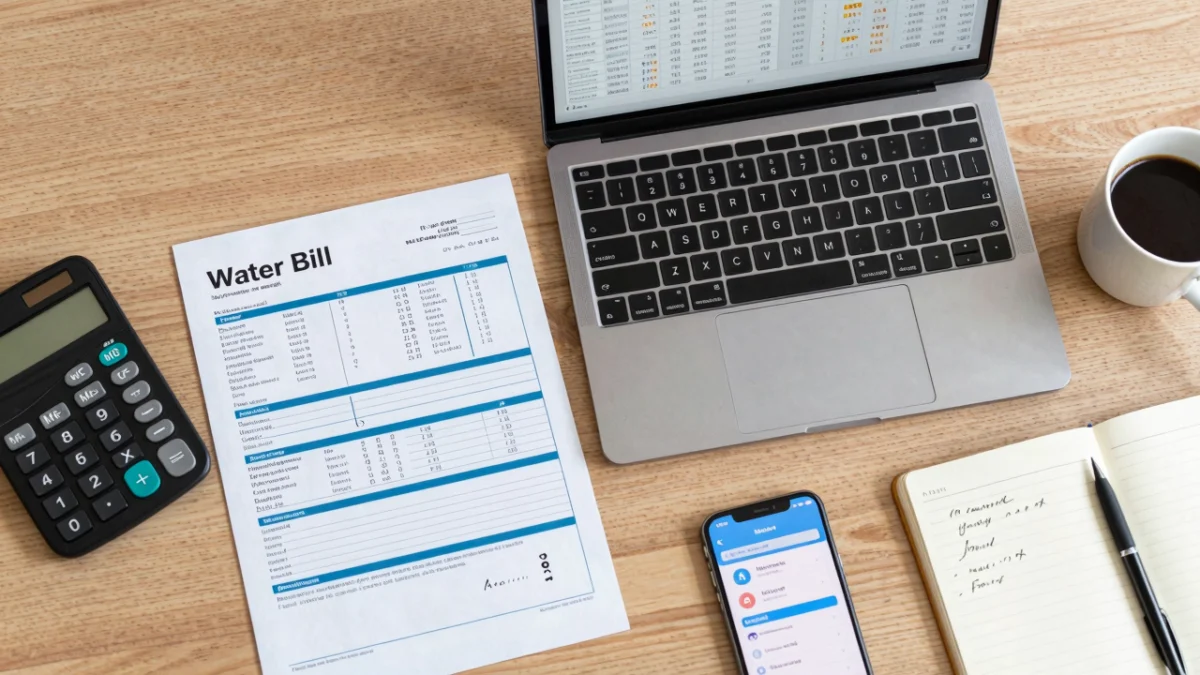
In the modern business landscape, efficiency is the currency of growth. While executives often focus on large-scale investments or revenue-generating activities, the meticulous management of overhead costs—specifically utilities—remains a foundational pillar of sustainable financial health. Whether you are a solo entrepreneur operating from a home office or a mid-sized enterprise managing a manufacturing facility, understanding how to classify, track, and optimize utility expenses is not merely a bookkeeping chore; it is a strategic necessity.
The Foundation: Understanding Utilities Expenses in Business Accounting
At its core, "utilities expense" refers to the essential costs associated with the services required to keep a business operational. These include electricity, water, gas, telecommunications, and waste management. In the lexicon of accounting, these are classified as operating expenses, representing the "cost of doing business."

For many business owners, the utility bill is an afterthought—a recurring charge that is paid and filed away. However, from a tax and financial planning perspective, this is a missed opportunity. Accurate classification of these costs allows business owners to distinguish between routine administrative support (like lighting an office) and direct production overhead (like powering machinery). This distinction is critical when calculating the true Cost of Goods Sold (COGS) and understanding profit margins.
The Chronology of Financial Compliance: Tracking and Reporting
To maintain a pristine financial record, businesses should follow a structured approach to utility management. This lifecycle ensures that every dollar spent is accounted for and optimized:

- Collection: Centralizing all utility invoices, whether digital or paper-based.
- Classification: Assigning each cost to a specific category (e.g., Office Administrative, Manufacturing Overhead, or Selling Expense).
- Recording: Entering these into the accounting system in the period they were incurred (Accrual Basis) or when they are paid (Cash Basis).
- Auditing: Reviewing these records monthly to identify anomalies or billing errors.
- Reconciliation: Ensuring that the amounts reported match the actual consumption and the service agreements.
Neglecting this cycle can lead to significant issues during annual tax filings. For instance, failing to separate personal home office utility usage from professional use can trigger an audit or result in the forfeiture of legitimate tax deductions.
Supporting Data: Categorization and Financial Impact
Effective budgeting requires a granular view of where money is going. The following breakdown illustrates how businesses should approach the categorization of common utility expenses:

| Expense Category | Primary Function | Accounting Treatment |
|---|---|---|
| Administrative Utilities | Office lighting, heating, cooling | Operating Expense (SG&A) |
| Manufacturing Overhead | Machinery power, water for cooling | Cost of Goods Sold (COGS) |
| Selling Utilities | Retail store electricity, Wi-Fi | Operating Expense |
| Home Office Utilities | Proportional business usage | Schedule C (Line 25) |
By segmenting these costs, business owners can identify "cost drivers." For example, if manufacturing utility costs rise disproportionately compared to production volume, it may indicate inefficient machinery or wasted energy resources. Data-driven monitoring transforms a static bill into an actionable business intelligence report.
The Tax Implications: Maximizing Deductions
One of the most significant advantages of meticulous utility tracking is the optimization of tax deductions. The IRS generally allows businesses to deduct "ordinary and necessary" utility expenses. However, the documentation requirements are stringent.

The Home Office Deduction
For remote workers and sole proprietors, the home office deduction requires a precise calculation of the business-use percentage. This is typically derived by dividing the square footage of the dedicated office space by the total square footage of the home. Once this ratio is established, it can be applied to the relevant utility bills. Documentation is paramount here; if the IRS questions a deduction, a spreadsheet detailing the square footage calculation and copies of the itemized utility bills will serve as your primary defense.
Accrual vs. Cash Basis
The timing of your deduction depends on your accounting method. Businesses using accrual accounting should record utility expenses in the period the service was consumed, even if the bill hasn’t been paid yet. Conversely, cash-basis businesses should record the expense at the moment of payment. Consistent adherence to these methods ensures that financial statements accurately reflect the company’s fiscal position.

Implications for Strategic Decision Making
The implications of poor utility management extend beyond tax compliance. Misclassifying utilities can distort your financial ratios, making the business appear more or less profitable than it truly is.
For instance, if manufacturing energy costs are incorrectly lumped into "administrative" expenses, a manager might mistakenly conclude that the back-office is becoming bloated, when in reality, the production line is experiencing energy spikes. Accurate classification provides a clear "source of truth," allowing for smarter budget forecasting and capital allocation.

Implementing Technology to Streamline Operations
Manual tracking is a relic of the past. Today, automation is the standard for high-growth businesses. Expense management software—such as Ramp, Sage, or QuickBooks—can be integrated directly with utility provider portals to capture data in real-time.
Real-Time Monitoring and Automation
Automated systems allow for:

- Automatic Categorization: Using machine learning to identify vendor names and assign them to the correct ledger accounts.
- Anomaly Detection: Setting alerts for unexpected spikes in usage, which could indicate a faulty HVAC system or a leak.
- Digital Storage: Eliminating the need for physical filing cabinets by storing tax-compliant digital receipts in the cloud.
By leveraging these tools, businesses move from a reactive stance—simply paying bills—to a proactive one, where utility costs are actively managed as a variable expense.
Addressing Common Pitfalls: A Solutions Framework
Even with the best intentions, businesses often fall into common traps. Below are the most frequent mistakes and their corresponding solutions:

- The "One-Size-Fits-All" Mistake: Treating all utilities as a single expense line.
- Solution: Utilize sub-accounts to separate electricity, water, gas, and internet to provide better visibility.
- Ignoring Peak Demand Charges: Many industrial utility contracts include "peak demand" fees that can be avoided by staggering machine operation times.
- Solution: Conduct an energy audit to determine if usage can be shifted to off-peak hours.
- Commingling Personal and Business: Using a personal account for business utility payments.
- Solution: Separate business and personal utility accounts entirely. If not possible, use a dedicated business credit card for payments to create a clean audit trail.
- Overlooking Subscription Creep: Paying for internet or communication tiers that exceed current business needs.
- Solution: Conduct a quarterly contract review to ensure you are on the most cost-effective service plan.
Conclusion: Turning Expenses into Efficiency
The management of utility expenses is a testament to the adage that "what gets measured gets managed." By treating utility bills as dynamic financial data points rather than fixed overhead, businesses can unlock significant value.
Through consistent, accurate classification—distinguishing between administrative, manufacturing, and selling utilities—business owners can gain deep insights into their operational efficiency. Combined with modern technological tools that automate tracking and provide real-time reporting, these efforts ensure compliance with tax regulations while identifying tangible cost-saving opportunities.

Ultimately, your approach to utilities is a reflection of your commitment to financial discipline. By building a robust system for tracking, categorizing, and auditing these expenses, you are not only preparing for a stress-free tax season but also building a leaner, more resilient, and more profitable business model. As you look toward the next fiscal year, consider these steps the baseline for your financial strategy: standardize your recording processes, leverage software for real-time visibility, and never stop looking for ways to optimize your consumption. Your bottom line will thank you.
