

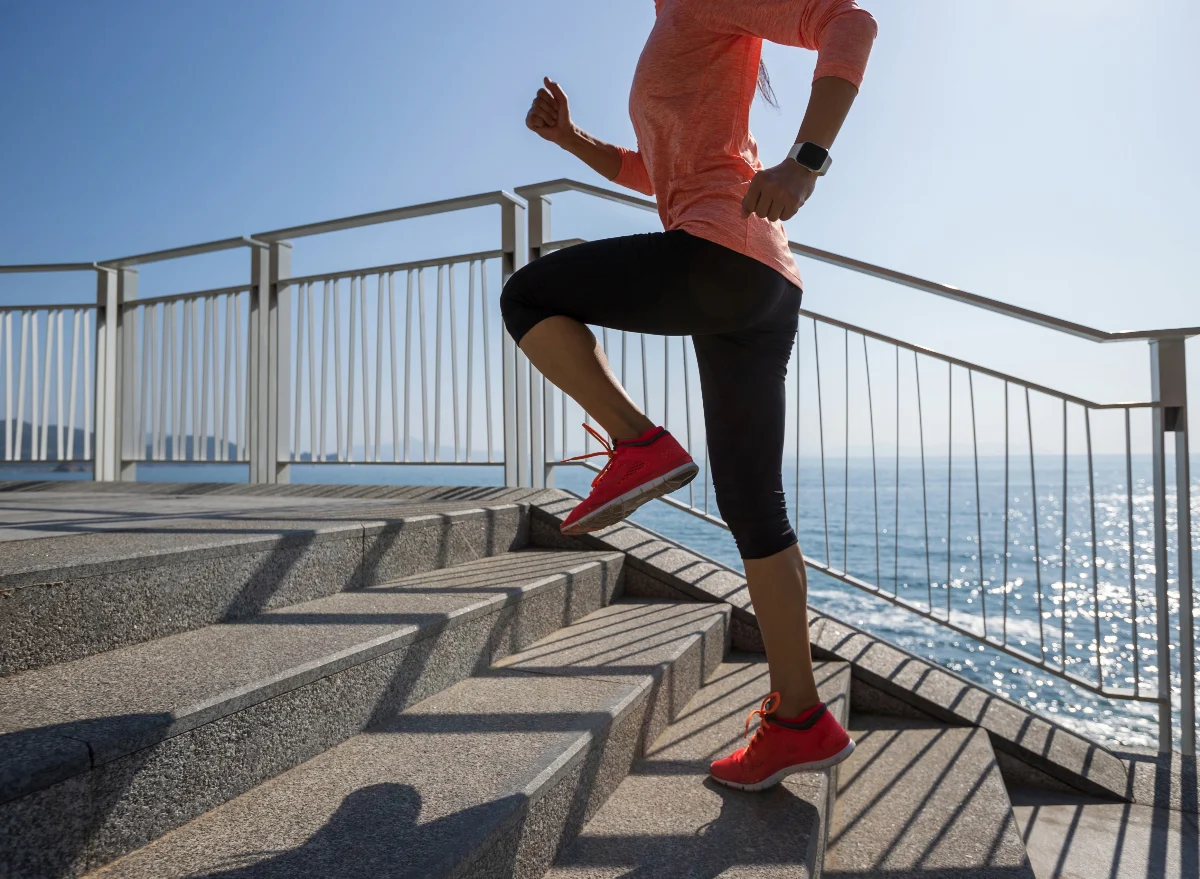
For many adults, the simple act of ascending a flight of stairs serves as a daily litmus test for physical vitality. It is a moment where the body’s lower-body strength, balance, and hip stability are put to the test simultaneously. As we navigate our sixties and beyond, these movements can become increasingly taxing. However, experts emphasize that stair-climbing ability is not a fixed trait—it is a skill that can be rebuilt, strengthened, and preserved through targeted, upright training.
The beauty of focusing on "no-floor" exercises—workouts that keep you on your feet—is that they mirror the functional reality of daily life. Unlike traditional floor-based Pilates or yoga, which are undeniably beneficial, upright training directly correlates to the mechanics of walking up a staircase. By shifting weight, engaging the core, and practicing controlled descents, you are training your body in the exact patterns it needs to remain independent and confident.
The Science of Stair-Climbing Strength
Stair climbing is a sophisticated biomechanical process. It requires a synergy of the quadriceps to drive upward, the glutes to stabilize the pelvis, and the core to maintain an upright posture. When we experience "lingering weakness" in our sixties, it is often not a failure of a single muscle, but a breakdown in this coordinated sequence.
Research published in the Journal of Aging and Physical Activity underscores that lower-body power is one of the strongest predictors of physical longevity. Strengthening these muscles does more than just make stairs feel "less draining"; it builds a reserve of functional power that protects joints and enhances balance. By incorporating specific, standing exercises into your weekly routine, you are effectively "bulletproofing" your lower body against the common hazards of aging, such as reduced stride control and joint fatigue.
A Chronology of Strength: Building the Foundation
To build lasting strength, consistency is the primary driver. It is not about how much weight you lift, but the quality of the movement and the frequency of your practice.
- Phase One (Weeks 1–2): Stability and Awareness. Focus on the Mini-Band Lateral Walk. The goal here is not exhaustion, but activation of the outer hips and glutes, which are essential for stabilizing the knee during the climb.
- Phase Two (Weeks 3–4): Controlled Ascent. Introduce the Box Step-Up. By starting with a lower box or using a sturdy handrail, you allow the body to learn the motor pattern of shifting weight onto a single leg without risking joint strain.
- Phase Three (Weeks 5–6): Isometric Endurance. Implement the Split Squat ISO Hold. This phase trains the muscles to hold tension—the "braking" force needed to descend stairs safely.
- Phase Four (Weeks 7+): Dynamic Power. Integrate the Goblet Box Squat. This movement brings all elements together, teaching you to sit back into your hips and rise with explosive, controlled power.
The Four Pillars of Upright Training
1. Mini-Band Lateral Walk: Mastering Hip Stability
Before you worry about the height of a step, you must address the foundation: your hips. The mini-band lateral walk is the gold standard for strengthening the gluteus medius, a critical muscle that keeps your pelvis level when you are balancing on one leg. If your hips are weak, your knees will inevitably "cave in" during a step-up, leading to discomfort.
- The Technique: Place a small resistance band just above your knees. With a slight athletic bend in your knees, take controlled steps to the side. Keep the steps small—about 6 to 10 inches—to maintain constant tension on the band.
- Why it works: It forces your outer hips to fire, stabilizing the knee joint.
- Target: 2–3 sets of 5–8 steps per side.
2. Box Step-Up: The Functional Gold Standard
The step-up is the most direct simulation of climbing stairs. It requires you to place your entire foot on a surface, shift your center of gravity forward, and drive through the heel.

- The Technique: Start with a low box or step. Place your entire foot on the platform. Keep your chest tall, drive through the lead heel, and rise until your leg is straight. Control the descent by lowering your non-working leg slowly back to the floor.
- Why it works: It builds single-leg confidence, which is vital for preventing stumbles.
- Target: 2–3 sets of 6–10 reps per side.
3. Split Squat ISO Hold: Building Isometric Resilience
Stairs aren’t just about going up; they are about coming down. The "iso hold" (a static hold at the bottom of a movement) builds the endurance needed to support your body weight through the entire range of motion.
- The Technique: Take a split stance (one foot forward, one back). Lower yourself until your front thigh is roughly parallel to the ground (or to a depth that is comfortable). Hold this position, keeping your weight in the front heel.
- Why it works: It trains your muscles to remain active under tension without the repetitive impact of a full lunge.
- Target: 2–3 holds of 15–30 seconds per side.
4. Goblet Box Squat: The Powerhouse Move
The goblet squat, performed with a weight (like a kettlebell or light dumbbell) held at chest height, forces you to keep your spine tall. Adding a box target ensures that you hit a consistent depth every time.
- The Technique: Stand in front of a chair or low box. Hold a weight close to your chest. Keeping your heels planted, sit back until your glutes lightly tap the box. Immediately stand back up, squeezing your glutes at the top.
- Why it works: The weight at the chest acts as a counterbalance, preventing you from leaning too far forward and putting stress on the lower back.
- Target: 2–3 sets of 8–12 reps.
Implications for Long-Term Health
The implications of building this strength go far beyond the staircase. When you strengthen the quads and glutes, you are simultaneously offloading pressure from the lumbar spine and the knee joints. Many people over 60 avoid stairs because of knee pain; ironically, that avoidance leads to muscle atrophy, which causes even more joint pain. By breaking this cycle with these four movements, you are reclaiming your mobility and reducing the risk of falls—a primary health goal for older adults.
Expert Perspective and Safety Considerations
Jarrod Nobbe, a renowned strength and conditioning coach, emphasizes that these exercises should be viewed as "training for life."
"Stairs are not just an obstacle," Nobbe notes. "They are a daily workout. By treating them as such, we can ensure that we remain physically capable of navigating our homes and our world with grace."
Safety Tips:
- Always utilize support: Do not hesitate to use a wall or a sturdy countertop for balance during these exercises.
- Listen to your joints: If a movement causes sharp pain, stop immediately. Discomfort from muscle fatigue is expected; joint pain is a signal to adjust your range of motion or height.
- Consistency over intensity: Aim to perform these moves 2–4 days per week. It is better to do a few perfect repetitions than many sloppy ones.
Conclusion: A Step Toward Freedom
Building stair-climbing strength after 60 is a proactive, empowering process. It requires no specialized gym equipment—just a small band, a box or chair, and a commitment to movement. By integrating these four exercises, you are not just building muscles; you are securing your independence. The next time you face a staircase, you won’t see an obstacle—you’ll see an opportunity to demonstrate the strength you’ve worked to build.
References and Further Reading
- Journal of Aging and Physical Activity: "The Impact of Lower-Body Resistance Training on Functional Independence in Adults 60+."
- PMC/National Institutes of Health: "Clinical Perspectives on Gait Stability and Fall Prevention."
- Geriatric Orthopaedic Surgery & Rehabilitation: "The Role of Eccentric Strength in Stair Navigation."
