

In an era where technology dictates the pace of global progress, Montclair State University is undertaking a radical restructuring of its academic architecture. Under the visionary leadership of Director Liaquat Hossain, the institution’s School of Computing is undergoing a comprehensive metamorphosis designed to dismantle systemic barriers, bolster student retention, and redefine what it means to be a modern, inclusive computing hub. By centralizing disparate programs and prioritizing pedagogical innovation, Montclair State is positioning itself at the vanguard of a movement aimed at democratizing access to high-level technical education.
A Unified Vision: Integrating the Disciplinary Landscape
For years, the various silos of computing education—computer science, cybersecurity, software engineering, data science, and applied mathematics—functioned as autonomous entities scattered across different schools within the university. This fragmentation often created disjointed learning paths for students and hindered interdisciplinary collaboration.
Under the new organizational framework, these disciplines have been consolidated under a single, cohesive School of Computing. This centralization is not merely administrative; it is a strategic maneuver designed to harmonize the curriculum. By bringing these departments under one roof, the school can now synchronize its teaching methodologies, ensuring that students receive a seamless education that bridges the gap between theoretical mathematics and applied programming.
"We’re doing something very exciting, maybe the most innovative in the country or in the world," says Director Liaquat Hossain. "One of the advantages that we have now is that they are all part of one school. We are focusing on completely rethinking our curriculum in stats, mathematics, and programming to connect them."
The Crisis of Retention: Addressing the STEM Dropout Challenge
One of the most pressing challenges in higher education, particularly within STEM (Science, Technology, Engineering, and Mathematics) fields, is the high rate of student attrition. Montclair State is confronting this reality head-on, acknowledging that traditional "gatekeeper" courses—calculus, discrete math, and introductory programming—often serve as obstacles rather than bridges for aspiring technologists.
The data is sobering: across the nation, students from non-elite backgrounds, women, and minority groups are disproportionately likely to withdraw from computing majors. Montclair State is determined to flip this narrative.
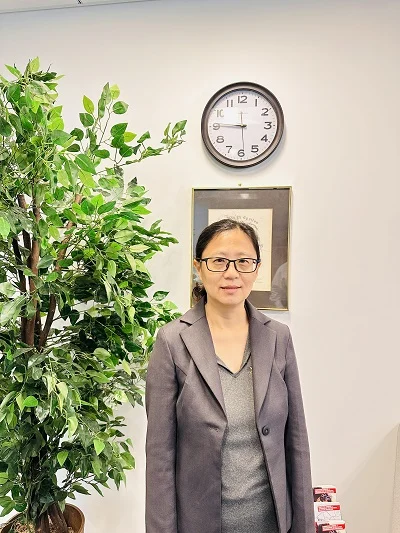
"We recognize that computing is a hard major, and there are some mathematical, statistics, and programming requirements that are necessary for students to succeed," says Professor Michelle Zhu. "We don’t want to give up on any student."
To combat high DFW (Drop, Fail, or Withdrawal) rates, the school has implemented a multi-faceted pedagogical intervention:
- Mandatory Recitation Sessions: Introduced approximately one year ago, these one-hour supplemental sessions are designed to reinforce core lecture concepts through guided, hands-on exercises led by instructor specialists.
- Evidence-Based Curriculum Reform: The faculty is actively reviewing cutting-edge computer-science education research to identify and implement pedagogical strategies that have proven successful in mitigating attrition at other top-tier institutions.
- Holistic Support: The administration is moving beyond the classroom, seeking to understand the socio-economic pressures that lead to student withdrawal and building a support infrastructure that addresses these challenges early in the freshman and sophomore years.
Nurturing Excellence: Faculty Development and Institutional Growth
A school is only as strong as its faculty, and Montclair State has invested heavily in human capital. The School of Computing now boasts 36 faculty members, 95 percent of whom hold Ph.D. degrees from prestigious institutions. However, the school’s ambition extends beyond hiring credentialed experts; it is actively building a culture of inclusion and professional growth.

Director Hossain emphasizes that this growth is coupled with the launch of new, high-demand academic programs. "We are going to offer new programs in cybersecurity, software engineering, and AI," he notes. To ensure these programs remain aligned with industry needs, Hossain is establishing an advisory council composed of external experts. This council serves as a critical sounding board, bridging the gap between academic theory and the rapidly evolving requirements of the global tech workforce.
Community Engagement: Technology as a Social Catalyst
Montclair State’s mission is deeply rooted in service. The university does not view itself as an ivory tower, but rather as an engine for regional and social development. This manifests in the school’s commitment to community-engaged projects, where students and faculty apply their skills to solve real-world problems.
Starting next year, the curriculum will integrate capstone projects centered on systems development and prototyping. These projects are designed to provide tangible benefits to the local community. For example, students might develop digital resources for K-12 schools that lack the infrastructure or funding to support advanced technology curricula.
Furthermore, the school intends to host public town halls to facilitate necessary conversations about the societal impact of technology. "We believe technology has a lot of good things," Hossain explains, "but we also need to put some guardrails and questions on that." By discussing issues like mental health, social media ethics, and digital harm, the school is training students to be not just developers, but responsible architects of the digital future.
Breaking the Mold: A Commitment to Gender Diversity
Perhaps the most ambitious component of the school’s transformation is its commitment to gender parity. Historically, computing has been a male-dominated field, a trend that Montclair State is actively working to reverse. The goal is to reach a target of 40 percent female enrollment in the coming years.
The school’s strategy for achieving this is twofold: attraction and retention.
Attraction Strategies:
- Targeted Outreach: The school is engaging with local high schools to offer courses in computing for social problem-solving, aiming to ignite interest in young girls from diverse social and religious backgrounds.
- Public Discourse: By framing computing as a "community-engaged, systems-prototyping, solution-based" field, the school seeks to shift the perception of the major, making it more appealing to a broader demographic.
Retention Strategies for Women:
- Mentorship and Networking: The university has launched two undergraduate clubs dedicated to women in cybersecurity and technology innovation. Additionally, female faculty are organizing a support network specifically for women in the graduate program.
- Work-Life Integration: Recognizing that many female faculty members balance professional responsibilities with family life, the school is actively adjusting course loads and providing flexible opportunities. "We are trying our best to help them," Zhu says, "to provide opportunities and give their course loads some adjustment, so they will be able to still do the research and take care of their families."
Looking Ahead: The Future of Computing at Montclair State
The changes at Montclair State University are indicative of a broader shift in higher education. As the digital economy continues to expand, universities are being called upon to provide more than just technical training; they are being asked to provide a pathway to success for a diverse student body.
By unifying its programs, prioritizing student support, fostering a inclusive faculty culture, and embedding itself in the local community, Montclair State is creating a blueprint for the future. The school is not just teaching students how to code; it is teaching them how to build solutions that serve humanity.
As Director Hossain and Professor Zhu look toward the future, the sentiment is one of cautious optimism. The challenges—ranging from high attrition rates to deep-seated cultural biases in STEM—are significant, but the school’s systemic, data-driven approach suggests that real, lasting change is possible. In the coming years, Montclair State’s School of Computing will likely serve as a barometer for how mid-sized, mission-driven universities can successfully navigate the complexities of 21st-century technological education.
