

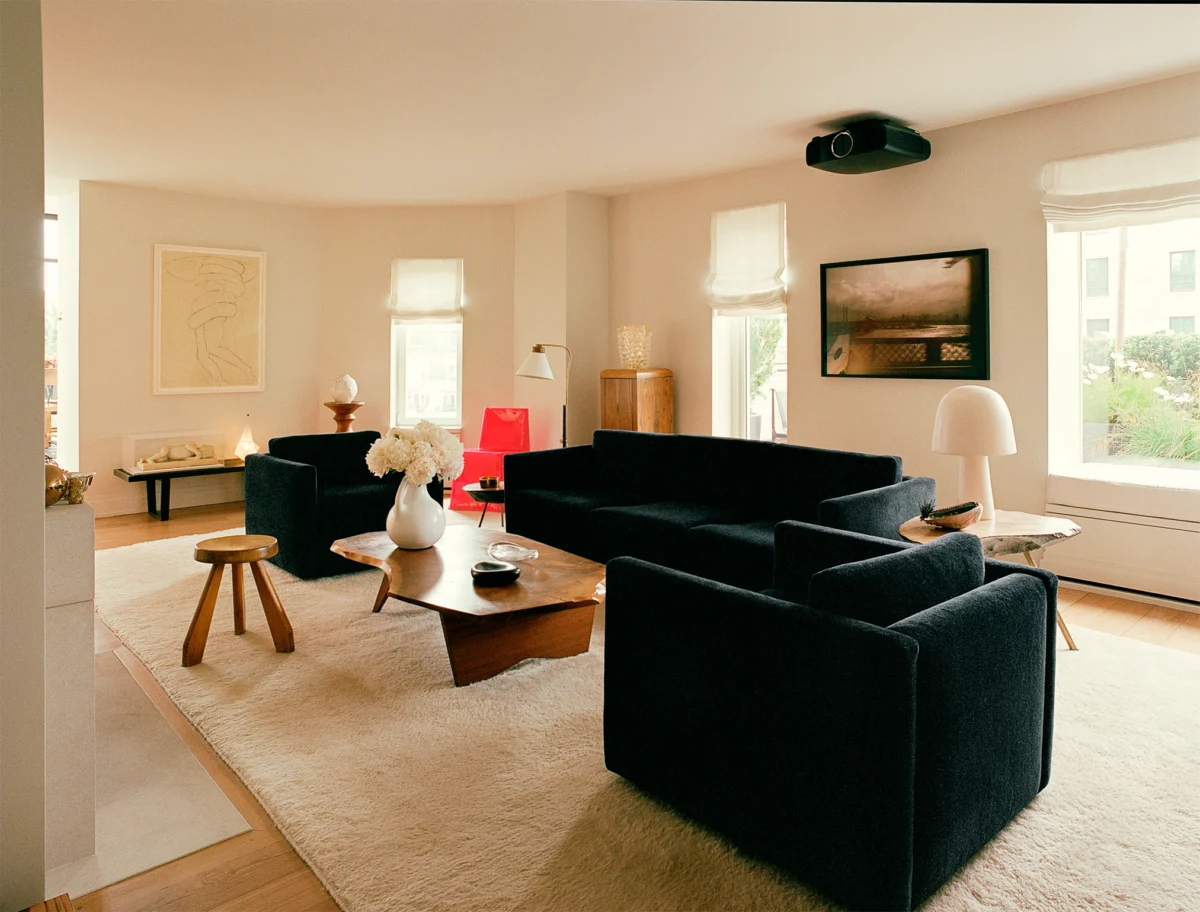
In the high-stakes world of Hollywood, where sprawling, cavernous estates and celebrity compounds often serve as symbols of status, Academy Award-winning actress Julianne Moore has consistently charted a different path. Tucked away in the historic heart of the West Village, Moore—alongside her husband, filmmaker Bart Freundlich—has cultivated a living space that feels less like a trophy property and more like a carefully composed love letter to art, history, and the intimacy of urban life.
As featured in the upcoming November issue of Architectural Digest, Moore’s residence is a testament to the idea that luxury is not defined by square footage, but by the thoughtful curation of one’s surroundings. The duplex, which serves as a sanctuary from the relentless pace of her professional life, is a masterclass in blending prewar architectural bones with a modernist sensibility, housing an impressive collection of contemporary art that reflects the couple’s deep intellectual and aesthetic curiosity.
A Sanctuary in the City: The Main Facts
The residence is situated in a 1920s-era building that originally functioned as a residential hotel. This pedigree is immediately apparent in the structure’s unique layout, which favors human-scale rooms over the grandiose, hollow volumes favored by modern developers.
"My taste is consistent, though it has evolved," Moore told Architectural Digest. "I love modernism. But this apartment is prewar, and you have to address that. It’s not tiny, but it’s not massive, either, so materials and choices become even more important."
The apartment functions as a gallery of sorts, though one that remains deeply personal. The walls are adorned with works by heavyweights such as Louise Bourgeois and Nan Goldin, yet the space retains a sense of warmth. It is a home that balances the rigors of high-end design with the practical realities of everyday life, a harmony achieved through the structural interventions of architectural designer Oliver Freundlich, who is not only a talented professional but also Moore’s brother-in-law.
A Legacy of Living: The Chronology of an Apartment
To understand Moore’s home is to understand the history of the West Village itself. The building, constructed in the roaring 1920s, was designed for a demographic far different from the typical celebrity elite. It was built as a residential hotel, primarily composed of small studios and one-bedroom units.
"Because of that, there’s a diverse group who live here," Moore observed. "Lots of young people in small apartments or older people who have been here for years. It’s super funky."
The evolution of the apartment reflects a multi-generational approach to space. Over the years, as Moore and Freundlich transitioned from their previous town house to this duplex, the goal was never to erase the history of the unit, but to amplify it. The renovation process, led by Oliver Freundlich, focused on creating "breathing room" for the art collection. By stripping back unnecessary ornamentation and focusing on the interplay of light and texture, the design team ensured that the architecture did not compete with the art, but rather provided a sophisticated backdrop for it.
The Art of Curation: Supporting Data
The inventory of the home reads like a curated exhibition at a major contemporary institution. Every corner of the duplex serves a purpose, and every piece of art holds a specific narrative weight.
The Living Room: A Narrative of Modernism
In the living room, the dialogue between the 1920s architecture and contemporary vision is most apparent. Dominating the wall space is Louise Bourgeois’s evocative work on paper, My Secret Life (2007), which provides a psychological anchor for the room. Nearby, Nan Goldin’s New York skyline from bridge (1994) serves as a gritty, romantic homage to the city outside the windows.
The mantelpiece acts as a secondary focal point, a shelf of treasures that includes bronze sculptures by Rogan Gregory, Nancy Pearce, and Lisa Eisner. A subtle nod to domestic tradition is provided by a Tiffany & Co. bowl and tin, which offer a tactile contrast to the sharper lines of the contemporary bronze works.

The Primary Bedroom: Serenity and Stillness
In the primary bedroom, the focus shifts to the personal. The space is anchored by a photograph of the moon taken by Bart Freundlich—a choice that highlights the collaborative and supportive nature of their partnership. The room is designed to facilitate rest and introspection, stripped of the clutter that often plagues city living.
Walls of Influence: The Gallery Spaces
Elsewhere in the home, the collection continues to unfold. A photograph of a person cycling naked by Robin Rice is placed with surprising wit above a ceramic piece by Isabel Rower, creating a whimsical juxtaposition of form and subject matter. David Armstrong’s evocative photography of a tree provides a organic, grounding element, while a large-scale framed photograph by Thomas Struth serves as a bold architectural intervention, effectively "re-drawing" the wall it occupies.
Official Responses and Philosophical Reflections
Moore’s approach to homeownership is informed by a distinct philosophy regarding the transient nature of urban life. While many celebrities view real estate as a volatile asset, Moore views her home as a temporary station in a much longer narrative.
"It feels very serene here," Moore told Architectural Digest. "I wanted a sense of history, of time, of all the people who have lived here before us. We’re just passing through. That’s the magic of New York City."
This sentiment is echoed in the very design of the apartment. By respecting the prewar origins of the building, the couple has ensured that the apartment feels authentic to the West Village. There is no attempt to "Hollywood-ize" the space; instead, there is a commitment to the "funky" energy of the neighborhood. The collaboration with Oliver Freundlich was not merely a functional necessity, but a way to ensure that the changes made were sympathetic to the existing structure.
The Implications of "Small-Scale" Living
The residence of Julianne Moore offers a compelling counter-narrative to the prevailing culture of excess. In an era where "more" is often equated with "better," Moore’s West Village duplex suggests that intellectual and emotional satisfaction is found in curation, history, and restraint.
1. The Death of the "Celebrity Estate"
Moore’s move from a traditional town house to a duplex reflects a broader trend among urbanites: the desire for intimacy over expanse. As property values in cities like New York continue to climb, the shift toward living spaces that prioritize quality of life over raw square footage is likely to influence architectural trends for the next decade.
2. The Role of the Home as a Personal Archive
The inclusion of family-produced art—such as the photograph by her husband—elevates the home from a curated space to a personal archive. It suggests that a home should not be a static showroom of expensive purchases, but a fluid environment that grows and changes with its inhabitants.
3. Sustainability through Preservation
By working within the confines of a 1920s building rather than opting for a new build, Moore and Freundlich are participating in a form of architectural sustainability. The preservation of the building’s original character—the small rooms, the vintage layout—is an act of conservation that rejects the disposable nature of modern construction.
Conclusion
Julianne Moore’s home is a triumph of identity. It is a space that refuses to be defined by the expectations of stardom, choosing instead to be defined by the tastes, relationships, and history of the people who inhabit it. As the November issue of Architectural Digest will undoubtedly showcase, the true power of a home lies in its ability to tell a story. Whether through the bold photography of Thomas Struth or the delicate bronze sculptures on a mantel, Moore has built a sanctuary that acknowledges the past, embraces the present, and remains perfectly, intimately, her own.
In the chaotic, relentless, and beautiful expanse of New York City, Julianne Moore has found a quiet corner where she can exist, create, and—perhaps most importantly—simply be.
