

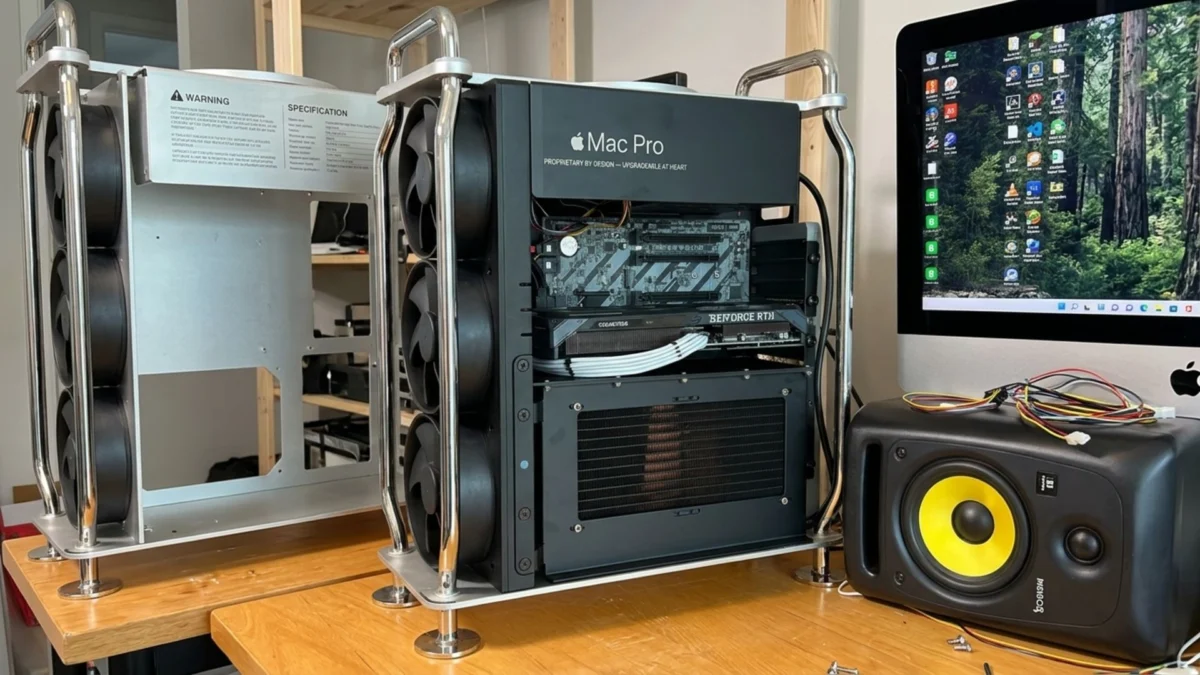
The iconic design of Apple’s 2019 Mac Pro—affectionately nicknamed the "Cheesegrater" by the tech community for its distinctive, lattice-patterned aluminum chassis—remains a pinnacle of industrial aesthetics. It is a masterpiece of thermal engineering and structural rigidity. However, for those who value the enclosure more than the proprietary hardware housed within, a new crowdfunding campaign has emerged with a bold promise: to gut the machine and transform it into a high-end, standard-compliant desktop PC.
Despite the allure of repurposing such a premium piece of hardware, the project currently faces a precarious future. With only a fraction of its funding goal met and time running out, the campaign serves as a case study in the complexities of niche PC modding and the challenges of hardware crowdfunding.
Main Facts: Converting the Mac Pro 7,1
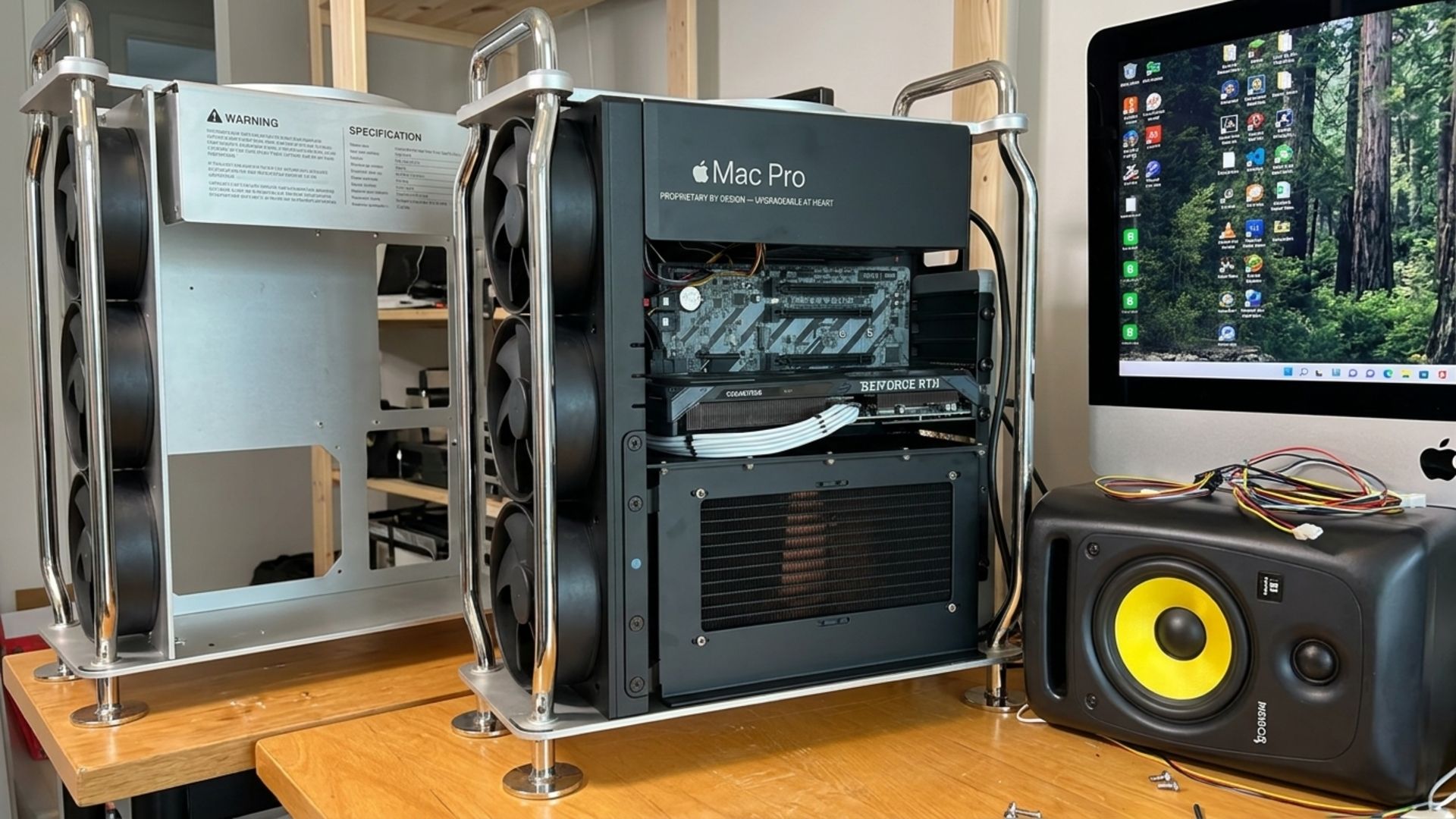
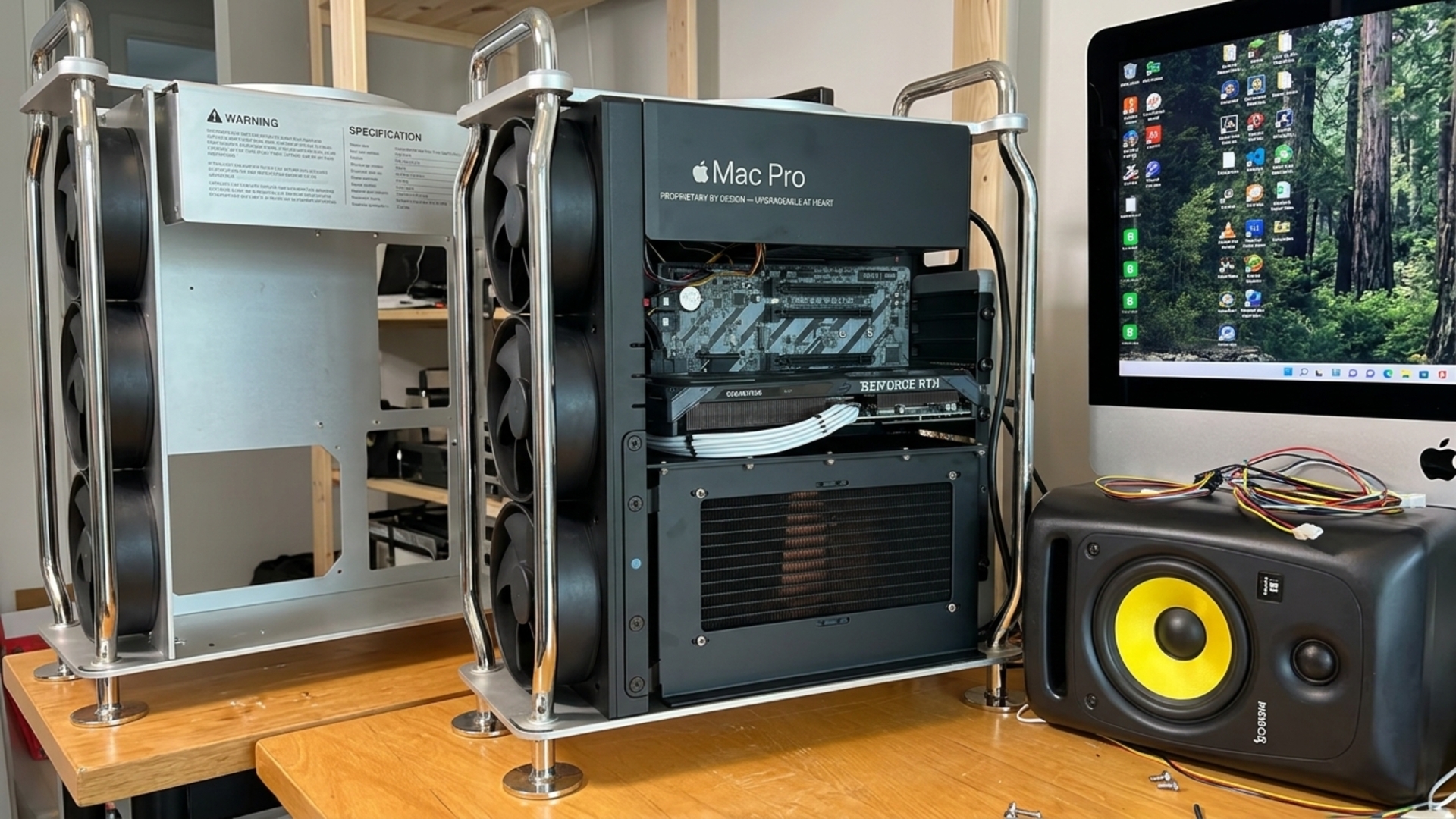
The conversion kit, currently seeking funding on Kickstarter, is designed to bridge the gap between Apple’s closed ecosystem and the open-ended world of custom PC building. The kit aims to allow owners of the 2019 Mac Pro (7,1) to install standard ATX motherboards, conventional power supplies (PSU), and off-the-shelf graphics cards without permanently damaging the chassis.
Key features of the conversion package include:
- Compatibility: Support for standard ATX motherboards.
- Modular Mounting: A proprietary mounting plate system for the motherboard and PSU.
- Thermal Retention: Specialized circuitry to retain the use of Apple’s original, high-performance front intake fans.
- I/O Preservation: A custom interface board that keeps the Mac Pro’s front-facing power button, status LED, and USB-C ports functional.
- Storage Flexibility: Sleds to accommodate two 2.5-inch or 3.5-inch SATA drives.
The project is ambitious, promising to preserve the exterior design while swapping the internal "guts." However, the cost of entry is significant. At a projected retail price of $500, the kit is an investment. Furthermore, the user must already possess a Mac Pro 7,1 chassis—which carries a high resale value on its own—and purchase all the internal PC components (CPU, GPU, RAM, etc.) separately.
Chronology of a Niche Project
The concept of "Mac-to-PC" conversions is not new. For years, hobbyists have used custom brackets and 3D-printed parts to house modern hardware in vintage Power Mac G5 and early Mac Pro towers. The 2019 Mac Pro, however, presents a unique challenge due to its highly integrated internal layout and specialized mounting rails.
- The Rise of the "Cheesegrater" Aesthetic: Since the 2019 launch, the Mac Pro 7,1 has been praised for its superior cooling and modularity. As Apple transitioned to Apple Silicon (M-series chips), the Intel-based 7,1 models became increasingly viewed as candidates for "legacy" hardware status.
- Development Phase: The project creator, operating under the name "Practical Prototyping," spent months developing the custom circuit boards and mechanical brackets required to interface with Apple’s proprietary connectors.
- The Kickstarter Launch: The campaign went live with a funding goal of $10,686, a relatively modest target for a hardware project.
- Current Stagnation: As of the latest report, the campaign has attracted only $7 from a single backer. With 28 days remaining, the project is effectively at a standstill, suggesting a disconnect between the developer’s vision and the potential market demand.
Supporting Data: The Economics of the Conversion
To understand why the project is struggling, one must analyze the total cost of ownership. A 2019 Mac Pro chassis, even stripped of its internals, retains a high value on the secondary market. When combined with the $500 conversion kit and the cost of high-end consumer PC parts—such as an RTX 40-series GPU and a modern motherboard—the total investment can easily exceed the price of a high-end pre-built PC or a custom-built machine in a standard ATX tower.
Technical Constraints
- Dimensions: The kit supports graphics cards up to 308 mm in length and 140 mm in height. While this accommodates many mid-to-high-tier cards, it excludes some of the massive, triple-fan cooling solutions found on top-tier flagship GPUs.
- Cooling: While the kit retains the original front fans, users are limited to air coolers no taller than 140 mm or radiators up to 240 mm. For enthusiasts looking to house a high-TDP processor, these thermal limitations are a significant bottleneck compared to modern PC cases that support 360 mm or 420 mm radiators.
- Skill Barrier: This is not a "plug-and-play" solution. It requires a high degree of technical proficiency in PC building, including cable management, motherboard mounting, and troubleshooting custom-wired components.
Official Responses and Creator Context
The creator of the project has framed the kit as a labor of love for those who "refuse to let the design go to waste." In the project description, they highlight the reversible nature of the installation. Because the kit relies on mounting plates rather than drilling or permanent modifications, a user could theoretically restore the Mac Pro to its original Apple configuration at a later date.
However, the lack of transparency regarding mass production and the technical risks involved may be deterring potential backers. Crowdfunding experts note that hardware projects of this nature often face "production hell"—where the cost of manufacturing custom circuit boards and precision-machined brackets far exceeds initial estimates.
Implications: The Future of Mac Repurposing
The struggle of this Kickstarter campaign highlights a broader shift in the technology sector. As Apple moves further toward unified, non-upgradeable architectures with its M-series chips, the "prosumer" desire for modular, customizable hardware is becoming a fringe interest.
1. The Death of the "Upgradable" Mac
The 2019 Mac Pro was arguably the last of its kind: a machine where components could be swapped and expanded with relative ease. By attempting to force modern PC components into this shell, the project is essentially performing a "transplant" to keep a specific aesthetic alive in an era where design is trending toward smaller, integrated, and non-modular units.
2. The Risks of Hardware Crowdfunding
Potential backers are increasingly wary of hardware crowdfunding campaigns. The disclaimer that "we do not recommend or endorse any crowdfunding project" is vital here. Projects like this are inherently risky; they rely on precision engineering and complex supply chains. If the project fails to meet its funding goal, the creator may never reach the economies of scale needed to make the kit affordable, let alone functional.
3. Sustainability vs. Practicality
There is an environmental argument to be made for this project. Extending the lifecycle of a high-quality aluminum enclosure is objectively more sustainable than discarding it. However, the market for such a niche product is limited. The overlap between "people who own a $5,000+ Mac Pro 7,1" and "people who want to gut it to build a DIY Windows PC" is exceedingly small.
Conclusion: A Visionary but Difficult Path
The Mac Pro 7,1 conversion kit is a fascinating example of hardware preservation. It speaks to the deep emotional connection users have with Apple’s industrial design. Yet, the brutal reality of the marketplace is that most users prefer the convenience of modern, standardized PC cases over the headache of complex, custom-engineered conversions.
Unless the project gains significant traction in the coming weeks, it is likely to serve as a cautionary tale: even the most iconic designs cannot always sustain a business model based on modification. For now, the "Cheesegrater" remains a masterpiece of its time, likely destined to remain as Apple intended, or perhaps to slowly fade into the annals of computing history as a design relic rather than a chassis for the next generation of PC builders.
Disclaimer: All crowdfunding campaigns carry inherent risks, including the possibility of delays, changes, or non-delivery of products. Potential backers should carefully evaluate the details, the creator’s history, and the technical requirements of the build before proceeding. This article is for informational purposes only and does not constitute an endorsement of the aforementioned project.
