

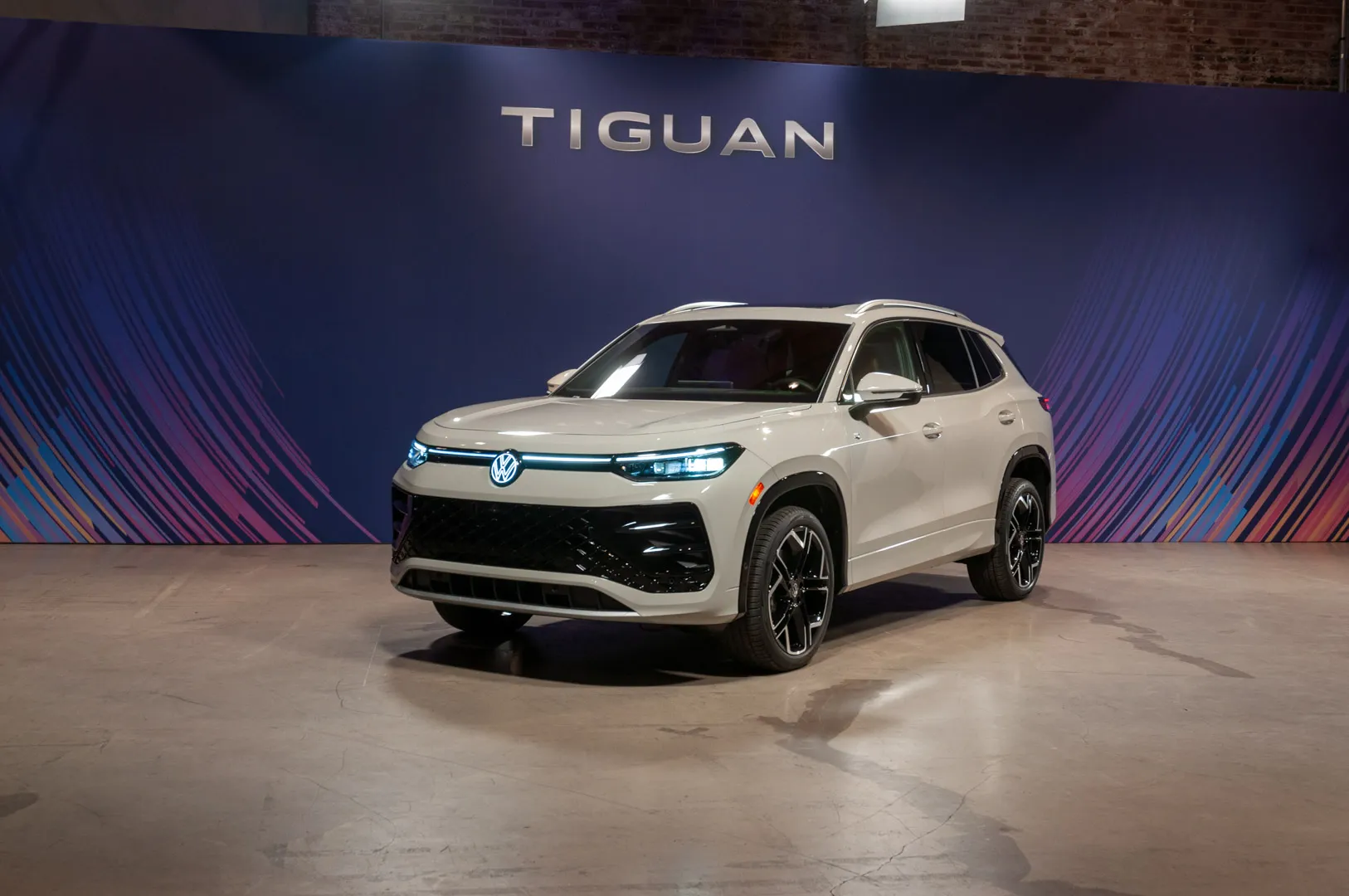
The landscape of the compact SUV segment is notoriously competitive, defined by a constant tug-of-war between practicality, performance, and price. As Volkswagen prepares to roll out its latest iteration of the Tiguan this summer, the German automaker is positioning the 2025 model not merely as a refresh, but as a fundamental re-engineering of its best-selling vehicle. With a starting price of $30,920—a modest $615 increase over the outgoing model—Volkswagen is betting that a blend of weight reduction, increased power, and an upmarket interior overhaul will keep the Tiguan at the forefront of the American market.
The Core Fundamentals: What You Need to Know
The 2025 Volkswagen Tiguan, which made its highly anticipated North American debut at the 2024 Los Angeles Auto Show, arrives with a clear mandate: to offer a more sophisticated driving experience while maintaining the utility that has defined the nameplate for years.
At $30,920 (inclusive of a $1,425 destination fee), the vehicle enters a crowded field. While the price hike is minimal, the value proposition is anchored in the mechanical and aesthetic upgrades. Under the hood, the Tiguan houses a refined 2.0-liter turbocharged four-cylinder engine, producing 201 horsepower. This represents a 17-horsepower jump over the previous generation, providing a noticeable performance boost for daily commuting and highway merging.
The vehicle retains the familiar MQB architecture, though it has been upgraded to the "MQB Evo" platform. This evolution is critical, as it provides the structural flexibility to support future electrified powertrains—a subtle hint from Volkswagen that the current gas-only lineup may be a precursor to a more comprehensive hybrid strategy in the coming years.
A Chronological Progression: From Global Concept to U.S. Arrival
The journey of the 2025 Tiguan is one of global synthesis. Volkswagen first unveiled the new-generation Tiguan for international markets in 2023. European and Asian consumers were treated to a variety of options, including plug-in hybrid variants that emphasized the company’s push toward electrification.

However, the U.S. market has historically required a specific approach to packaging and performance. Throughout 2024, speculation mounted regarding how the "Americanized" version of the Tiguan would differ from its global counterpart. By the time the vehicle took the stage in Los Angeles, the strategy became clear: prioritize the core engine performance and cabin luxury that American buyers demand, while deferring the introduction of a plug-in hybrid option to a later date. This staggered release allows Volkswagen to fine-tune its domestic manufacturing output at its Mexico facility, ensuring that the 2025 model year launch remains smooth and logistically sound.
Engineering and Performance: The Physics of Improvement
One of the most significant engineering achievements in the 2025 Tiguan is its diet. Through the strategic use of high-strength steel and lightweight aluminum components in the suspension, Volkswagen has managed to shed approximately 170 pounds compared to the previous model.
Power-to-Weight Ratio
The reduction in mass, paired with the 201-hp turbo engine, is expected to yield tangible benefits in both fuel economy and acceleration. While Volkswagen is withholding specific EPA figures until closer to the official market launch, the physics of the change are promising. A lighter vehicle requires less energy to move, and when paired with an 8-speed automatic transmission, the powertrain should feel more responsive than the outgoing iteration.
Towing and Capability
For those who view their SUV as a weekend utility vehicle, the Tiguan remains capable. The front-wheel-drive configuration boasts a 1,500-pound towing capacity, while the available all-wheel-drive system bumps that figure up to 1,800 pounds. While not intended for heavy hauling, it provides sufficient capability for small trailers, bike racks, or light recreational gear, maintaining the "Swiss Army Knife" appeal that has made the Tiguan a family favorite.
Inside the Cabin: A Digital and Material Leap
Perhaps the most striking departure from the outgoing Tiguan is the interior. Volkswagen has clearly listened to criticism regarding previous iterations, which were often described as functional but utilitarian. The 2025 model shifts the focus toward an "upmarket" feel.
Material Quality
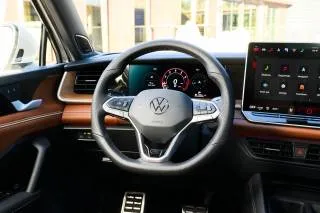
The cabin is now a sensory experience. Available appointments include genuine American walnut wood trim, quilted leather upholstery, and seats that offer both heating and cooling functions. The inclusion of a massage feature suggests that Volkswagen is positioning the Tiguan to compete with entry-level luxury crossovers, bridging the gap between mainstream practicality and premium comfort.
The Tech Interface
The dashboard is dominated by a dual-screen setup. A 10.3-inch digital gauge cluster serves as the driver’s primary interface, while the center stack hosts a massive infotainment display. Standard models come with a 12.9-inch screen, with an optional upgrade to a 15.0-inch unit.
A particularly clever addition is the new rotary dial control. While it handles basic tasks like volume adjustment, it also functions as a multi-mode controller for drive settings and "Atmospheres." These atmospheric settings are designed to curate the cabin environment by synchronizing ambient lighting colors with specific soundscapes, allowing the driver to tailor the car’s mood to their journey.
Strategic Implications: Why the Tiguan Matters
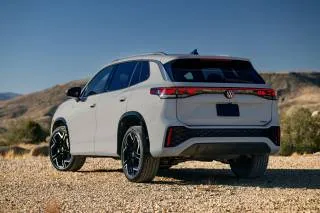
The decision to abandon the third-row seating option in the 2025 model is a bold strategic move. By opting for a slightly longer wheelbase and a shorter rear overhang, Volkswagen has prioritized second-row legroom and cargo space over the cramped, rarely-used third row of the previous model. This suggests that Volkswagen has conducted deep market research indicating that their primary demographic—young families and urban professionals—values interior comfort and cargo utility over the "seven-seat" marketing gimmick.
The Hybrid Question
The absence of the plug-in hybrid (PHEV) powertrain currently available in global markets is the most significant "missing piece" for the American consumer. In a market increasingly concerned with fuel volatility and environmental impact, the lack of an electrified option could be a hurdle. However, Volkswagen’s official communication remains optimistic. By using the MQB Evo platform, they have built the foundation for a hybrid future. The "will they or won’t they" regarding a U.S.-spec hybrid is likely a matter of supply chain readiness and regulatory timing rather than a lack of intent.
The Road Ahead: Manufacturing and Market Outlook
Production of the 2025 Tiguan is firmly established at Volkswagen’s plant in Mexico. This proximity to the U.S. market is vital for maintaining the supply chain efficiency required to keep the starting price near the $30,000 threshold.
As the summer launch approaches, all eyes will be on the final performance metrics and the trim-level pricing strategy. If Volkswagen can successfully bridge the gap between its legacy of reliability and this new, tech-forward, premium-leaning identity, the 2025 Tiguan stands to be a formidable contender.
The SUV market is no longer just about moving people from point A to point B; it is about providing a space that feels like an extension of the home. With the 2025 Tiguan, Volkswagen is attempting to prove that it understands this shift, offering a vehicle that is lighter, faster, and significantly more sophisticated than the one it replaces. Whether the American public embraces this shift—and the omission of the third row—will be the defining story of the year for the German automaker’s North American division.
For now, the 2025 Tiguan represents a calculated evolution: a recognition that to survive in a crowded field, one must refine the fundamentals while embracing the digital future. It is, in every sense, a Tiguan reborn.
