

In the world of automotive maintenance, the sheer variety of fluids required to keep a vehicle operational can be overwhelming for the casual owner. From coolant and brake fluid to motor oil and transmission fluid, the chemical complexity of a modern automobile is a testament to engineering precision. Amidst this array of liquids, a common question arises among DIY mechanics and enthusiasts: Is there a "universal" lubricant? Can one oil handle the demands of the engine, the transmission, and the differential?
The short answer is a definitive "no." Specifically, hypoid gear oil occupies a unique chemical niche that makes it fundamentally incompatible with the needs of an engine or a transmission. Using the wrong fluid in these critical components does not just risk suboptimal performance—it risks catastrophic mechanical failure.
Main Facts: The Nature of Hypoid Gearsets
To understand why specialized oil is required, one must first understand the "hypoid" gearset. Common in pickup trucks, SUVs, and the rear differentials of rear-wheel-drive vehicles, the hypoid gear is a variation of a spiral bevel gear.
Originally referred to as a "hyperboloidal" gear, the design features a pinion gear that meets the ring gear offset from the center. By placing the driveshaft lower than the centerline of the axles, engineers can significantly lower a vehicle’s center of gravity and reduce the size of the "transmission tunnel," thereby freeing up valuable interior cabin floor space.
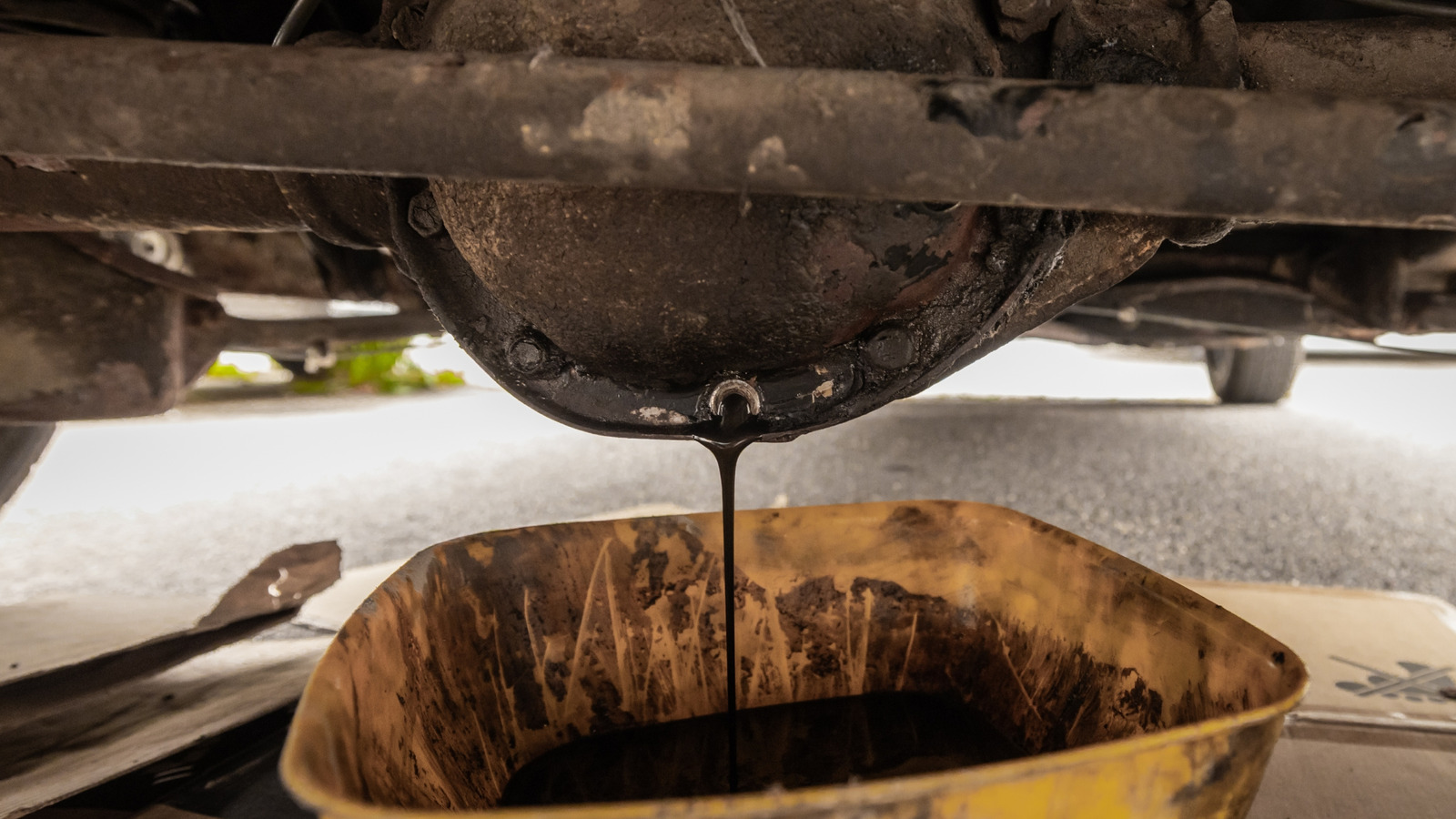
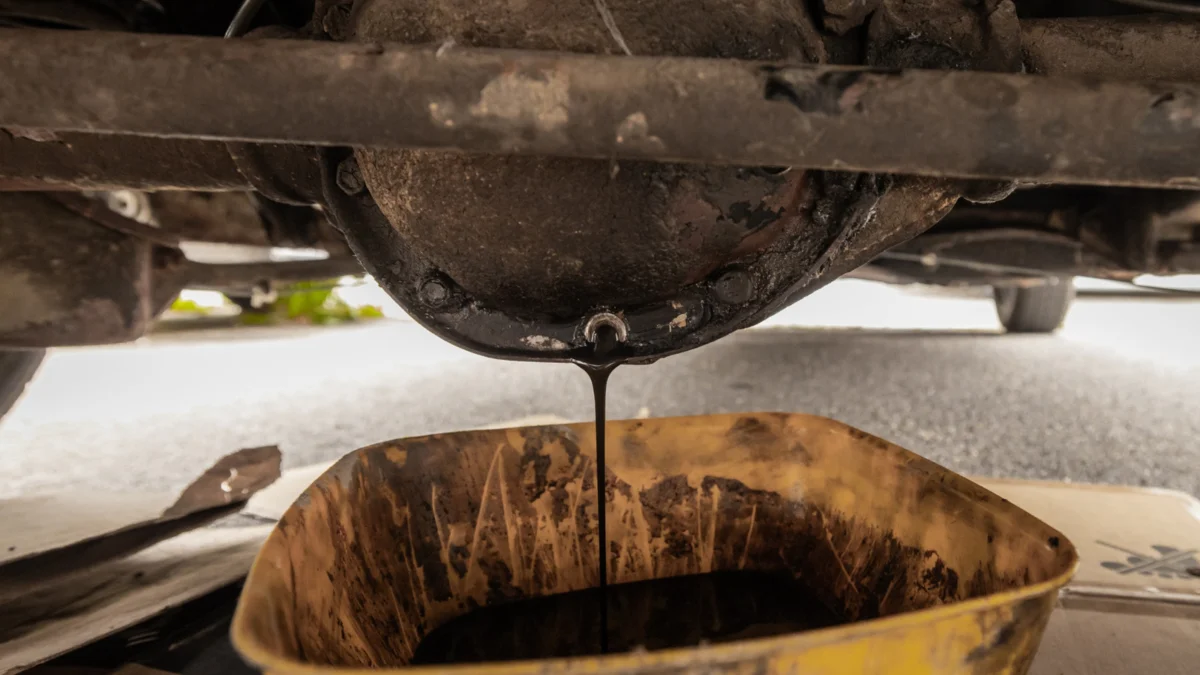
However, this design comes with a significant physical penalty. Because of the offset, the teeth of the hypoid gears do not simply mesh in a rolling motion; they engage with a high-degree of sliding action. This sliding force is so intense that it effectively "squeezes" standard lubricants away from the contact points, leaving metal surfaces vulnerable to "boundary lubrication" conditions—where the protective oil film is broken, leading to metal-on-metal contact. To prevent this, hypoid gear oil must be fortified with extreme pressure (EP) additives. These specialized chemicals, typically categorized under the American Petroleum Institute (API) GL-5 designation, act as a sacrificial shield, chemically reacting with the metal surfaces to prevent welding and galling under immense load.
Chronology: The Evolution of Gear Lubrication Standards
The development of hypoid gearsets in the early 20th century presented a significant challenge for lubrication engineers. Prior to the widespread adoption of hypoid gears, standard mineral oils were often sufficient for simpler gear configurations.
- The 1920s–1930s: As automotive manufacturers began adopting hypoid gears to lower vehicle silhouettes, early lubrication failures were rampant. Standard lubricants lacked the chemical fortitude to withstand the extreme sliding pressures of the new gear designs.
- The 1940s: The military requirements of World War II accelerated the development of EP additives. Researchers discovered that sulfur and phosphorus compounds could provide the necessary protection for hypoid gear teeth, laying the foundation for modern gear oil chemistry.
- The 1970s–1990s: The API (American Petroleum Institute) refined its service classifications. The introduction of GL-4 and GL-5 designations helped categorize oils based on the concentration of EP additives, creating a clear distinction between oils meant for light-duty manual transmissions (GL-4) and heavy-duty hypoid differentials (GL-5).
- The Modern Era: Today, manufacturers have moved toward highly synthetic formulations that provide better thermal stability, but the fundamental chemical requirement—that differential oil must handle extreme pressure—remains unchanged.
Supporting Data: Comparative Chemical Profiles
Understanding why you cannot mix these fluids requires looking at the chemical "cocktail" inside each bottle.
Hypoid Gear Oil vs. Engine Oil
Engine oil is a multitasking fluid designed to handle combustion byproducts, soot, and sludge. Its additives are largely detergent-based, meant to suspend contaminants and neutralize acids produced by the combustion process. It relies on mild anti-wear agents like ZDDP (zinc dialkyl dithiophosphate).
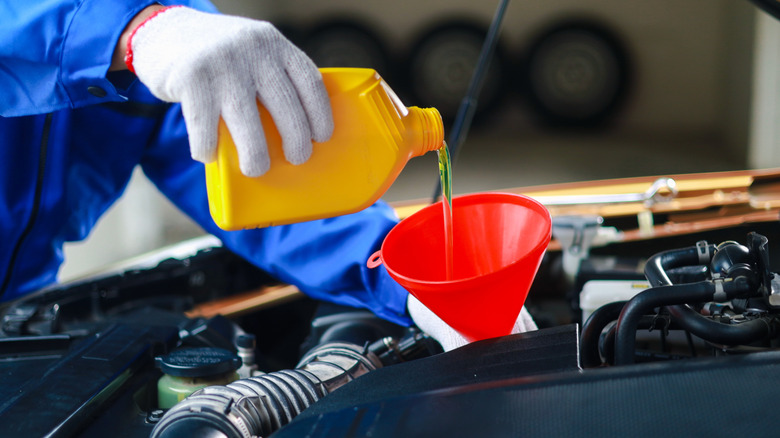
If you put GL-5 hypoid gear oil in an engine, the sulfur-phosphorus EP additives—which are highly effective at protecting steel gears—become chemically aggressive at the high operating temperatures of an internal combustion engine (typically above 200°F). These additives can become corrosive to internal engine components and wreak havoc on emissions systems. Phosphorus, in particular, is a known "poison" to catalytic converters, leading to premature failure and costly repairs.
The Viscosity Confusion
Viscosity scales are another area of confusion. Engine oil uses the SAE J300 scale, while gear oil uses the SAE J306 scale. These two scales are not equivalent. A 90-weight gear oil might feel like a 40-weight engine oil in terms of pure thickness, but the "weight" numbers do not map to each other linearly. Relying on the number on the label is a recipe for disaster.
Official Responses: What the Manufacturers Say
Automotive engineers and fluid manufacturers are unanimous: the "wrong fluid" is the leading cause of premature differential and transmission failure.
In technical bulletins, manufacturers emphasize the "Yellow Metal" issue. GL-5 oils, which are rich in sulfur and phosphorus, are chemically reactive with copper, brass, and bronze. Many manual transmissions contain brass synchronizer rings. When a high-EP GL-5 oil is used in a transmission designed for a milder GL-4 lubricant, the chemical additives slowly "eat" or corrode the brass synchronizers. Over time, this leads to grinding during gear changes and the eventual loss of the ability to shift gears entirely.
While some manufacturers (such as Subaru) have specifically engineered manual transmissions to handle the chemistry of certain GL-5 oils, these are the exception rather than the rule. Using such an oil in a vehicle not explicitly designed for it is a violation of the manufacturer’s warranty and a direct threat to the vehicle’s longevity.
Implications: The High Cost of Convenience
The temptation to reach for the nearest bottle of lubricant is often born of convenience or a misunderstanding of fluid chemistry. However, the implications of using the wrong fluid are far-reaching.
- Mechanical Wear: Using engine oil in a hypoid differential will lead to immediate, rapid wear of the ring and pinion teeth. The gears will heat up, the metal will score, and the differential will begin to "howl" before it eventually seizes.
- Shift Quality: Using a standard GL-5 gear oil in a manual transmission designed for GL-4 can ruin the "feel" of the shifter. The friction-reducing properties of the EP additives can make the synchronizers too slippery, preventing them from slowing the gears down enough to engage smoothly.
- Emissions Damage: Using gear oil in an engine can ruin the catalytic converter, which is often one of the most expensive individual components on a modern vehicle.
- Warranty Voidance: Most manufacturers strictly define the required lubricant specifications in the owner’s manual. Using an unapproved fluid—regardless of its quality—is grounds for the denial of warranty claims regarding drivetrain components.
Conclusion
The chemical engineering behind automotive lubricants is a precise science. Hypoid gear oil is not merely "thick oil"; it is a specialized chemical agent designed to withstand the brutal sliding forces of a differential. Conversely, engine oil and transmission fluid are formulated to handle the distinct, and often delicate, environments of the engine and the gearbox.
When performing vehicle maintenance, the most important rule remains: Consult the owner’s manual. The specifications listed there are not suggestions; they are the result of thousands of hours of testing. Using the correct fluid is the single most effective way to ensure that your vehicle performs reliably for the long haul. When in doubt, leave the "universal" oil myths behind and stick to the chemistry that your specific machine was designed to use.
