

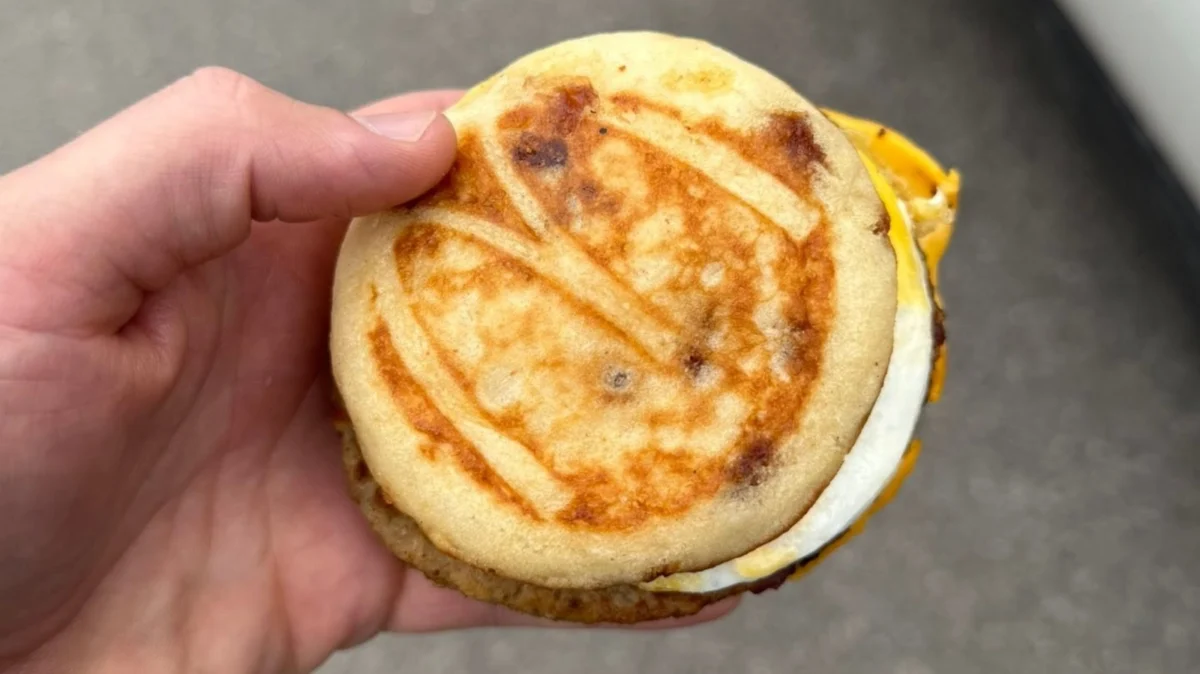
Since its debut in 2003, the McDonald’s McGriddle has occupied a singular space in the American culinary landscape. By defying the traditional boundaries between savory breakfast proteins and sweet, syrup-infused carbohydrates, the sandwich became an instant cult classic. Today, as home cooks look for ways to streamline their morning routines without sacrificing the indulgence of fast-food favorites, the "McGriddle Muffin" hack has emerged as the definitive solution for busy families.
The Main Facts: Decoding the McGriddle Phenomenon
At its core, the appeal of the McGriddle lies in its genius-level simplicity: a folded egg patty, a slice of savory cheese, and a choice of bacon or sausage, all encased between two maple-infused griddle cakes. The sandwich effectively acts as an "all-in-one" breakfast, eliminating the need for side dishes.
The recent trend of transforming this sandwich into a "muffin" format using boxed pancake mix represents a significant shift in how consumers view fast-food imitation. Rather than attempting to recreate the exact, labor-intensive griddle cakes at home—which requires careful temperature control and consistent flipping—home cooks are now opting for the muffin tin method. By pouring a standard pancake batter into a greased muffin tin, layering the cooked proteins and egg directly into the batter, and baking, the result is a handheld, portable breakfast that mirrors the flavor profile of the original while dramatically reducing prep time.
Chronology: A History of the Sweet and Savory Revolution
The journey of the McGriddle is one of McDonald’s most successful product launches in the 21st century.
- 2003: McDonald’s officially introduces the McGriddle to its national menu. It was designed to compete with the growing demand for portable, "on-the-go" breakfast options that didn’t require utensils.
- 2003–2010: The sandwich cements its status as a staple. During this period, the "all-day breakfast" movement begins to gain traction, though it would take several more years for McDonald’s to implement it fully.
- 2015: McDonald’s launches "All-Day Breakfast," allowing customers to purchase McGriddles well past the traditional 10:30 a.m. cutoff. This sparked a wave of social media interest in the chemistry of the syrup-infused bun.
- 2018–2022: The rise of "food hacks" on platforms like TikTok and Instagram leads to the emergence of the "McGriddle-Chick-fil-A" hybrid, where users swap out the standard McDonald’s protein for Chick-fil-A chicken, highlighting the versatility of the griddle cake base.
- 2023–Present: The "Muffin-Tin Revolution." As inflation impacts the cost of dining out, home cooks move toward DIY methods, utilizing boxed pancake mix as the foundational ingredient to mass-produce these sandwiches for weekly meal prep.
Supporting Data: Why the Muffin Method Wins
The transition from a sandwich to a muffin is not merely a stylistic choice; it is grounded in efficiency. Traditional pancake-making requires a significant time investment: heating the griddle, pouring, flipping, and cleaning. In contrast, the muffin method is a "set it and forget it" process.
Efficiency Metrics
- Labor Time: Preparing a traditional pancake sandwich takes approximately 15–20 minutes of active standing time. The muffin method requires roughly 5 minutes of active assembly.
- Volume: A standard muffin tin allows for the creation of 6 to 12 sandwiches simultaneously.
- Ingredient Cost: Utilizing a standard boxed pancake mix (average cost $3.00–$4.00 per box) yields enough batter for 24+ muffins, bringing the per-unit cost significantly lower than the individual purchase price of a fast-food sandwich.
Official Responses and Culinary Perspective
While McDonald’s Corporation has not issued an official statement regarding the "muffin-tin" home-cooking trend, industry analysts suggest that the brand views such hacks as a testament to the strength of their intellectual property. When customers attempt to recreate a product at home, it serves as a form of brand loyalty, keeping the flavor profile top-of-mind even when the consumer chooses to eat at home.
Culinary experts note that the success of the home-cooked version relies heavily on the quality of the "mix-ins." For those attempting the recipe, the recommendation is to use pre-cooked breakfast meats. Because the muffin bake time is relatively short, raw bacon or sausage may not reach a safe internal temperature or achieve the desired crispness before the batter is fully cooked.
Implications: The Future of Meal Prep
The move toward "McGriddle Muffins" signifies a broader change in how Americans approach the "fast-casual" dining experience. As schedules become increasingly demanding, the boundary between "home-cooked" and "fast-food" continues to blur.
Storage and Logistics: A Professional Guide
The long-term viability of these muffins depends on proper storage, which is a critical consideration for meal-prepping professionals.
- Refrigeration: Because these muffins contain eggs and meat, they are highly perishable. They must be stored in airtight containers. If kept at room temperature, the moisture from the pancake batter creates an environment prone to rapid bacterial growth. In a refrigerator, they remain stable for 3–4 days.
- The "Paper Bag" Reheating Hack: If the muffins lose their texture in the fridge, the paper bag method is the industry standard for restoration. By placing the muffin in a paper bag with a damp paper towel and microwaving for 15–20 seconds, the steam trapped in the bag rehydrates the griddle cake, returning it to a "fresh-out-of-the-oven" consistency.
- Freezing Strategy: For long-term storage, the "flash-freeze" method is essential. By placing the muffins on a sheet pan in the freezer for 30 minutes before bagging them, you prevent them from sticking together in a clump. This allows for individual portions to be grabbed throughout the week. Frozen muffins maintain quality for up to three months.
Conclusion: A New Era for the Breakfast Sandwich
The McGriddle’s journey from a revolutionary fast-food item to a staple of the home kitchen demonstrates the enduring power of its flavor profile. By leveraging simple, pantry-ready ingredients like boxed pancake mix, consumers are proving that they don’t need to visit a drive-thru to enjoy a high-quality, convenient breakfast.
Whether you are looking to save money, improve your morning efficiency, or simply enjoy the unique marriage of sweet maple and savory protein, the muffin-tin method offers a reliable, scalable, and delicious path forward. As we move further into an era of domestic culinary innovation, the "McGriddle Muffin" stands as a prime example of how modern consumers are taking control of their food narrative, one muffin tin at a time. By mastering the storage, preparation, and reheating techniques outlined here, any home cook can turn a once-a-week treat into an everyday staple, proving that the best innovations are often those that simplify our lives while satisfying our cravings.
