

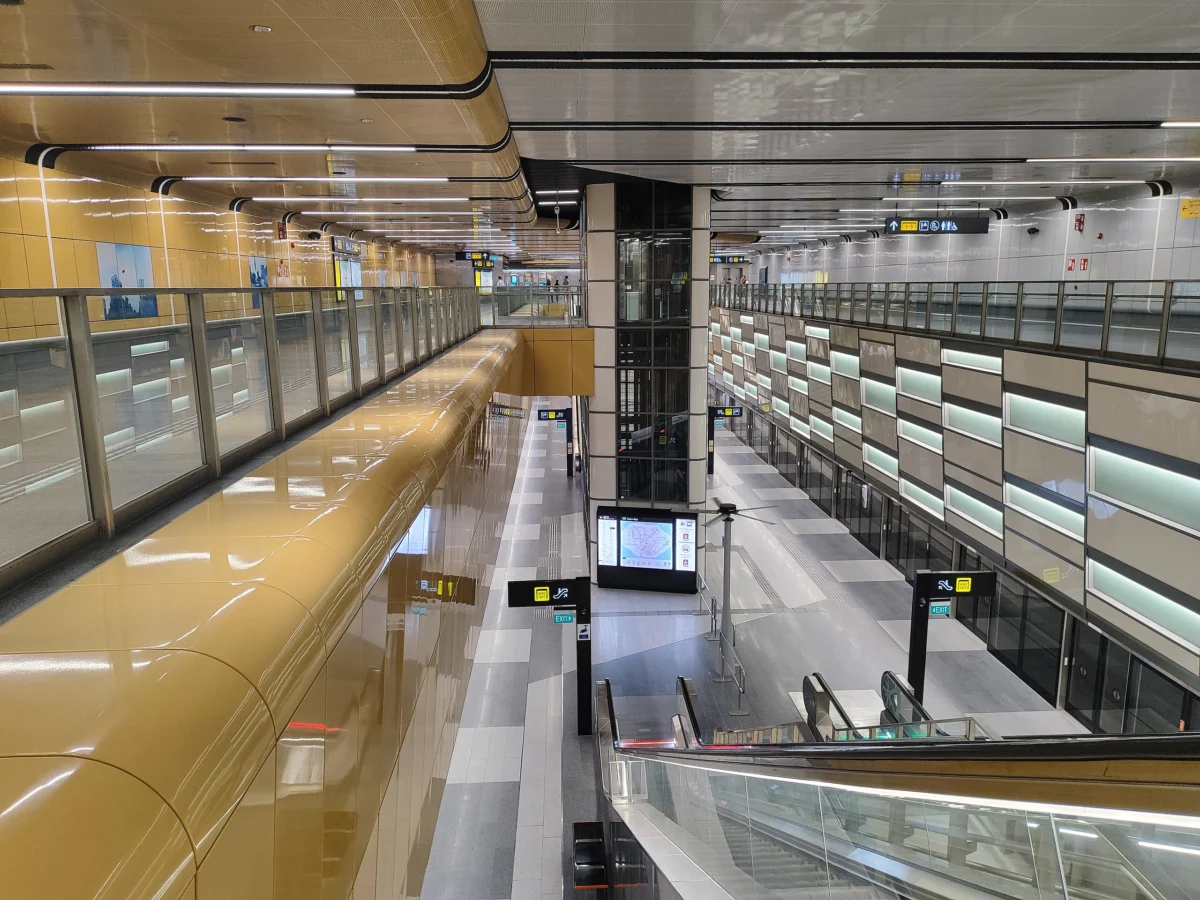
The global landscape of urban mobility underwent a transformative shift in 2024, as cities around the world accelerated investments in high-capacity transit infrastructure. Driven by the twin imperatives of rapid urbanization and the urgent need for sustainable, low-carbon transportation, metropolitan areas added nearly 1,300 kilometers of new metro lines over the past year. This expansion represents a 6 percent growth over the 22,400 kilometers of track already in service at the end of 2023, continuing a blistering pace of development that has seen the total global metro network length more than triple since the turn of the millennium.
Beyond heavy rail, the transit menu was bolstered by 120 kilometers of new light rail and tramway services, alongside 170 kilometers of Bus Rapid Transit (BRT) lanes. While growth was truly global in scope, the narrative of 2024 was undeniably defined by China, which alone accounted for roughly two-thirds of the world’s new transit infrastructure.
2024: A Year of Landmark Openings
The year 2024 was characterized by a mix of massive network build-outs in emerging markets and strategic capacity expansions in established global hubs.

The Chinese Dominance
China continues to operate at an unprecedented scale. With nearly 900 kilometers of new metro lines brought into service across more than a dozen cities, the country’s reach remains unrivaled. Notable highlights included the completion of complex loop lines in Guangzhou and Xi’an, which serve to integrate suburban growth into the dense urban cores. The Pearl River Delta, a sprawling megalopolis encompassing Hong Kong, Shenzhen, and Guangzhou, now boasts 1,667 kilometers of metro track—a system larger than the entire operational rail network of the United States.
Global Highlights
The momentum was not confined to East Asia:
- Riyadh, Saudi Arabia: The city witnessed a historic milestone with the activation of its new metro network. Five of the system’s six lines became operational in December 2024, with the final line following in early 2025, effectively signaling a new era for public transport in the Middle East.
- Europe: Paris saw significant progress, expanding its metro reach in three directions, introducing a new regional rail tunnel, and extending its iconic tramway network. Istanbul continued its aggressive transit build-out, adding capacity to four existing metro lines and unveiling a new tram route.
- India: The nation’s transit revolution reached seven new cities, which received metro service for the first time, reflecting a wider national policy to curb urban congestion.
- Southeast Asia: Ho Chi Minh City successfully inaugurated its first metro line, a major technical and social achievement for the rapidly growing Vietnamese economic hub.
- Australia: Sydney continued to modernize its transit landscape with the opening of a critical new metro rail tunnel and a light rail extension.
2025: The Year of Scaling Up
If 2024 was a year of significant progress, 2025 is shaping up to be a year of exponential growth. Projections indicate that the total length of metro and light rail services opening globally could double the figures recorded in 2024.

The focus remains heavily on Asia, with China planning to add another 1,500 kilometers of service. Cities like Tianjin and Nanjing are slated for massive expansions, aiming for 182 km and 120 km of new track respectively. Meanwhile, India is set to maintain its pace, with Mumbai preparing for 116 kilometers of new lines, and the highly anticipated completion of the Delhi–Meerut Regional Rapid Transit System (RRTS)—an 82-kilometer high-speed artery.
Elsewhere, the Western world is seeing a resurgence of high-profile projects. Toronto is poised to finally open its long-delayed Eglinton Crosstown light rail line, while Montreal’s REM automated light metro is expected to enter a more complete phase of operation. In the United States, the focus shifts to the West Coast, with the first phase of Los Angeles’s Purple Line extension and a major light rail connection linking Seattle to Bellevue across Lake Washington.
The Changing Global Hierarchy
The shift in the geography of global transit is one of the most significant geopolitical trends in infrastructure. In 2000, the leaders in urban rail were the legacy cities of the West: London and New York. Today, those cities have plummeted in the global rankings, not because they have shrunk, but because the pace of growth in Asia has been staggering.

London now ranks 12th globally, while New York City sits at 15th. In contrast, the top 10 list is dominated by Chinese cities, with Chengdu, Hangzhou, Chongqing, Wuhan, and Nanjing all boasting systems that were effectively non-existent at the start of the century.
Comparison of Network Lengths (Selected Regions)
| Region/City | 2000 Length (km) | 2025 Length (km) |
|---|---|---|
| Pearl River Delta | 135 | 1,667 |
| Beijing | 54 | 857 |
| Shanghai | 64 | 842 |
| Moscow | 272 | 540 |
| London | 438 | 454 |
| New York City | 415 | 418 |
This data illustrates a stark reality: while legacy systems are struggling with the high costs of maintenance and incremental expansion, emerging metropolitan regions are building entire, integrated systems from the ground up, designed for the population densities of the 21st century.
Official Perspectives and Challenges
Despite the optimistic projections for 2025, officials and urban planners remain cautious. The "on-time" delivery of transit projects remains the industry’s greatest challenge. Rising costs of raw materials, labor shortages, and complex bureaucratic hurdles have led to delays in cities from Toronto to Berlin.

"The challenge is no longer just funding; it is execution," notes one industry analyst. "We are seeing a move toward automated and driverless systems, which require more rigorous safety testing, often pushing back commissioning dates."
In the United States, the critique remains that the nation is a "major laggard" in transit expansion. Policy experts often cite the prohibitive cost per kilometer and the fragmented nature of transit governance as primary reasons why the U.S. trails behind its international peers. While cities like Seattle and Los Angeles are making headway, the scale of their expansion is dwarfed by the rapid, state-backed construction cycles seen in China or the rapid implementation of regional rail in India.
Implications for the Future
The global transit boom has profound implications for climate policy and urban sustainability. By providing high-capacity alternatives to private car travel, these systems are essential to reducing the carbon footprint of the world’s fastest-growing cities.

1. Urban Density and Real Estate
The expansion of transit lines is fueling a shift in real estate development. "Transit-Oriented Development" (TOD) has become the gold standard for urban planning. In cities like Hong Kong and Tokyo, the proximity to a rail station dictates property values and determines the success of commercial corridors. As new lines open in secondary cities, these areas will likely see a densification of housing and retail, preventing urban sprawl.
2. Economic Integration
The regionalization of transit—best exemplified by the Pearl River Delta’s network—shows that transit is no longer just about moving people within a city, but about connecting entire economic regions. This integration allows for a more fluid labor market and reduces the "friction of distance" that typically hinders economic productivity in large metropolitan areas.
3. Technological Evolution
The shift toward automation is undeniable. From the REM in Montreal to the new lines in Riyadh, the move toward driverless, automated, and high-frequency systems is becoming the norm. This shift not only increases efficiency but also allows for more flexible scheduling, enabling systems to adapt to post-pandemic work patterns where travel demand is less centered on the traditional "9-to-5" commute.

Conclusion
The year 2024 confirmed that the global appetite for rail transit is stronger than ever. While the centers of gravity have shifted toward Asia, the lessons being learned in these rapidly expanding systems—from project management to technology integration—are being exported globally.
As we look toward 2025 and beyond, the focus will likely shift from simply adding "kilometers of track" to optimizing the "passenger experience." The challenge for planners will be to ensure that these massive infrastructure investments lead to equitable access, seamless multi-modal connections, and, ultimately, more livable cities. The era of the metro is not over; it is merely entering a new, more interconnected, and highly sophisticated phase.
