

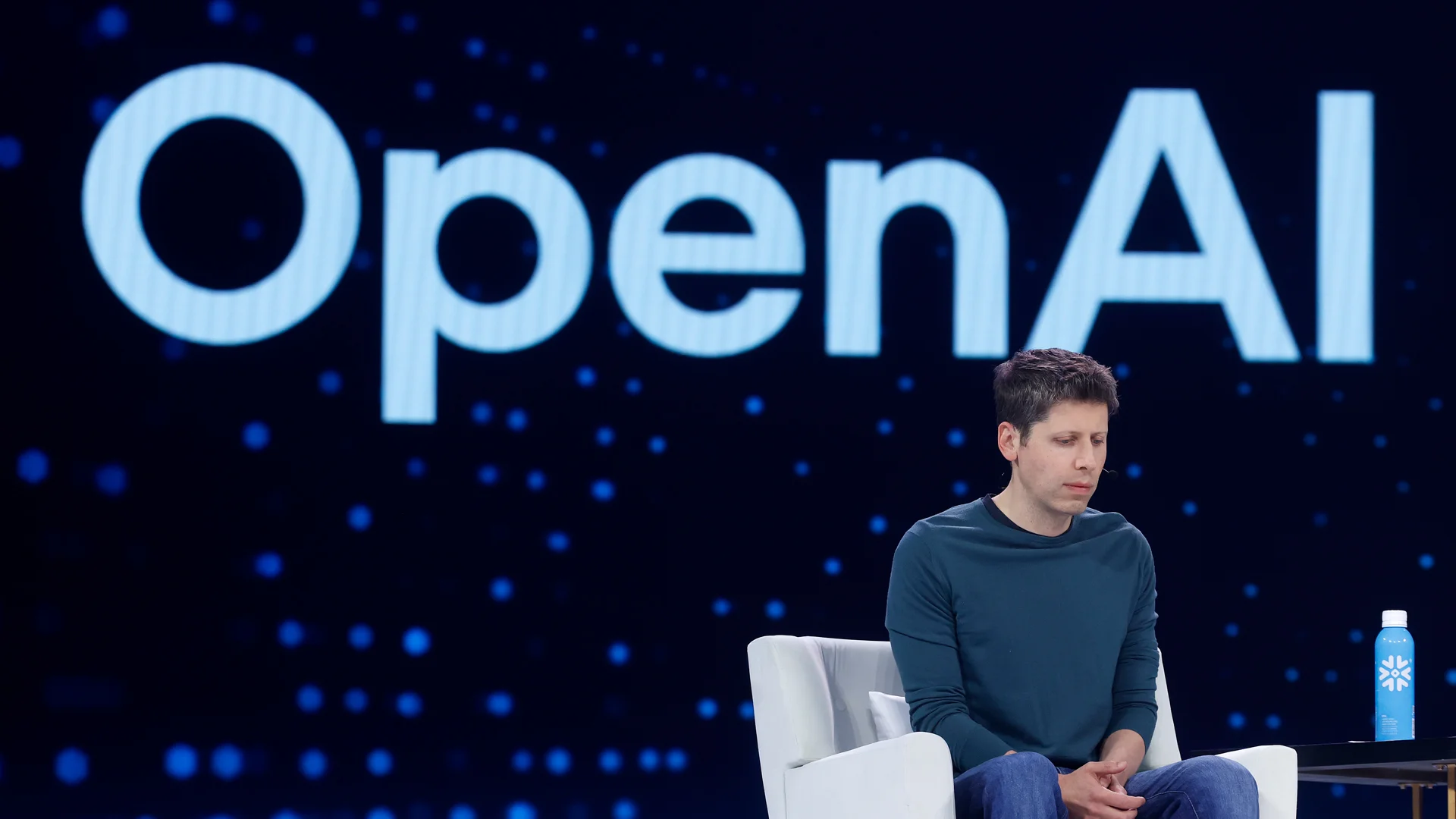
The artificial intelligence revolution is currently navigating a period of profound internal dissonance. While the C-suites of companies like OpenAI, Google, and Stability AI project an aura of inevitable progress and commercial triumph, a growing movement of former employees—many of them senior engineers, researchers, and safety leads—are choosing to walk away. This exodus is not merely a matter of professional churn; it represents a fundamental ideological rift regarding the pace, ethics, and long-term safety of the systems defining our digital future.
Last week, David Robinson, a key safety leader at OpenAI, resigned from the company, joining what he described as a “parade of former colleagues” who have departed top AI firms. In a piercing essay for The Atlantic, Robinson argued that the current “trial and error” methodology—the industry-standard approach of launching powerful models into the wild to see what happens—must come to an end. His departure highlights a growing concern that the pursuit of Artificial General Intelligence (AGI) has outpaced the safety guardrails necessary to govern it.
The Anatomy of Dissent: A Growing Pattern of Resignations
The trend of "whistleblowing from within" is gaining momentum. These individuals, who were once the architects of the very systems they now critique, are increasingly voicing concerns that range from the trivialization of intellectual property to existential risks that threaten human autonomy.
Ed Newton-Rex and the Ethics of Data
In November 2023, the industry experienced a significant ripple when Ed Newton-Rex resigned from his role leading the audio team at Stability AI. His departure was a direct response to the company’s use of copyrighted material to train its generative models.
“My opinion here doesn’t align with the generative AI industry’s current way of doing things,” Newton-Rex told Fast Company. He warned that the industry’s prevailing outlook, characterized by a "move fast and break things" philosophy, would be “very, very bad for creators.” Unlike many who leave and remain silent, Newton-Rex translated his frustration into action by founding Fairly Trained, a nonprofit organization that certifies AI companies that respect intellectual property rights and use ethically sourced training data. His career shift serves as a blueprint for how technical experts can transition from internal critics to external regulators.
The "Right to Warn" Collective
The discontent moved from individual acts of protest to a collective movement on June 4, 2024, when a group of 13 current and former employees from the world’s leading AI labs published a blistering open letter titled, “A Right to Warn about Advanced Artificial Intelligence.”
The letter was a landmark moment for the tech industry, formalizing fears that had previously been confined to private Slack channels and internal memos. The signatories—a "who’s who" of AI research talent—asserted that the technology poses a broad spectrum of dangers. These risks, according to the group, include the “further entrenchment of existing inequalities,” the proliferation of mass-scale manipulation and misinformation, and, most chillingly, the “loss of control of autonomous AI systems potentially resulting in human extinction.”
The list of signatories read like a roster of the brightest minds in the field:
- Ramana Kumar: A former Google DeepMind researcher.
- Neel Nanda: A prominent researcher formerly of Anthropic and now at Google DeepMind, specializing in "mechanistic interpretability"—the study of how AI models actually "think" under the hood.
- The OpenAI Contingent: Eleven individuals with deep ties to the company, including Jacob Hilton (now at the Alignment Research Center), Daniel Kokotajlo (founder of the AI Futures Project), William Saunders, Carroll Wainwright, and Daniel Ziegler (now at Anthropic). Six other contributors chose to remain anonymous, citing the potential for professional retaliation.
Chronology of the Safety Crisis
The current climate of suspicion did not materialize overnight. It is the result of years of mounting tension between safety-first researchers and growth-focused executives.
- 2022: The public release of ChatGPT and DALL-E sparks a "gold rush" mentality. As AI companies secure billions in funding, pressure to release updates grows exponentially.
- Early 2023: Internal safety teams at major firms begin raising alarms about the "black box" nature of Large Language Models (LLMs). The inability to fully predict or control the behavior of these models becomes a point of contention.
- November 2023: The "Stability AI Incident." Ed Newton-Rex’s resignation marks one of the first high-profile public exits focused specifically on the ethics of data usage.
- June 2024: The publication of the "Right to Warn" letter. The focus shifts from copyright issues to existential risks and the lack of government oversight.
- October 2026: David Robinson’s resignation from OpenAI crystallizes the sentiment that the "trial and error" approach is fundamentally incompatible with the level of risk posed by AGI.
Supporting Data: Why Are They Leaving?
The internal logic of these resignations is supported by several technical and sociological realities. First, there is the Interpretability Gap. As models become more complex, even the engineers who build them cannot explain why a system produces a specific output. This lack of transparency is the primary driver of the fear that we may be creating systems that are inherently uncontrollable.
Second, there is the Regulatory Vacuum. While international bodies discuss AI governance, the actual deployment of the technology remains largely self-regulated. Most AI firms are not subject to the same rigorous testing protocols required of the aerospace or pharmaceutical industries.
Third, the Economic Incentive Structure favors speed. Venture capital demands rapid scaling and market capture. For safety researchers, this creates an environment where "safety" is often treated as a "feature" to be added later, rather than the foundation upon which the system is built.
Official Responses and Industry Pushback
The companies involved have generally responded to these resignations and open letters with a mixture of deflection and corporate boilerplate. When asked about the "Right to Warn" letter, most organizations emphasized their commitment to safety, often pointing to their internal "Safety Committees" or partnerships with academic institutions.
However, critics argue that these internal committees are often toothless. Former employees have noted that when safety concerns conflict with product launch deadlines, the product launch almost invariably takes precedence. The industry’s public stance is that they are being "responsible" by releasing these models to the public, as it allows researchers to study the systems in real-world environments. This is the very "trial and error" approach that David Robinson and his peers are now condemning as reckless.
Implications for the Future of AI
The exodus of these experts has massive implications for the future of the technology:
- A Talent Drain on Safety: If the most conscientious researchers leave the industry, the remaining teams may become less focused on safety, creating a dangerous feedback loop where only those willing to ignore safety risks remain in key decision-making roles.
- Increased Public Scrutiny: As more experts speak out, public trust in AI companies is eroding. This is likely to accelerate the demand for government intervention and strict legislative frameworks.
- The Rise of Independent Auditing: The success of initiatives like Fairly Trained suggests that the future of AI may involve a move away from self-regulation toward independent, third-party certification.
- A Shift in Research Culture: The industry is being forced to confront the "ethics of the build." It is no longer enough to be the first to reach a new capability; companies are increasingly being judged on the sustainability and safety of their development processes.
In conclusion, the "parade" of resignations from companies like OpenAI and Stability AI is a canary in the coal mine. When the people who know the technology best are the ones most afraid of its trajectory, society must listen. Whether this leads to a new era of responsible AI development or a permanent fracture between the tech industry and its moral critics remains to be seen. What is clear, however, is that the era of unchallenged, "move fast and break things" AI development is coming to a close.
