

This story was originally published by Yale E360 and is reproduced here as part of the Climate Desk collaboration.
Niku Argane’s farm sits on a precarious, steep hillside in the Gurage Zone of central Ethiopia. For generations, this land served as the lifeblood of his family, providing ample harvests of barley and potatoes—enough to feed his wife and four children, with a surplus to trade in the local market. Today, however, the landscape tells a different story. Years of unchecked flooding have carved jagged, deep gullies into the earth, while relentless drought has rendered the remaining soil stubborn and difficult to cultivate.
“We have never stopped farming,” the 32-year-old says, gesturing toward the parched rows of his Ambele Kebele farm. “But our production has declined sharply because of land degradation. The soil is simply not what it once was.”
Argane’s struggle is a microcosm of a national crisis. Over the last century, Ethiopia has seen its once-verdant forests nearly eradicated, cleared away to make room for expanding agriculture, livestock grazing, and the insatiable demand for fuel. This massive loss of tree cover has stripped the land of its natural defenses, leaving fertile topsoil vulnerable to the wind and torrential rain. Now, this historical damage is being compounded by the unpredictable, volatile hand of climate change. Ethiopia stands as one of the countries most vulnerable to these shifts, trapped in a cycle where heavier downpours wash away depleted soils, while intense, prolonged droughts—exacerbated by the lack of cooling shade—turn the earth to dust.
The Cost of a Barren Earth
The economic and humanitarian toll of this degradation is staggering. Experts estimate that Ethiopia loses approximately $4.3 billion annually due to diminished harvests and the resulting drop in farm income. Because more than 100 million Ethiopians depend directly on the land for their survival, the environmental decay is a direct threat to national stability.
Climate-driven shocks have become a primary engine of acute hunger. In 2024 alone, an estimated 15.8 million Ethiopians—roughly 12 percent of the population—required urgent food assistance. As the climate becomes more erratic, the thin line between subsistence and famine grows ever thinner, making the restoration of Ethiopia’s landscape not merely an ecological aspiration, but a national security imperative.
A Chronology of Decline and Renewal
To understand the current "Green Legacy," one must look at the trajectory of the 20th century. In the early 1900s, an estimated 35 to 40 percent of Ethiopia was cloaked in lush, productive forests. The highlands were characterized by cool, fertile soils protected by a thick canopy. As the population surged and settlement patterns shifted, the forest fell. By 1989, estimates suggested that forest cover had plummeted to less than 3 percent. During that same period, the highlands were shedding nearly 1 billion metric tons of topsoil every year, effectively flushing the country’s agricultural future into its river systems.
The pivot toward restoration began in the wake of the catastrophic famines of the 1970s and 80s. Recognizing that the land could no longer support the population, the government—backed by international donors—began experimenting with soil and water conservation. Early efforts focused on excluding livestock from exhausted grazing lands, building rudimentary terraces, and installing "check dams"—small barriers made of rocks and logs designed to slow the rush of rainwater during storms.
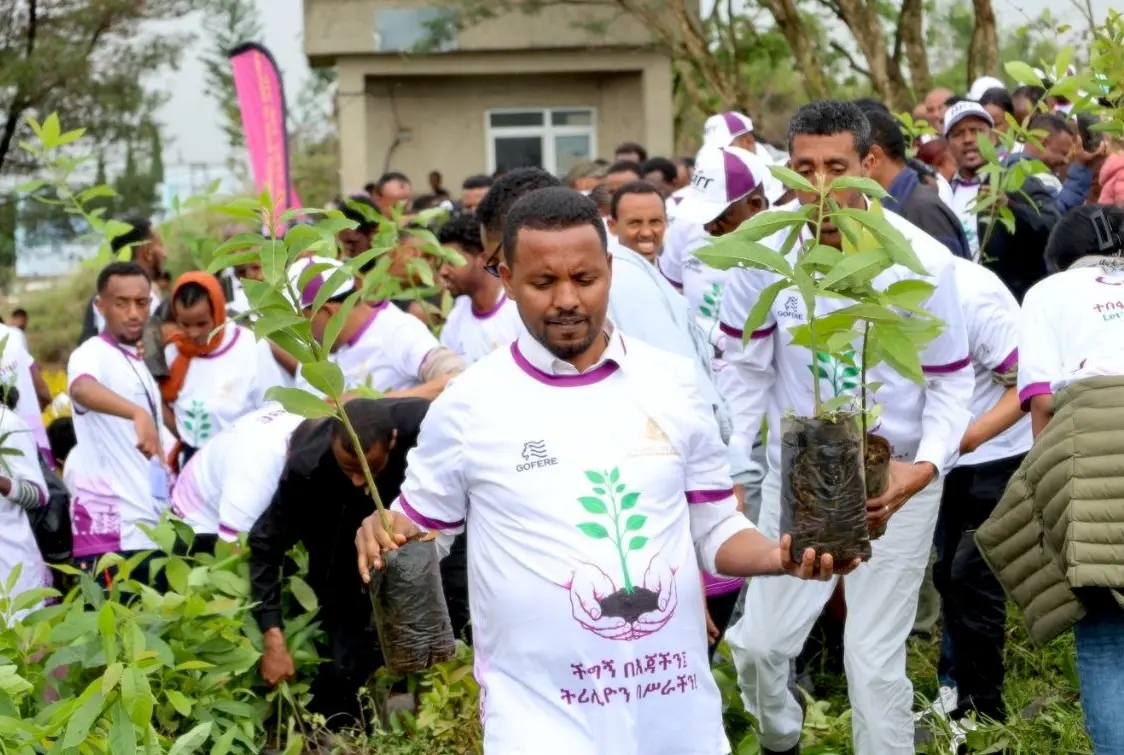
By the 2000s, these localized experiments began to coalesce into a broader strategy. However, it was not until 2019 that the effort was truly supercharged. The launch of the "Green Legacy Initiative" transformed environmental restoration from a series of disjointed projects into a nationwide movement. By mobilizing millions of public servants, students, religious leaders, and farmers, the government turned tree planting into a civic duty, providing free seedlings and setting ambitious, high-profile targets.
Supporting Data: The Scale of the Green Legacy
The numbers behind the Green Legacy Initiative are, by any metric, record-breaking. In the last seven years, Ethiopians have planted more than 47 billion seedlings. The campaign aims to reach 50 billion by 2030. In August 2024 alone, a government-led mobilization saw 26.6 million citizens plant 800 million seedlings in a single 24-hour period.
The government reports suggest that this effort is yielding tangible results. National forest cover has reportedly climbed from 17.2 percent in 2019 to 23.6 percent in 2023. Perhaps most significantly, the rate of deforestation has slowed drastically: between 2013 and 2023, the annual loss of forest dropped from 350 square miles to roughly 100 square miles.
Beyond the raw data, the ecological recovery is visible in places like the Abijata-Shalla National Park. By reintroducing native grasses and trees, authorities have seen water tables rise and lakes refill. This influx of water has triggered a secondary ripple effect: the return of fish, the arrival of bird species like cormorants and African darters, and the expansion of Grant’s gazelles and wild dog populations into areas where they had been absent for decades.
Official Responses and Expert Skepticism
The sheer scale of the initiative has drawn both international praise and rigorous academic scrutiny. Aad Kessler, a researcher at Wageningen University in the Netherlands, notes that while reforestation is notoriously difficult and prone to failure, the sheer volume of Ethiopia’s project provides a buffer. “It almost always fails,” Kessler says, “but this is so big that even if 30 percent of the trees survive, it’s still huge.”
However, not all experts are convinced that planting numbers is the same as growing forests. Emiru Birhane Hizikias, an Ethiopian restoration ecologist at Norway’s Nord University, warns that the focus on "planting" sometimes ignores the necessity of "nurturing." He argues that the political pressure to meet massive numerical targets can lead to a "quantity over quality" approach. "You can’t expect a baby to grow if you don’t care for it," Hizikias says. "That is how some of the planting is being done."
Defenders of the program, such as Abreham Berta Aneseyee of Wolkite University, argue that such critiques overlook the institutional support now in place. Aneseyee, who advises the Ministry of Agriculture, points out that government experts are working on the ground to educate farmers on "plantation practices"—teaching them about appropriate soil depth, the right species for specific microclimates, and the integration of water-trapping techniques like bunds and half-moon ditches.
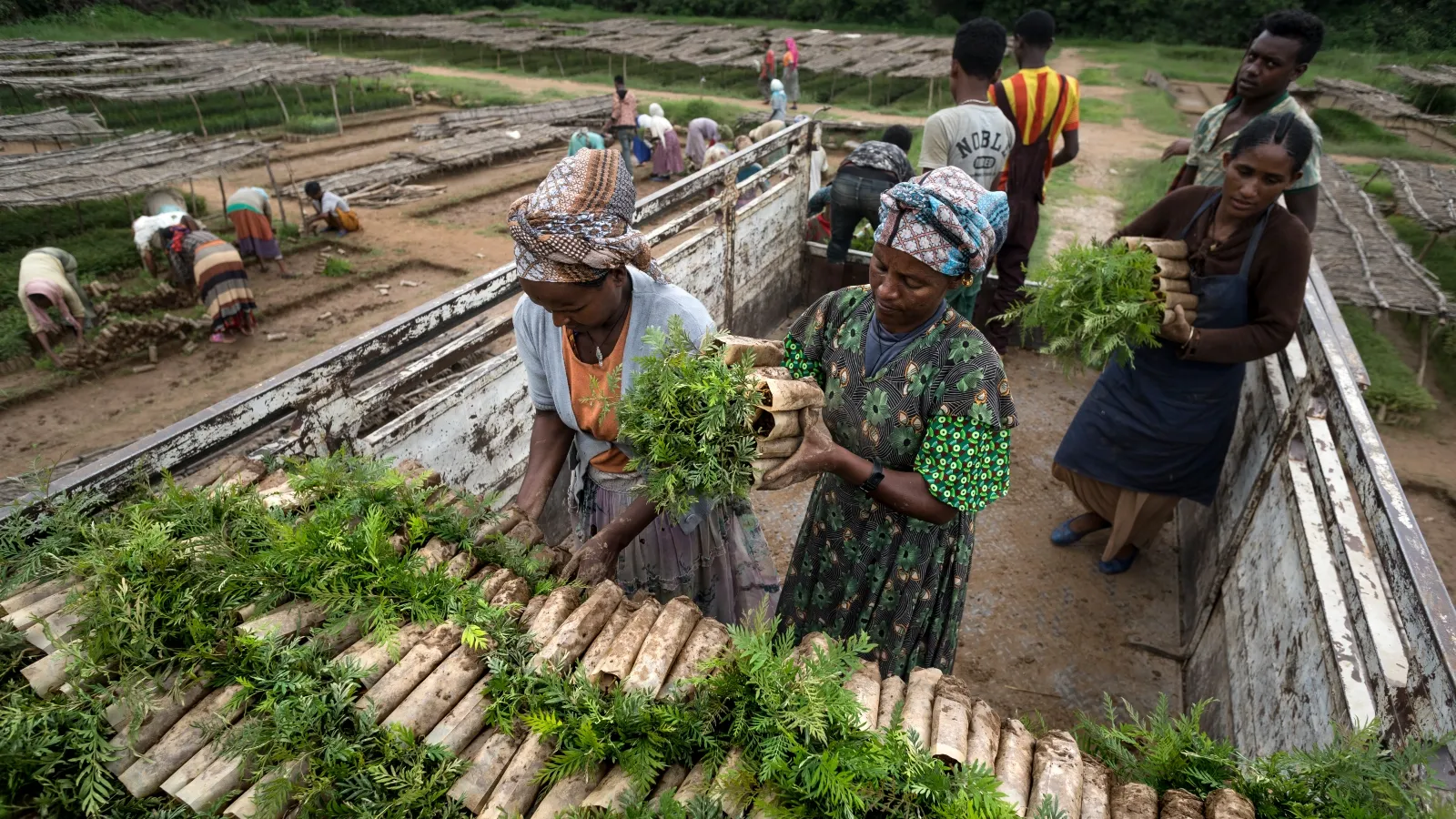
Evidence supports this more nuanced approach. A 2026 study of 44,500 seedlings in southern Ethiopia revealed an 80 percent survival rate, particularly in areas where planters received specific training and utilized wet-season planting cycles.
The Implications of a Changing Climate
The greatest threat to Ethiopia’s green dream is the changing climate itself. The Intergovernmental Panel on Climate Change (IPCC) projects that East Africa will face more frequent and intense rainfall, which, paradoxically, can lead to more landslides and soil erosion if the vegetation hasn’t yet established a firm root system.
Conversely, the region is also subject to the whims of El Niño. The Famine Early Warning Systems Network recently linked El Niño-induced weather patterns to some of the driest June and July months on record for parts of Ethiopia. Farmers like 65-year-old Belayneh Mamo, from the Amhara region, now find their planting schedules completely disrupted. "The delays affect the seedlings, our crops, and the availability of animal feed," Mamo says.
A Path Toward Sustainability
Despite the hurdles, the success stories are beginning to manifest in the fields of individual farmers. Niku Argane has integrated his own planting with the national initiative, incorporating fodder, fruit trees, and grasses into his agricultural cycle. His results are promising: his barley yield has surged from 1,800 pounds per acre to 3,200, and his livestock are healthier than they have been in years.
As Ethiopia prepares to host the U.N. climate conference next year, it will be under a global spotlight. The nation is attempting to prove that a low-income country, through sheer political will and mass public participation, can reverse the tide of ecological collapse.
"Restoring degraded land isn’t just about protecting the environment," Argane concludes, looking over his greening hillside. "It’s about making life better for my family and my community." Whether the Green Legacy Initiative will survive the test of time and climate change remains to be seen, but for millions of Ethiopians, the act of putting a seedling into the mud is a vital, necessary vote for a future that is finally beginning to look a little greener.
