

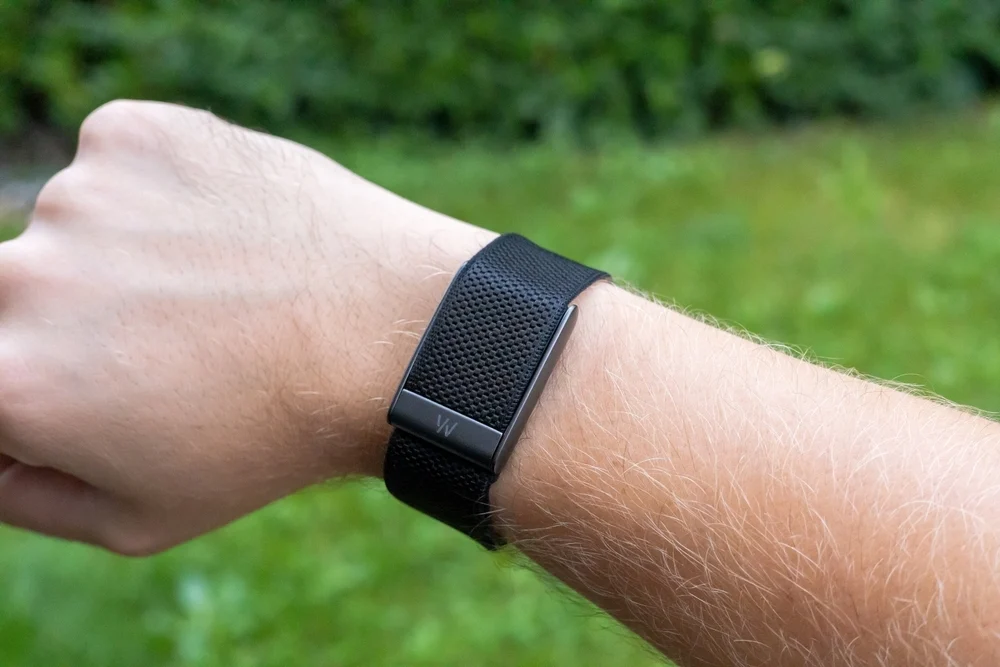
Executive Summary: The Price of Success
In the high-stakes arena of wearable technology, growth is often viewed as the ultimate metric of success. However, for Whoop, the Boston-based human performance company, a recent explosion in demand has highlighted the precarious gap between marketing prowess and operational scalability. Following a strategic pivot from elite athletic performance to everyday consumer health, Whoop has reported a staggering 85% year-over-year growth in membership. This surge, while propelling the company to a $10.1 billion valuation, has pushed its legacy operational systems to their breaking point.
The company recently faced a "chaos test" when a surprise demand for 300,000 units emerged just before the Q4 holiday season—an opportunity that took nearly a month to validate through manual processes. To ensure future opportunities do not result in lost margins or supply chain paralysis, Whoop is now undergoing a massive digital transformation, replacing "tribal knowledge" and fragmented spreadsheets with the o9 Solutions enterprise planning platform. This retooling aims to compress decision-making cycles from 25 days to just 48 hours, signaling a new era of "clean" hypergrowth for the wearable giant.
Main Facts: Metrics of a Market Leader
Whoop’s recent performance indicators paint a picture of a company that has successfully transitioned from a niche hardware provider to a global lifestyle and health powerhouse.
1. Exponential Membership and Valuation
As of late 2025, Whoop boasts more than 3 million active members who engage with the product daily. Unlike traditional wearable companies that rely solely on hardware sales, Whoop’s revenue model is built on recurring subscriptions, providing a stable and predictable cash flow. The brand has achieved over 70% growth for three consecutive years, with the most recent year hitting an 85% peak. This trajectory culminated in a Series G funding round in March 2025, raising $575 million and pegging the company’s valuation at $10.1 billion.
2. The Strategic Pivot
The catalyst for this growth was a fundamental shift in target demographics. Whoop moved from focusing exclusively on the "1% of the 1%"—elite athletes in the NFL, NBA, and Olympic circles—to the "everyday consumer." By framing the device as a tool for longevity, sleep optimization, and stress management, Whoop tapped into a much larger total addressable market (TAM).
3. Global Expansion and Wholesale Surges
Whoop’s physical footprint has expanded almost as fast as its digital one. While the company ships to 58 countries, it has active members in 200 countries, indicating massive "gray market" demand. In early 2024, the brand expanded into 26 new markets in just 90 days. Furthermore, wholesale bookings—sales to third-party retailers—have increased by 300% year-over-year, now rivaling the company’s direct-to-consumer (DTC) channel in volume.
Chronology: From Harvard Labs to Global Retail
The evolution of Whoop is a decade-long journey of refining a singular vision: making the invisible visible through data.
-
2012–2018: The Founding and Elite Proof-of-Concept
Founded by Will Ahmed while he was a student-athlete at Harvard, Whoop was born out of a desire to prevent overtraining. The early years were spent perfecting the sensor technology and securing "anchor" users in professional sports. High-profile early adopters like LeBron James and Michael Phelps gave the brand immediate credibility. -
2019–2021: The Subscription Shift and Pandemic Tailwind
Whoop made the bold move to eliminate the upfront cost of the hardware, instead offering it for "free" with a monthly subscription. This lowered the barrier to entry just as the COVID-19 pandemic heightened global interest in personal health monitoring and respiratory rate tracking. -
2024: International Aggression
Under the leadership of Marie Fodness, Assistant Vice President of Global Operations, Whoop began a rapid international rollout. Between January and April 2024, the company entered 26 new countries, significantly increasing the complexity of its logistics, including localized packaging and regulatory compliance. -
March 2025: The $10 Billion Milestone
The Series G funding round, backed by athlete-investors like Cristiano Ronaldo and Rory McIlroy, provided the capital necessary to fuel the next generation of hardware and AI-driven insights. -
May 2025: Launch of the Fifth Generation
Whoop released its most advanced hardware to date, moving beyond mere exercise tracking to focus on longevity. Features included blood pressure insights, advanced women’s health tracking, and the ability to integrate lab bloodwork directly into the app. -
September 2025: The Operational Crisis and o9 Partnership
At the Innovation for All Conference in Berlin, the commercial team identified a massive 300,000-unit holiday demand signal. The subsequent 25-day struggle to validate this order served as the "smoking gun" for the need to overhaul the company’s planning software, leading to the partnership with o9 Solutions.
Supporting Data: The Complexity of "The 300,000 Unit Surprise"
To understand why Whoop is retooling, one must look at the specific data points that defined their operational bottleneck in late 2025. When the commercial team requested 300,000 additional units for the Q4 holiday season, the operations team faced a multi-variable puzzle that Excel could not solve efficiently.
| Metric | The "Manual" Era (Pre-2025) | The "o9" Goal (Post-Transformation) |
|---|---|---|
| Decision Cycle Time | 25 Days | 48 Hours |
| Data Source | Fragmented Excel Sheets | Single Source of Truth (SSOT) |
| Wholesale Growth | 300% YoY | Scalable & Predictive |
| Planning Method | Tribal Knowledge | AI-Driven Demand Sensing |
| Market Entry Speed | 26 countries in 3 months (Chaotic) | Systematic & Localized |
The 25-day delay was not merely due to a lack of effort; it was due to the "complexity of growth" that Fodness highlighted at the Aim 10x Summit. Each of those 300,000 units required:
- Chip Sourcing: In a volatile semiconductor market, verifying the availability of specific microprocessors.
- Logistical Localization: Ensuring packaging copy was translated and compliant for 58 different shipping destinations.
- Margin Analysis: Determining if the cost of expedited manufacturing and air freight would erode the profit margins of the wholesale deals.
Official Responses: Insights from the Front Lines
Speaking at the o9 Solutions Aim 10x Summit in Chicago, Marie Fodness, Whoop’s AVP of Global Operations, was candid about the friction caused by the company’s success.
"We’ve grown really fast in a lot of different directions," Fodness told the audience. "That includes retail channels, new countries, new markets, enterprise deals. And it has not just been more units, it’s been more complexity. Growth like this does not come in a clean forecast. There’s no Excel sheet that has modeled out how we’re going to grow in all of these different directions."
Fodness emphasized that the "tribal knowledge" within the company—where critical operational details lived in the heads of a few veteran employees—had become a liability. "Tribal knowledge can end up adding time because there’s only one person who knows exactly the details. All of it living in o9 will then give us that ability to pull down the information that we need to make those quick decisions."
Santiago Garcia-Poveda Maria, Senior Vice President at o9 Solutions, noted that Whoop’s transition is part of a broader trend in retail and health tech. He explained that a transformation of this scale typically takes about a year to fully implement, as it requires cleaning decades of disparate data and integrating it into a cohesive, AI-ready ecosystem.
Implications: The Future of Health Wearables
Whoop’s operational pivot has significant implications for the broader wearable industry and the future of consumer health.
1. The Shift from Performance to Longevity
Whoop’s 5th-generation product launch signals a market-wide shift. While the industry started with "step counting" and moved to "workout tracking," the future lies in "longevity." By integrating bloodwork and blood pressure insights, Whoop is positioning itself not just as a fitness tracker, but as a proactive medical dashboard. This increases the stakes for supply chain reliability; if a device becomes a critical health monitor, stockouts are no longer just a lost sale—they are a disruption in a user’s health data continuity.
2. Operational Agility as a Competitive Advantage
In a market where Apple, Google (Fitbit), and Oura are vying for dominance, the winner may not be the one with the best marketing, but the one with the most agile supply chain. Whoop’s ability to respond to a 300,000-unit demand signal in 48 hours would allow it to seize market share from competitors who are still bogged down by month-long lead times and manual forecasting.
3. The End of the "Excel Era" for Unicorns
Whoop’s story is a cautionary tale for "Unicorn" startups. The tools that help a company reach a $1 billion valuation (Excel, Slack, and small-team agility) are often the very things that prevent it from reaching a $20 billion valuation. The move to sophisticated ERP (Enterprise Resource Planning) and demand-sensing software is now a mandatory rite of passage for any hardware-software hybrid aiming for global ubiquity.
4. The Globalization of Health Data
With members in 200 countries, Whoop is sitting on one of the world’s most diverse sets of physiological data. As they "clean" their operations, they are also cleaning their data pipelines. This could eventually allow Whoop to provide localized health insights based on regional environmental factors, further distancing themselves from competitors who lack a robust, integrated global operation.
In conclusion, Whoop is no longer just a "wearable company." It is a sophisticated global logistics and data firm that happens to sell a wristband. By retooling its operations to match its marketing ambition, Whoop is attempting to prove that hypergrowth doesn’t have to be chaotic—it can be calculated.
