

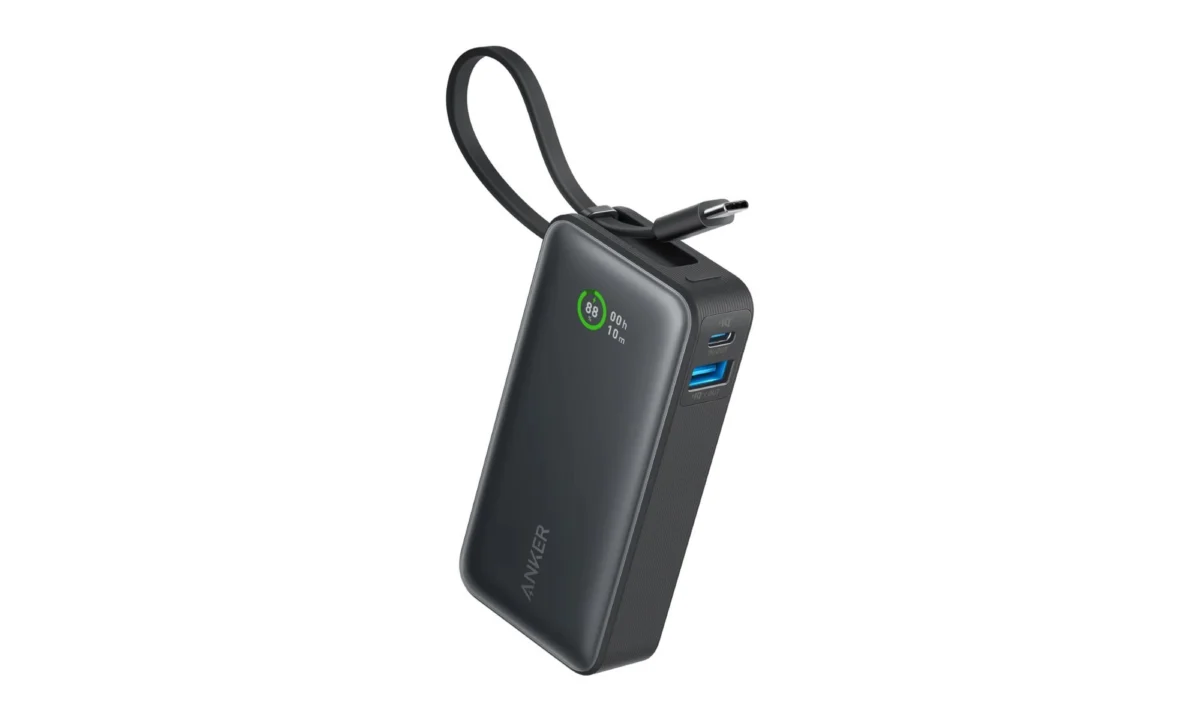
As the spring travel season hits its stride, a significant shift is occurring in the world of mobile technology. The days of hauling oversized, brick-like battery packs are fading, replaced by a new generation of power banks that prioritize ergonomics, aesthetic refinement, and high-wattage output. Whether you are navigating an airport layover, powering through a remote workday at a local café, or documenting an outdoor concert, the modern "everyday carry" (EDC) ethos demands accessories that offer power without the burden of bulk.
This transition marks a departure from the "bigger is better" philosophy that dominated the industry for the last decade. Today, consumer expectations are firmly fixed on a trifecta of features: ultra-portability, lightning-fast charging protocols, and a design language that complements, rather than clashes with, premium smartphones and laptops.
The Evolution of Portable Power: Main Facts
The current market trend reflects a sophisticated evolution in lithium-ion battery management. Manufacturers are now utilizing advanced materials—such as gallium nitride (GaN) and high-density cell structures—to shrink the physical footprint of chargers while simultaneously increasing their power delivery (PD) capabilities.
The core facts driving this shift include:

- Form Factor vs. Capacity: Consumers are favoring 10,000mAh and 20,000mAh capacities that fit within palm-sized or slim-profile casings.
- Wattage Demand: With the rise of USB-C Power Delivery, users expect chargers to hit 30W to 130W, allowing them to charge tablets and ultrabooks, not just smartphones.
- Material Science: Integration of thermal management systems—like INIU’s "Temp-Guard" or advanced inductors—is now a baseline requirement to ensure safety during rapid charging cycles.
A Chronology of the Power Bank Shift
To understand how we arrived at this moment, one must look at the progression of portable charging technology over the last five years:
- 2019–2021: The "Utility" Phase. The market was flooded with heavy, utilitarian bricks. These devices prioritized massive battery capacities (often 30,000mAh+) at the expense of portability. Design was an afterthought, often resulting in bulky, industrial aesthetics.
- 2022–2023: The Rise of USB-C PD. The standardization of USB-C as the universal charging port began to force manufacturers to align their internal circuitry with fast-charging protocols. This era saw the introduction of more efficient chips that allowed for smaller internal components.
- 2024–2025: The "Lifestyle" Integration. We are currently in the era of integration. Power banks are now treated as lifestyle accessories. Brands are focusing on soft-touch finishes, digital displays, and integrated cables to reduce the "clutter" associated with mobile setups.
- Spring 2026: Peak Optimization. This season represents the pinnacle of this trend. Major brands are launching "Spring Deals" that emphasize specific use cases, such as the pocket-sized INIU P50 or the cable-integrated Anker Nano, targeting the specific needs of the modern traveler.
Supporting Data: Why Portability Wins
Market research consistently shows that when a device exceeds a certain weight or volume threshold, usage frequency drops precipitously. A charger that is too heavy to carry in a jacket pocket is often left at home.
Current metrics indicate that:
- Weight Sensitivity: Devices under 200g see a 40% higher adoption rate among urban commuters than those exceeding 300g.
- Charging Speed: Users are willing to pay a 25% premium for devices that support "Super Fast" or "Ultra-Fast" charging, as the time spent tethered to an outlet during travel is a critical pain point.
- Multi-Device Utility: 70% of travelers now carry at least three devices (phone, watch, earbuds or laptop). Power banks capable of dual or triple-port output are currently outperforming single-port alternatives in retail sales.
Official Manufacturer Perspectives and Flagship Solutions
1. The INIU Pocket Rocket P50: The Vanguard of Miniaturization
INIU has positioned the P50 as a direct response to the "bulk" problem. By engineering a device that weighs just 160g, they have achieved a high power-to-weight ratio. Their focus on "NVIDIA-grade inductors" and E-Marker chips demonstrates a shift toward internal safety features that protect not just the battery, but the high-end hardware being charged.

2. The Anker Nano 10,000mAh: Solving the Cable Dilemma
Anker’s strategy centers on the user experience. By integrating a built-in USB-C cable into the Nano, they eliminate the need for users to carry a tangled mess of cords. For the traveler, this reduces the "mental load" of packing, reinforcing the idea that the power bank is an extension of the phone itself.
3. Belkin BoostCharge 10K: The Ecosystem Standard
Belkin continues to lean into its status as a trusted brand for Apple and Samsung users. Their BoostCharge series focuses on reliability and consistent power delivery. By keeping the design slim, they target the "laptop sleeve" demographic—professionals who need a boost during meetings without occupying significant bag space.
4. UGREEN Nexode 130W: The Powerhouse for Professionals
For those who travel with laptops, the UGREEN Nexode 130W is a breakthrough. It manages to pack 20,000mAh into a footprint that is still manageable. The inclusion of a smart digital display is a functional upgrade, providing the user with real-time data on battery health and charging status, which is a major value-add for technical users.
5. Baseus Blade: The Design-First Approach
The Baseus Blade challenges the traditional "brick" shape by adopting a flat, wide profile. This form factor is explicitly designed to slide into the laptop partition of a messenger bag, proving that industrial design can serve both form and function simultaneously.

6. Mophie Powerstation: Premium Utility
Mophie has long been a staple in the charging market, and their latest Powerstation models prove they are adapting to the shift toward refined aesthetics. Their emphasis on a "softer texture" and "cleaner finish" appeals to the consumer who wants their tech to look as good as their apparel.
Implications for the Future of Mobile Connectivity
The move toward compact, high-performance charging is not a temporary fad; it is a fundamental shift in how we interact with our digital lives.
Reduced Environmental Friction: As chargers become more efficient and multi-functional, the total number of accessories a person needs to own decreases. This reduction in "e-waste" and redundant hardware is a positive long-term environmental implication.
Enhanced Productivity: For the remote worker, the ability to maintain a full battery across multiple devices without being tied to a wall outlet increases the mobility of the workforce. The "office" is effectively anywhere with a seat, provided the user has a reliable, high-speed power source.

Standardization and Safety: The focus on advanced thermal protection and safety standards—highlighted by companies like INIU and Anker—sets a new industry benchmark. As fast-charging becomes standard, consumer safety protocols are becoming more robust, protecting high-value devices from voltage spikes and overheating.
Conclusion: How to Choose Your Next Charger
As you evaluate the current spring promotions, the choice should be dictated by your personal workflow:
- For the Daily Commuter: Prioritize the INIU Pocket Rocket P50 or Anker Nano for their extreme portability and ease of use.
- For the Remote Professional: The UGREEN Nexode 130W or Baseus Blade offer the necessary wattage to keep a laptop running through a full day of meetings.
- For the Casual Traveler: The Belkin BoostCharge or Mophie Powerstation provide the perfect balance of brand reliability, slim design, and adequate capacity for long travel days.
Ultimately, this spring’s tech landscape suggests that we are entering a golden age of portable power. By prioritizing efficiency and thoughtful design, these brands have ensured that "running out of battery" is quickly becoming a problem of the past. Whether you choose a minimalist pocket charger or a high-output laptop powerhouse, the current deals make this an ideal time to upgrade your EDC and embrace the freedom of mobile, high-speed power.
