

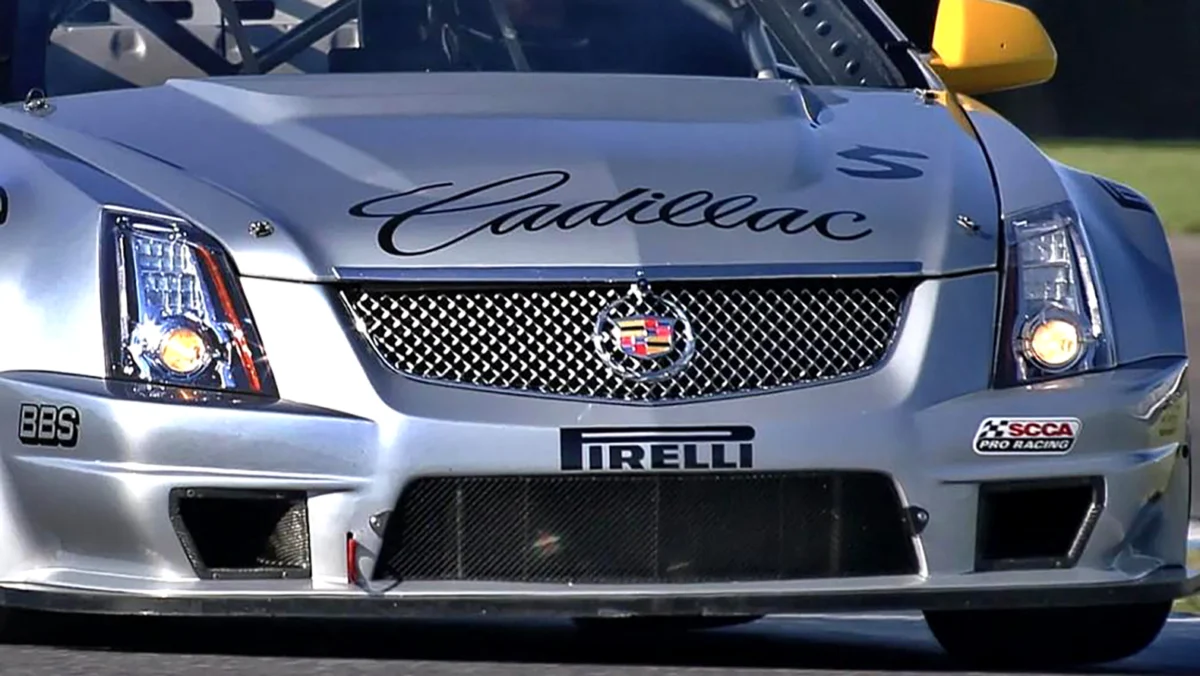
For the serious motorsport enthusiast, the opportunity to acquire a piece of automotive history is rare; the opportunity to acquire a championship-winning, factory-developed titan of the track is practically non-existent. Yet, a piece of General Motors’ most aggressive racing heritage has surfaced for public sale. One of only three Cadillac CTS-V.R Coupes ever constructed by the legendary Pratt & Miller engineering firm is currently seeking a new owner, offering a visceral, V8-powered experience that transcends the capabilities of almost any road-legal supercar.
Listed through RaceCarsForYou, this specific chassis—identified as #3—is not merely a display piece. It is a battle-hardened veteran of the Pirelli World Challenge GT Championship, boasting a pedigree that includes stints behind the wheel by some of the most respected drivers in American racing. With a fresh powertrain and a comprehensive spares package, this vehicle represents a unique intersection of museum-grade provenance and modern, track-ready performance.
The Genesis of a Track Dominator
The story of the CTS-V.R begins in the high-stakes world of the Pirelli World Challenge (PWC) during the early 2010s. General Motors, looking to solidify the Cadillac brand’s transition from a luxury marque to a high-performance contender, partnered with Pratt & Miller. Based in New Hudson, Michigan, Pratt & Miller is renowned for its long-standing collaboration with GM, most notably in the Corvette Racing program.
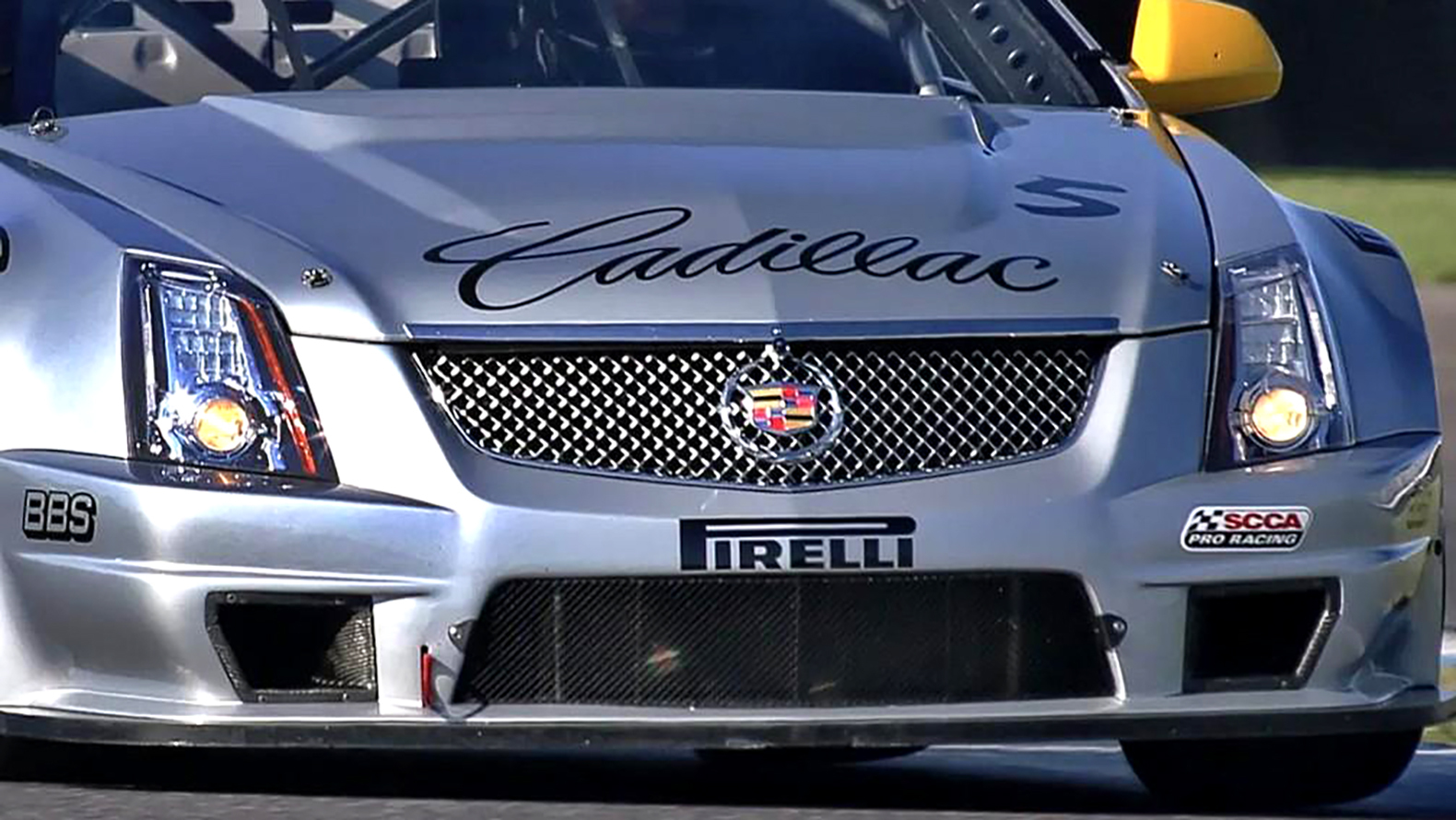
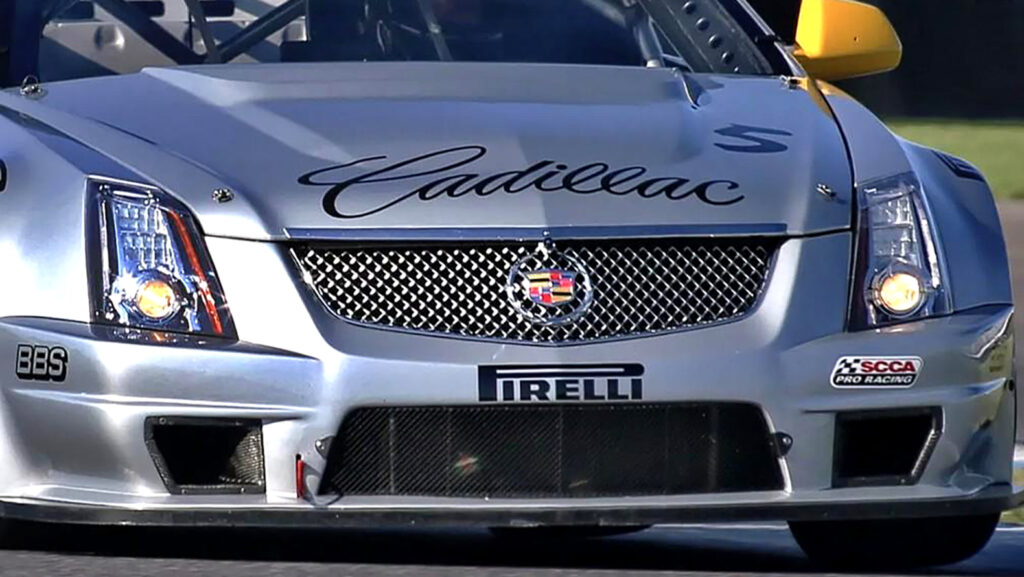
The mandate for the CTS-V.R project was clear: take the angular, aggressive silhouette of the production CTS-V Coupe and transform it into a GT-class monster. Development was remarkably rapid, with the engineering team requiring only eight months to refine the chassis, aerodynamics, and powertrain for competitive duty. The result was a vehicle that looked as menacing as it performed, characterized by its wide-body stance, massive rear wing, and a naturally aspirated V8 growl that became the soundtrack of the PWC circuit.
A Chronology of Racing Excellence
The CTS-V.R program was not just a branding exercise; it was a masterclass in domestic engineering. Between 2012 and 2014, the platform achieved legendary status in the PWC GT Championship.
- 2012: The debut of the CTS-V.R was met with immediate success. Johnny O’Connell, a veteran of sports car racing, dominated the season, securing the Drivers’ Championship. Simultaneously, the program earned the Manufacturers’ Championship, proving that the Cadillac chassis was the one to beat.
- 2013: Cadillac doubled down on its success. Johnny O’Connell repeated his feat, clinching a second consecutive Drivers’ Championship, while the brand once again secured the Manufacturers’ title.
- 2014: The momentum continued as Andy Pilgrim joined the effort, contributing to the program’s legacy. By the end of this three-year window, the CTS-V.R had effectively defined an era of Cadillac’s involvement in professional GT racing.
Chassis #3, the specific unit now available for purchase, carries its own unique history. It was campaigned by Jordan Taylor, a name synonymous with elite endurance racing, during the 2012 and 2013 seasons. Taylor’s tenure with this car included several notable performances, including a podium finish that highlighted the car’s consistent pace and handling characteristics.
Mechanical Specifications and Current State
For potential buyers, the most significant aspect of this listing is the car’s current mechanical condition. Rather than being a neglected relic, this CTS-V.R has been maintained to a high standard, with its most critical components having been recently refreshed.
The heart of the beast is a naturally aspirated 6.2-liter LS3 V8 engine. Known for its reliability, power, and distinct American muscle note, the engine currently installed in chassis #3 has seen less than five hours of track time. This provides the new owner with a significant buffer before any major internal maintenance is required. Complementing the engine is an Xtrac transmission—a staple of professional GT racing—which has also seen fewer than five hours of operation.

The sale is not limited to the chassis itself. To ensure the car remains operational for years to come, the current owner is including a substantial spares package. This inventory includes:
- Spare bodywork panels (essential for a contact-heavy sport like GT racing).
- Multiple sets of race-grade wheels.
- Comprehensive suspension and braking components.
- Fresh subframes.
This level of support is invaluable for a prospective owner, as these parts are often bespoke or difficult to source for retired factory-backed race cars.
The Life After Factory Competition
Following its retirement from the professional PWC circuit, the car did not retreat to a climate-controlled vault. The current owner, having acquired it directly from General Motors, chose to keep the car in its natural habitat: the race track.
Over the last five years, the vehicle has been a fixture at historic racing events, participating in more than 35 race weekends. This is a testament to the car’s build quality; a vehicle that can compete at a championship level and then endure five seasons of high-intensity historic racing with minimal fatigue is a rare find. It has effectively bridged the gap between professional-grade machinery and the accessible world of high-end club racing.
Implications for the Collector Market
The asking price of $249,000 places the CTS-V.R in a competitive bracket. While that figure buys a variety of modern high-performance road cars, it is difficult to find a machine with this level of provenance at that price point.
For the buyer, there are several key implications:
- Investment Potential: As one of only three units ever built, this car is inherently rare. Its history—being factory-developed by Pratt & Miller and driven by racing icons—cements its status as a collector’s item that is unlikely to depreciate significantly over time.
- The Experience Factor: Owning a GT-class race car is an immersive experience. The raw, unfiltered nature of the CTS-V.R, combined with the relative ease of maintaining an LS-based powertrain, makes this a much more practical proposition than a vintage European race car of similar vintage.
- Community and Events: Owners of these vehicles are often welcomed into exclusive historic racing circles. The ability to drive a championship-winning car at events like the Road America Brian Redman International Challenge provides a level of social and driving satisfaction that standard luxury car ownership simply cannot replicate.
Official Perspective and Closing Thoughts
While General Motors has moved on to other racing platforms, including the LMDh hybrid prototypes, the legacy of the CTS-V.R remains a highlight of the brand’s modern era. Representatives of the racing community often point to this period as the moment Cadillac ceased to be a "luxury" brand and fully embraced the "performance" moniker that now defines the V-Series.
For the enthusiast who is tired of the digital driving aids and muted exhaust notes of modern road cars, the CTS-V.R offers a return to basics. It is a machine designed for one purpose: to go fast, handle with precision, and out-muscle the competition.

As the listing states, opportunities like this are fleeting. In a market where many significant race cars disappear into private, non-public collections, the chance to purchase a documented piece of Cadillac’s racing heritage—complete with a fresh drivetrain and extensive spares—is a rare window. Whether the buyer intends to continue the car’s legacy on the track or preserve it as a centerpiece in a private museum, chassis #3 remains a titan of American GT racing.
Interested parties are encouraged to review the full technical documentation on the RaceCarsForYou portal, where the full history of the chassis and the specifics of the spares inventory are cataloged. For those prepared to make the leap, the CTS-V.R is not just a car; it is a permanent seat at the table of American racing history.
