

For millions of high school seniors, the college acceptance letter serves as a long-awaited validation of years of academic rigor. For Shir Levenson, that moment of triumph was short-lived, quickly eclipsed by a harsh economic reality that has become a defining struggle for the American middle class. After receiving a coveted acceptance to Tufts University, Levenson faced the cold, hard math of a financial aid package that would have required a $270,000 debt burden to complete her degree.
Levenson’s story is not an outlier; it is a symptom of a systemic crisis. In an era where the sticker price of private higher education frequently approaches $100,000 annually, the promise of social mobility through a degree is being throttled by the crushing weight of student loans. This is the story of how one student navigated the disillusioning chasm between academic aspiration and financial survival.
The Mirage of Meritocracy: A Chronology of a Decision
The journey for Levenson began with a visit to the Tufts University campus near Boston. The atmosphere—the architecture, the intellectual energy, and the promise of a top-tier education—resonated immediately. Like many prospective students, she ignored the "sticker price," operating under the assumption that financial aid would bridge the gap.
The Timeline:
- The Application: Driven by passion, Levenson applied to Tufts, trusting the institution’s claim that it "meets 100 percent of demonstrated need."
- The Acceptance: In the spring, the long-awaited email arrived. The initial euphoria was intense, but the financial aid notification, which arrived weeks later, shattered the dream.
- The Verification Gap: Despite a net-price calculator suggesting a significantly lower cost, the actual offer required the family to pay nearly the full $100,000 annual cost.
- The Appeals Process: Levenson and her parents engaged in a formal reevaluation process, providing documentation and engaging in correspondence with the financial aid office. The result was a marginal adjustment that did little to alter the prohibitive total cost.
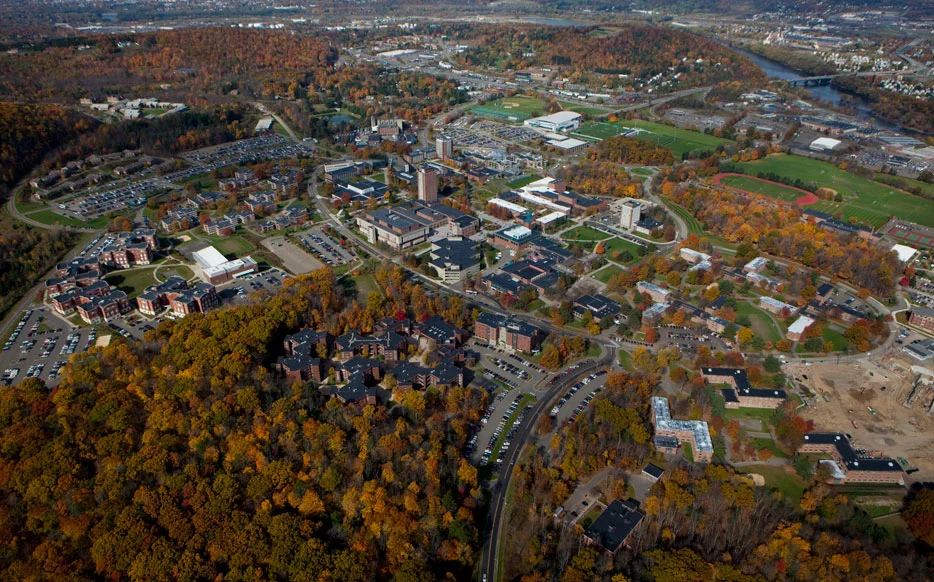
- The Pivot: Recognizing the mathematical impossibility of the situation without endangering her future, Levenson made the painful decision to decline her dream school, choosing instead the State University of New York (SUNY) at Binghamton.
The Middle-Class Squeeze: Where Financial Aid Fails
The core of the issue lies in the definition of "need." Levenson’s parents are both professionals in the non-profit sector—people who have dedicated their lives to service but lack the liquid capital to pay for private tuition. They are caught in a precarious middle ground: they are not wealthy enough to write a check for a private university, yet they are often viewed as "too affluent" to qualify for the robust grants awarded to low-income families.
This phenomenon is increasingly common. Recent polling data from Gallup suggests that only 12 percent of Americans currently view four-year colleges as affordable. This perception gap is fueled by a complex financial aid ecosystem that relies on the FAFSA and the CSS Profile—tools that often fail to account for the nuances of modern family debt, the cost of living, and the necessity of saving for multiple siblings simultaneously.
The Illusion of Tuition-Free Policies
In September 2025, Tufts University made headlines by announcing a tuition-free policy for families earning less than $150,000. On the surface, this appeared to be a watershed moment for equitable access. However, for families like Levenson’s, the policy offers little solace.
Many families who fall slightly above the income threshold—or who live in high-cost-of-living areas where a $150,000 salary is effectively middle-class—remain excluded from these "tuition-free" initiatives. These families are left to grapple with the "gap," the difference between the total cost of attendance and the limited aid provided. This creates a psychological and financial burden that forces many students to consider taking on massive, high-interest private loans, or simply abandoning their aspirations entirely.
Institutional Perspective: The "Net Price" Paradox
When asked about the discrepancy between their net price calculators and the final aid awards, university administrators typically point to the complexity of the verification process.
In a statement regarding the specific case, officials at Tufts noted that while they cannot comment on individual awards, the net price calculator is designed only as a tool for "reasonable estimates." The formal financial aid process involves a deep dive into tax documents and verified data. If the initial information provided by the family—or the variables considered by the institution—shifts during the verification phase, the final award often deviates from the calculator’s projections.
For the student, however, the "estimate" is often the basis for the decision to apply. When that estimate fails to materialize, it feels like a "bait-and-switch," leaving families to scramble for funding at the eleventh hour.
The Implications: A Generation Defined by Debt
The decision to attend a state school like Binghamton is, by all accounts, the "rational" choice. For an annual cost of roughly $32,000—less than a third of the Tufts price tag—Levenson will receive an education that is highly regarded and, more importantly, sustainable. However, the emotional toll of "settling" is significant.
Key Implications of the Current Model:
- Stifled Ambition: When top-tier institutions are accessible only to the extremely wealthy or the very poorest (who receive full aid), the middle class is effectively pushed out, narrowing the diversity of the student body.
- Debt-Aversion as a Barrier: Many students are choosing majors or career paths based on the need to pay off loans rather than on passion or societal impact, which may lead to a long-term deficit in essential but lower-paying fields like public service, social work, and teaching.
- The Eroding Trust: As trust in the value of a degree wanes, the perception of higher education as a "luxury good" increases. This threatens the foundational belief that education is a public good and a primary driver of democratic health.
Beyond the Price Tag: Redefining Value
As Levenson prepares for a gap year before heading to Binghamton, she remains optimistic about her academic future, particularly her plans to study political science. Yet, her message to higher education institutions is clear: "Affordability cannot be an afterthought."
The current model of "sticker price" tuition, followed by a mysterious and often opaque discounting process, serves neither the student nor the institution. It fosters a culture of anxiety and resentment. To rebuild trust, colleges must move toward greater price transparency, more generous aid packages that account for the reality of the middle-class cost-of-living crisis, and a commitment to ensuring that a student’s zip code or their parents’ employment status does not dictate their access to elite institutions.
Higher education is meant to be a ladder to opportunity, but for too many, it has become an anchor. Until universities prioritize the financial stability of their students as much as they prioritize their endowments and rankings, the "dream school" will remain just that—a dream, deferred by the harsh realities of a broken financial system.
For Levenson, the lesson is bittersweet. She has learned to prioritize her future over a brand name, a lesson that will serve her well in her career. But the broader lesson belongs to the higher education sector: if they do not fix the math, they risk losing the very talent that makes their institutions worth attending in the first place.
