

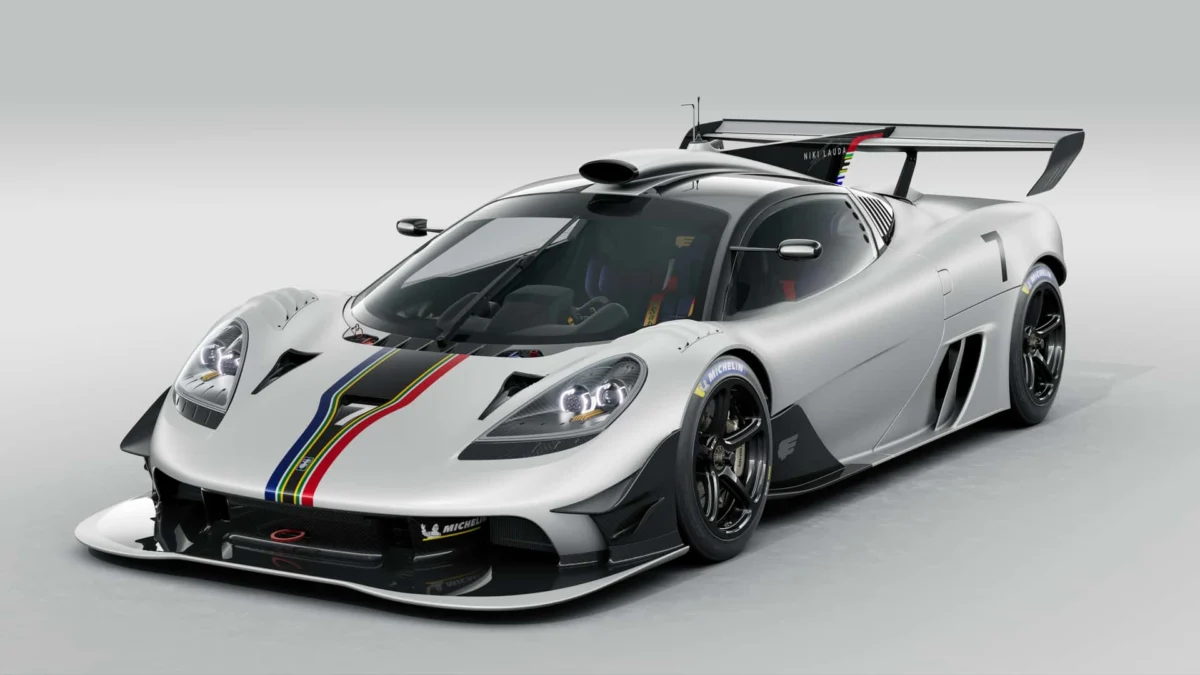
The automotive world is currently converging on the hallowed grounds of West Sussex, England, for the annual Goodwood Festival of Speed. While the event is always a sensory overload of historic racing machinery and modern hypercar debuts, this year carries a specific weight for purists. Gordon Murray Automotive (GMA) has officially unveiled the first customer-delivered unit of the T.50s Niki Lauda—a track-only machine that represents the absolute zenith of Murray’s "lightweight and analog" engineering philosophy.
The Genesis of a Track Titan
The T.50s Niki Lauda is not merely a stripped-out version of the T.50 road car; it is a fundamental reimagining of what a track-focused hypercar can be. While the standard T.50 is celebrated as the spiritual successor to the legendary McLaren F1, the "Niki Lauda" variant pushes the platform to its aerodynamic and mechanical breaking points.
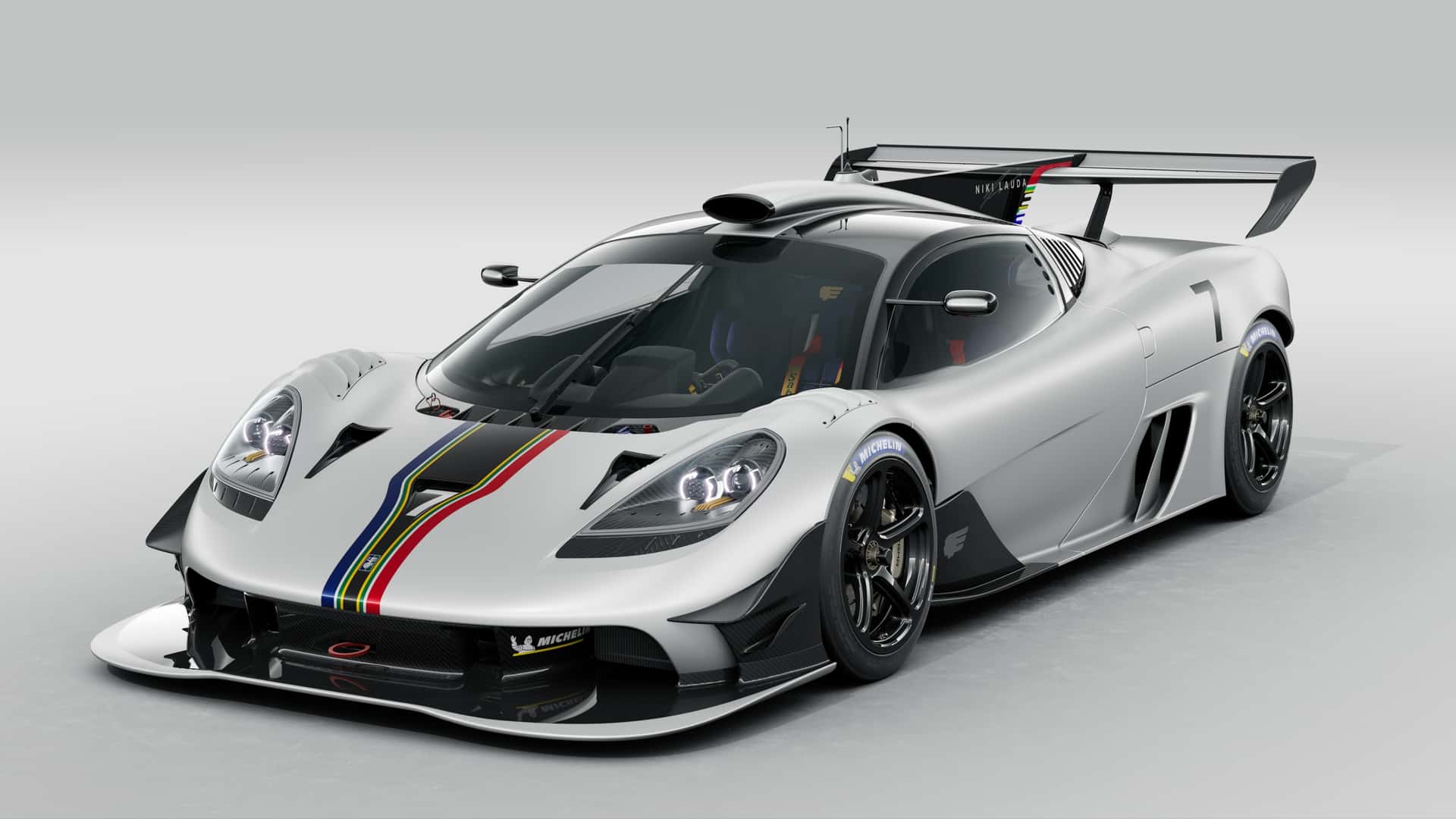
Chassis 001, the vehicle showcased at Goodwood, features a pristine white bodywork accented by a striking livery inspired by the South African flag. This design choice is deeply personal for Gordon Murray, serving as a poignant tribute to his first-ever Formula 1 victory at the 1974 South African Grand Prix. For enthusiasts, seeing the car climb the famous Goodwood hill is more than a marketing exercise—it is a live demonstration of a vehicle that prioritizes mechanical engagement over computerized driver aids.
Engineering Excellence: The Heart of the Beast
At the core of the T.50s lies a bespoke 3.9-liter naturally aspirated V12 engine, developed in collaboration with Cosworth. This power plant is a masterpiece of modern engineering, capable of screaming to a staggering 11,500 rpm. Producing 761 horsepower, the engine is paired with a dedicated six-speed paddle-shift gearbox, allowing for lightning-fast gear changes that keep the driver in the heart of the power band.
The commitment to weight reduction remains the company’s defining mantra. By removing the creature comforts required for road legality, GMA has achieved an incredible power-to-weight ratio that places the T.50s in a league of its own. Every component, from the carbon-fiber monocoque to the bespoke suspension geometry, has been optimized to provide the driver with telepathic levels of feedback.
Aerodynamics and Downforce: Taming the Air
The exterior design of the T.50s is defined by its aggressive aerodynamic profile. The car features a prominent central fin, a massive rear wing, and a ground-effect floor system that works in harmony to generate up to 2,645 pounds of downforce. This allows the vehicle to corner with extreme violence, yet the system remains adjustable to suit the specific characteristics of different circuits.
In the center of it all sits the driver, echoing the iconic central driving position of the McLaren F1. This layout is not just a nod to history; it is a functional requirement for optimal weight distribution and visibility, ensuring that the driver remains the focal point of the high-speed experience.
A Legacy of Innovation: Gordon Murray’s Vision
Gordon Murray’s career spans over five decades of motorsport dominance and road car innovation. His transition from designing championship-winning F1 cars to establishing his own bespoke automotive brand has been a masterclass in independent manufacturing. In just six years, GMA has moved from a blank canvas to delivering some of the most sought-after vehicles on the planet.
During the Goodwood festivities, Murray emphasized that the T.50s is just one pillar of a much larger strategy. "We are well through the development of the T.33 and T.33 Spider," Murray noted during the press conference. He hinted at a "specialized range of vehicles" that will continue to challenge the status quo, focusing on the company’s core values: performance, precision, and an unwavering commitment to the driver.
The Goodwood Showcase: A Multi-Car Statement
GMA’s presence at the 2024 Festival of Speed extends well beyond the Niki Lauda edition. The manufacturer has curated a comprehensive display that highlights the breadth of its current portfolio:
- S1 LM Design Model: The festival serves as the European debut for this design study, giving the public their first real-world look at the aesthetic direction of GMA’s future racing aspirations.
- Le Mans GTR XP1 Prototype: This test mule is essentially the development laboratory for the upcoming production run of 24 dedicated race cars. Seeing it attack the hill climb provides a glimpse into the raw performance expected of the final customer units.
- T.33 Spider VP12: The T.33 Spider, represented by its validation prototype (VP12), showcases a different side of Murray’s vision—one that balances supercar performance with open-top touring capability, all while maintaining the brand’s signature V12, manual-transmission purity.
Market Implications and Exclusivity
With a starting price of approximately $3 million, the T.50s Niki Lauda is an investment as much as it is a machine. However, for the 25 individuals who have already secured their allocations, the value proposition is measured in exclusivity and engineering heritage.
The hypercar market is currently saturated with electrified, multi-motor vehicles boasting 2,000-plus horsepower. In this environment, the T.50s stands out as a defiant statement. By choosing to stick with a high-revving, naturally aspirated V12, Gordon Murray is catering to a demographic of collectors and drivers who value the visceral connection between human and machine—a connection that is often diluted by the heavy batteries and complex torque-vectoring systems found in modern EVs.
Looking Ahead: The Future of the Brand
As the Goodwood Festival of Speed concludes, the industry is left with a clear picture of Gordon Murray Automotive’s trajectory. The company is not interested in chasing the "fastest 0-60 time" in a straight line. Instead, it is focused on creating the most rewarding driving experiences in history.
The successful testing and public reveal of the T.50s marks a major milestone. With the T.33 range nearing production and rumors circulating about future projects designed to "explore the limits of our design and engineering philosophy," the brand is clearly entering its second phase of growth. For the automotive world, this means the spirit of the lightweight, high-revving internal combustion engine is not only alive but being refined to a degree previously thought impossible.
Gordon Murray has proven that even in an era of rapid transition toward electrification, there is still a massive, passionate audience for the "analog" experience. As the T.50s Niki Lauda begins its journey into the hands of its owners, it serves as a reminder that engineering passion—when backed by a clear, uncompromising vision—remains the most powerful force in the automotive industry.
Conclusion
The sight of the T.50s Niki Lauda ascending the Goodwood hill is symbolic. It represents a bridge between the golden age of Formula 1 and the future of performance engineering. While the automotive landscape is rapidly changing, Gordon Murray Automotive remains anchored in its mission to deliver the ultimate driving machine. Whether it is the track-focused intensity of the T.50s or the open-air refinement of the T.33 Spider, GMA is setting a standard that few others can emulate, ensuring that the legacy of one of history’s greatest engineers remains stronger than ever.
