

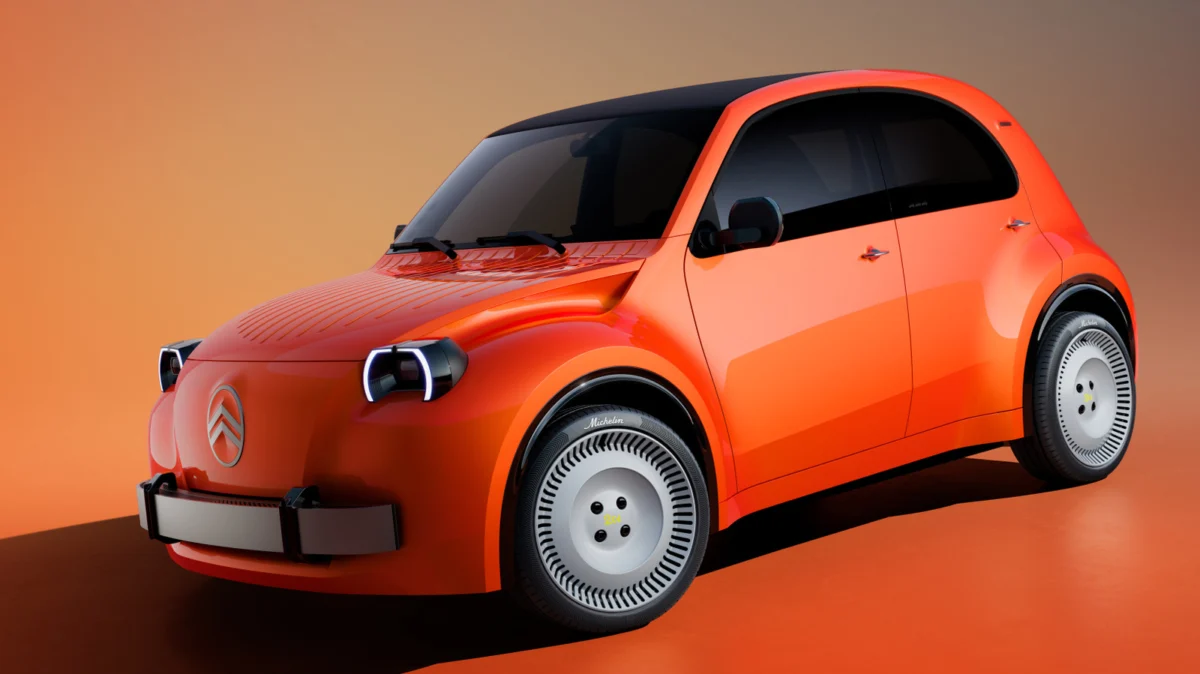
In the automotive world, few silhouettes are as instantly recognizable—or as universally beloved—as the Citroën 2CV. Known affectionately as the "Deuche" in its home country of France, the original 2CV was a masterclass in minimalist engineering, providing affordable, reliable mobility to the masses for over four decades. Now, as the industry pivots toward an electrified future, Citroën has stunned the attendees of the Paris Motor Show by unveiling a modern, electric reinterpretation of this legendary runabout.
Set for production in 2028, the new 2CV Concept is not merely a nostalgic exercise in retro design. It is a bold, cheerful, and unabashedly optimistic declaration that the future of urban mobility does not have to be sterile, complex, or prohibitively expensive.
The Core Facts: A New Vision for Electric Simplicity
At its heart, the 2CV Concept is a return to the ethos that made the original car a global cultural icon: simplicity, accessibility, and a human-centric approach to design. Measuring approximately 148 inches in length—roughly five inches longer than a modern Fiat 500e—the concept is remarkably compact, optimized for the tight, congested streets of the modern European metropolis.
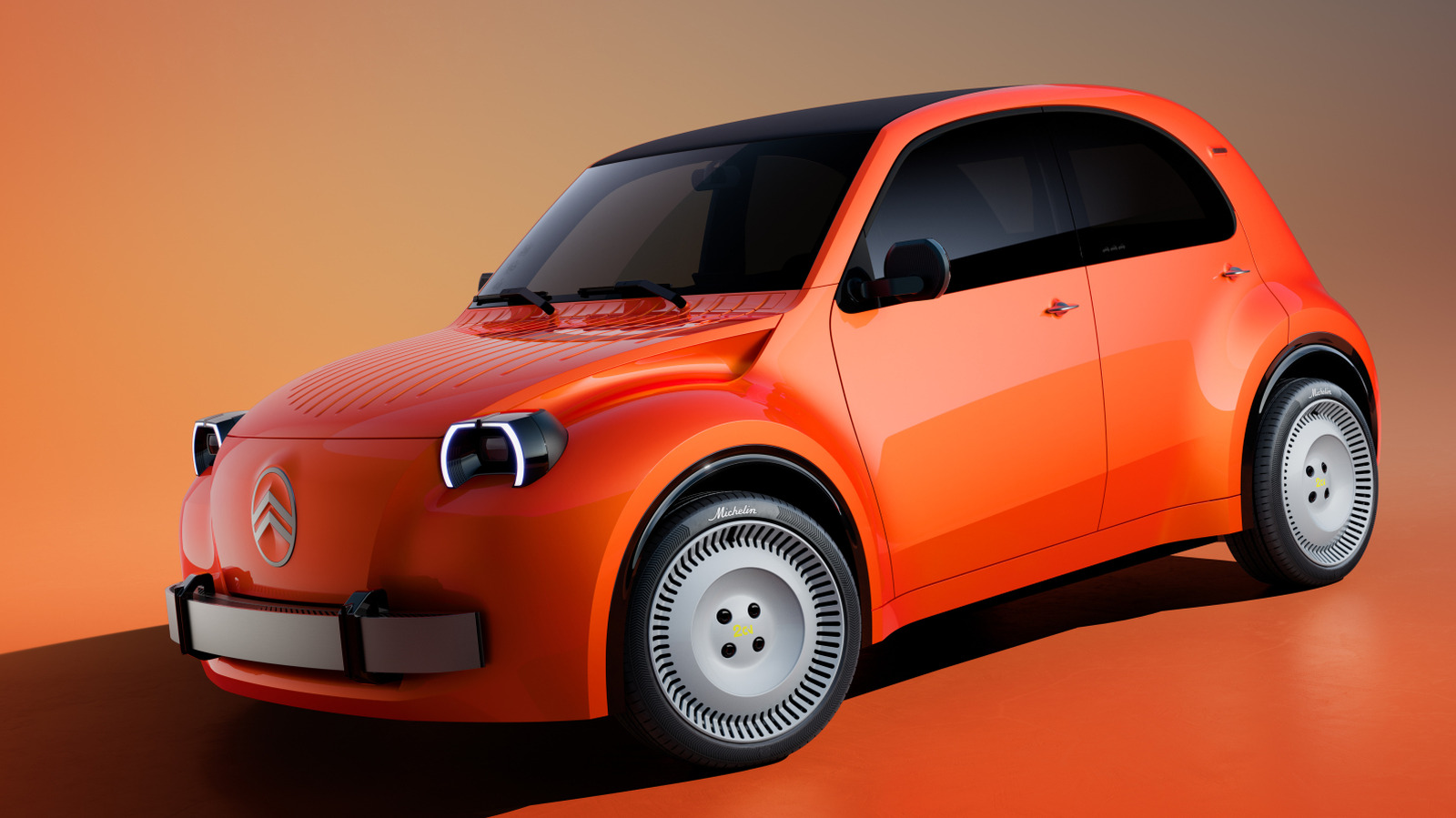
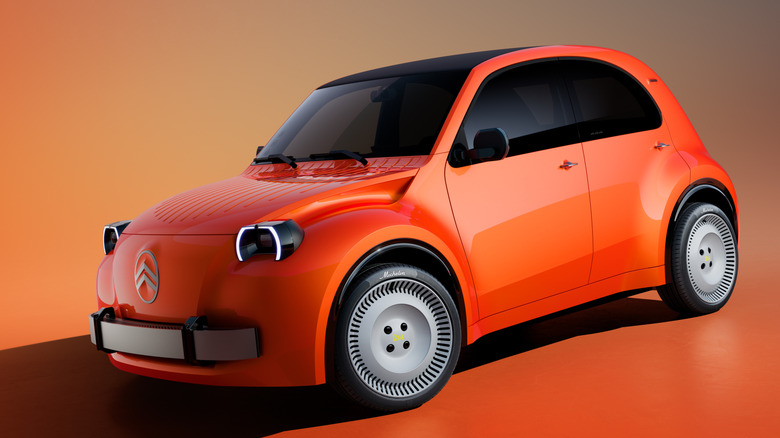
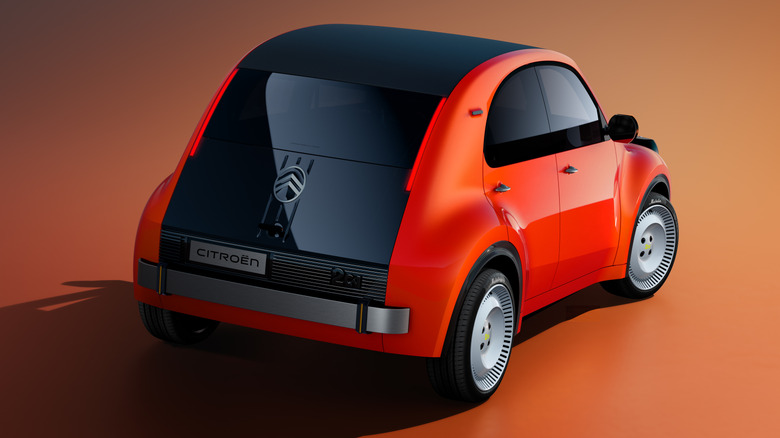
Citroën has confirmed that the vehicle will be a battery-electric vehicle (BEV), with a target curb weight of approximately 2,200 pounds. By focusing on lightweight materials and a modular, repair-friendly architecture, the brand aims to keep the vehicle efficient and affordable. The design language features distinct, flat body panels, bumpers separated from the primary structure for easy replacement, and direct air intakes located beneath the windshield. These aren’t just aesthetic choices; they are functional decisions intended to simplify maintenance and reduce the total cost of ownership.
A Chronological Journey: From the "Tin Snail" to the Digital Age
To understand the weight of this announcement, one must look at the timeline of the 2CV’s legacy. The original car, first introduced in 1948, was born out of a requirement for a "four wheels under an umbrella" vehicle that could traverse muddy French farmland while carrying a basket of eggs without breaking them. It became a symbol of post-war resilience and freedom.
The development of this new concept has been a closely guarded secret, but the timeline leading to its debut reflects a broader strategy by Citroën to reconnect with its heritage while addressing contemporary climate mandates.
- 1948–1990: The original 2CV production run, cementing its status as an icon of French automotive culture.
- Early 2020s: Citroën begins experimenting with modular electric platforms and "simplified" vehicle design, signaling a shift away from the feature-bloat prevalent in modern premium EVs.
- October 2024: The official unveiling at the Paris Motor Show. The concept is introduced as a direct response to the "seasonal blues" of modern commuters, framing the vehicle as an antidote to the monotony of current automotive design.
- 2025–2027: The development phase, focusing on safety integration (specifically airbag placement) and finalizing the production-ready powertrain.
- 2028: The projected date for full-scale commercial production, with a target entry price of approximately €15,000 (roughly $17,000).
Design Philosophy: Why "Party Lights" Matter
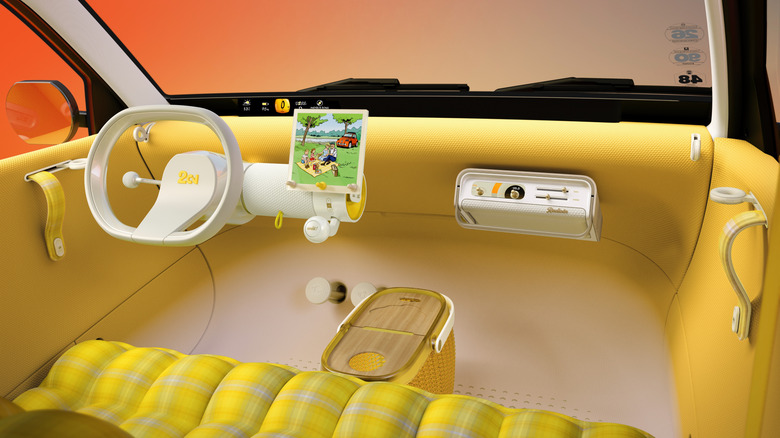
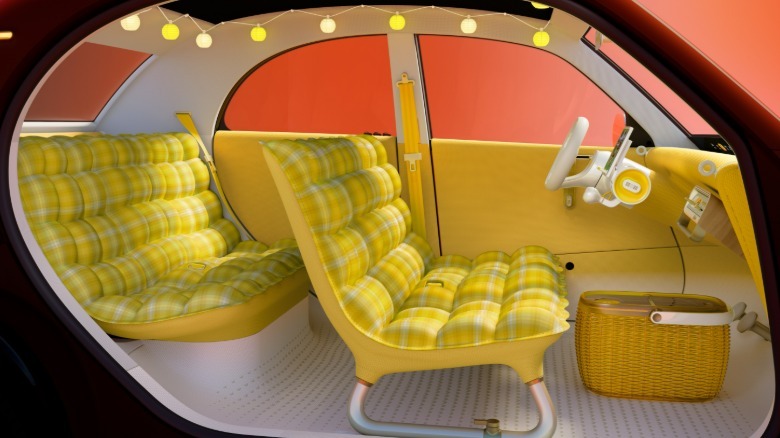
Perhaps the most polarizing—and delightful—feature of the 2CV Concept is its interior. While many modern automakers are obsessed with massive touchscreens, haptic feedback, and austere "minimalism," Citroën has gone in the opposite direction. The interior is bright, colorful, and intentionally playful.
The steering wheel is mounted to a central cylinder that also houses a modest 8-inch digital display featuring whimsical, cartoon-style graphics. A single control stalk handles basic functions, keeping the dashboard uncluttered. However, the true showstopper is the inclusion of "party lights" integrated into the cabin ambiance.
Critics might dismiss these features as unnecessary, but they underscore a shift in automotive marketing. By focusing on joy rather than raw performance metrics, Citroën is positioning the 2CV as a lifestyle companion rather than just a commuting appliance. Furthermore, the car maintains the utilitarian spirit of the original; the seats are fully removable for impromptu picnics, and the passenger-side radio is detachable, allowing owners to take their music with them once the car is parked.
Technical Specifications and Economic Feasibility
While full powertrain details remain under wraps, the industry is closely watching the 2CV’s development regarding its battery technology. Keeping the price point at €15,000 is an ambitious goal in an era of rising inflation and supply chain volatility.
The strategy hinges on "design for repair." By separating bumpers from the bodywork and using simplified, flat surfaces, the brand is reducing the complexity of the assembly line. The 3D-printed elements, such as the wicker-look storage basket, suggest a lean manufacturing process that relies on additive technology to keep costs down while adding unique aesthetic value.
The inclusion of windshield wipers, side-view mirrors, and the overall structural integrity of the concept suggests that the vehicle is far closer to production than typical "show-only" concept cars. Citroën appears to have prioritized parts that are already functional or easily adaptable for mass production, reducing the "concept-to-reality" degradation that often plagues new models.
Official Responses and Corporate Vision
Citroën CEO Xavier Chardon, speaking at the Paris debut, emphasized that this project is about capturing the spirit of the past rather than replicating the mechanics of it. "Reinventing the 2CV isn’t about replicating a car from the past; it’s about reinventing what made it unique: its simplicity, its accessibility, and the freedom it offered," Chardon stated.
The corporate vision is clear: the company believes that electric mobility has become too detached from the user. By making the vehicle "simpler, more human, and more desirable," Citroën is betting that consumers are tired of the "serious, grumpy car" paradigm. The inscription on the rear window of the concept—"Life feels better in a Citroën"—serves as both a marketing slogan and a mission statement for the brand’s upcoming product roadmap.
Implications for the Future of Urban Mobility
The implications of a successful 2CV revival are profound. If Citroën can indeed deliver a high-quality, charming, and electric vehicle for under €15,000, it could disrupt the entry-level segment of the European market.
- Democratization of EVs: By lowering the price barrier, the 2CV could accelerate the adoption of electric vehicles among younger demographics and lower-income households who have been priced out of the current EV market.
- Design Shift: Success for the 2CV would likely trigger a trend toward "character-driven" design. Automakers may realize that consumers are willing to trade high-end performance for personality, color, and modular utility.
- Sustainability through Longevity: By prioritizing ease of repair and simple, replaceable components, the 2CV supports the "right to repair" movement, potentially increasing the lifecycle of the vehicle and reducing the environmental impact associated with frequent trade-ins.
Conclusion: A Prescription for the Road
As we look toward 2028, the Citroën 2CV Concept stands as a beacon of light in an often gloomy automotive landscape. It is a rare example of a company listening to the collective need for something "cheerful." While the road to production is still fraught with the usual challenges—safety regulations, supply chain hurdles, and the inevitable interference of corporate bean-counters—the momentum behind this project is undeniable.
If the final production model manages to retain even half of the concept’s charm, the 2CV will not just be a car; it will be a cultural reset. It invites us to stop taking our commute so seriously and reminds us that, sometimes, the best way to move forward is to remember what made us smile in the first place. Whether or not it will actually banish seasonal depression remains to be seen, but one thing is certain: the world is much better off with a little more whimsy on the road.
