

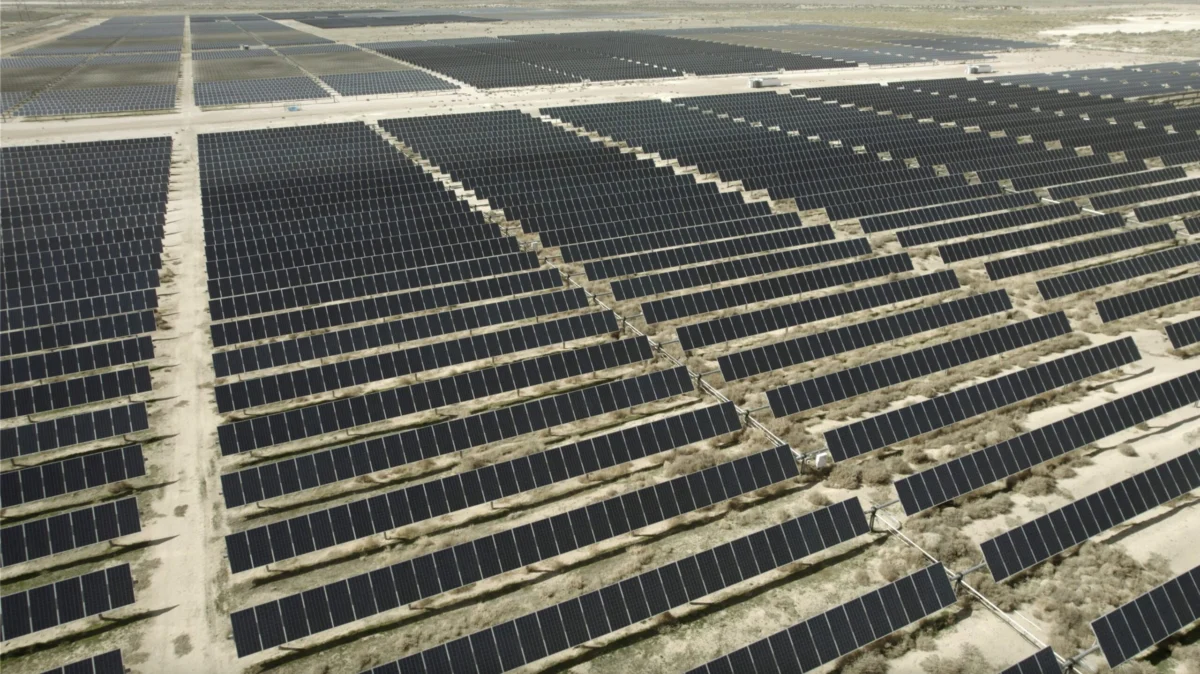
This story was reported with the help of a grant from Grist and was originally published by The Lens.
Under the vast, cerulean skies of Iberia Parish, the air often hangs heavy with the sweet, cloying scent of burning cane. For generations, the seasonal ritual of clearing sugarcane fields with fire has been the heartbeat of this Acadiana community. It is a practice accepted without question, despite the lingering ash and the hazardous pollutants that drift over residential neighborhoods.
Yet, a new industry—one that promises clean, silent, and emission-free energy—has triggered a firestorm of a different kind. In recent years, proposed utility-scale solar farms have been met with intense, often vitriolic opposition. Critics warn of “toxic” chemical leaks, plummeting property values, and even the bizarre claim that solar panels create localized tornadoes. Experts in policy and science, however, characterize these fears as a triumph of sophisticated misinformation over reality, a trend that is not only stalling local economic development but is becoming a hallmark of energy discourse nationwide.
The Anatomy of an Uprising: A Chronology of Conflict
The tension in Iberia Parish reached a boiling point in 2025. What began as an effort to integrate sustainable energy into the local economy devolved into a series of fractured town halls and emotionally charged parish council meetings.
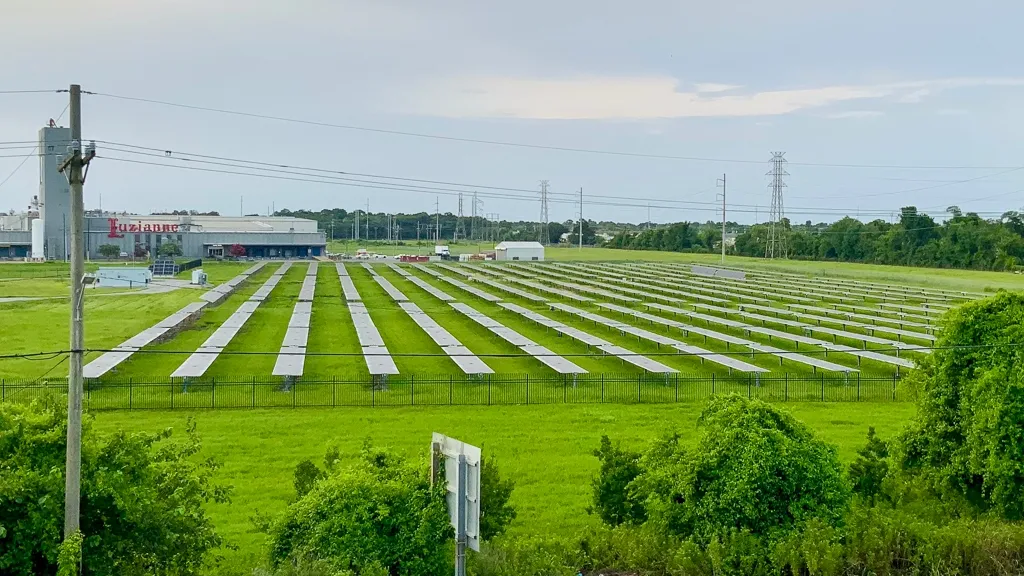
The catalyst for the current standoff was the proposed "Acadiana Solar" project, a $175 million investment by Recurrent Energy, a division of Canadian Solar. The project, slated for 1,000 acres of farmland, promised to bring millions in tax revenue to a region that has faced significant economic headwinds.
By early 2024, an organized opposition had coalesced. A Facebook group titled "NO Industrial/Utility solar in Iberia Parish" grew to 1,200 members, serving as the primary digital clearinghouse for anti-solar rhetoric. The group, founded by local real estate agent Angela Scott, successfully lobbied the Parish Council for a temporary moratorium on solar development.
The culmination of this campaign arrived in July 2025, when the Council passed a restrictive ordinance requiring utility-scale solar projects to maintain a half-mile setback from any residential property line. The move effectively crippled the Acadiana Solar project. For landowners like Andree McAnally, whose family had leased acreage for the project to help secure their financial future following the death of her husband, the vote was a devastating loss.
“I thought you were going to call in your own experts and figure it out yourself,” McAnally told the council during the final vote. “People are fueled by misinformation.”
The Digital Echo Chamber: AI and Organized Disinformation
The resistance in Iberia is not an isolated phenomenon. It is a carefully curated narrative, fueled by a national network of anti-solar groups. Investigations into the digital architecture of this movement reveal a disturbing pattern of cross-pollinated, often AI-generated, propaganda.
Groups like "Stop Solar-Wind-BESS-Carbon Capture Scams," a 11,000-member national hub, have provided the blueprint for local chapters. A pinned post by an administrator using the alias "David Herman" explicitly seeks volunteers to be trained in spreading anti-solar content across local Facebook pages.
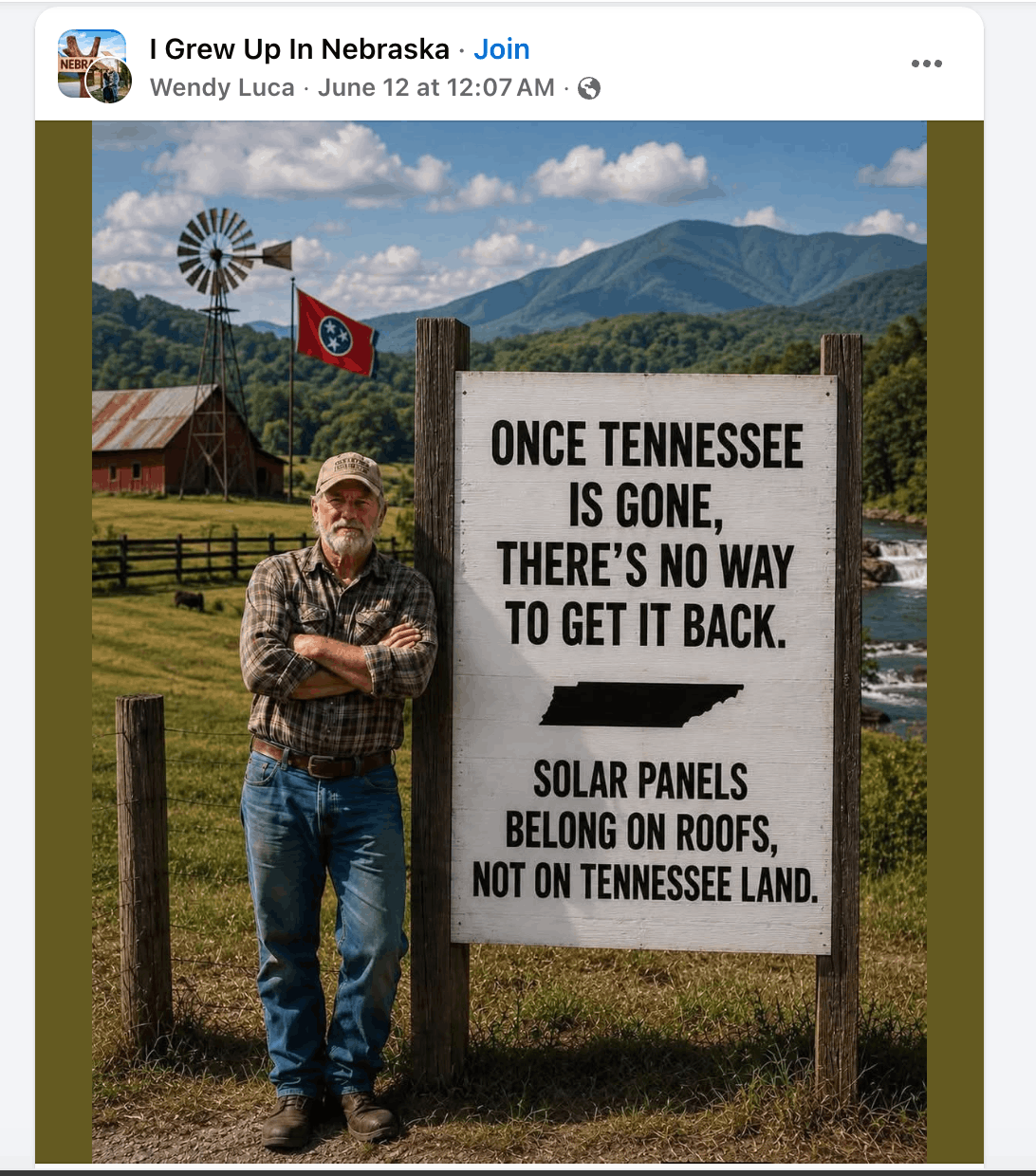
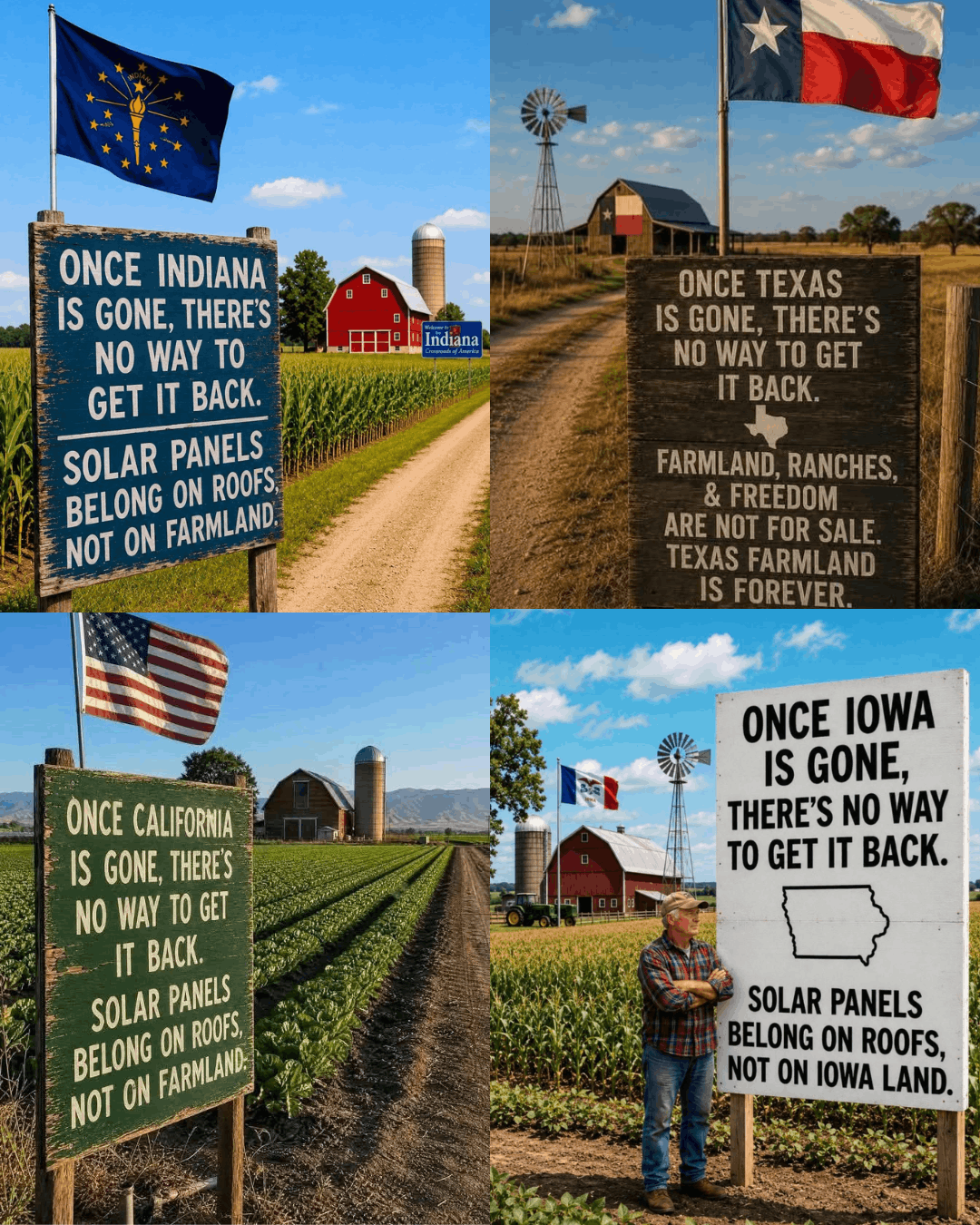
The reach of this network extends to the use of "AI slop"—content generated by artificial intelligence designed to mimic grassroots concern. Analysts from Alethea, a threat intelligence firm, have tracked an influx of identical AI-generated graphics across states as diverse as Texas, Iowa, Nebraska, and Tennessee. These graphics often feature a rustic barn and a sunset, overlaid with text claiming, "Once [State Name] is gone, there’s no way to get it back."
These accounts, often operating anonymously and linked to offshore server farms in countries like Bangladesh, serve to manufacture an appearance of local consensus where none may exist, successfully poisoning the well of public discourse.
Setting the Record Straight: The Scientific Reality
As policy debates rage, experts at institutions like the University of Louisiana-Lafayette (UL-Lafayette) have worked to dismantle the myths surrounding solar infrastructure. Terrence Chambers, the recently retired director of the Center of Efficiency and Sustainable Energy, has provided extensive testimony to the legislature to counter the claims circulating on social media.
Regarding the "toxic chemicals" narrative, Chambers is blunt: "The solar cell is completely protected from air and water during normal operation, and as such, rainwater does not wash any toxic materials into the soil." He notes that the panels are largely constructed of inert materials like glass, steel, and aluminum.
Furthermore, concerns regarding fire hazards and storm resilience are contradicted by data from over 50,000 operational installations. Modern solar racking is engineered to withstand wind speeds exceeding 150 mph, and the panels themselves are non-flammable. Studies by UL-Lafayette further indicate that solar farms have no negative impact on soil health or runoff quality.
Regarding property values, the fear that solar arrays act as eyesores has been mitigated by modern design standards, which now frequently incorporate vegetative barriers—tall plants and hedges—to screen the projects from public view. Stephen Barnes, director of the Kathleen Babineaux Blanco Public Policy Center, notes that in many parishes with operational solar farms, residents are often unaware of their existence.
The Economic Paradox: Abandoning Revenue for Anxiety
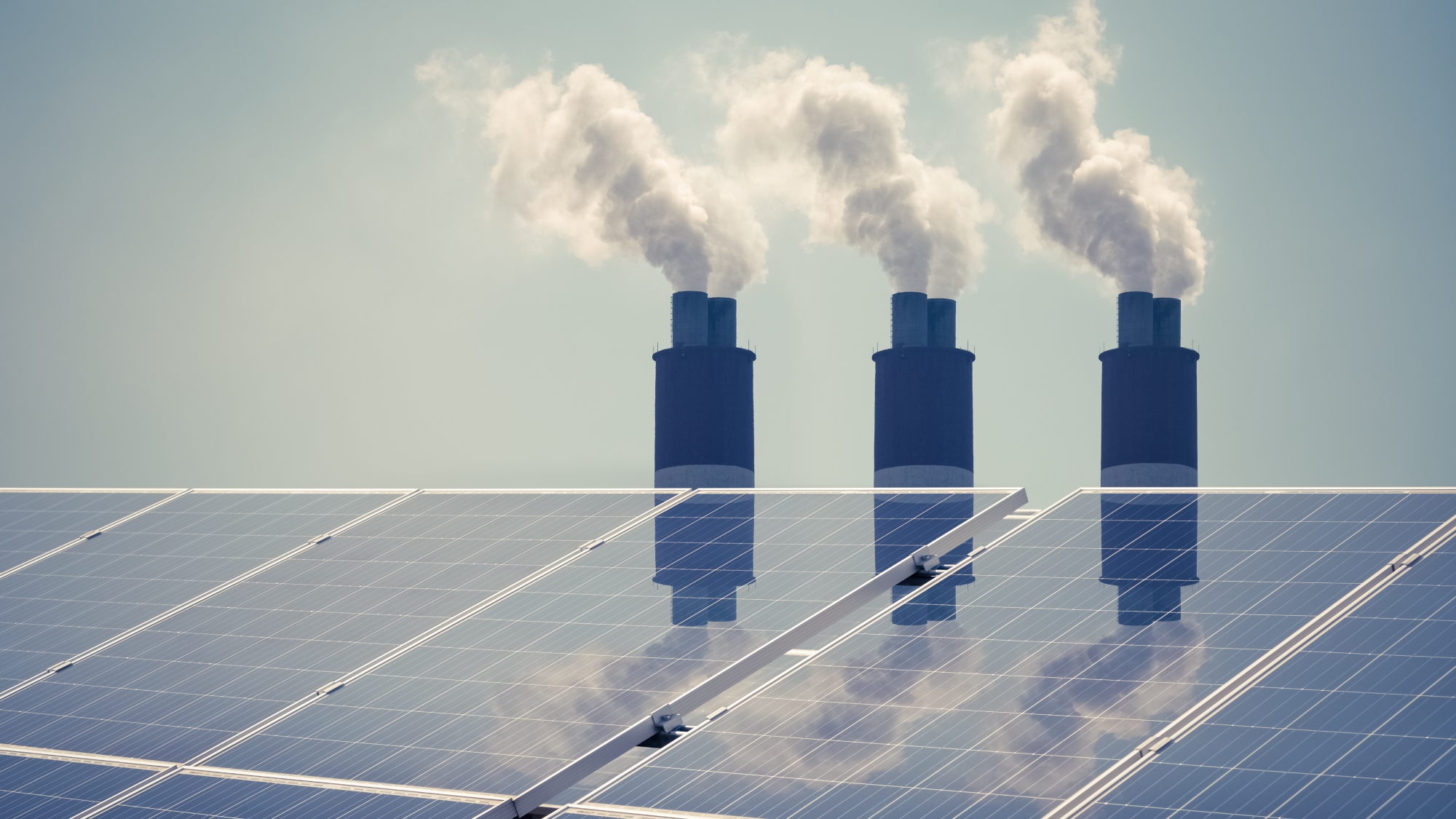
The irony of the opposition in Iberia Parish is that it has stifled a project that could have provided a stable, long-term tax base without the environmental degradation associated with the area’s historical industrial reliance.
Louisiana is currently facing a decline in traditional oil and gas employment. A report from The Data Center found that the New Orleans metro area lost over 6,500 jobs in the oil and gas sector between 2004 and 2023—a 47% decrease. In contrast, the solar industry offers a predictable, steady stream of revenue.
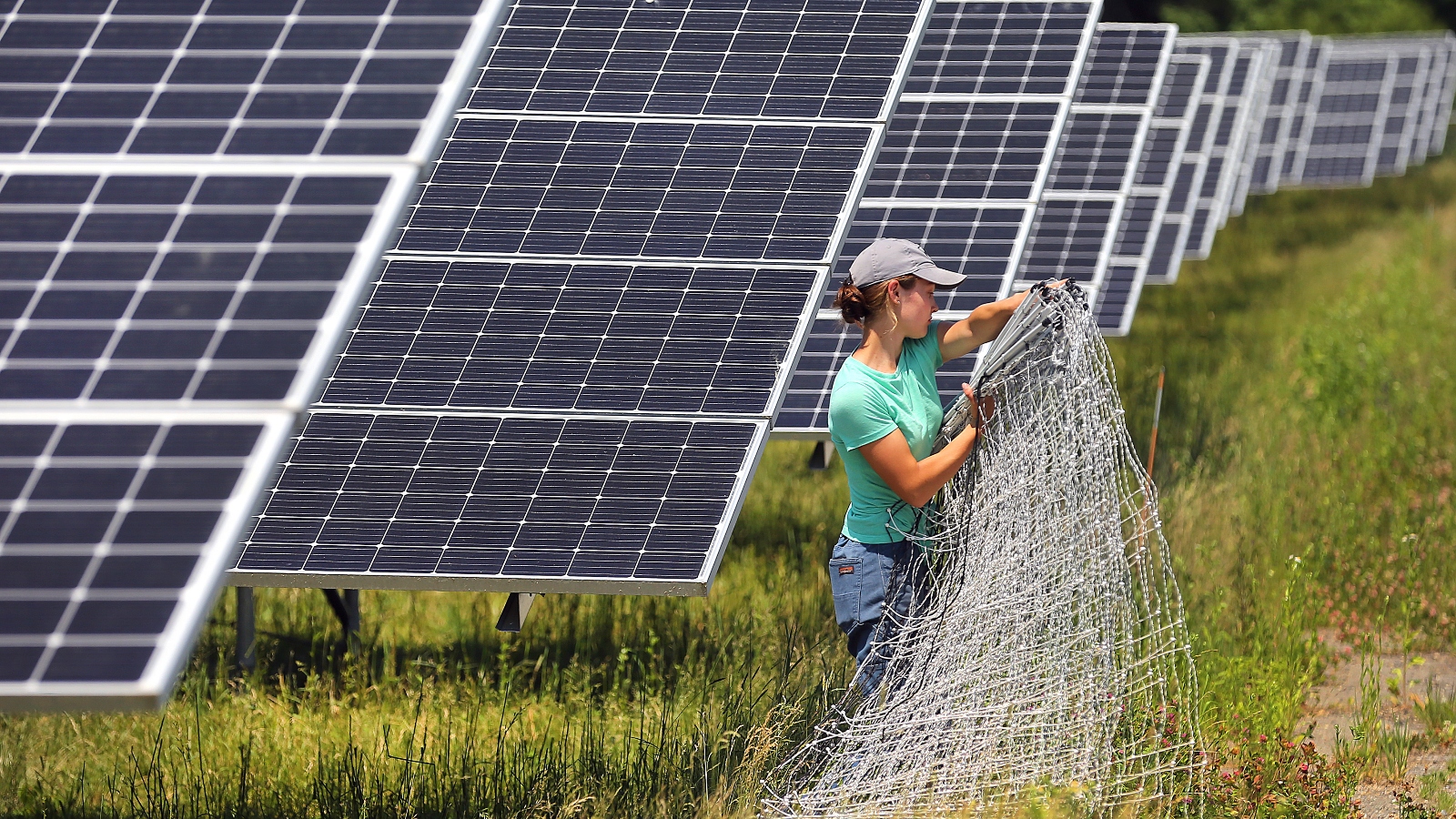
For instance, the Oxbow solar project in Pointe Coupee Parish is projected to generate $9.7 million in local tax revenue in its first three years. Similarly, the Oak Ridge Solar Farm in Morehouse Parish has generated roughly $3 million, significantly boosting local school board funding. Across the state, researchers predict solar will generate half a billion dollars in tax revenue by 2035.
Despite the vocal opposition, the transition is already occurring elsewhere. Nineteen solar projects are currently operating in Louisiana, with five coming online after the Iberia Parish moratorium was enacted. Monika Gerhart, executive director of the Gulf States Renewable Energy Industries Association, warns of the opportunity cost: "The question is whether those projects will be over the state lines in Texas or Arkansas or Mississippi, or whether Louisiana is going to be able to avail itself of that revenue."
The Path Forward: Implications for Local Democracy
The struggle in Iberia Parish underscores a deeper, more systemic issue in American public policy: the erosion of trust in institutional expertise. When neighbors turn against neighbors, and legitimate policy concerns are sidelined by AI-driven alarmism, the democratic process suffers.
Interestingly, Iberia Parish has already seen the "spillover benefits" of the solar sector in an unexpected way. A $1 billion First Solar manufacturing facility recently opened in the parish, creating hundreds of local jobs. The irony of the parish welcoming a solar manufacturing plant while simultaneously banning solar farms is a testament to the fractured nature of the modern energy transition.
For communities like Iberia, the challenge is not just the technology itself, but the information environment in which it is presented. The path to a resilient, economically diverse future requires a return to evidence-based governance. Until then, the "Acadiana Solar" story serves as a cautionary tale: when misinformation is allowed to dictate land-use policy, the ultimate cost is borne by the very taxpayers the opposition claims to protect.
As the state moves toward a future where renewable energy is increasingly a staple of the grid—and as that energy begins to overtake coal in production—the decision for rural parishes will remain: will they choose to be active participants in a changing energy landscape, or will they be left behind, clinging to the myths of the past?
