


October 22, 2026 – In the high-velocity world of modern pop music, longevity is often treated as a burden rather than a badge of honor. Yet, for Tinashe, the singer-songwriter and visionary performer, the last decade has been a masterclass in evolution. Fresh off a standout appearance at the Victoria’s Secret Fashion Show in Los Angeles, the artist sat down to discuss her eighth studio album, Popstar, a record that feels less like a pivot and more like a coronation.
With a career that has spanned the shifting tides of the digital age—from her breakout 2014 hit "2 On" to the cultural phenomenon of 2024’s "Nasty"—Tinashe is no longer interested in playing the game of being "underrated." Instead, she is defining her own legacy, identifying her peers, and embracing the effortless power that comes with over a decade of creative autonomy.
The Evolution of an Icon: A Chronological Journey
To understand the weight of Popstar, one must look back at the trajectory that brought Tinashe to this moment. Her career is a testament to the endurance required to survive the "middle" of a pop star’s journey—the space between initial breakout success and the solidification of a long-term legacy.
- 2014: The world is introduced to the "fluid" sound of Tinashe via Aquarius. "2 On" establishes her as a purveyor of high-gloss, alt-R&B that feels intimate yet radio-ready.
- 2015–2023: A period of relentless experimentation. Through a series of projects, Tinashe bridges the gap between the underground and the mainstream, consistently releasing music that defies genre boxes, even as the industry struggles to categorize her.
- 2024: The "Nasty" era. The track becomes a viral sensation, proving that Tinashe’s ear for cultural mood-setting is sharper than ever. Her lyrical wit—specifically the line, "Is somebody gonna match my freak?"—becomes a staple of the cultural lexicon.
- 2026: The release of Popstar. A mature, self-aware collection of songs that synthesizes her R&B roots with razor-sharp pop sensibilities, cementing her status as a veteran who is still peaking.
Decoding the Popstar Ethos
When asked about the title of her new record, Tinashe’s response is characteristically serene. "I landed on that title because it just so perfectly encompasses all of the things that I was trying to say," she explains. "I realized it didn’t have to be any more complicated than that."
This simplicity belies the complexity of the music. Popstar is a record of confidence. In a track like "Empty Stadium," she confronts the existential dread that has dogged her throughout her career: the label of being "underrated."
"There’s been a lot of discussion over the years where people have called me underrated, and I’ve had different feelings about that term at different times," Tinashe admits. "There were periods when I agreed. And there were periods when I rejected that term because it felt like it was putting me in some type of ‘other’ box. Empty Stadium is me saying that despite all the amazing things I’m able to experience, there’s still this fear that potentially no one’s gonna see me for who I am."
By tackling this insecurity head-on, she effectively neutralizes it. She is no longer waiting for validation; she is generating it.
Defining Peers and Paving the Way
One of the most revealing moments in our conversation centers on the concept of "peers." In an industry that often pits female artists against one another, Tinashe offers a refreshing perspective rooted in shared history and mutual survival.
"I love the girls who’ve been doing it for a long time—the same way I’ve been in the game for a long time—and are really just thriving," she says. When asked to name them, she identifies Charli xcx and Zara Larsson. "They are the girls who’ve been doing it since 2010. We understand the landscape, we understand the work, and we’ve seen the evolution of the industry firsthand."

This alignment highlights a growing movement of veteran pop artists who are taking control of their narratives. By acknowledging Charli and Zara, Tinashe is not just looking for community; she is acknowledging a cohort of creators who have transitioned from industry "products" to industry "architects."
Creative Methodology: The Art of Effortlessness
Tinashe’s approach to Popstar was defined by a deliberate rejection of "forced" creativity. In the modern music industry, where content cycles are brutal and songs are often manufactured by committee, Tinashe’s process stands in stark contrast.
"Honestly, none of them were extremely challenging to write, which is probably why they ended up on this project," she reveals. "The records that I started working on that felt difficult to write, I just didn’t end up finishing them. I was guided by an effortlessness and an ease in creating this work."
This philosophy extends to her definition of the "key to creativity." According to Tinashe, the secret is "being playful and never judging your work as you’re making it. And honestly, not creating something like it’s a product."
This is a profound stance for an artist in the age of streaming. It suggests that by treating her music as art rather than a commodity, she has found the secret to longevity. It is a mindset that allows her to remain "unflappable," even when the pressures of fame threaten to mount.
Supporting Data: The Anatomy of Success
Tinashe’s definition of success has shifted alongside her career. For many, success in pop is measured in chart positions and ticket sales. For Tinashe, it is about the intersection of critical acclaim and creative freedom.
"I feel like I’m reaching my ultimate success now because I’m able to find critical acclaim by making art the way I want," she states. "I’m really proud of my art regardless of whether it’s popular, but it feels amazing to see those things come together."
This holistic view of success is supported by the way she manages her professional life. Her mantra, "Life is long," serves as an antidote to the "impatient" nature of the industry. "I’m naturally a very impatient person who’s constantly asking, ‘What’s next?’" she says. "So I feel like it’s an important reminder that everything will unfold the way it’s meant to unfold."
Implications: A Blueprint for the Future
What does the success of Popstar mean for the broader pop landscape? It suggests that the era of the "disposable" pop star may be waning, replaced by a generation of artists who prioritize self-ownership and artistic evolution.
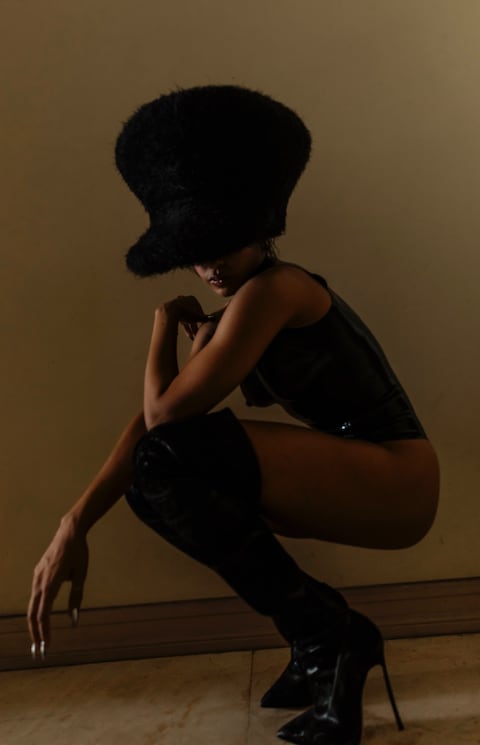
The Power of Self-Awareness
Tinashe’s lyrics have become sharper and more cynical in the best way possible. A standout lyric from the new project perfectly captures her current mindset: "If you win the rat race and you come in first place, then you’re still a rat." This line, which she calls a "bar," highlights her distance from the industry’s vanity metrics. She is playing a different game now—one where winning means maintaining one’s humanity and artistic integrity.
The Role of the "Complete" Performer
Tinashe remains a staunch advocate for the craft of performance. Whether it is her childhood memories of directing her friends in plays or her current stage presence, she views performance as an extension of her identity. "It’s where I feel the most myself," she notes.
Future Aspirations
When looking beyond the immediate horizon, Tinashe remains grounded. While she is an artist first, she possesses a multifaceted creative mind that could easily pivot toward film directing, choreography, or fashion. However, she retains a soft spot for the fundamentals of human connection, citing a potential future in caregiving or teaching. "I really love kids," she says, a sentiment that offers a grounded contrast to the high-glamour life of a global pop icon.
Conclusion: The Long Game
As Tinashe continues to promote Popstar, the narrative surrounding her has shifted from one of "what could have been" to "what is currently being achieved." She is no longer waiting for the industry to give her a seat at the table; she has built her own room.
With her feet firmly planted in the nature of Los Angeles and her eyes set on the future, Tinashe is proving that the best way to handle the pressures of fame is to simply keep creating, keep evolving, and keep remembering that life is long.
"My worst nightmare used to be dying underrated," she reflects. "But I think now my worst nightmare is running out of time to do all the things I want to do."
Given the trajectory of her latest record, it is clear that Tinashe has plenty of time left to continue shaping the sound of the future. The "underrated" chapter of her life is officially closed. The "Popstar" era has only just begun.
Tinashe’s album, Popstar, is available now on all major streaming platforms.
