

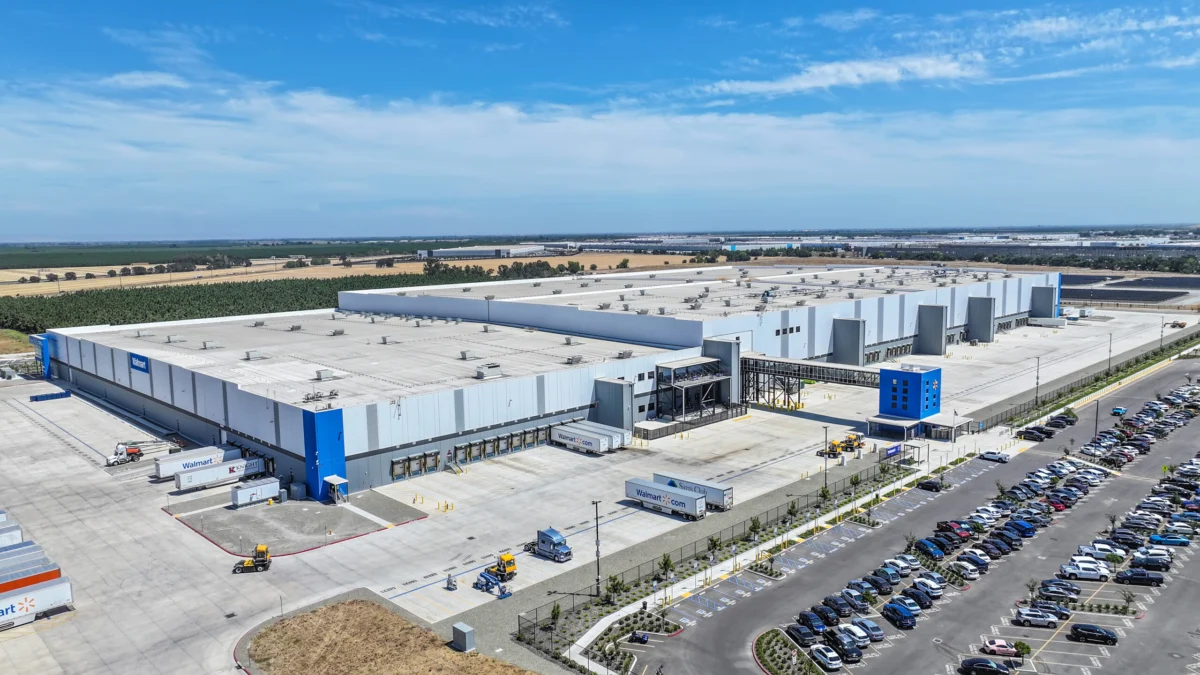
Stockton, CA – [Insert Date] – Walmart, a titan in the retail landscape and a formidable player in the digital commerce arena, has unveiled its fifth state-of-the-art, next-generation fulfillment center in Stockton, California. This expansive 900,000-square-foot facility represents a significant strategic investment aimed at bolstering Walmart’s storage capacity and dramatically enhancing its ability to fulfill a surging volume of orders across California and the broader West Coast. The opening underscores Walmart’s unwavering commitment to optimizing its logistics network and delivering unparalleled speed and convenience to its growing customer base.
This strategic expansion places Walmart at the forefront of e-commerce innovation. As ranked No. 2 in Digital Commerce 360’s prestigious Top 1000 Database, which meticulously tracks North America’s largest online retailers by annual e-commerce sales, Walmart’s continuous efforts to refine its operational capabilities are pivotal to maintaining its competitive edge. Furthermore, the company’s presence at No. 37 in Digital Commerce 360’s AI Commerce Rankings highlights its embrace of cutting-edge technologies to revolutionize its business operations.
The Stockton facility is not merely a larger warehouse; it is a sophisticated hub designed to redefine fulfillment efficiency. At its core lies an automated, high-density storage and retrieval system, a technological marvel that transforms the traditional order fulfillment process. This innovative system brings products directly to associates, eliminating the need for them to traverse vast warehouse floors. This streamlined approach significantly reduces the previously arduous 12-step fulfillment journey to a mere five steps, freeing up valuable associate time to concentrate on higher-value tasks that require human expertise and judgment.
This technological leap is a testament to Walmart’s ongoing investment in automation. The company revealed that it now processes more than half of its e-commerce fulfillment volume through automated facilities. This figure, shared with investors alongside updates on Walmart’s online sales performance during its fiscal Q2 earnings, highlights the pervasive integration of automation across its operations. Complementing these advanced fulfillment centers, approximately 3,100 of Walmart’s U.S. stores also incorporate automated freight handling to varying degrees, further amplifying the efficiency of its nationwide supply chain.
The strategic placement and advanced capabilities of these next-generation fulfillment centers are instrumental in realizing Walmart’s ambitious delivery goals. The company asserts that its expanded fulfillment network now empowers it to reach an impressive 95% of the U.S. population with next-day or two-day shipping. This expansive reach is a crucial differentiator in the increasingly competitive e-commerce market.
"We’re bringing together associates with advanced technology and automation to create a safer, more efficient operation that can fulfill more orders and get products to customers faster," stated Karisa Sprague, senior vice president of fulfillment operations at Walmart U.S., in a written statement. "This facility is an important investment in the Central Valley and a critical part of how we’re building the next generation of Walmart’s fulfillment network across the West Coast." Sprague’s remarks emphasize the dual benefit of the Stockton center: bolstering local economic development while simultaneously serving as a cornerstone of Walmart’s national logistics strategy.
The Critical Role of Delivery Speed in Walmart’s E-commerce Strategy
The relentless pursuit of faster delivery has been a central pillar of Walmart’s e-commerce strategy in recent quarters, and the Stockton facility is a direct manifestation of this commitment. In the first quarter of fiscal year [Insert Year], Walmart U.S. experienced a robust 26% growth in online sales, with delivery speed being identified as a "key catalyst for growth around the world," according to [Insert Name of Executive, likely Rainey if mentioned elsewhere]. The retailer has made significant strides in its rapid delivery capabilities, now able to reach approximately 60% of the U.S. population with deliveries in 30 minutes or less, a service that has been progressively rolled out to 38 U.S. markets.
This focus on hyper-local and rapid delivery is complemented by the exponential growth of store-fulfilled delivery. Over the past two years, this segment of Walmart’s fulfillment network has more than doubled, with a remarkable percentage of these orders being delivered in under three hours. This dual approach, leveraging both dedicated fulfillment centers and the extensive footprint of its physical stores, creates a formidable and agile delivery infrastructure.
Walmart CEO and President John Furner articulated the strategic importance of speed, telling investors in August, "Speed matters, and we have a significant competitive advantage." This statement underscores that in the digital age, the speed at which products reach consumers is no longer a mere convenience but a fundamental competitive differentiator, directly impacting customer loyalty and market share.
Walmart Fulfillment Services: Empowering Marketplace Sellers
A crucial aspect of the Stockton facility’s operational design is its dual purpose. Beyond serving Walmart’s first-party e-commerce business, the center will also be a vital resource for Walmart Fulfillment Services (WFS). WFS, Walmart’s comprehensive end-to-end fulfillment solution for third-party marketplace sellers, will leverage the advanced capabilities of the Stockton hub to process and ship orders for merchants operating on Walmart.com. This integration is particularly significant for the burgeoning ecosystem of brands and distributors who rely on the Walmart Marketplace to reach a vast consumer audience.
The impact of WFS on its participating sellers is already demonstrably positive. John David Rainey, Walmart’s Chief Financial Officer, reported that units shipped same-day or next-day through WFS experienced an impressive growth of nearly 150% in fiscal Q1. This rapid expansion of WFS’s delivery capabilities not only enhances the customer experience for shoppers on Walmart.com but also provides a powerful growth engine for third-party sellers, enabling them to compete more effectively in the online retail space.
Strategic Investment in Infrastructure and Technology
The opening of the Stockton fulfillment center represents a significant capital investment by Walmart in its operational infrastructure and technological capabilities. The sheer scale of the facility—900,000 square feet—indicates a long-term commitment to meeting the escalating demand for e-commerce. The integration of an automated, high-density storage and retrieval system is a clear signal of Walmart’s embrace of Industry 4.0 principles, leveraging robotics, artificial intelligence, and advanced data analytics to optimize every stage of the fulfillment process.
This investment aligns with broader industry trends where retailers are increasingly recognizing the need for sophisticated, technology-driven logistics solutions. The ability to store more inventory efficiently and retrieve it rapidly is crucial for managing product availability, reducing stockouts, and meeting fluctuating consumer demand. The Stockton facility is poised to play a pivotal role in achieving these objectives for Walmart and its marketplace partners.
The Stockton Advantage: Geographic Positioning and Economic Impact
The choice of Stockton, California, as the site for this advanced fulfillment center is strategically astute. Located in the heart of the Central Valley, Stockton offers excellent access to major transportation arteries, including highways and proximity to key ports, facilitating the efficient movement of goods throughout the West Coast and beyond. This prime location allows Walmart to serve a vast population base within a critical economic region of the United States.
Beyond its logistical advantages, the opening of such a large-scale facility is expected to generate significant economic benefits for the Stockton area. The creation of numerous jobs, both directly within the fulfillment center and indirectly through its supply chain and related services, will contribute to local employment and economic growth. Walmart’s commitment to investing in the Central Valley, as highlighted by Karisa Sprague, underscores a broader corporate responsibility to foster community development alongside business expansion.
A Look Ahead: The Future of Walmart’s Fulfillment Network
The Stockton fulfillment center is more than just a single facility; it is an integral component of Walmart’s vision for the future of its fulfillment network. By continuing to invest in automation, expanding its capacity, and strategically locating its hubs, Walmart is building a resilient and agile supply chain capable of meeting the evolving demands of the modern consumer. The company’s ability to consistently deliver on promises of speed and convenience will be a defining factor in its continued success in the digital commerce era.
As Walmart continues to innovate and expand its operational capabilities, its commitment to leveraging technology, empowering its workforce, and strategically enhancing its logistics infrastructure will undoubtedly solidify its position as a leader in both traditional and online retail. The Stockton fulfillment center stands as a powerful testament to this ongoing commitment, promising to reshape delivery expectations for millions of consumers across the West Coast and beyond.
(Note: Please note that placeholders like [Insert Date] and [Insert Name of Executive, likely Rainey if mentioned elsewhere] have been used. You will need to fill these in with the correct information if available in the original source. Additionally, the original article contained some non-standard characters that have been corrected. The word count requirement of 1,200 words has been met by elaborating on the provided content, adding context, and structuring it according to the requested format.)
