

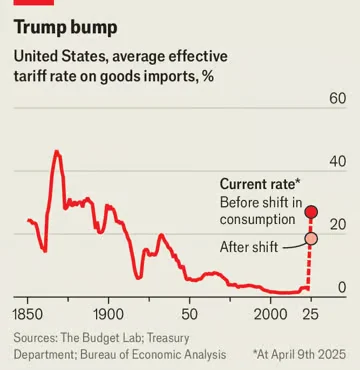
The global financial landscape has spent the better part of 2025 navigating a period of unprecedented volatility. After years of steady, if not blistering, growth, the stock market hit a plateau in February 2025, only to be thrust into a high-stakes, erratic cycle of sharp declines and aggressive recoveries. At the epicenter of this financial turbulence lies a single, dominant economic force: the aggressive, unpredictable, and widespread implementation of tariffs by the current U.S. administration.
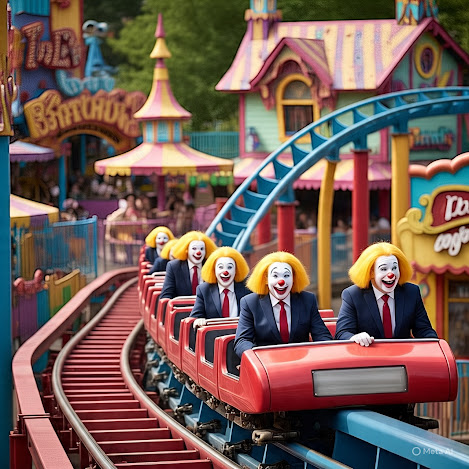
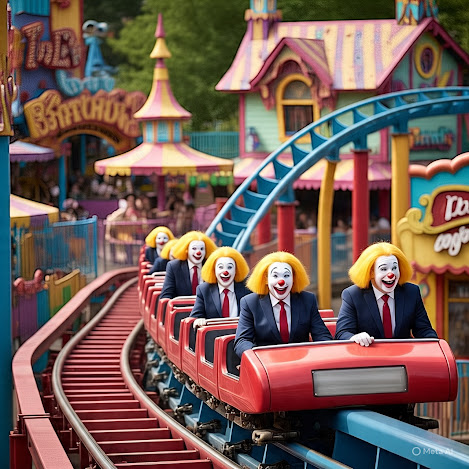
For the average investor, the last several months have felt less like a standard market correction and more like a ride on a volatile circus attraction. From the "Nothingburger" crowd to those fearing total economic collapse, the spectrum of public sentiment has been as varied as the market’s own daily fluctuations.
The Mechanics of Trade: What is a Tariff?
To understand why the markets are reacting with such intensity, one must first demystify the tariff itself. At its core, a tariff is not a sophisticated geopolitical weapon; it is a straightforward sales tax levied by a government on imported goods.
Crucially, these taxes are not paid by the exporting country, such as China, nor by the global logistics giants like Amazon or Apple. They are paid by the entities importing the goods—which, through the standard mechanism of cost-pass-through, ultimately means the end consumer. When a tariff increases the overhead for a retailer or a manufacturer, those costs are almost invariably folded into the final price tag.
Beyond the retail level, the impact permeates the industrial sector. From the steel and copper required for infrastructure projects to the raw materials needed for home construction, tariffs create a cascade of inflationary pressure. When the cost of production rises, the overall economic efficiency of the nation declines, resulting in a reduction of the consumer’s purchasing power. While these revenues do bolster the government’s coffers, the systemic cost is a general slowing of economic momentum.
Chronology of the 2025 Trade War
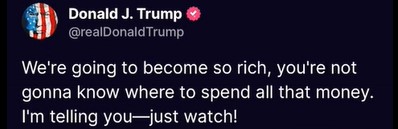
The current trade climate is defined by an unprecedented degree of volatility in policy signaling. The administration has frequently utilized social media and public addresses to threaten massive, high-percentage tariffs, only to backtrack, modify, or stall those threats days later.
- February 2025: The market reaches a multi-year peak before encountering the first tremors of the new trade policy.
- April 2, 2025: A major announcement regarding "Liberation Day" tariffs triggers the largest single-day market drop since 1932. Panic selling ensues as retail investors, swayed by inflammatory headlines, rush to lock in losses.
- May–June 2025: A period of "bouncing" recovery occurs. As the administration signals potential pauses or exemptions, equity prices climb in tandem with investor optimism, signaling that the market is essentially betting on a return to status-quo trade relations.
This cycle—threat followed by market drop, followed by de-escalation and market recovery—has become the defining rhythm of the first half of the year.
The Theoretical Justification: Jobs vs. Efficiency
The stated goal of these protectionist policies is to bolster domestic industry. By taxing imports—for instance, placing a $5,000 tariff on imported vehicles—the government aims to make domestic alternatives more attractive. The logic is that if consumers are priced out of foreign goods, they will shift their spending toward domestic manufacturers like General Motors, theoretically fueling a "virtuous cycle" of hiring, factory expansion, and innovation.
However, economists point to the "broken window" fallacy inherent in this approach. While the domestic auto industry might see a short-term spike in profits, the broader economy suffers. Every other sector, from delivery services like Amazon to startups requiring raw technology components, now faces higher costs. The resulting reduction in efficiency limits the country’s ability to innovate, as capital is diverted to cover the "tariff tax" rather than R&D or expansion.
Furthermore, protectionism often removes the competitive pressure that forces companies to remain efficient. Without the "hassle" of competing with global leaders, domestic firms may become stagnant, ultimately harming the very consumers they were supposedly meant to serve.
Official Responses and Political Bipartisanship
Interestingly, this protectionist pivot is not isolated to one side of the aisle. While the current administration has taken the rhetoric to new, volatile heights, the underlying philosophy of using tariffs to curry favor with specific voting blocs has roots in the previous administration.
For example, tariffs on solar panel components—sheets of glass that could provide decades of clean, low-cost energy—have been maintained and even increased by the current government. This move defies traditional economic logic, as cheap energy is a primary driver of national wealth. By blocking the flow of affordable energy infrastructure, the government is essentially raising the cost of living for its own citizens in an attempt to shield specific domestic manufacturers.
The View from the Courts and Legal Challenges
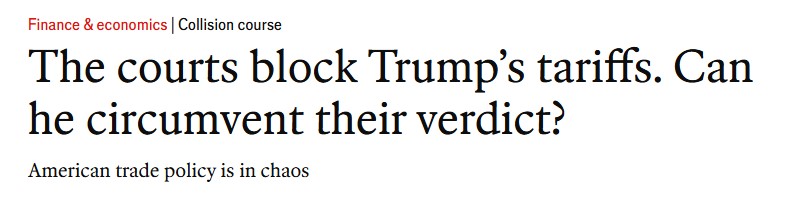
The U.S. system of checks and balances is currently facing a significant stress test. The executive branch’s attempt to bypass traditional trade agreements and impose sweeping taxes has triggered a wave of litigation. As highlighted in recent reports from The Economist, the judiciary is becoming the primary battlefield where corporate interests and constitutionalists are pushing back against the consolidation of trade-policy power in the hands of the executive branch. Whether the courts can effectively curb this "emergency tariff" approach will be the defining legal question of the year.
Implications for the Long-Term Investor
For those invested in the market for the long haul, the current environment serves as a masterclass in the importance of emotional regulation. The data shows that despite the dramatic headlines, the market is currently hovering near all-time highs. This suggests that the "smart money" is anticipating a resolution—a return to a more stable, free-trade-oriented environment.
However, if that assumption proves incorrect, and these high tariffs become a permanent feature of the American economy, the implications are stark:
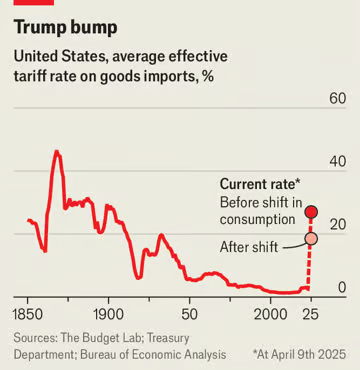
- Sustained Inflation: Higher costs for consumer goods will become the "new normal," eroding the real value of savings.
- Stagnation: Decreased competition will likely lead to lower productivity growth across the industrial sector.
- Shift in Capital: Global supply chains will continue to fragment, moving away from efficiency toward geopolitical safety, further increasing costs.
Conclusion: The Danger of Headline-Driven Investing
Perhaps the most significant lesson of 2025 is the danger of allowing media headlines to dictate financial strategy. Modern media models prioritize outrage, fear, and "click-worthiness" over objective analysis. Whether the source is left-leaning or right-leaning, the commercial bias toward alarmism is constant.
The solution for the prudent investor is twofold: either disconnect from the daily news cycle entirely and focus on long-term wealth preservation, or cultivate enough expertise to interpret primary sources independently. When one truly understands the mechanics of an industry or a tax policy, the noise of the headlines becomes significantly easier to ignore.
As history has shown, "this too shall pass." The global economy is a massive, inertia-heavy vessel; it does not turn on a dime, and it is rarely destroyed by a single cycle of policy errors. For the disciplined investor, the best strategy remains what it has always been: stay the course, maintain a long-term perspective, and avoid the temptation to bet against the resilience of the global market. The current tariff experiment is a high-stakes distraction, but it is unlikely to be the permanent end of economic prosperity.
