

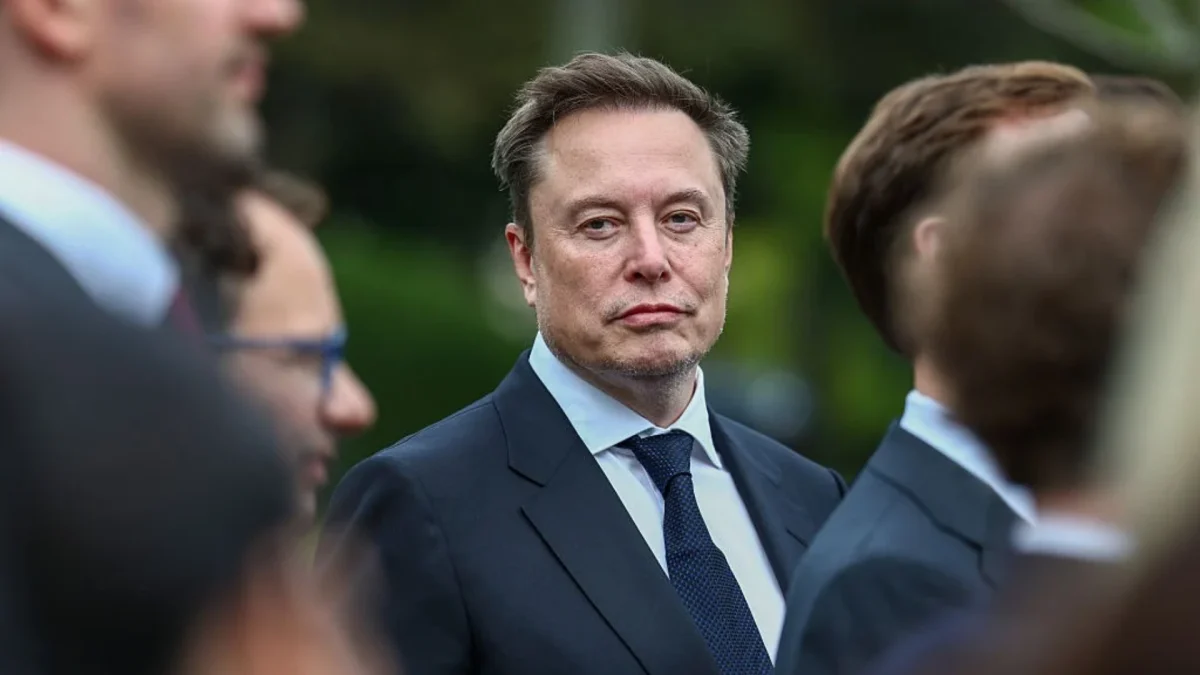
In the high-stakes world of investigative journalism and documentary filmmaking, few subjects command as much scrutiny—or inspire as much pushback—as Elon Musk. When acclaimed director Alex Gibney, the Academy Award-winning filmmaker behind Enron: The Smartest Guys in the Room, announced a comprehensive documentary on the tech mogul, industry insiders expected a cinematic event. Instead, the film’s theatrical run has become a case study in controversy, ending prematurely after just two weeks and leaving behind a trail of unanswered questions regarding market forces, digital censorship, and the reach of corporate power.
The Main Facts: A Brief and Turbulent Run
Alex Gibney’s documentary, titled simply Musk, arrived in theaters on October 9 with the weight of massive anticipation. Yet, its presence on the big screen was fleeting. According to reports from Showbiz411, the film is being pulled from nearly every one of the 472 theaters that had committed to screening it.
The box office performance has been widely categorized as an "unmitigated flop," with Gizmodo reporting a total domestic take of just $571,902. While these figures are objectively low, the context of the release suggests a narrative far more complex than simple ticket sales. The film began with a limited footprint—a four-theater rollout across two cities—before expanding to a mid-sized release in its second week. The sudden reversal of that expansion has prompted observers to ask: Is this a failure of audience interest, or are there invisible hands accelerating the film’s disappearance?
Chronology of a Controversial Release
To understand the trajectory of Musk, one must look at the timeline of events that preceded and accompanied its release.
Pre-Release Tensions: Long before the film reached a single cinema, it was the subject of legal maneuvering. Reports confirm that Elon Musk’s attorney, Alex Spiro, issued a formal legal notice to the production team. Such preemptive legal posturing is not uncommon when dealing with high-profile subjects, but the aggressive tone set the stage for a contentious rollout.
The October 9 Debut: The film opened in a handful of theaters, a strategic move often used for documentaries to build word-of-mouth. However, the anticipated momentum never materialized in the way the studio hoped.
The Mid-October Friction: During the week of expansion, the film encountered inexplicable hurdles. TikTok suspended the documentary’s advertising account, citing "political content" violations. While the account was restored 48 hours later, the interruption prevented the marketing team from effectively reaching their target demographic during the crucial second week.
The Final Pull: By the end of the second week, reports began to surface that theaters were cancelling scheduled screenings. This was not a slow fade; it was a rapid, coordinated reduction in availability that effectively ended the film’s theatrical life.
Analyzing the "Unmitigated Flop" Narrative
While the $571,902 box office figure is undeniable, industry analysts point out that documentary distribution is inherently volatile. Comparing Musk to traditional tentpole films is a false equivalence; however, even by documentary standards, the exit is unusually abrupt.
The film, which explores the complex intersection of Musk’s personal influence, his corporate empires, and his political alignments, was always going to face an uphill battle. When a documentary is centered on a figure who controls one of the world’s largest town squares—the platform formerly known as Twitter—the distribution process is uniquely vulnerable to the subject’s own influence.
The speculation on platforms like Reddit has been intense. Theatergoers in major markets like New York City reported finding their tickets cancelled without clear explanation, leading to a wave of "conspiracy" theories. While theater chains typically base cancellations on performance data, the speed at which this occurred has left many wondering if external pressures—whether legal, political, or social—played a role in the decision-making process of theater operators.
The Director and the Subject: A Clash of Titans
Alex Gibney is not a filmmaker who shies away from difficult subjects. His portfolio includes Citizen K, a deep dive into the Russian oligarchy, and The Armstrong Lie, which dismantled the mythology of Lance Armstrong. Gibney’s methodology is rooted in meticulous research and archival discovery.
Elon Musk, for his part, has been vocal about his disdain for the project. In a post on X, Musk labeled the director a "horrible human," further cementing the adversarial relationship between the subject and the creator. By dismissing the documentary as an "assembly of people with an axe to grind," Musk sought to preemptively discredit the film’s findings before the public had a chance to engage with them.
This dynamic highlights a growing trend in modern media: the "subject vs. creator" narrative. When the subject of a documentary possesses the capacity to shape the public discourse regarding that same documentary, the line between journalistic critique and character assassination blurs.
Implications: The Future of Investigative Documentary
The premature exit of Musk from theaters raises significant questions about the future of investigative media in an era of platform-controlled distribution.
The Vulnerability of Marketing
The 48-hour suspension of the film’s TikTok advertising account is a harbinger of a dangerous trend. If social media platforms, which are the primary engines for film marketing, can deem a documentary "political" and suppress its visibility, independent investigative journalism will struggle to find a theatrical audience. This creates a "soft censorship" environment where controversial films are not banned, but are made impossible to find.
The Power of the "Legal Chill"
The letter sent by Alex Spiro represents the "chilling effect" that legal threats have on independent production companies. Even if a film is legally sound, the financial burden of defending against a billionaire’s legal team can lead to risk-aversion among distributors and theater chains. When a distributor feels that a film may bring unwanted litigation, they are naturally inclined to minimize their exposure, which may explain the lack of aggressive support for Musk during its theatrical run.
The Shift to Streaming
The fact that Musk is now readily available on platforms like Prime Video and Fandango suggests that the film’s long-term viability is not tied to the box office, but to the streaming ecosystem. In the digital age, a "flop" in theaters is often just the beginning of a film’s life cycle. However, the theatrical experience offers a level of cultural validation that streaming cannot replicate. By cutting the theatrical run short, the film loses the chance to be part of the national conversation in the way that a sustained cinema release provides.
Conclusion: A Lesson in Modern Influence
The case of Musk serves as a sobering reminder of the power dynamics in modern media. Whether one views the film as a necessary investigation into the man behind SpaceX and Tesla, or as a biased critique from an "axe-grinding" director, the reality of its distribution is undeniable.
The rapid disappearance of the documentary from the cinematic landscape highlights a fragile ecosystem where independent, investigative work is increasingly at the mercy of corporate gatekeepers, social media algorithms, and the vast, unchecked influence of the very people being investigated.
As viewers transition to watching Musk from the comfort of their homes on Prime Video or Fandango, the true impact of the film will eventually be determined by the audience rather than the box office. But the questions surrounding its theatrical exit—the role of legal intimidation, the impact of social media gatekeeping, and the courage of theater exhibitors—will linger long after the credits roll. In the battle between a world-renowned director and the world’s richest man, this round may have gone to the subject, but the broader debate over media freedom and corporate influence has only just begun.
