

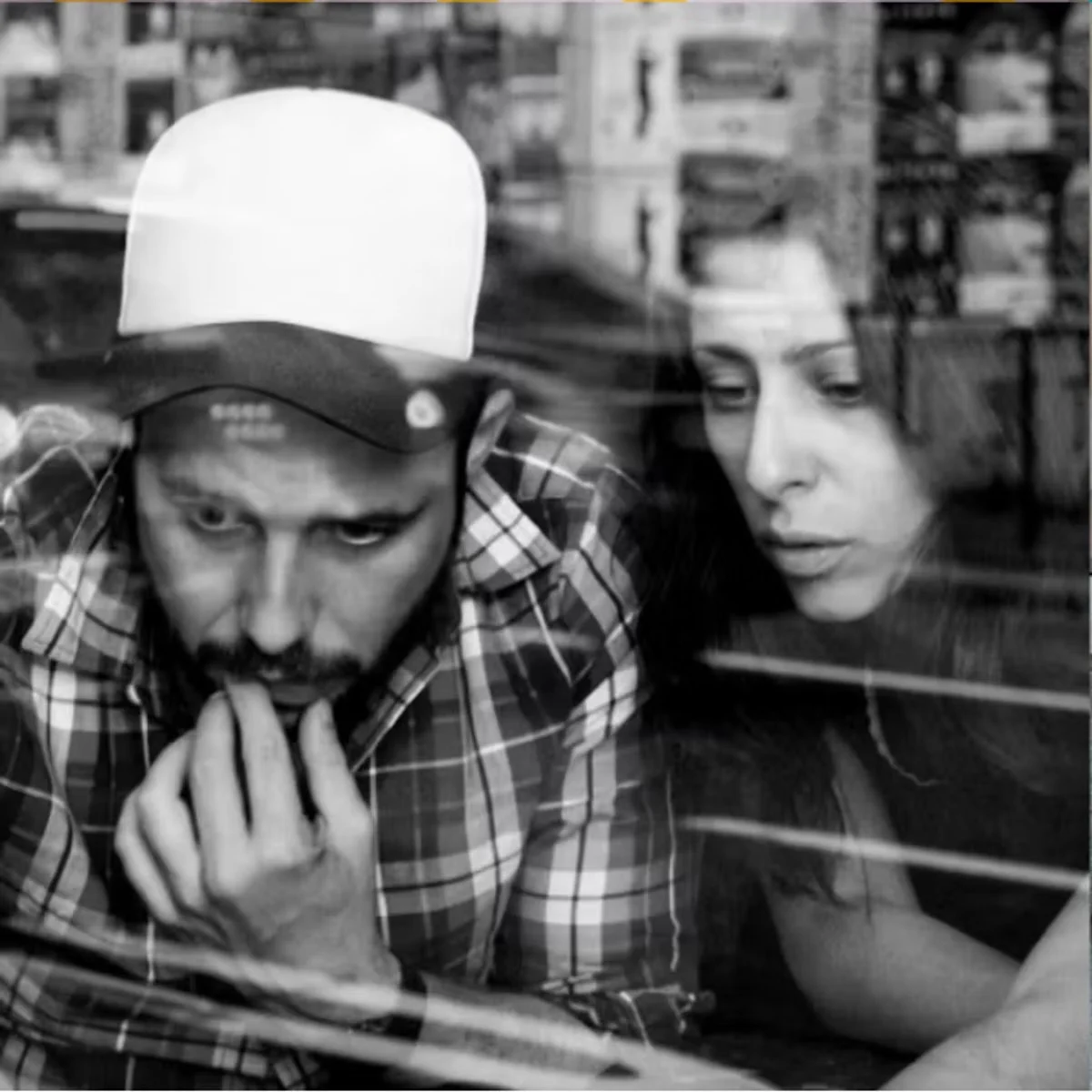
On October 22, 2026, the Parisian art world turned its collective gaze toward the Musée d’Art Moderne de Paris (MAM) for one of the most anticipated announcements in the contemporary calendar: the recipient of the 2026 Prix Marcel Duchamp. The prestigious honor, which carries a purse of €30,000 ($39,000), was awarded to the collaborative duo Brognon Rollin, comprising David Brognon and Stéphanie Rollin.
By securing this accolade, the pair bested a formidable shortlist of fellow finalists: visual artist Joël Andrianomearisoa, photographer and filmmaker Laura Henno, and the multi-disciplinary artist and performer Josèfa Ntjam. As part of the recognition, each of the three runners-up will receive a €10,000 ($11,000) grant. The winning work and the projects of the finalists are currently on display at the MAM, where the exhibition will remain open to the public through February 7, 2027.
A Legacy of Collaboration: The Artistic Trajectory of Brognon Rollin
The win marks a significant milestone in a partnership that has spanned two decades. David Brognon (born 1978, Belgium) and Stéphanie Rollin (born 1980, Luxembourg) first began their collaborative practice in 2006. Operating between Paris and Luxembourg, they have carved out a distinct niche in the contemporary art landscape, earning a reputation for work that is as intellectually rigorous as it is visually arresting.
Their practice is characterized by a "hacking" of social realities. Rather than focusing on grand, abstract gestures, Brognon Rollin often directs their lens toward the interstitial spaces of human experience—the peripheries where marginalized populations exist and where systems of control, whether institutional, psychological, or temporal, intersect. Their medium is fluid, spanning expansive video installations, immersive soundscapes, and conceptual sculpture that often requires a deep, sustained engagement from the viewer.
The Winning Work: 5,376 years, 1892 months, 1110 days, 1201 hours
The jury for the 2026 Prix Marcel Duchamp, chaired by the director of the Centre Pompidou and composed of international collectors and museum curators, highlighted the duo’s winning installation as a testament to their dedication to capturing the intangible. Titled 5,376 years, 1892 months, 1110 days, 1201 hours, the work is a profound meditation on the mechanics of recovery and the passage of time.
To realize the piece, Brognon Rollin spent years amassing sobriety tokens from members of various abstinence groups. These small, circular talismans, which typically represent the length of an individual’s journey toward sobriety, were transformed into an installation that recalls the aesthetic of vintage arcade games. By presenting these tokens—symbols of profound personal struggle and incremental success—within the context of a game, the artists invite viewers to consider the tension between individual willpower and the rigid systems of measurement we use to quantify progress. The work’s title is not merely a name; it is an arithmetic summation of the cumulative time represented by every token in the collection, forcing the audience to reckon with the massive, collective weight of human endurance.

Institutional Context and the Changing Landscape of the Prize
The ceremony took place at the Musée d’Art Moderne de Paris, a shift from the prize’s traditional home at the Centre Pompidou. The change in venue is necessitated by the massive, long-term renovation project currently underway at the Pompidou, which is slated to remain closed to the public until 2030.
Established in 2000, the Prix Marcel Duchamp was designed to foster the development of visual artists who are either French nationals or residents of France, providing them with a platform to gain international visibility. Over the past quarter-century, the prize has become a bellwether for the evolution of the French art scene, rewarding artists who challenge the boundaries of their respective media.
The list of previous laureates reads like a "who’s who" of contemporary art history: Thomas Hirschhorn, Dominique Gonzalez-Foerster, Tatiana Trouvé, Kader Attia, Latifa Echakhch, Kapwani Kiwanga, and most recently, creators like Tarik Kiswanson and Xie Lei. By adding Brognon Rollin to this roster, the ADIAF (Association pour la Diffusion Internationale de l’Art Français) has signaled a continued interest in artists who prioritize thematic depth over market-friendly aestheticism.
Official Responses and Juried Perspectives
Fabrice Hergott, director of the MAM, was effusive in his praise for the winners during the announcement ceremony. "With Brognon Rollin, the Marcel Duchamp Prize recognizes a demanding body of work that is committed to materializing what usually escapes the eye," Hergott noted in an official statement. "They possess a unique ability to make the invisible visible—the time of waiting, the mechanics of addiction, and the quiet, persistent power of intimate resistance."
The jury’s selection process is notoriously stringent, focusing on the ability of the artists to sustain a complex dialogue with the viewer. By choosing Brognon Rollin, the jury has underscored the importance of research-based art that engages with social realities rather than existing in a vacuum. The inclusion of the runners-up—Andrianomearisoa, Henno, and Ntjam—also reflects the diversity of the current French art landscape, covering themes ranging from urban identity to colonial history and speculative futures.
Implications for the Future of Conceptual Art
The victory of Brognon Rollin carries significant weight for the trajectory of conceptual art in Europe. In an era often dominated by digital saturation and the rapid consumption of imagery, the duo’s focus on long-form research and the accumulation of physical objects (like the thousands of sobriety tokens) offers a necessary counterpoint.

Their work suggests that art can be an act of stewardship. By collecting these tokens, they have become custodians of a collective narrative. The installation does not merely display the tokens; it honors the human labor inherent in their creation. As the art world moves into the latter half of the decade, the recognition of Brognon Rollin may encourage a return to "slow art"—works that require a long-term commitment from the artist and demand a meditative, slow-burn engagement from the public.
Furthermore, the financial support provided by the Prix Marcel Duchamp—not only to the winners but to the finalists—acts as a vital infrastructure for the arts. At a time when institutional funding in Europe faces various pressures, the ADIAF’s continued commitment to the prize ensures that artists have the resources to push the scale and ambition of their projects.
Conclusion: Looking Toward 2027
As the exhibition continues at the Musée d’Art Moderne through the winter of 2027, the focus will undoubtedly remain on the way Brognon Rollin manages to bridge the gap between private struggle and public display. The success of 5,376 years, 1892 months, 1110 days, 1201 hours proves that the most compelling art often resides in the quiet spaces between the ticks of the clock.
For Brognon and Rollin, this prize is not a conclusion but a continuation. Having spent two decades exploring the margins of society, they now occupy the center of the French art establishment. Whether this shift in position will alter the "demanding" nature of their practice remains to be seen, but given their track record of relentless intellectual pursuit, it is likely they will use the platform of the Prix Marcel Duchamp to delve even deeper into the mechanics of the human condition.
As the art community prepares for the next cycle of the prize, the legacy of this year’s competition remains clear: the Prix Marcel Duchamp continues to be the ultimate arbiter of quality in the French art scene, successfully identifying the voices that define our contemporary moment. Brognon Rollin, through their meticulous and poignant exploration of time and addiction, have firmly established themselves as the architects of that moment.
