

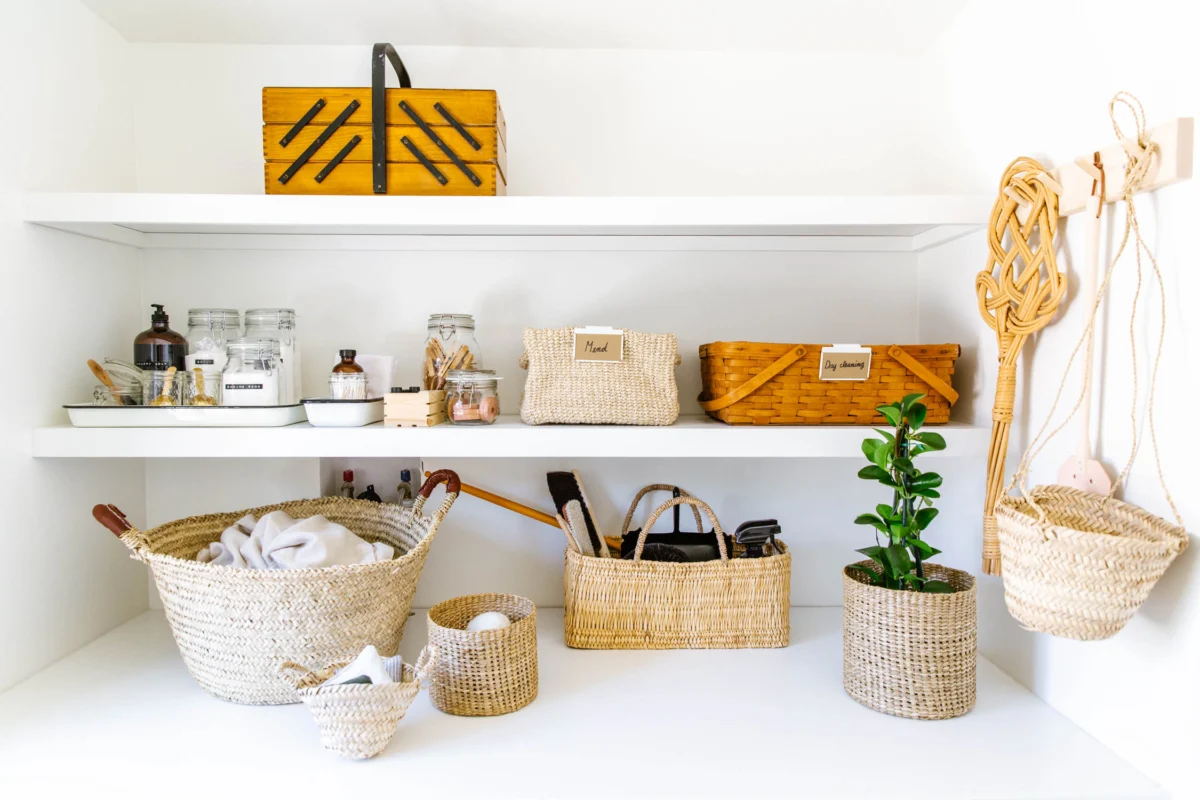
For many homeowners, the laundry room is the "forgotten zone"—a chaotic repository for mismatched socks, harsh chemical bottles, tangled hangers, and the general debris of daily life. It is rarely associated with words like "serene," "intentional," or "spa-like." However, interior design and professional organization experts Lauren Kellim and Erin Conklin, the sister duo behind the Ventura, California-based firm Humble & Grand, are on a mission to redefine this essential space. By blending high-end design aesthetics with the rigorous organizational principles of hospital supply management, they are proving that the place where we care for our clothes can be a source of genuine domestic joy.
The Philosophy of Renewal: Main Facts
At its core, the Humble & Grand philosophy rests on a simple premise: a laundry room is a space for renewal. Its singular purpose is to clean, repair, and refresh the fabrics of our lives. When that space becomes cluttered with unrelated items—broken tools, old electronics, or surplus pantry goods—the psychological benefit of the cleaning process is diminished.
Kellim and Conklin argue that by stripping away the visual noise of commercial plastic packaging and "junk drawer" overflow, homeowners can transform a utility room into a meditative workspace. This isn’t merely about aesthetics; it is about functional efficiency. When every item has a dedicated, labeled home, the barrier to entry for performing a mundane task like folding laundry is significantly lowered. By curating a space that feels beautiful, the chore itself becomes an act of self-care rather than a begrudging necessity.
A Legacy of Organization: The Chronology of Success
The duo’s unique approach is rooted in their professional history. Before pivoting to full-time interior design and home organization, they navigated the high-stakes world of hospital administration. In a medical setting, organization is not a luxury; it is a matter of safety and efficiency. A misplaced supply can cause critical delays.
Applying this "medical-grade" mindset to the home, the sisters realized that residential laundry rooms were failing because they lacked the logic of a clinical supply closet. Over the past few years, as they have expanded their practice, they have observed a shift in client priorities. Post-pandemic, homeowners are spending more time in their houses and are less tolerant of "visual clutter." They have moved from wanting simple storage solutions to desiring a total overhaul of their utility habits. Today, Humble & Grand operates as a lifestyle brand, offering hand-crafted housewares that bridge the gap between heavy-duty utility and elegant home decor.

Supporting Data: The Impact of Environment on Productivity
While "laundry room design" might seem like a niche interest, the psychological implications are grounded in environmental psychology. Studies on home organization suggest that physical clutter competes for our neural resources. When a laundry room is filled with chaotic, mismatched plastic bottles and piles of unwashed items, it triggers a subtle, persistent stress response.
Conversely, decanting detergents into clear glass vessels and utilizing woven, labeled baskets creates what experts call "visual rhythm." This order allows the brain to process the room as a singular, organized unit rather than a collection of disparate tasks. Furthermore, moving toward sustainable, refillable, or glass-based storage reduces the "plastic footprint" of a household. Data from the Environmental Protection Agency (EPA) continues to highlight the burden of plastic waste; by transitioning to concentrated pods or powder refills in glass containers, families can significantly reduce their contribution to landfill waste, aligning their home maintenance with broader environmental goals.
Expert Insight: Official Responses from Humble & Grand
In recent consultations, Kellim and Conklin have emphasized five key pillars for a successful laundry room transformation:
1. The Principle of Essentialism
"Only store things related to laundry and cleaning in this space," says Conklin. The laundry room is not a secondary storage unit for lightbulbs, extension cords, or pet supplies. If it doesn’t directly contribute to the process of cleaning, drying, or mending, it needs to be relocated. This creates "cognitive space" for the actual task at hand.
2. Systematic Categorization
Labeling is not just a decorative choice; it is a communication tool. The sisters advocate for a strict basket system: one for whites, one for stains, one for mending, and one for dry cleaning. By using smaller baskets for mending tasks and larger, market-style baskets with sturdy handles for dry cleaning, the movement of laundry throughout the home becomes fluid and intentional.

3. The Power of Decanting
The visual assault of bright, neon-colored plastic detergent bottles is a major deterrent to a peaceful environment. "It helps us find joy in a mundane task," notes Conklin. "We enjoy it more when we don’t have to look at ugly plastic." Decanting liquids and powders into high-quality glass jars provides the added benefit of a clear visual inventory, allowing homeowners to see exactly when they are running low on supplies.
4. Health-Conscious Cleaning
The duo strongly advocates for replacing harsh, synthetic chemicals with simple, earth-friendly alternatives. Baking soda and hydrogen peroxide are their gold standards for stain removal. Keeping these in small, aesthetically pleasing glass jars with dedicated tools (like cotton swabs or bamboo brushes) turns the act of spot-treating a garment into a precise, almost clinical procedure.
5. Elevating the "Small" Details
The difference between a chore and a ritual often lies in the tools. Replacing a plastic scoop with a wooden or brass one adds a sensory element to the process. Similarly, swapping chemical-laden dryer sheets for wool dryer balls infused with organic essential oils allows for a customized, waste-free experience that leaves both the clothes and the room smelling naturally clean.
Implications: Moving Toward "Slow Living"
The shift toward a better-organized laundry room reflects a broader cultural movement toward "slow living." In a society that is increasingly digital and fast-paced, there is a growing desire to reclaim the manual, tactile aspects of life. Caring for our textiles—washing, mending, and properly storing them—is a way of honoring the things we own.
When the laundry room is treated with the same respect as a living room or a kitchen, the implications for household harmony are profound. Children are more likely to participate in chores when systems are clearly labeled and accessible. Partners are more likely to put away their own clothing when the "destination" for those items is clear and orderly.

Ultimately, Kellim and Conklin are teaching us that we do not have to be victims of our own utility rooms. By investing in natural materials—cotton ropes, glass, wood, and brass—and committing to a philosophy of "less but better," we can reclaim the laundry room. It ceases to be a dungeon of drudgery and becomes a quiet, efficient workshop where we prepare ourselves for the week ahead.
Recommended Upgrades for the Modern Laundry Room
To begin your own transformation, consider these targeted upgrades that favor longevity and aesthetics over temporary fixes:
- Wool Dryer Balls: A staple for those looking to eliminate single-use dryer sheets. They reduce drying time, soften fabrics naturally, and can be scented with lavender, eucalyptus, or cedarwood oils.
- Customizable Pump Dispensers: For liquid detergents or fabric softeners, use glass pump bottles. These can be sourced from specialized companies that allow for custom labeling, ensuring your detergent is identifiable and easy to dispense without the mess of heavy, dripping plastic jugs.
- Natural Fiber Baskets: Woven rope or seagrass baskets offer durability and a soft, organic texture that contrasts beautifully against the hard surfaces of a washer and dryer. They are ideal for storing clean linens or hauling folded clothes back to the bedroom.
- Glass Storage Jars (Korken Style): These are the gold standard for storing laundry pods or scent-booster crystals. The airtight rubber gasket ensures that powders stay dry and clump-free, while the clear glass maintains a clean, uniform look across your shelves.
By integrating these strategies, the Humble & Grand method offers a scalable blueprint for anyone—whether they live in a sprawling home or a compact apartment—to elevate their daily routine. The laundry room, once the most dreaded space in the house, can indeed become the most peaceful.
