


In a significant move to align academic training with the shifting demands of the global property market, Rutgers University has announced the launch of a new Bachelor of Science (B.S.) degree program in real estate. The decision, formally approved by the Rutgers Board of Governors during their October 1 meeting, marks a historic milestone for the state’s flagship institution. By transitioning from a minor and concentration-based model to a full-fledged major, Rutgers is positioning itself as the premier hub for real estate education in the Northeast.
This strategic expansion is spearheaded by the Rutgers Center for Real Estate, an organization that has long served as the school’s heartbeat for industry-focused pedagogy and professional networking. Starting in May 2028, the inaugural class of graduates will enter the workforce with a specialized degree, providing them with a distinct competitive advantage in sectors ranging from commercial acquisition and urban development to real estate finance and asset management.
The Evolution of Real Estate at Rutgers: A Chronology of Growth
The establishment of this new degree program is the culmination of over a decade of intentional growth. Since 2015, Rutgers Business School has offered undergraduate students the opportunity to minor in real estate or pursue a concentration within their business degree. While these foundational programs successfully introduced thousands of students to the mechanics of the property market, the administration recognized that the industry’s increasing complexity demanded a more robust, specialized curriculum.
- 2015: Rutgers introduces an undergraduate minor and a formal concentration in real estate, establishing a foundational presence at the Newark and New Brunswick campuses.
- 2023–2024: Industry feedback and shifting market trends in New Jersey’s logistics and residential sectors underscore the need for highly specialized talent, prompting discussions about a dedicated major.
- October 1, 2026: The Rutgers Board of Governors formally approves the creation of the Bachelor of Science in Real Estate.
- October 13, 2026: The university makes the public announcement, signaling a new era for the business school.
- May 2028: The first cohort of students is slated to graduate with the new B.S. in Real Estate, marking the transition from traditional business administration to specialized property studies.
This timeline reflects a deliberate strategy of testing the market with minor programs before committing to a full degree, ensuring that the final curriculum is vetted by faculty, industry leaders, and current market conditions.
Supporting Data: Why New Jersey Needs Specialized Real Estate Talent
The necessity for this degree is underscored by the sheer scale of the real estate industry within New Jersey. According to data provided by the Commercial Real Estate Development Association (CREDA) of New Jersey, the sector is not merely a component of the state’s economy; it is a primary driver.
In 2025 alone, commercial real estate contributed a staggering $32.1 billion to the New Jersey economy. This economic engine supported more than 142,000 jobs across the state and generated $9.4 billion in total wages and salaries.
The state’s unique geographic position—sandwiched between the financial powerhouses of New York City and Philadelphia—has turned New Jersey into a critical node for industrial logistics and transit-oriented development. As corporations continue to consolidate operations in the Garden State, the demand for professionals who understand the nuances of land use, zoning, capital markets, and property management has reached an all-time high. The Rutgers program is designed to fill this specific vacuum, providing a talent pipeline that is "trained, knowledgeable, and ready to work," according to faculty leadership.
Official Responses and Leadership Vision
The initiative has received overwhelming support from the leadership at Rutgers Business School. Dean Lei Lei, a driving force behind the school’s academic expansion, emphasized that the decision is a response to the state’s specific economic landscape.
"Because of New Jersey’s high density of corporate headquarters, massive industrial logistics hubs, and booming transit-oriented residential developments, offering a major in real estate at Rutgers will provide a strong talent pipeline to meet the needs of the state’s economy," Dean Lei noted.
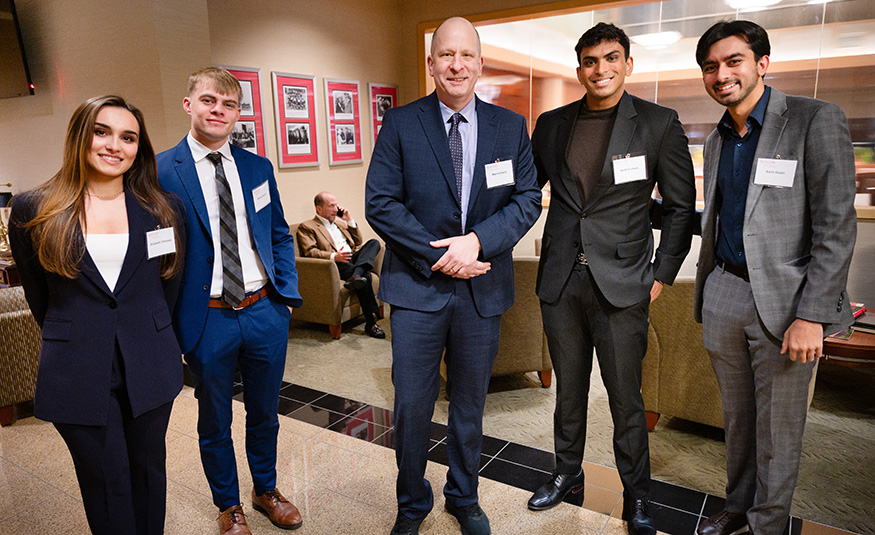
Professor Morris Davis, who serves as the Paul V. Profeta Chair of Real Estate and is the director of the Center for Real Estate, echoed this sentiment. Davis, a noted authority on housing and finance, has observed a recurring trend among his students: "Many students learn after having a class or two in the real estate program at Rutgers that they wish to learn as much as possible and pursue commercial real estate acquisition, financing, or development as a career."
For Davis, the goal is to ensure that students do not just graduate with a diploma, but with a refined skill set that is immediately applicable to the complexities of modern real estate, such as navigating high interest-rate environments, ESG (Environmental, Social, and Governance) compliance in building, and the revitalization of urban retail spaces.
The Role of the Center for Real Estate
The Center for Real Estate remains the backbone of this new academic venture. Beyond curriculum design, the center has been instrumental in democratizing access to real estate education. Since its inception, the center has awarded over $2.3 million in scholarships to 373 students. This financial support is made possible through a robust network of industry donors and an engaged advisory board, ensuring that high-performing students from all backgrounds can enter the industry.
The center’s corporate partners—including major firms like Dynamic Engineering Consultants PC, EisnerAmper, Sills Cummis & Gross PC, and Walker & Dunlop—provide more than just financial backing; they provide a bridge to the professional world. These partnerships offer students access to internships, guest lectures from industry titans, and direct mentorship, which significantly lowers the barrier to entry for graduates looking to secure positions at top-tier firms.
Competitive Implications and Market Differentiation
In the landscape of higher education, Rutgers is carving out a unique niche. While other institutions in the region, such as Montclair State University and Monmouth University, offer excellent B.S. in Business Administration programs with concentrations in real estate, Rutgers is distinguishing itself by offering a dedicated, standalone B.S. degree.
This distinction is significant. A dedicated major allows for a deeper dive into specialized coursework that might be overlooked in a broader business curriculum. Students in the new program will benefit from a more comprehensive exploration of:
- Real Estate Finance: Advanced modeling, debt structuring, and equity analysis.
- Urban Planning and Policy: Understanding the intersection of public policy and private development.
- Asset Management: Lifecycle management of commercial and residential portfolios.
- Sustainable Development: Addressing the future of green building and carbon-neutral real estate assets.
Furthermore, the new undergraduate major complements the school’s existing graduate offerings, including its highly regarded MBA concentrations in real estate. By providing a pathway from undergraduate studies to an MBA, Rutgers is creating a "continuum of learning" that allows students to grow alongside their careers.
Looking Toward the Future
The launch of the Bachelor of Science in Real Estate is not merely an academic update; it is a signal to the industry that Rutgers is committed to being the intellectual center of the New Jersey property market. As the sector faces new challenges—from the rise of remote work impacting office valuations to the evolving needs of e-commerce logistics—the next generation of real estate leaders will require more than just a passing interest in the field. They will need the rigorous, data-driven, and experiential education that this new major promises to deliver.
For prospective students, the message is clear: the path to a career in real estate has become more focused and accessible than ever before. With the backing of the Rutgers Center for Real Estate, a dedicated faculty, and a strong network of corporate sponsors, the university is set to transform the way future professionals approach the built environment. As the first class prepares to walk across the stage in May 2028, the industry will be watching, waiting to welcome a new generation of graduates who are, in the words of Professor Morris Davis, "trained, knowledgeable, and ready to work."
