

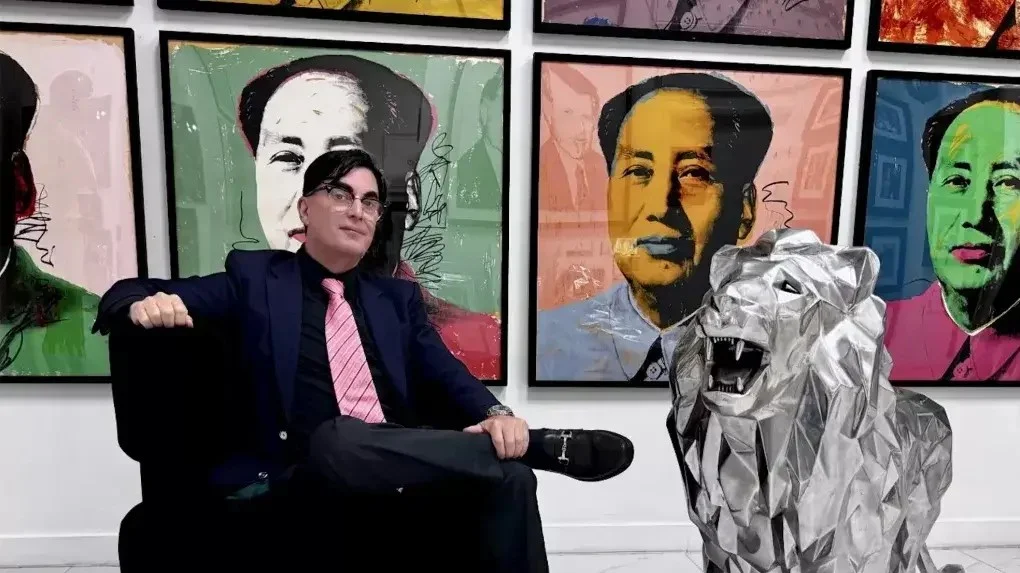
On October 2, the art world witnessed the final chapter of a sophisticated criminal enterprise that shook the foundations of the Miami gallery scene. Leslie Roberts, a prominent Miami-based art dealer, was sentenced to three years and ten months in federal prison for orchestrating a sprawling fraud scheme involving the sale of counterfeit Andy Warhol works. The sentencing, handed down by US District Judge Roy Altman in the Southern District of Florida, serves as a stark reminder of the vulnerabilities inherent in the high-stakes trade of blue-chip art.
Beyond the prison term, Judge Altman ordered Roberts to pay nearly $2.6 million in restitution, a sum that represents the illicit proceeds he harvested by weaponizing the prestige of one of the 20th century’s most iconic artists.
The Anatomy of the Fraud: How the Scheme Unfolded
The investigation into Roberts revealed a meticulously crafted web of lies designed to bypass the rigorous vetting processes typically associated with high-value art transactions. Roberts did not merely sell fake prints; he built an entire infrastructure of deception.
The Fabrication of Provenance
The cornerstone of Roberts’ scheme was the creation of entirely fraudulent documentation. In the art market, provenance—the history of an object’s ownership—is as valuable as the work itself. Roberts fabricated sophisticated invoices and authentication documents, going so far as to forge the signatures of authorized representatives from the former Andy Warhol Art Authentication Board. By layering these forgeries with falsified identification numbers allegedly linked to the Andy Warhol Foundation for the Visual Arts (AWF), he successfully cloaked his counterfeit inventory in the mantle of institutional legitimacy.
The Accomplice: A Performance of Authority
Roberts’ operation was not a solitary endeavor. He enlisted the assistance of Carlos Rodriguez Melendez, who acted as a crucial piece of the deception. Melendez assumed the role of an employee at a prestigious, New York-based auction house. In this capacity, he provided verbal and written "confirmations" to prospective buyers, validating the authenticity of the forgeries. This external "vetting" by a perceived industry insider served to neutralize the skepticism of even the most cautious collectors.
A Chronology of Deception
The timeline of the investigation and subsequent legal proceedings highlights the persistence of federal authorities in untangling the complex fraud.

- The Inception of the Scheme: For several years, Roberts operated his Miami gallery as a facade for the distribution of counterfeit works, positioning himself as a reputable conduit for rare Warhols.
- The Investigative Net Tightens: As buyers grew suspicious of the lack of consistent tracking records and discrepancies in the forged documents, the FBI’s Miami Field Office launched a comprehensive probe into the gallery’s activities.
- The June Plea: In June 2026, facing mounting evidence, Leslie Roberts entered a guilty plea to charges of conspiracy to commit wire fraud. His associate, Rodriguez Melendez, followed suit, pleading guilty to the same charge.
- The Sentencing: On October 2, 2026, Judge Roy Altman concluded the case, delivering the 46-month prison sentence. The ruling was punctuated by the requirement of full financial restitution to the victims.
Supporting Data and the Cost of Counterfeit Culture
The financial toll of the Roberts case—$2.6 million—is a significant figure, but experts suggest the "hidden" costs are even higher. The influx of high-quality forgeries into the private market distorts pricing, erodes the value of authentic works, and forces reputable auction houses to increase the cost of authentication services.
In the world of Andy Warhol, where works like his Campbell’s Soup Cans or Marilyn Diptych prints regularly fetch hundreds of thousands, if not millions of dollars, the margins for fraud are incredibly high. Roberts’ operation focused on works that were desirable enough to command high prices but common enough that collectors might not immediately demand a forensic audit of the paper stock or ink chemistry.
Official Responses: Law Enforcement’s Stance
The sentencing was met with strong rhetoric from federal prosecutors and law enforcement, underscoring the government’s intent to police the "grey areas" of the art market.
US Attorney Jason A. Reding Quiñones, representing the Southern District of Florida, issued a scathing statement following the sentencing. "He exploited the trust that collectors place in art dealers and the authenticity of the works they purchase," Quiñones stated. "Today’s 46-month prison sentence sends a clear message: fraud is fraud, whether it happens on Wall Street or in an art gallery. Those who profit through deception will be held accountable."
The FBI, which has increasingly focused its resources on high-end art crimes, echoed these sentiments. Special Agent in Charge Brett D. Skiles of the FBI Miami Field Office noted the broader implications of the crime: "Art fraud undermines confidence in the legitimate art market and victimizes buyers who rely on the authenticity of the works they purchase. This sentence demonstrates that those who use forged artwork, fraudulent documentation, and deceptive schemes to profit illegally will be held accountable."
Implications for the Art Market
The Roberts case is part of a growing trend of high-profile forgery scandals that have forced the art world to reconsider its reliance on paper-based authentication.

The End of "Gentleman’s Agreements"
For decades, the art market operated largely on trust and reputation. A dealer’s word was often the final authority on a work’s provenance. The ease with which Roberts manufactured fake authentication boards and auction house confirmations suggests that this era of informal verification is effectively over. Galleries and private collectors are now increasingly turning to blockchain-based provenance tracking and scientific testing—such as carbon dating of canvas or spectroscopic analysis of pigments—to verify works before funds change hands.
Increased Scrutiny on Small-to-Mid-Sized Galleries
While major auction houses have robust compliance departments, small-to-mid-sized galleries like the one Roberts operated often lack the same level of internal oversight. This case serves as a warning to collectors: size does not correlate with safety. The prestige of a gallery’s location, even in a thriving art hub like Miami, is not a substitute for due diligence.
The Role of the Andy Warhol Foundation
The Andy Warhol Foundation for the Visual Arts, which ceased its authentication board in 2011, has long maintained that it does not provide certificates of authenticity. The fact that Roberts was able to convince victims that he was dealing directly with the Foundation highlights a critical gap in consumer education. The Foundation has been active in alerting the public that any "authentication" document bearing their name is, by definition, a forgery.
Conclusion: A Cautionary Tale
The case of Leslie Roberts is more than a story of a greedy dealer; it is a case study in the fragility of cultural value. When the authenticity of an artwork is reduced to a set of forged documents, the art itself—and the legacy of the artist—is diminished.
As Roberts begins his sentence, the art world continues to grapple with the fallout. The $2.6 million restitution order will provide some financial solace to the victims, but the reputational damage to the market’s integrity may take longer to heal. For the collectors who purchased these works, the lesson is expensive but clear: in an age of sophisticated forgery, skepticism is the only responsible approach. As the authorities have made plain, the law is no longer willing to treat art fraud as a victimless or "sophisticated" crime. It is a theft of culture, and it will be prosecuted as such.
