

As the technology world prepares for the 60th anniversary of the Consumer Electronics Show (CES) in Las Vegas, the landscape of the industry’s most influential gathering is undergoing a seismic shift. What was once a trade show defined by the rigid geometry of the Las Vegas Convention Center (LVCC) has evolved into a sprawling, citywide experience. As CES 2027 approaches, the narrative is no longer just about the gadgets on the floor, but about where—and how—the world’s most powerful brands choose to show up.
The upcoming milestone year is marked by a paradox: while the event remains the "Global Stage for Innovation," two of its most historic anchors, Panasonic and Sony, have announced their departure from the traditional exhibition floor. Simultaneously, the rise of "experiential" venues like the Sphere and the introduction of new categories like "Art Tech" signal a future where technology is integrated into the cultural fabric rather than just displayed on a pedestal.
Main Facts: A Paradigm Shift in Engagement
The 2027 edition of CES is defined by three major developments that highlight the changing priorities of global technology leaders.
First, the "Sphere Effect" has reached a fever pitch. Lenovo has announced it will host its "Tech World @ CES 2027" keynote at the Sphere, following the successful precedents set by HP and Delta. The theme, "Hybrid AI," aims to utilize the venue’s unparalleled immersive capabilities to showcase an ecosystem of artificial intelligence that transcends traditional screen-based demonstrations.
Second, the "No-Show" phenomenon has sent shockwaves through the industry. Panasonic, a foundational exhibitor since the inaugural 1967 show, will not have a presence on the show floor in 2027. Sony, which traditionally occupied one of the largest footprints in the LVCC Central Hall, is also skipping the 2027 event following the dissolution of its joint electric vehicle project with Honda.
Third, the Consumer Technology Association (CTA) is expanding the show’s intellectual borders. In partnership with the venerable auction house Christie’s, CES has introduced "Art Tech" as a new category for the CES Innovation Awards. This move validates the growing intersection of generative AI, virtual reality, and the creative arts, positioning technology as a tool for cultural expression rather than just utility.
Chronology: From the Basement to the Sphere (1967–2027)
To understand the magnitude of the changes in 2027, one must look at the trajectory of CES over the last six decades.
- 1967–1980s: The Hardware Era. The first CES took place in New York City with just 14 exhibitors, including LG (then GoldStar) and Panasonic. It was a show for transistor radios and televisions. For decades, the "booth" was a sacred space where retail buyers met manufacturers.
- 1990s–2010s: The Convergence Era. The show moved permanently to Las Vegas, expanding from the LVCC to the Sands Expo. This era saw the rise of the PC, the DVD, and eventually the smartphone. Sony and Panasonic became the "titans of the hall," spending millions on multi-story booths that served as cathedrals of consumerism.
- 2020–2024: The Pandemic Pivot. COVID-19 forced CES into a digital-only format in 2021, breaking the "booth habit" for many brands. When the show returned to in-person, companies began questioning the ROI of massive physical builds, leading to a rise in hotel suite activations and off-site "takeovers."
- 2025–2027: The Experiential Era. The opening of the Sphere in 2023 changed the gravity of Las Vegas. Brands realized that a 90-minute immersive experience at the Sphere could generate more social media impressions and executive engagement than a four-day booth. Lenovo’s 2027 commitment to the Sphere marks the culmination of this trend.
Supporting Data: The Economics of the "Anti-Booth" Movement
The decision by Panasonic and Sony to exit the show floor is driven by a complex set of economic and strategic data points. Traditionally, a premier "anchor" booth in Central Hall could cost a corporation upwards of $5 million to $10 million when factoring in floor space, construction, logistics, and staffing.
Data from recent years suggests a diminishing return on these "megabooths." In 2024 and 2025, attendance remained high (averaging 130,000+), but the way attendees interacted with the show changed. "Suite culture"—where brands host private meetings in luxury hotels like the Wynn or Encore—has seen a 25% increase in participation. Brands are finding that high-level deal-making happens behind closed doors, while brand "vibe" is better established through restaurant takeovers or stadium-scale spectacles.
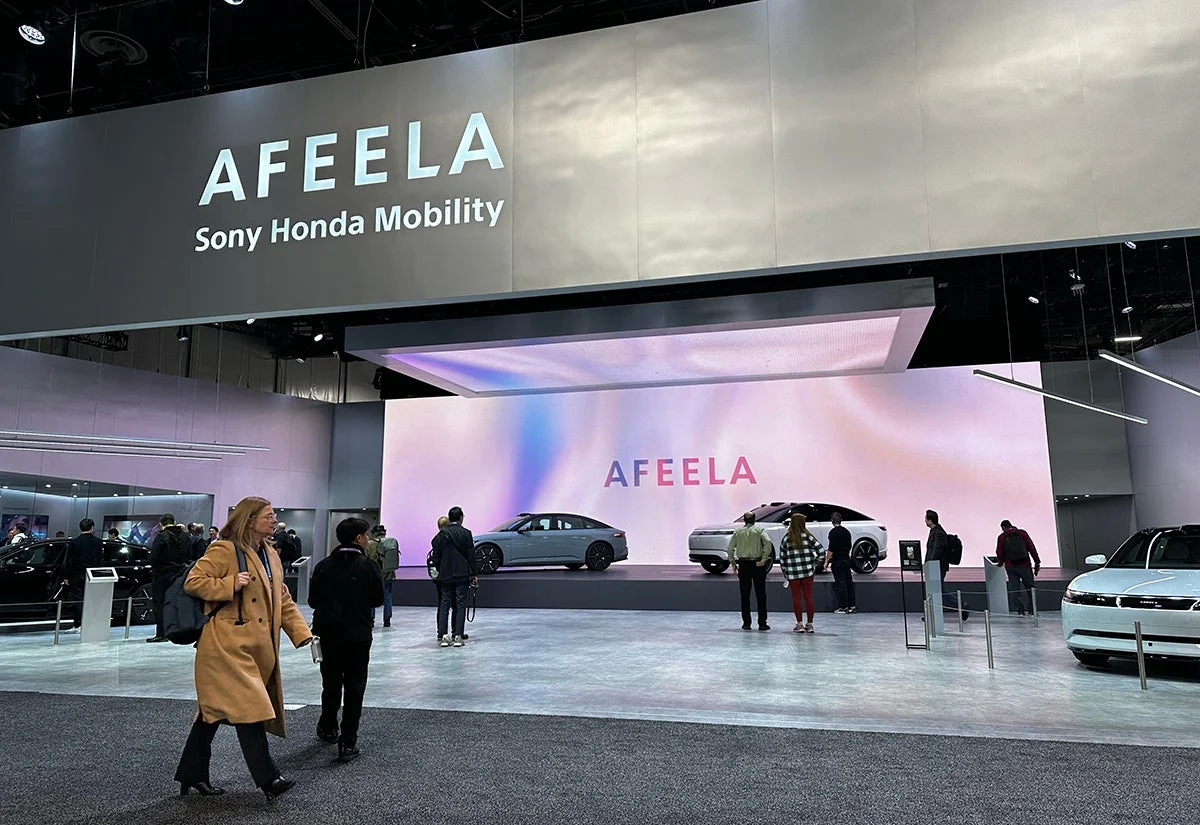
For Sony, the data was likely tied to product cycles. The Sony Honda Mobility venture, which was the centerpiece of their CES 2026 presence with the Afeela EV, stalled in mid-2026. Without a flagship hardware project to anchor a 20,000-square-foot booth, the cost-to-benefit ratio no longer favored a traditional exhibit.
Conversely, the "Art Tech" sector is seeing explosive growth. According to industry reports, the market for immersive art experiences—powered by projection mapping and VR—is expected to reach $12 billion by 2028. The CTA’s partnership with Christie’s is a data-driven move to capture this nascent market, which bridges the gap between software developers and the luxury art world.
Official Responses: Shifting Communications Channels
The official rhetoric from the departing giants emphasizes a "strategic recalibration" rather than a total abandonment of the CES ecosystem.
A spokesperson for Panasonic stated that the company is "shifting its communication channels" to better align with its B2B focus on green energy and automotive components. While they are skipping the 2027 booth, the company noted it hasn’t ruled out "showcases or displays through partner booths," suggesting a more modular, collaborative approach to marketing.
The CTA, meanwhile, remains optimistic about the vacancies left by Sony and Panasonic. Gary Shapiro, the longtime leader of the CTA, has frequently noted that the "death" of the trade show has been predicted for decades, yet the event continues to reinvent itself. Regarding the new Art Tech category, the CTA stated: "Developed in collaboration with Christie’s, the category highlights how emerging technologies are reshaping the art ecosystem while preserving its human core."
Lenovo’s leadership has been the most vocal about the move toward the Sphere. A company representative described the 2027 Tech World event as a "fully immersive environment" that will leverage the venue’s atrium to showcase their AI ecosystem. "We are not just showing products; we are showing the next generation of ideas and entrepreneurs shaping the future," the company stated.
Implications: What This Means for the Future of Trade Shows
The transformation of CES 2027 carries profound implications for the marketing industry, the city of Las Vegas, and the tech sector at large.
1. The Decentralization of Influence
The exit of Sony and Panasonic from the Central Hall creates a power vacuum. This "coveted real estate" will likely be filled by one of two groups: emerging Chinese tech giants looking to establish a domestic U.S. foothold, or non-traditional tech players such as healthcare conglomerates or automotive manufacturers who are pivoting to "software-defined vehicles." The "center" of CES is moving away from the LVCC and toward the entire Las Vegas Strip.
2. The "Experience" Arms Race
Lenovo’s use of the Sphere sets a high bar. For Tier-1 brands, the traditional booth is now seen as "static." To compete for attention, brands must now think like entertainment producers. This will lead to increased demand for high-end production talent, immersive designers, and stadium-grade technology within the marketing budget.
3. The Legitimatization of Creative AI
The partnership with Christie’s for the Art Tech awards signals that the "creative economy" is no longer a niche interest. By creating a category for GenAI and projection mapping, CES is inviting a new demographic of attendees—curators, gallery owners, and digital artists—who previously viewed the show as a "gadget fest." This expands the show’s relevance into the multi-billion-dollar luxury and art markets.
4. The Sustainability Factor
The move away from massive, temporary physical booths has a positive environmental implication. Large-scale trade show exhibits often produce significant waste. By moving toward "takeovers" of existing venues (restaurants, theaters, stadiums) or smaller, more focused partner displays, the tech industry may inadvertently lower the carbon footprint of its largest annual gathering.
Conclusion
As CES enters its 60th year, it is shedding its skin. The departure of legacy exhibitors like Panasonic and Sony is not a sign of the show’s decline, but rather a symptom of its evolution. In 2027, the "Consumer Electronics Show" is becoming a "Consumer Experience Symphony." From the immersive AI heights of the Sphere to the sophisticated halls of the Art Tech awards, the message is clear: technology is no longer something we buy and put on a shelf; it is the environment we inhabit. For those who remain on the show floor, the challenge will be to prove that a booth can still capture the imagination in an era of citywide spectacles.
