

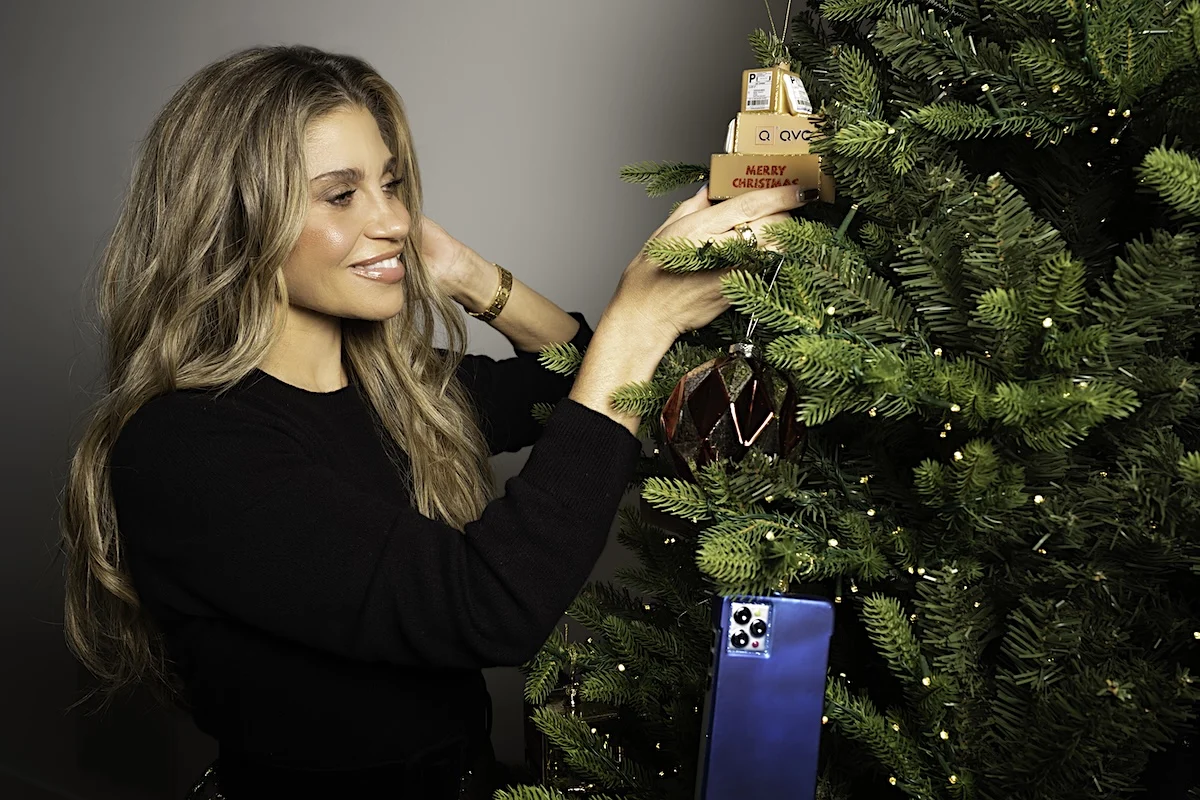
As QVC approaches its 40th holiday season, the titan of televised commerce is undergoing a metamorphosis. Once defined by the tether of cable television and the hypnotic, long-form sales pitch, the brand is now aggressively pivoting to meet a generation of shoppers who equate “channel surfing” with “social scrolling.” Following a turbulent period that saw the retail group navigate Chapter 11 bankruptcy and emerge with a leaner financial profile, QVC is looking to the 2025 holiday season as a critical inflection point for its future growth.
The Evolution of the Live-Commerce Pioneer
Since its inception in 1986, QVC has been the gold standard for live, interactive retail. For decades, its business model was straightforward: provide high-quality demonstrations of home, beauty, and fashion products to a captive audience sitting in their living rooms. However, the rise of the digital creator economy and the rapid ascent of social commerce platforms have forced the company to adapt or risk irrelevance.
The company’s modern strategy is now multi-pronged, bridging the gap between its traditional broadcast roots and the fast-paced, algorithm-driven world of TikTok Shop. In April 2025, the company launched a 24/7 live-streaming presence on TikTok, a move that signals its intent to capture the next generation of consumers. By leveraging its vast infrastructure—including massive distribution networks and a deep bench of experienced on-air talent—QVC is betting that its core competencies of trust, demonstration, and storytelling can translate seamlessly to a vertical screen.
Chronology: From Cable Dominance to Digital Resurgence
- 1986: QVC launches, fundamentally changing how Americans shop from home.
- 2024: The company faces mounting pressure from declining cable viewership, increased digital competition, and economic headwinds.
- April 2025: QVC Group, Inc. files for Chapter 11 bankruptcy as part of a restructuring effort to address debt burdens.
- April 2025 (Concurrent): The company launches its 24/7 live-social shopping experience on TikTok.
- August 2025: QVC emerges from bankruptcy proceedings having successfully reduced its debt load by more than $5 billion, setting the stage for a fiscal reset.
- November 2025: The “Nonstop Holiday Party” kicks off, marking a massive push into early Black Friday sales, featuring high-profile appearances from Martha Stewart, John Legend, and Teri Hatcher.
Supporting Data and Market Position
The transition to a digital-first hybrid model has not been without its fiscal challenges. In the second quarter of 2025, which ended June 30, QVC Group reported net revenue of $1.765 billion, a dip from the $1.984 billion reported during the same period in 2024. Despite this decline, the company’s pivot to TikTok has yielded significant dividends in terms of brand reach.
The QVC Group, which includes its sister network HSN, successfully acquired nearly 1 million new U.S. customers via TikTok Shop in 2025 alone. This figure represents a vital injection of new blood into the brand’s ecosystem—shoppers who had never previously interacted with the brand on TV or its legacy website. These metrics prove that while the medium of consumption is shifting, the consumer’s appetite for curated, demonstrative, and high-energy retail experiences remains robust.
Inside the Strategy: A Conversation with Krystyna Taheri
To understand the operational shift behind these numbers, Modern Retail sat down with Krystyna Taheri, QVC Group’s SVP of social commerce. For Taheri, the challenge lies in maintaining the brand’s foundational pillars while tailoring content to the unique syntax of social media.
The Shift in Format: From 8 Minutes to 30 Seconds
"We still do about 60,000 hours a year of live TV," Taheri explains. "But on TikTok, we do about 200 hours a week of live content. The style of selling is fundamentally different. TV is a seven-to-eight-minute deep dive; TikTok is a series of 20- to 30-second hooks. We have completely different sets, different cameras, and different hosts for these platforms."
The technical divergence is striking. While QVC’s television studios utilize sophisticated robotics and high-end production crews, the TikTok studios are designed for speed and intimacy, often utilizing mobile devices to maintain a raw, authentic aesthetic. Despite these differences, Taheri emphasizes that the core objective remains constant: "Trust, product demonstration, and storytelling. If you can do those well, you can succeed on any platform."
Building a "TikTok-Optimized" Studio
QVC has invested heavily in creating modular studio spaces that cater to specific product categories. From "closet-like" fashion sets to kitchen-focused environments equipped for live cooking, the goal is to make the digital space feel like a natural extension of the consumer’s home. "We’re working up to being able to cook live," Taheri notes. "We want to transport the viewer into these spaces, even if they are much smaller than our traditional broadcast sets."
Training the Next Generation of Hosts
The talent management strategy at QVC has also evolved. While some TikTok hosts are veteran QVC personalities, others are creators brought in for their established followings. The training process is rigorous, focusing on what Taheri calls "the analytical side of live."
"We teach them to watch the engagement metrics while they are live," Taheri says. "It’s not just about revenue—that’s an output. We want them to understand click-through rates and click-to-order rates. We do weekly tape reviews, sitting with producers to break down what worked and what didn’t. It’s an immediate feedback loop."
This "test-and-learn" culture allows for organic innovation. When a host suggests a new show concept, like "Girly Girl Vibes," the company treats the broadcast as an immediate focus group. If the audience responds, the concept stays; if not, they pivot.
Implications for the Holiday Season
The upcoming holiday season is being treated as the ultimate test of QVC’s renewed strategy. The brand is positioning itself as a destination for exclusive launches, including partnerships with brands like Le Creuset, KitchenAid, and Nespresso, alongside exclusive capsules from Off/Duty by Coco Rocha and RM Studio by Rebecca Minkoff.
The "Nonstop Holiday Party" and Beyond
The "Nonstop Holiday Party," scheduled for November 6-8, acts as a tactical bridge between early holiday demand and the frantic pace of Black Friday and Cyber Monday. By deploying "mega lives"—eight- to 10-hour, high-production streams—QVC is attempting to manufacture a sense of urgency that traditional retail can no longer sustain.
"If you don’t win Black Friday and Cyber Monday, you don’t win the year," Taheri admits. The company is using these long-form digital events to "drip-feed" product drops, keeping the audience engaged with teasers that drive viewers back to the app and the website.
Conclusion: The Flywheel Effect
The most encouraging sign for QVC’s leadership is the emergence of a "flywheel" effect across its platforms. Diehard, long-term customers are discovering the brand’s TikTok presence, while new, younger customers brought in by the TikTok algorithm are exploring the full breadth of the QVC website.
While the retail landscape remains volatile, QVC’s 40th anniversary is less about looking back and more about leveraging its heritage to claim a space in the future. By successfully balancing the high-fidelity production of television with the high-velocity engagement of social media, QVC is demonstrating that in the world of retail, the medium may change, but the value of a great demo—and a trusted host—is timeless. As the company moves past its recent bankruptcy and into a new era of growth, its ability to marry these two worlds will likely determine its success for the next forty years.
