

In the modern culinary landscape, the term "salad" evokes images of crisp arugula, nutrient-dense kale, and vibrant vinaigrettes. However, for many Americans—particularly those hailing from the Midwest and the Deep South—the word carries a nostalgic, sweeter connotation. Long before the recent social media obsession with "dessert salads" featuring Snickers bars and caramel sauce, the American pantry was dominated by a far more structured, gelatinous phenomenon: the "Pink Lady" salad.
Also affectionately known as "Pink Fluff," this no-bake vintage dessert, constructed from the humble trio of cottage cheese, Jell-O, and Cool Whip, serves as a fascinating lens through which to view mid-century American food culture. It is a testament to an era of convenience, scientific innovation in the kitchen, and a distinct aesthetic preference for the vibrant and the artificial.
The Foundation: Main Facts and Culinary Anatomy
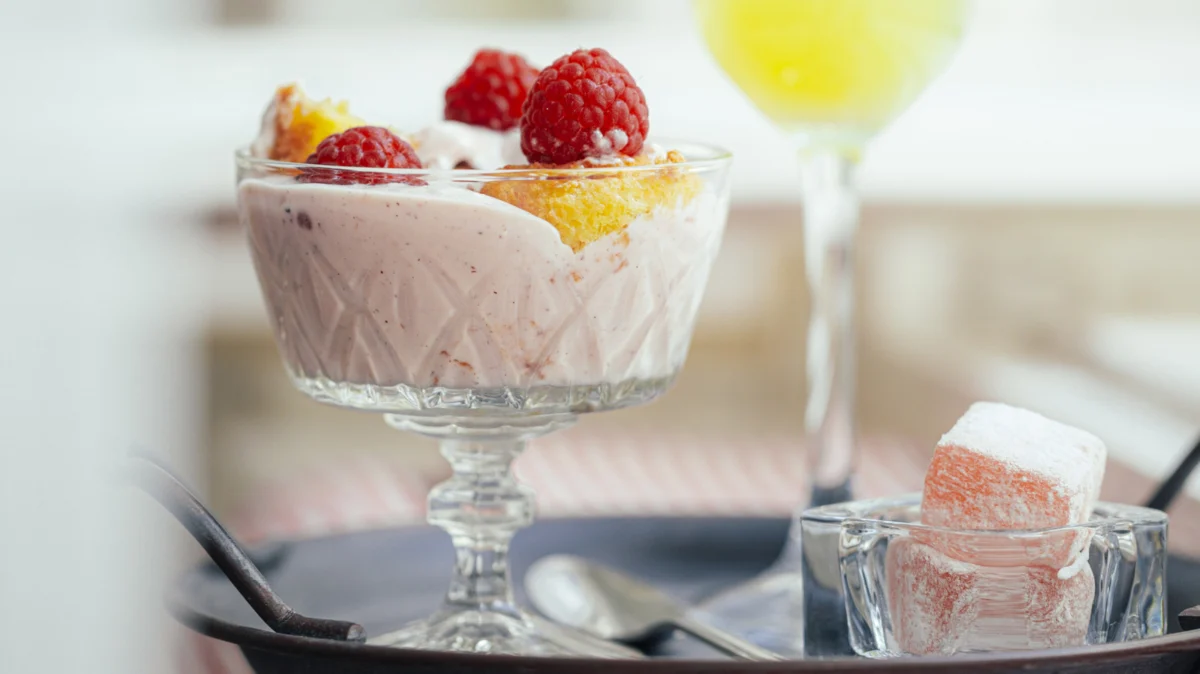
At its core, the Pink Lady salad is an exercise in minimalism disguised as decadence. The preparation is deceptively simple: dry strawberry-flavored gelatin powder is folded into cottage cheese until the curds are tinted a uniform, vibrant pink. This mixture is then combined with a tub of thawed Cool Whip, creating a fluffy, mousse-like consistency. After an hour or two of chilling in the refrigerator, the result is a dish that sits somewhere between a side dish and a dessert—a hallmark of the "congealed salad" craze that swept through American potlucks and holiday tables between the 1960s and 1980s.
Unlike traditional salads, the Pink Lady is not designed for health or nutritional balance. Its purpose is sensory: the visual appeal of its neon hue, the textural contrast between the creamy whipped topping and the slight resistance of the cottage cheese curds, and the sharp, sugary punch of fruit-flavored gelatin. It is a dish that prioritizes convenience, requiring no cooking and minimal preparation time, making it a staple of the "modern housewife" era.
A Chronology of Congealed Culture
The rise of the Pink Lady salad cannot be separated from the evolution of American industrial food production.
The Post-War Boom (1950s–1960s)
In the years following World War II, the American kitchen underwent a technological revolution. The widespread availability of household refrigerators allowed for the storage of chilled, gelatin-based dishes, which were previously limited by the availability of ice blocks. During this period, the Jell-O company, a subsidiary of General Foods, launched an aggressive marketing campaign that positioned their flavored gelatin as the ultimate "modern" ingredient. They provided recipes for everything from savory vegetable aspics to sweet dessert salads, encouraging homemakers to experiment with "suspension" in their food.
The Cool Whip Catalyst (1966)
The true catalyst for the Pink Lady was the introduction of Cool Whip in 1966. Before its invention, homemakers had to rely on heavy whipping cream, which was perishable and labor-intensive to whip by hand. Cool Whip offered a shelf-stable, easy-to-thaw alternative that held its structure perfectly when folded into gelatin mixtures. It was the "missing link" that allowed for the creation of "fluffs"—dishes that were lighter, more airy, and more stable than their predecessors.
The Peak and Decline (1970s–1990s)
By the 1970s, the "fluff" salad had become a staple of the American banquet circuit. Whether at a church basement potluck, a neighborhood block party, or a holiday family gathering, these vibrant pink, lime green, or orange dishes were omnipresent. As the 1990s approached, the culinary tide turned toward "fresh" and "farm-to-table" movements, and these gelatinous concoctions were largely relegated to the realm of kitsch and irony.
Supporting Data: Why It Remains a Regional Staple
Despite the disparagement of food critics and the rise of health-conscious dining, the Pink Lady salad has proven remarkably resilient. According to anecdotal data from food historians and regional surveys, the dish maintains a stronghold in the "Jell-O Belt"—a stretch of states including Utah, the Midwest, and the Deep South.
- Regional Preferences: In the Midwest, the addition of canned crushed pineapple or mini-marshmallows is considered standard, adding a layer of chewy texture that distinguishes a "good" salad from a "great" one.
- The "Cottage Cheese" Factor: While skeptics often cite the cottage cheese as a deterrent, proponents argue that the saltiness of the cheese acts as a necessary counterpoint to the sweetness of the gelatin and whipped topping, preventing the dish from becoming cloying.
- Versatility: The base recipe is infinitely customizable. Data from online recipe databases suggest that the inclusion of chopped nuts (pecans or walnuts) increases the dish’s popularity among older demographics, while the addition of fresh berries is preferred by younger, more "modern" hobbyists.
Official Responses and Culinary Critique
The culinary establishment has historically had a love-hate relationship with gelatin salads. During their heyday, organizations like the American Home Economics Association promoted them as "efficient" and "economical." However, as the 21st century dawned, professional chefs and food critics began to view them with suspicion.
"The Pink Lady is a relic of a time when we valued chemical stability over natural complexity," notes one food historian. "Yet, there is an undeniable pleasure in the nostalgia it provides." Conversely, modern nutritionists point to the high sugar and processed-fat content as evidence that these salads belong in the category of desserts, not sides.
Despite this, the resurgence of "retro" food trends has sparked a second life for the Pink Lady. Social media platforms like TikTok and Instagram have seen a revival of vintage recipes, with younger generations often "discovering" these salads and treating them as an ironic, yet surprisingly satisfying, party treat.
Implications: The Sociology of the "Fluff"
The survival of the Pink Lady salad offers profound insights into American sociology. It represents a period where "convenience" was the ultimate metric of culinary success. By using pre-packaged ingredients, women were able to contribute to communal meals without spending hours at the stove—a vital development for women entering the workforce in greater numbers.
Furthermore, the Pink Lady salad is a symbol of egalitarian dining. It requires no specialized skills, no expensive equipment, and very little budget. It is a "democratic" dish; whether prepared by a novice or a seasoned cook, the result is virtually identical, ensuring that every guest at the table has access to the same sweet, bright-pink treat.
Adaptability in the Modern Kitchen
Today, the Pink Lady has evolved to accommodate contemporary dietary shifts:
- Dairy-Free Alternatives: Using coconut-based whipped toppings and vegan cottage cheese alternatives has allowed the dish to survive in modern, allergen-conscious households.
- The "Gourmet" Spin: Some home cooks have begun experimenting with high-quality, natural fruit purees instead of commercial gelatin mixes, attempting to recreate the aesthetic of the Pink Lady while utilizing "real food" ingredients.
- The Texture Debate: The inclusion of fresh, rather than canned, fruit is now preferred by many, highlighting a shift toward wanting the "look" of the vintage classic with the "bite" of fresh produce.
Final Thoughts: A Bowl of Kale vs. A Bowl of Pink Fluff
Ultimately, the Pink Lady salad is more than just a culinary oddity; it is a time capsule. It reminds us of a time when the dinner table was less about nutritional optimization and more about the communal joy of sharing something vibrant, sweet, and undeniably fun.
While it may never replace the kale salad on the menus of high-end bistros, it occupies a secure place in the American heart. Whether it is a "salad" or a "dessert" remains a matter of semantics. What is clear is that as long as there is a need for a quick, colorful, and comforting dish that can feed a crowd, the cottage cheese, Jell-O, and Cool Whip combination will endure. It is a reminder that in the grand history of American food, there is always room for a little bit of fluff.
