

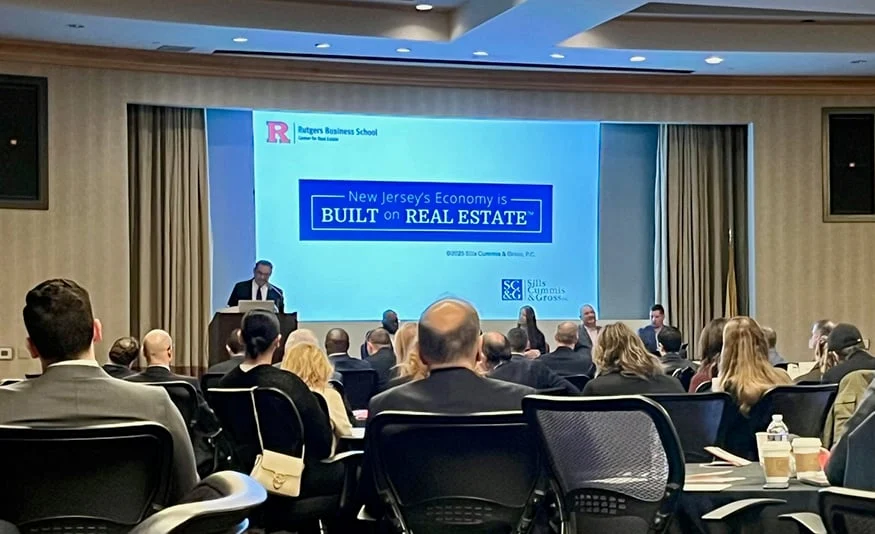
New Jersey stands at a critical juncture. As the state grapples with evolving housing demands, aging infrastructure, and the urgent need to maintain its competitive edge in the national economy, the third annual Rutgers Center for Real Estate (RUCRE) Symposium arrives at a pivotal moment. Titled "A State Planned: How and Where Do We Grow from Here?", the event is set to convene on October 27 at The Heldrich Hotel in New Brunswick, bringing together the architects of New Jersey’s physical and economic landscape.
Presented in partnership with the prominent law firm Sills Cummis & Gross PC, the symposium is expected to draw a high-level assembly of government officials, real estate developers, urban planners, energy experts, and transportation authorities. The event aims to move beyond standard industry rhetoric, focusing instead on the systemic challenges of building a state that is both economically vibrant and environmentally resilient.
The Core Challenge: Navigating an Inflection Point
The impetus for this year’s symposium is rooted in the recognition that the status quo is no longer sufficient. Ted Zangari, chair of the Real Estate Department & Redevelopment Law Practice Group at Sills Cummis & Gross, characterizes the current environment as an "important inflection point."
"The questions facing the real estate industry today go well beyond individual projects," Zangari said. "They involve how we provide housing, power and transportation; how we attract and retain businesses; how we make the development process more certain and predictable; and how we balance growth with preservation."
This year’s programming, running from 8 a.m. to 12:30 p.m., is structured to address these multi-layered challenges through four primary panel discussions. These sessions are designed to deconstruct the friction points between policy, public interest, and private development.
A Chronology of Collaboration
The symposium has rapidly established itself as a premier venue for dialogue in the Tri-State area. Its growth reflects a heightened interest in how New Jersey manages its limited land resources.
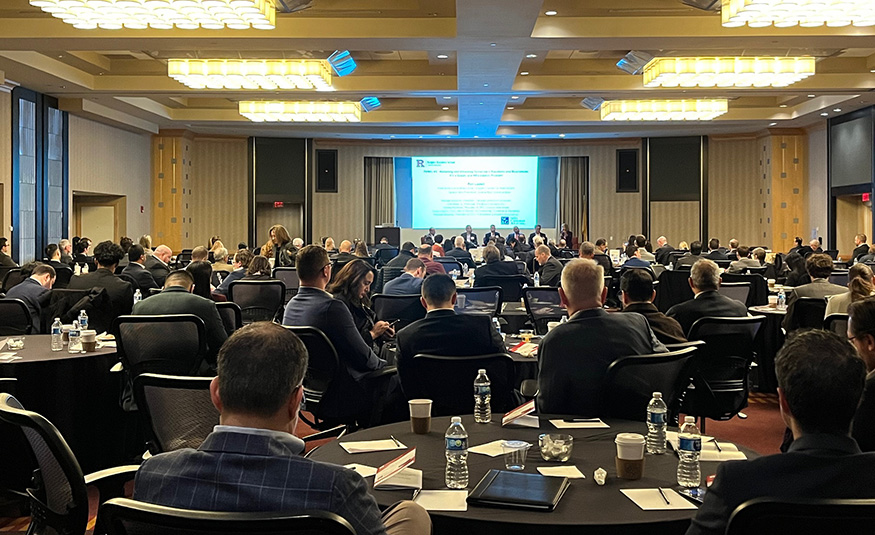
- March 2025: The 2nd Annual RUCRE Symposium saw a capacity crowd at The Heldrich, signaling a strong appetite for a centralized forum where public policy meets private capital. The success of that event underscored the necessity for an ongoing conversation regarding land-use reform.
- October 2026: The upcoming 3rd Annual Symposium aims to scale these discussions, focusing on actionable legislative and procedural outcomes.
- The Future: Organizers hope to translate the symposium’s findings into white papers and policy recommendations that can inform future state-level legislative sessions.
Supporting Data and Thematic Panels
The symposium’s agenda is divided into four critical pillars, each featuring experts at the top of their respective fields.
1. Housing, Powering, and Transporting New Jersey
This panel will address the "infrastructure trifecta." With New Jersey’s population density and aging power grid, the integration of energy, transit, and residential development is paramount. Participants include senior representatives from AECOM, Community Investment Strategies, and FirstEnergy/Jersey Central Power & Light. They will be joined by former New Jersey Board of Public Utilities Commissioner and state Sen. Bob Gordon, Department of Transportation Commissioner Priya Jain, and New Jersey Housing and Mortgage Finance Agency Executive Director Melanie Walter. The focus here is on the logistical reality of scaling housing in a state with significant environmental and transit constraints.
2. Retaining & Attracting Businesses: The Competitive Edge
Moderated by Ted Zangari, this panel moves into the realm of economic development. New Jersey has long competed with neighbors like New York and Pennsylvania for corporate headquarters and talent. The discussion will pivot to what, specifically, incentivizes companies to stay—or leave. This involves a granular look at tax policy, the quality of life, and the availability of a skilled workforce.
3. Fast-Tracking Projects: Beyond the "Shot Clock"
Development timelines in New Jersey are notoriously complex. Moderated by RUCRE Executive Committee Chair Ron Ladell—who also serves as an adjunct professor at the Rutgers Business School and a senior vice president at Vimark Residential—this session will explore how the state can "responsibly fast-track" projects. The term "shot clock" refers to the pressure on local planning boards to reach decisions, but the panel will look deeper into how to streamline bureaucracy without sacrificing local oversight or quality of construction.
4. The False Choice: Sprawl vs. Preservation
Moderated by Adam Zellner, president of Greener by Design, this panel will attempt to dismantle the binary argument that pits environmental preservation against urban sprawl. As New Jersey seeks to meet housing targets while protecting its remaining open spaces, the conversation will shift toward smart-growth models, brownfield redevelopment, and sustainable urban densification.
Official Perspectives and Industry Implications
The involvement of high-ranking officials from the New Jersey Department of Transportation and the New Jersey Housing and Mortgage Finance Agency underscores the state’s desire to bridge the gap between regulatory bodies and the development community.
For industry professionals, the implications of these discussions are profound. If the symposium can foster a consensus on "predictable development," the potential for a surge in multi-family housing and transit-oriented development is high. However, the path to such a consensus is fraught with political, fiscal, and social hurdles.
"The real estate industry is tired of uncertainty," a source close to the event noted. "When developers don’t know if a project will be approved in two years or ten, they don’t break ground. This symposium is about creating a roadmap that makes ‘Yes’ easier to reach for the right kinds of projects."
Implications for New Jersey’s Economic Future
The outcome of this symposium will likely reverberate through the halls of the state legislature. As the state faces a persistent housing shortage and rising energy costs, the strategies discussed in New Brunswick will serve as a bellwether for how New Jersey intends to balance its status as a high-density, high-cost state with the need for accessibility and growth.
The symposium also serves as a pedagogical extension of Rutgers University’s commitment to the region. By placing the Center for Real Estate at the center of this dialogue, Rutgers is positioning itself as a hub for both intellectual rigor and pragmatic policy-making.
For those planning to attend, the event offers more than just networking; it offers a front-row seat to the policy debates that will define the next decade of development in the Garden State. Registration remains open, and the event is expected to reach capacity as the date approaches.
How to Engage
The symposium will be held on October 27 at The Heldrich Hotel. With the event program set to run for 4.5 hours of high-intensity panel discussions, organizers emphasize that this is a "work session" for industry leaders. Prospective attendees, sponsors, and media representatives are encouraged to visit the official event page to secure their place.
As the state prepares to define its next phase of development, the questions raised at this year’s RUCRE symposium will likely become the cornerstone of future legislative debates. The fundamental question remains: Can New Jersey successfully transition from a state of reactive development to a "State Planned"? The answer will be shaped in New Brunswick this October.
