

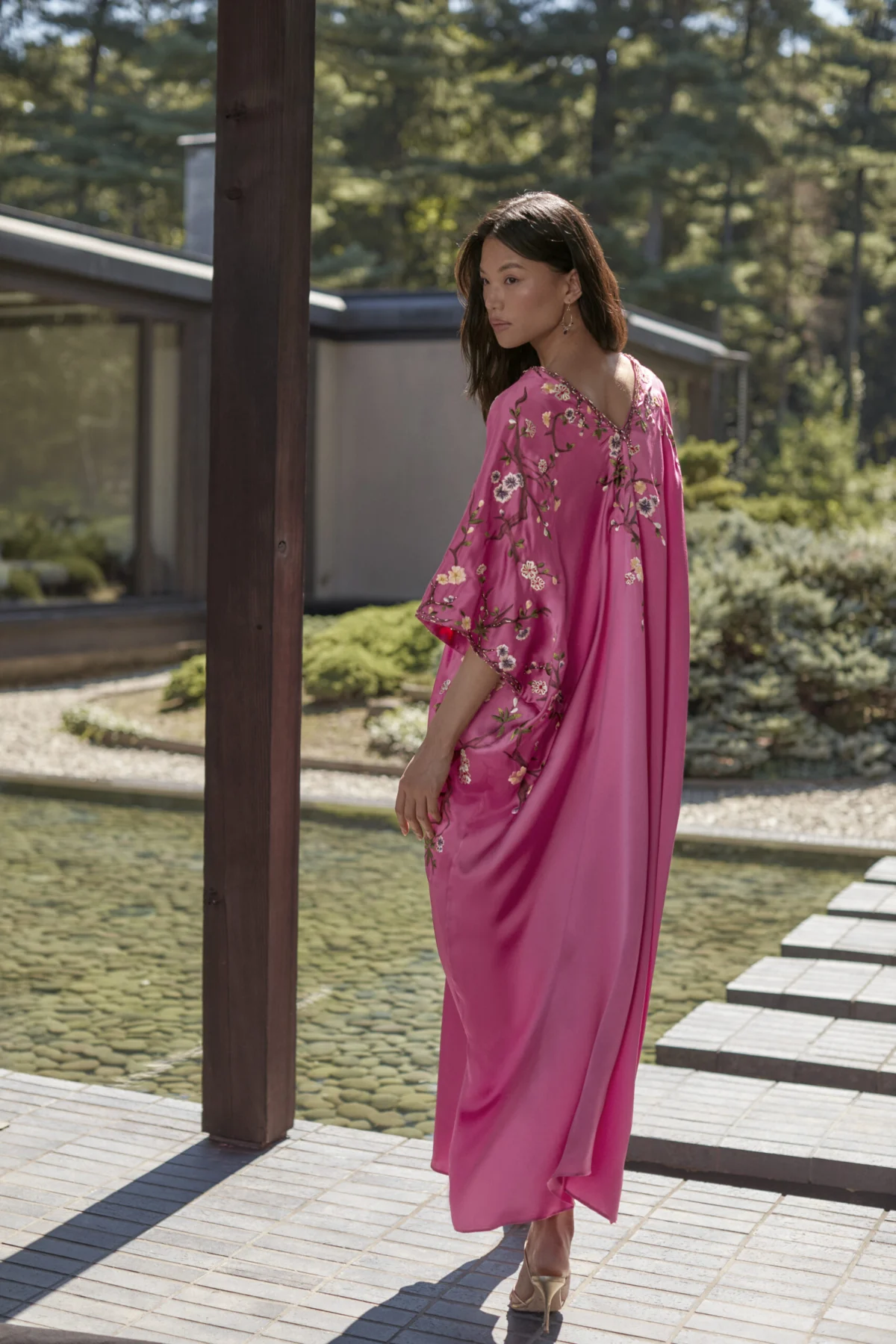
In a significant move for the luxury lifestyle and intimate apparel sectors, Johnny Was and Josie Natori have announced the launch of a high-profile loungewear collaboration. Marketed under the label Natori x Johnny Was, the collection is built upon the foundational concept of "Artful Living." This partnership represents more than a mere product release; it is a sophisticated blending of two distinct fashion identities: the refined, East-meets-West luxury of Josie Natori and the relaxed, bohemian-chic aesthetic of Johnny Was.
The collection, which officially debuted across digital and physical retail channels this week, aims to redefine everyday dressing by elevating home-wear into the realm of wearable art. Through a combination of archival prints, meticulous embroidery, and premium textiles, the collaboration targets a growing demographic of consumers who demand versatility, comfort, and high-design in their domestic and social attire.
I. Main Facts: The Architecture of the Collection
The Natori x Johnny Was collection is a comprehensive assortment designed to bridge the gap between traditional intimate apparel and contemporary ready-to-wear. At its core, the collaboration utilizes the strengths of both houses: Natori’s decades-long authority in silk and luxury intimates and Johnny Was’s signature mastery of vibrant color stories and intricate needlework.
Product Assortment and Design Ethos
The collection features a diverse range of silhouettes intended to move seamlessly from the bedroom to a social setting. Key pieces include:

- Silk Robes and Kimonos: Utilizing Natori’s signature silk fabrics as a canvas for Johnny Was’s floral and geometric embroidery.
- Caftans: Handcrafted pieces that emphasize volume and movement, drawing on global travel influences.
- Pajama Sets: Reimagined classics that use Natori’s archival prints updated with a new, distinctive color palette.
- Elevated Basics: The inclusion of embroidered hoodies and luxury blankets suggests a lifestyle approach that extends beyond clothing into the home environment.
Pricing and Availability
The collection occupies a broad luxury price bracket, ensuring accessibility for the aspirational shopper while offering "investment pieces" for the high-end collector. Prices range from $160 for entry-level items to $2,400 for limited-edition, hand-embroidered "couture" dusters and caftans.
The distribution strategy is robust, leveraging the physical footprint of Johnny Was, which operates 72 retail stores across the United States. Additionally, the collection is available globally via the e-commerce platforms of both brands (johnnywas.com and natori.com), timed strategically to capture the peak holiday gifting season.
II. Chronology: A Relationship Thirty Years in the Making
While the Natori x Johnny Was collaboration may appear as a fresh market entry, its roots extend back three decades. The partnership is the culmination of a long-standing professional and personal relationship between the leaders of the two brands.
The Foundation (1977–1987)
The historical context of the two brands provides the backdrop for this synergy. Josie Natori founded her eponymous brand in 1977, leaving a successful career on Wall Street to bring a Filipino-inspired, high-art sensibility to the lingerie market. A decade later, in 1987, Johnny Was was established in California, carving out a niche for vintage-inspired, bohemian clothing that emphasized craftsmanship and "West Coast cool."

The Neiman Marcus Connection
The catalyst for the current collaboration is Lisa Kazor, the President of Johnny Was. Kazor’s career trajectory is deeply intertwined with Josie Natori’s. During Kazor’s 25-year tenure at the Neiman Marcus Group—where she eventually served as Senior Vice President and General Merchandise Manager of women’s ready-to-wear, outerwear, and intimates—she worked closely with Natori. This decades-long history of mentorship and commercial partnership provided the "trust equity" necessary to execute a complex co-branded project.
Recent Evolution (2022–2025)
The momentum toward this collaboration accelerated following corporate shifts at Johnny Was. In September 2022, Oxford Industries acquired Johnny Was for $270 million, providing the brand with the financial backing to scale its operations and explore high-level partnerships.
Lisa Kazor joined Johnny Was in April 2025 as Chief Commercial Officer and Strategic Adviser, before assuming the role of President in December 2025. Upon taking the helm, Kazor identified the synergy between Natori’s archives and Johnny Was’s embroidery-heavy DNA as a primary growth opportunity. The design process for this specific collection began approximately one year ago, involving deep dives into Natori’s extensive print archives to find motifs that could be reinterpreted through the Johnny Was lens.
III. Supporting Data: Manufacturing and Market Context
The success of the Natori x Johnny Was line is underpinned by specific manufacturing capabilities and market trends that favor "elevated loungewear."

Global Craftsmanship
A significant differentiator for this collection is its manufacturing provenance. Josie Natori confirmed that the "couture" elements of the collection—specifically the intricate caftans—are handcrafted in Natori’s own factory in the Philippines. This vertical integration allows for a level of quality control and artisanal detail that is rare in mass-produced luxury collaborations. The use of traditional embroidery techniques serves as a tribute to the heritage of both brands.
Strategic Retail Footprint
By launching in Johnny Was’s 72 brick-and-mortar locations, Natori gains immediate access to a "boho-luxury" customer base that may not have previously engaged with her brand’s intimate apparel. For Johnny Was, the partnership adds a layer of "New York sophistication" and heritage to its product mix.
Financial Backdrop
The collaboration arrives at a time when parent company Oxford Industries is looking to maximize its $270 million investment in Johnny Was. By moving into the "innerwear as outerwear" category—a segment of the fashion industry that has seen consistent growth post-pandemic—the brand is diversifying its revenue streams. The holiday timing is also data-driven; loungewear and silk accessories traditionally see a 30-40% uptick in sales during the Q4 period.
IV. Official Responses: Leadership Perspectives
The leadership teams of both organizations have emphasized that this collaboration was born out of mutual respect rather than purely clinical market analysis.

Josie Natori, Founder of Natori, highlighted the personal connection as a primary driver. "First, I could not say no to Lisa Kazor," Natori stated in an interview with WWD. "I have known and worked with Lisa for over 30 years… Second, I loved the idea of trying something new. Our two brands share the same values of artistry and print." Natori also noted the strategic value of being in "70 new doors for holiday" in a category where her brand is already an established authority.
Lisa Kazor, President of Johnny Was, described the project as a "full-circle moment." She emphasized the creative energy between the two teams, noting that "Josie is simply delightful. She makes you laugh, and that joy comes through in the collection." Kazor pointed to the hand-embroidered dusters and caftans as the "superlative examples" of the craft that both brands represent.
Christy Whitley, Head of Design at Johnny Was, provided insight into the technical aspects of the merger. "Natori has this incredible archive of prints, and we were able to bring our own personality through color and embroidery," Whitley explained. She noted that the goal was to create pieces that feel "feminine and a little unexpected," focusing on the "growing versatility of innerwear as outerwear."
V. Implications: The Future of "Artful Living" and Luxury Collaborations
The Natori x Johnny Was partnership signals several broader shifts in the luxury fashion landscape.

1. The Normalization of "Innerwear as Outerwear"
This collection reinforces the trend of blurring lines between private and public dressing. By pricing items up to $2,400, the brands are signaling that a silk robe or a caftan is no longer just for the home; it is a high-fashion statement piece suitable for gala events, resort travel, and social gatherings. This shift reflects a permanent change in consumer behavior toward "luxury comfort."
2. The Power of "Heritage Networking"
The fact that this deal was predicated on a 30-year relationship between Kazor and Natori underscores the importance of long-term industry ties. In an era of rapid-fire digital collaborations, "heritage networking" provides a level of brand stability and creative cohesion that often eludes temporary partnerships.
3. Strategic Brand Diversification
For Natori, the collaboration is an exercise in brand extension, moving her East-meets-West aesthetic into the "bohemian" space. For Johnny Was, it is an elevation of their product category, moving from casual lifestyle wear into "couture-level" intimates and loungewear. This mutual exchange allows both brands to "borrow" each other’s prestige in their respective domains.
4. The "Artistic" Defense Against Fast Fashion
By emphasizing "handcrafted" elements from the Philippines and archival prints, both brands are insulating themselves against the rise of ultra-fast fashion. The focus on "Artful Living" and "superlative craft" creates a value proposition based on longevity and artistry, appealing to the modern luxury consumer’s desire for authenticity and ethical craftsmanship.

As the collection rolls out through the holiday season, the industry will be watching to see if this "Artful Living" philosophy translates into a long-term multi-season partnership. Given the initial reception and the deep-rooted synergy between the two houses, Natori x Johnny Was may well set the standard for how heritage brands can successfully collaborate to capture the evolving luxury market.
