

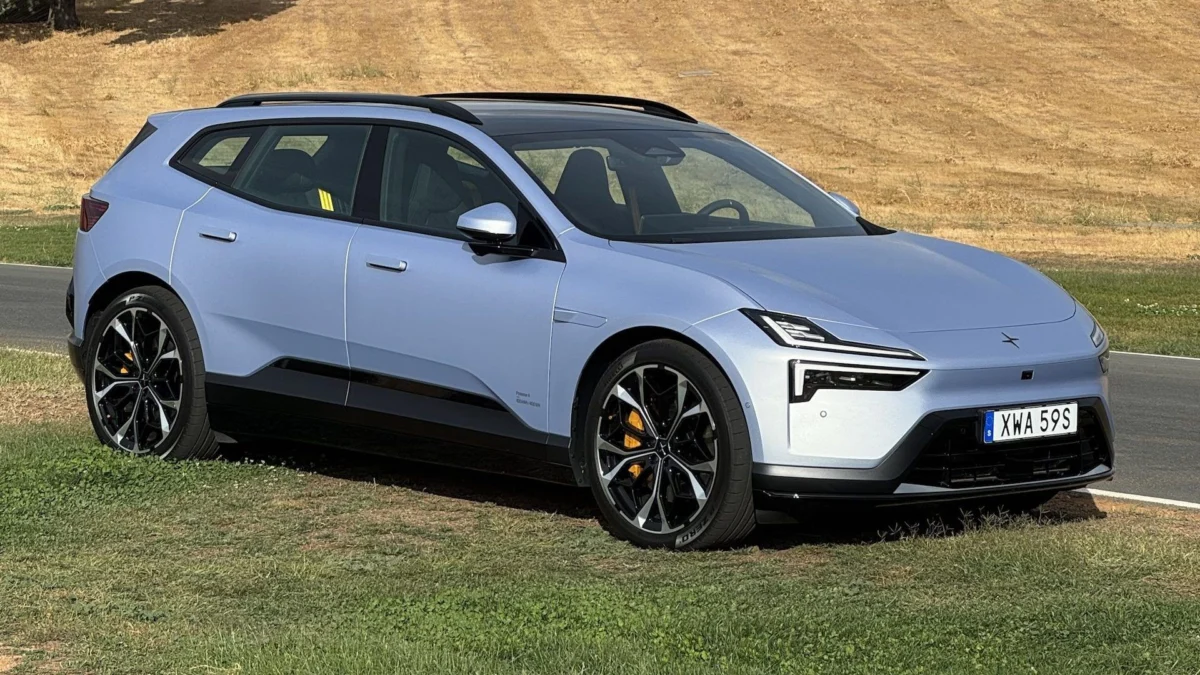
In the natural world, evolution is a response to environmental pressures: when the climate shifts, species adapt to survive. The automotive industry operates on a similar, albeit faster, evolutionary timeline. When a vehicle design meets market resistance, manufacturers rarely double down on their original vision; instead, they pivot, refine, and listen to the consumer. This is precisely the narrative behind the launch of the 2027 Polestar 4 SUV—a vehicle that represents a calculated structural evolution of the brand’s midsize electric offering.
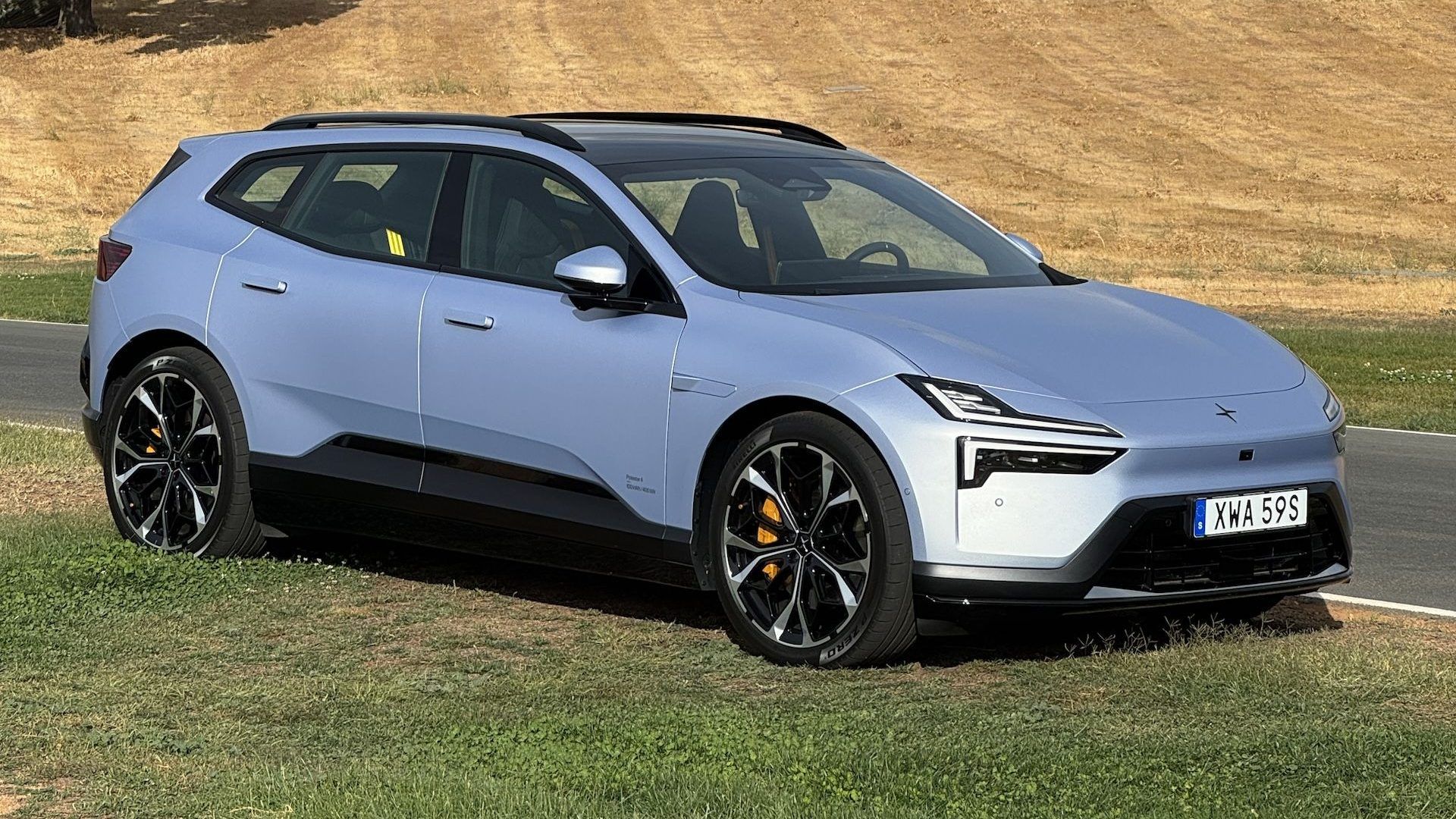
For years, the industry has chased the "coupe-crossover" trend, prioritizing aggressive, fastback rooflines at the expense of utility. When the original Polestar 4 debuted, it was a design statement—a sleek, aerodynamic silhouette that famously omitted a traditional rear window in favor of a high-definition camera system. While Polestar argued that modern tech rendered the glass window obsolete, the market remained skeptical. Now, the Swedish brand has responded, splitting its midsize entry into two distinct paths: the Polestar 4 Coupe and the newly minted, traditional-roofline Polestar 4 SUV.
A New Chapter in Product Planning
The arrival of the 2027 Polestar 4 SUV is not merely a cosmetic update; it is a fundamental repositioning of the model. To understand why this change was made, one must look at the brand’s design leadership. Philipp Römers, Polestar’s head of design—a recent high-profile recruit from Audi—brought a fresh perspective to the company’s product roadmap.
When asked whether the SUV variant was a reactive measure to customer feedback or a long-planned strategy, Römers suggested a blend of both. "When I knew my role was coming up at Polestar, I looked at the lineup and began sketching out different ideas," he explained. While the "SUV-ification" of the 4 may have been accelerated by public discourse regarding the Coupe’s visibility and cargo constraints, the team was able to execute the shift with remarkable speed, leveraging the modular nature of their existing architecture.
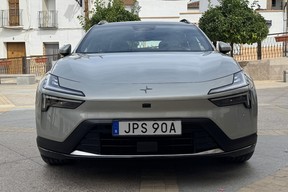
Structural Anatomy: Two Blankets from One Ball of Wool
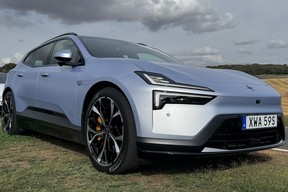
From an engineering standpoint, the Polestar 4 SUV and Coupe are siblings sharing the same genetic code. Both vehicles sit on the same platform, sharing a length of 4,840 mm and a width of 2,139 mm. According to the design team, every component ahead of the B-pillar is identical, and even the lower sections of the rear doors are shared. This "common-parts" strategy allows Polestar to maximize manufacturing efficiency while offering two distinct user experiences.
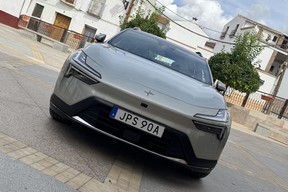
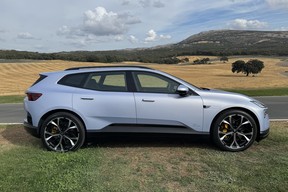
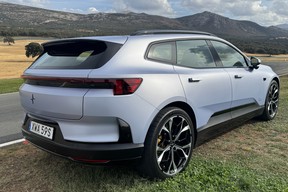
The primary differentiator is the roofline. By abandoning the sloping fastback of the Coupe, the SUV gains significant volumetric efficiency. Cargo capacity behind the second row has increased from 526 litres (18.6 cubic feet) in the Coupe to 655 litres (23.1 cubic feet) in the SUV. When the rear seats are folded flat, the total cargo volume expands to 1,665 litres (58.8 cubic feet).
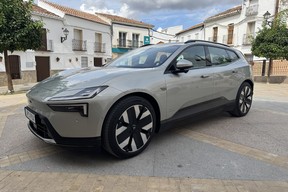
Beyond the raw numbers, the SUV introduces an "honest-to-glass" rear window and, crucially, a rear wiper. For many buyers, particularly in northern climates, the inclusion of a physical wiper is not just a convenience—it is a dealbreaker for visibility. By reintroducing these elements, Polestar has bridged the gap between avant-garde design and functional necessity.
Powertrain and Performance Metrics
The mechanical underpinnings of the Polestar 4 SUV remain robust. The vehicle utilizes a 100kWh battery pack capable of accepting up to 200kW on a Level 3 DC fast charger. While official range figures for the Canadian market are still being finalized, early testing suggests impressive efficiency. Despite the SUV weighing roughly 60 kilograms more than the Coupe, engineers have managed to improve its range through refined tire compounds and optimized software calibration.

Powertrain Options:
- Single-Motor (RWD): Delivers 272 horsepower and 253 lb-ft of torque. It is a capable cruiser, managing 0-100 km/h in just over seven seconds.
- Dual-Motor (AWD): By adding a motor to the front axle, the power output surges to 544 ponies and 506 lb-ft of torque, pushing the vehicle from a standstill to 100 km/h in under four seconds.
The handling characteristics have also been refined. The rear springs are 12% stiffer than those found in the 2026 Coupe to account for the additional mass. Models equipped with the Performance package benefit from active dampers that can be tuned for track-day precision, while standard models utilize a high-quality passive system with bypass valves that provide a remarkably composed ride on public roads.

The Minimalist Swedish Interior
Step inside, and the Polestar 4 SUV feels like a masterclass in Scandinavian minimalism—a stark contrast to the button-heavy dashboards of the past. A massive 15.4-inch central touchscreen serves as the "brain" of the vehicle, controlling everything from HVAC and audio to the adjustment of exterior side mirrors and steering column height.

While the reliance on a single screen might intimidate those accustomed to physical switchgear, the interface is remarkably intuitive. The response times are virtually lag-free, and the menu structure has been simplified to ensure critical functions remain accessible. One standout feature is the fixed panoramic glass roof, which uses dimmable electrochromic technology to manage cabin heat and light, eliminating the need for bulky mechanical shade tracks and maximizing headroom.

In line with Polestar’s commitment to sustainability, the interior materials are ethically sourced. Rather than resorting to "vegan leather"—often a euphemism for low-grade plastic-based vinyl—Polestar has opted for high-quality, fully traceable leather. The company even prints documentation of its animal welfare standards on the seatbacks, inviting passengers to engage with the brand’s transparency.

Market Context and Competitive Landscape
The midsize electric crossover segment is arguably the most competitive space in the automotive industry. The Polestar 4 SUV enters a fray currently occupied by the Porsche Macan Electric, the Tesla Model Y, the Genesis GV60, and the upcoming Volvo EX60.

Polestar’s challenge is partly one of branding and education. As the company continues to expand its portfolio, the naming convention—2, 3, 4, and beyond—reflects the chronological order of the vehicles’ market arrivals rather than their size or status in the hierarchy. Dealers must work hard to clarify that the Polestar 3 is a larger, luxury-segment crossover (akin to a Volvo EX90), while the 4 is a more compact, sporty offering designed to compete directly with the Tesla Model Y.
Manufacturing and Global Strategy
A recurring question for the brand is its manufacturing origin. The units tested for this review bear VINs starting with "YS," indicating assembly in Sweden. However, the company is backed by the financial might of Geely, the Chinese automotive conglomerate. Polestar is transparent about these ties, acknowledging that its rapid product offensive would have been significantly more difficult without this deep well of capital. The arrangement appears to be a successful one: the parent company provides the industrial scale and financial runway, while the Swedish team retains full autonomy over design, engineering, and the brand’s distinct "Scandi-minimalist" identity.
Implications for the Future
The introduction of the 2027 Polestar 4 SUV is a victory for the "listen-and-adapt" philosophy of modern manufacturing. By providing a traditional SUV body style alongside the trendy Coupe, Polestar has effectively doubled the appeal of its midsize offering without diluting its brand equity.
As the industry moves toward total electrification, the "winner-take-all" designs of the early EV era are giving way to practical, consumer-focused variants. Whether it is the inclusion of a simple rear wiper, the shift toward sustainable but premium materials, or the move toward more versatile cargo spaces, Polestar is demonstrating that it is a company capable of evolving.

For prospective buyers, the choice is now clearer: the Coupe remains for the design-conscious driver who values aesthetics above all else, while the SUV offers a more pragmatic, family-oriented approach to electric mobility. In the fast-moving, often unforgiving environment of the global automotive market, this kind of evolutionary agility is not just smart—it is the ultimate competitive advantage. As we look toward the latter half of next year, when the 4 SUV arrives in Canadian showrooms, it is highly likely that this model will serve as the anchor for the brand’s growth, proving that when you get the bones right, you can build just about anything.
