

In the fast-paced world of brand activations, where the "louder is better" philosophy often reigns supreme, a subtle yet profound shift is taking place. Marketing departments are increasingly looking toward the Old World for inspiration, specifically the Italian tradition of the aperitivo. This century-old social ritual—characterized by pre-dinner drinks, light snacks, and unhurried conversation—has become the new blueprint for high-impact consumer engagement.
From the sun-drenched polo fields of Coachella to the historic cobblestones of London’s Covent Garden, brands are ditching the high-energy nightclub aesthetic in favor of the "vibrant piazza." This trend represents more than just a preference for orange-hued cocktails; it signals a fundamental change in consumer appetites for "slow-paced" rituals, moderation in alcohol consumption, and high-quality, shareable social environments.
Main Facts: The Anatomy of the Aperitivo Activation
The core of the aperitivo trend lies in its ability to blend sampling with lifestyle immersion. Unlike traditional sampling programs that often feel transactional, aperitivo-themed activations focus on "dwelling time"—the amount of time a consumer spends interacting with a brand in a relaxed state.
Several key pillars define this current movement:
- The Golden Hour Aesthetic: Branded footprints are being designed to maximize the "golden hour" light, featuring polished, Mediterranean-inspired decor that serves as a magnet for social media content.
- Low-ABV and Moderation: As Gen Z and Millennial consumers lean toward "sober-curious" lifestyles or moderate drinking, the aperitivo—which typically features low-alcohol bitters and vermouths—provides a socially acceptable middle ground.
- The "Slow Movement" Integration: In a digital-first world, the physical "pause" offered by these activations provides a psychological reprieve that consumers find increasingly valuable.
- Cross-Category Adoption: While beverage brands like Aperol and Sarti are natural leaders, the trend has jumped categories, with snack giants like Pringles utilizing the aperitivo framework to reposition their products as premium social accompaniments.
Chronology: From Italian Tradition to Global Marketing Strategy
The globalization of the aperitivo ritual has followed a strategic rollout, beginning in traditional European markets and culminating in massive North American "takeovers" through 2026.
The UK Artistry (Early 2024-2025)
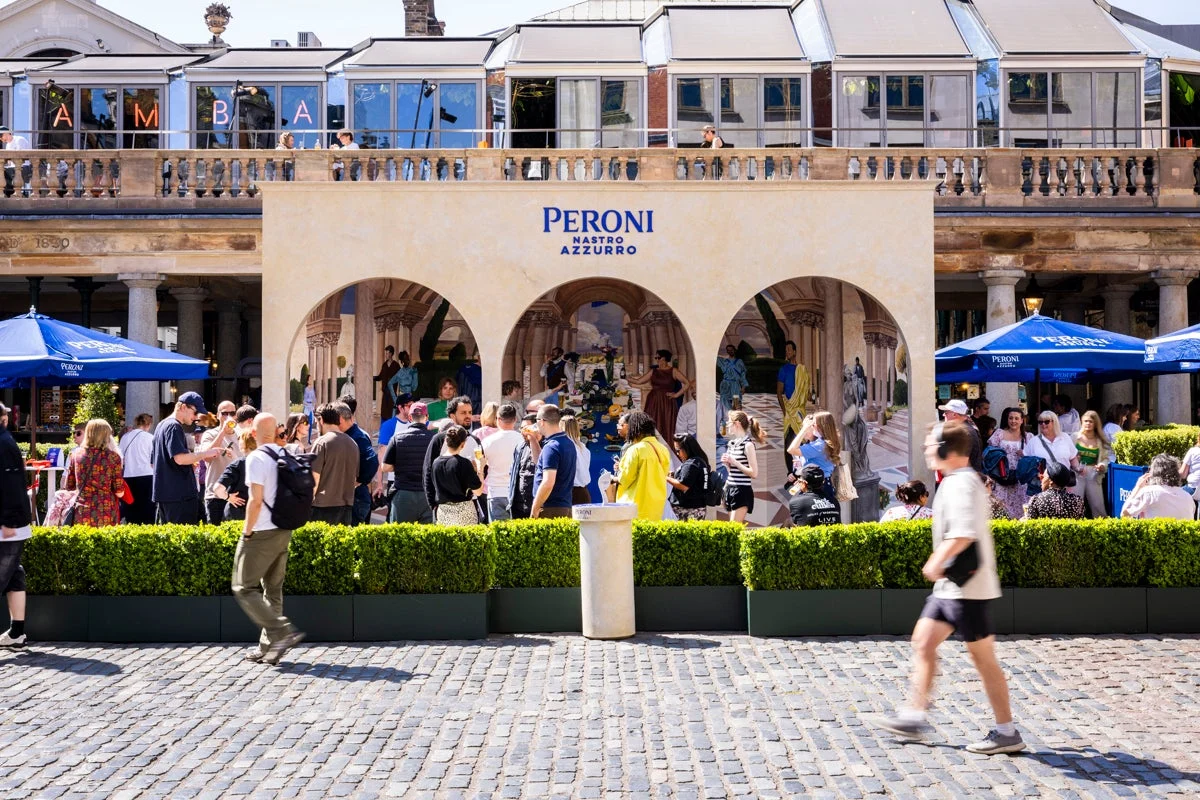
The momentum built significantly with Peroni’s "Il Fresco di Peroni" in London. Recognizing a shift in British social habits—where early-evening gatherings were beginning to outpace late-night clubbing—Peroni launched an Italian Renaissance-inspired 3D art installation in Covent Garden. The activation allowed consumers to "sit" within a hand-painted masterpiece, merging classical art with modern sampling. This provided a "shareable live moment" that grounded the beer brand in a sophisticated, culturally relevant context.
The Sarti U.S. Expansion (Late 2025-Early 2026)
Campari Group identified a massive opening in the American market for a new aperitivo entry. Last month marked the debut of Sarti, supported by the company’s largest-ever investment in the category. The launch was a multi-city tour starting in New York City’s Meatpacking District. By using oversized pink luggage trunks and a branded pink boat, Sarti combined high-visibility "out-of-home" marketing with intimate consumer experiences like charm bars and live podcast recordings, all centered around the Sarti Spritz.
The Milan Design Week Convergence (April 2026)
The trend reached a fever pitch during Milan Design Week 2026. Here, the "Pringles Aperihouse" demonstrated the versatility of the concept. By taking over a hub in the heart of the design world, Pringles transformed from a supermarket staple into a gourmet "aperitivo partner." Between 5 p.m. and 9 p.m.—the traditional aperitivo window—the brand hosted "interactive group challenges" and experimental pairings, proving that the ritual could be successfully "hacked" by non-beverage brands.
The Coachella Apex (Spring 2026)
Most recently, Aperol solidified its dominance in the space at Coachella 2026. The "Aperol Day Club" served as a high-visibility anchor for the festival’s daytime programming. Moving away from the frantic energy of the main stages, the Day Club offered "small, joyful pauses," a strategic move designed to drive repeat visits and build long-term brand equity under their "Be the Moment" campaign.
Supporting Data: Why the "Early Evening" is Winning
The pivot toward aperitivo culture is backed by shifting consumer data points that suggest the "late-night" economy is being replaced by "day-time" experiences.

- The Rise of Low-ABV: Market research indicates that the global low-to-no-alcohol market surpassed $11 billion in 2023, with a projected CAGR of 7% through 2030. Aperitivo-style drinks, which often use soda or prosecco to lengthen a bitter base, fit perfectly into this "temperate" consumption model.
- The "Sober-Curious" Demographic: According to recent industry surveys, nearly 40% of consumers aged 21–34 say they are actively trying to reduce their alcohol intake. The aperitivo ritual focuses on the social aspect and the flavor rather than the intoxication, making it inclusive for this demographic.
- Social Media ROI: Data from experiential agencies shows that "lifestyle-centric" activations (like a branded piazza) generate 3.5 times more organic social media impressions compared to standard product-tasting booths. The "Instagrammability" of a vibrant orange or pink spritz against a well-designed backdrop provides brands with a massive earned-media multiplier.
- The "Early Night" Movement: In major urban hubs like London and New York, there has been a 15% increase in restaurant bookings between 5:00 PM and 7:00 PM over the last two years, while late-night (post-11 PM) foot traffic has stagnated.
Official Responses: Strategy from the Source
Industry leaders emphasize that the success of these programs depends on authenticity and the creation of "connection."
A spokesperson for the Campari Group’s experiential team highlighted this during the Sarti launch: "What was important is that we made a space that guests would be excited to come to, they would want to gather, make a memory with a friend, and of course, share a Sarti spritz. That’s really core to the culture of Italian aperitivo—this idea of connecting and enjoying time with one another, but of course with our own spin."
Similarly, Aperol’s strategy at Coachella was built on the philosophy of "Be the Moment." By rewarding repeat visits and focusing on "mini moments of joy," the brand moved away from traditional "one-and-done" sampling. The goal was to become a "third place" for festival-goers—a home base between the music sets where they could recharge and reconnect.
For Peroni, the focus was on the "optical illusion" of the experience. Their UK marketing lead noted that "The Creation of Aperitivo" was designed to bridge the gap between high art and the simple pleasure of a beer. By allowing consumers to literally "step into the painting," they created a tactile memory that associated Peroni with premium Italian craftsmanship.
Implications: The Future of Branded Environments
The migration of aperitivo culture into the global marketing mainstream has several long-term implications for the experiential industry.
1. The Death of the Traditional "Sampling Tent"
The era of handing out lukewarm samples in a white tent is effectively over. Brands now understand that to win "mindshare," they must provide an environment. The aperitivo trend suggests that future activations will be judged on their "vibe" and their ability to facilitate social connection rather than just the volume of product distributed.
2. High-End Collaborations
We are likely to see more "unexpected" pairings, similar to the Pringles Aperihouse. Luxury fashion brands, tech companies, and even automotive manufacturers may begin adopting the "Aperitivo Hour" as a low-pressure way to engage high-net-worth individuals in a relaxed, non-sales environment.
3. Year-Round "Summer" Marketing
While the spritz is traditionally a summer drink, the "aperitivo state of mind" is being adapted for year-round use. Brands are already experimenting with "Winter Aperitivo" concepts—using spicier bitters and indoor "piazza" setups—suggesting that the desire for early-evening socialization is not seasonal, but a permanent shift in lifestyle.
4. Integration of "Retail-tainment"
As seen with the Sarti "charm bars" and "patch stations," the aperitivo experience is becoming a vehicle for customization. This "retail-tainment" model allows brands to collect consumer data and provide personalized takeaways, all while the guest enjoys a drink. It turns a social ritual into a data-rich marketing funnel.
In conclusion, the rise of aperitivo culture in experiential marketing is a testament to the power of human connection. By tapping into a ritual that prioritizes conversation over consumption and "being" over "doing," brands like Sarti, Peroni, and Aperol have found a way to cut through the digital noise. They aren’t just selling a drink; they are selling a slice of la dolce vita—and in an increasingly fractured world, that is a commodity consumers are more than willing to wait in line for.
