

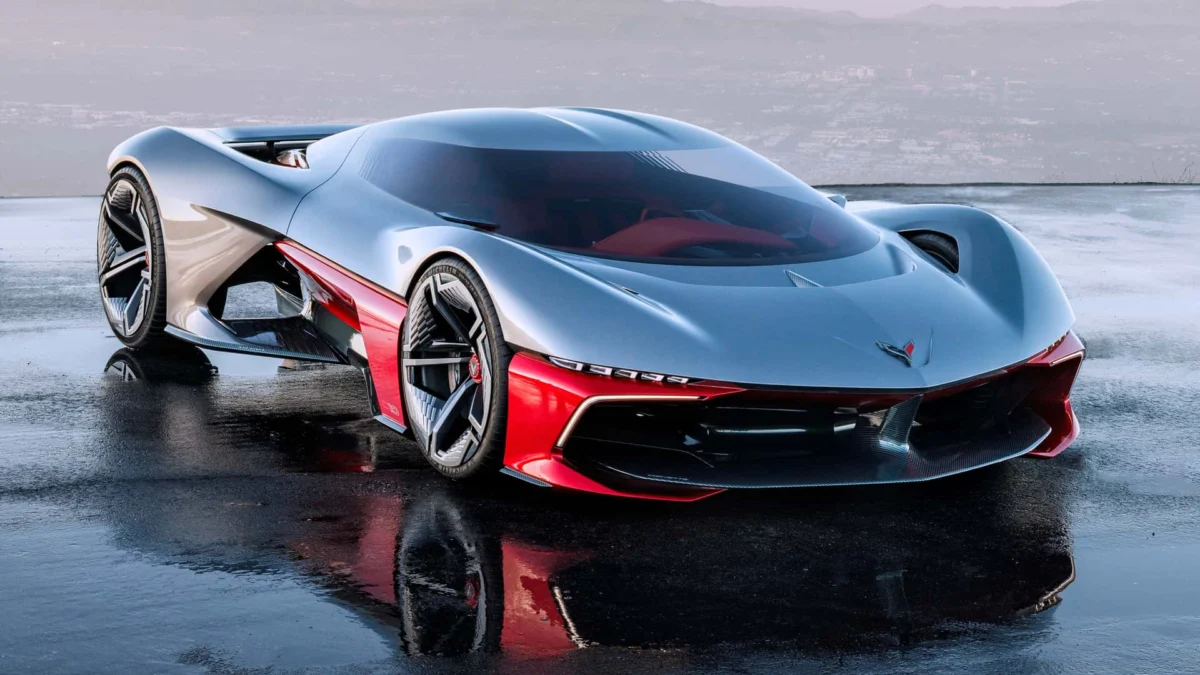
For over seven decades, the Chevrolet Corvette has occupied a unique niche in the automotive pantheon: the "everyman’s supercar." It is a machine that has consistently promised Ferrari-killing performance at a price point accessible to the middle-class professional. However, as General Motors prepares to move beyond the highly successful C8 platform, a critical question has emerged: can the Corvette evolve into the C9 generation without losing its soul—and its value proposition?
According to Corvette chief engineer Tony Roma, the answer is a firm "yes." In a candid discussion with The Drive, Roma outlined a strategic vision for the future of America’s sports car, drawing a definitive line in the sand regarding how far the nameplate will climb up the luxury ladder. As the C8 era continues to expand its reach, the mandate for the C9 is clear: achieve superior performance benchmarks while resisting the siren song of prestige-priced exoticism.
The Performance Paradox: Evolution Over Exclusivity
The transition from the front-engine C7 to the mid-engine C8 was a seismic shift for the Corvette brand. It brought the car closer to the mechanical architecture of European rivals like Lamborghini and Ferrari than ever before. With the C8 lineup now spanning from the relatively attainable base Stingray to the stratospheric heights of the ZR1X—which commands a price tag of $227,695—the brand is currently testing the upper limits of its market ceiling.
Tony Roma is acutely aware of this trajectory. His primary objective for the C9 generation is to maintain a healthy "performance gap" between the entry-level models and the halo variants, rather than inflating the base price to match the exotic segment.
"A Corvette is still meant to be the value play in this space," Roma noted. The engineering philosophy remains rooted in the belief that the car’s worth is derived from its capability and mechanical integrity, not merely from the location of the engine or the prestige of a six-figure MSRP. For GM, the goal is to continue delivering world-class track performance while ensuring the car remains attainable for the enthusiasts who have built the brand’s legacy.
A Chronology of the Modern Corvette Evolution
To understand the stakes for the C9, one must look at the rapid-fire development of the current C8 platform, which has set the stage for the next decade of American engineering.
- 2020: The Paradigm Shift: Chevrolet officially launched the C8 Stingray, abandoning the traditional front-engine layout that had defined the Corvette since 1953. This move signaled a new era of mid-engine balance and handling.
- 2023–2025: Expanding the Hierarchy: The range quickly filled out with the Z06 and the E-Ray, the latter introducing the brand to hybrid-electric all-wheel drive.
- 2027: The Current Frontier: The 2027 model year represents the maturation of the C8 platform. With the introduction of the Grand Sport and the advanced Grand Sport X, GM has solidified its commitment to hybrid performance. The Grand Sport X, in particular, pairs the classic sixth-generation LS6 small-block V8 with a front-mounted electric motor, providing a blueprint for how the company intends to integrate electrification without sacrificing the visceral, raw power of the small-block engine.
- The Future (C9): While the C9 remains in the early stages of long-term planning, the engineering directive has been established: increase performance, maintain the value proposition, and navigate the transition to more sustainable power without alienating the core customer base.
Engineering Realities: The "Manual Transmission" Dilemma
One of the most frequent points of contention among Corvette purists is the absence of a manual transmission. When asked about the possibility of returning to a stick shift for the C9, Roma provided a sober, pragmatic assessment of modern automotive engineering.
"I would love it as a driver, as a customer, I would love it," Roma admitted. "I just do not know if we can make it make sense."
The barrier to entry for a manual transmission in a mid-engine platform is not merely a matter of bolting in a new gearbox. Because the C8 and its successor are built around a dual-clutch transaxle (DCT) integrated directly into the chassis architecture, a manual transmission would require a complete re-engineering of the vehicle’s rear end.
The process involves a "three-step cost stack" that makes the endeavor prohibitively expensive:

- New Tooling: Developing a gear case that can handle the power of modern Corvette engines while fitting into the specific packaging of a mid-engine car.
- Durability Validation: The rigorous testing required to ensure the gearbox can withstand years of abuse on track and street, meeting GM’s high reliability standards.
- Emissions Certification: Every new drivetrain configuration requires extensive testing to ensure it meets federal emissions and fuel economy regulations, a cost that is often difficult to amortize over the relatively low volume of manual-transmission sales.
Roma pointed out that the previous front-engine manual transmissions were the result of 30 years of incremental development. To replicate that level of refinement from scratch today is, from a production standpoint, a losing battle. While the desire for a manual remains a "cyclical" industry trend, it is not currently large enough to justify the massive investment required to disrupt the C9’s value-driven business model.
Supporting Data: The Value Gap
The current pricing structure of the 2027 Corvette lineup illustrates the challenge GM faces in maintaining its identity. With a base Stingray starting at $73,795, the Corvette remains competitive with high-performance sports sedans and entry-level luxury coupes. However, at the top end, the ZR1X brushes against the pricing territory of dedicated exotics.
The challenge for the C9 design team is to prevent "price creep" from pushing that entry-level floor upward. If the cost of the base model rises to meet the mid-range performance of previous generations, the Corvette loses the "attainable performance" crown that has been its defining feature for decades. By focusing on smart electrification—such as the hybrid setup seen in the Grand Sport X—GM hopes to increase performance metrics without relying on the expensive, carbon-fiber-heavy, and ultra-exotic materials that drive up the costs of European rivals.
Strategic Implications: The Path Forward
The implications of Roma’s stance are significant for the automotive industry. By choosing to prioritize value over the "sticker-for-sticker" battle with Ferrari and Lamborghini, General Motors is effectively doubling down on the Corvette’s role as a democratic high-performance vehicle.
1. Retention of the "Everyman" Customer
By keeping the C9 within a reasonable price bracket, Chevrolet ensures that the loyal customer base—those who have aspired to own a Corvette their entire lives—remains engaged. This loyalty is the lifeblood of the brand.
2. Technological Pragmatism
The commitment to the LS6 engine and hybrid integration suggests that the C9 will be a bridge between the analog past and the electric future. It shows that GM is not interested in chasing the "all-electric supercar" trend if it means compromising the emotional experience of the engine.
3. Focus on Engineering Efficiency
The decision to stick with the DCT transaxle underscores a commitment to efficiency. By focusing resources on improving the existing drivetrain and chassis, rather than pouring capital into niche, low-volume manual transmissions, GM can ensure the C9 is faster, safer, and more capable than the C8 without an exponential increase in development costs.
Conclusion: A Philosophy of Purpose
As we look toward the C9, it is clear that General Motors is not interested in transforming the Corvette into something it was never meant to be. The brand is not looking to chase the prestige of the Italian supercar manufacturers at the expense of its own identity.
Tony Roma’s message is one of discipline. By rejecting the temptation to chase exotic pricing, and by being transparent about the engineering hurdles that preclude a return to manual transmissions, GM is protecting the very thing that makes the Corvette a legend: its accessibility. The C9 will undoubtedly be a technological marvel, pushing the boundaries of what a mass-produced sports car can do, but it will do so while remaining, at its core, a car for the driver who believes that performance shouldn’t be reserved for the ultra-wealthy.
The future of the Corvette is not in becoming a supercar; it is in remaining the ultimate sports car. And in that, the C9 looks to be the most important chapter yet.
