

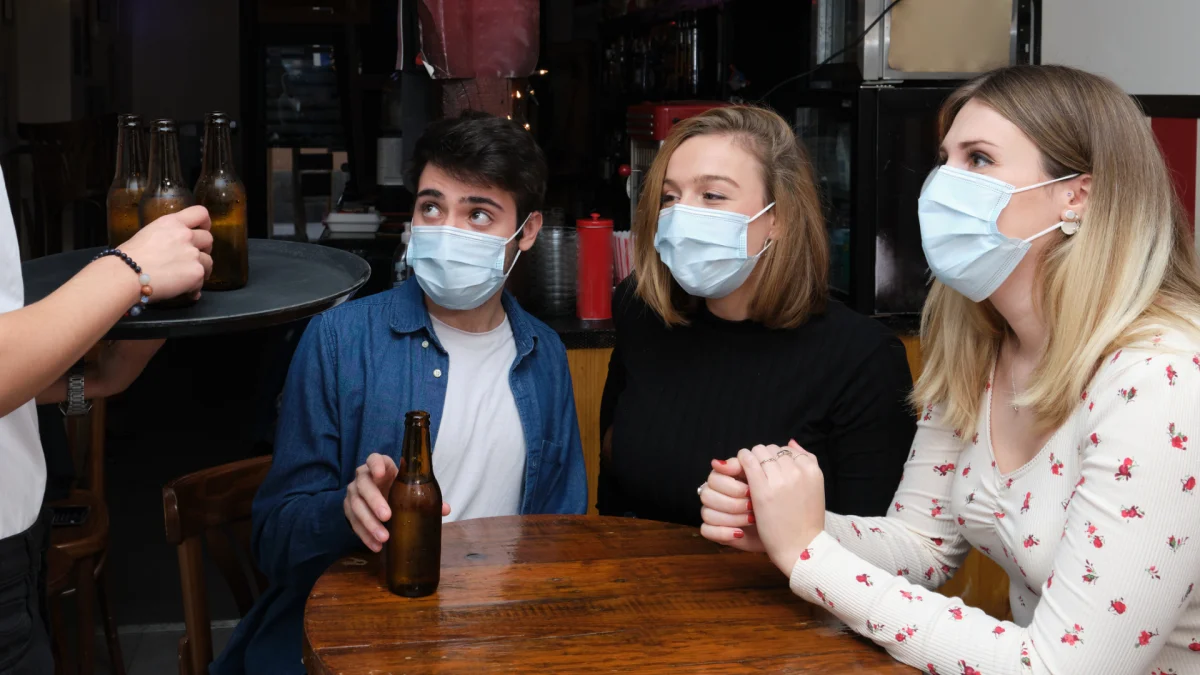
Western Massachusetts, a region long celebrated for its progressive enclaves and vibrant queer culture, is currently mourning the potential loss of a singular community anchor. Last Ditch, a lesbian bar and arts venue that carved out a niche as a strictly COVID-conscious space, announced on Monday that it is ceasing operations, effective immediately. While the owners have framed this as a "soft closure," leaving the door ajar for new ownership, the announcement marks a somber turning point for a venue that became the center of a vitriolic national debate.
The Announcement: A Call for Succession
In an Instagram post that arrived with little fanfare, the leadership at Last Ditch signaled that their tenure had reached its expiration. The statement was candid, acknowledging the exhaustion inherent in running a space that prioritized radical care in an era of pandemic fatigue.
"We have put our lives on hold to foster networks of care, resources, and a home base for organizing," the statement read. "It’s time we pass it on."
The venue, which had operated with a mission to serve the local LGBTQ+ community while maintaining stringent public health standards, noted that their efforts to transition into a worker-owned cooperative had stalled due to a lack of administrative bandwidth. "We’ve been fighting since the beginning to fill out the team, and we still don’t have a board or leadership to manage the transfer," the owners explained.
While the venue will honor previously booked events, the indefinite suspension of daily operations leaves the future of the space in the hands of potential successors. Without an influx of new management, the shuttering of Last Ditch serves as a stark reminder of the precarity facing independent queer spaces in the United States.
A Chronology of Conflict: From Local Haven to Viral Controversy
To understand the collapse of Last Ditch, one must look back at the cascade of events that turned a small-town venue into a global internet sensation. The catalyst was a feature in the Boston Globe that examined the friction caused by the venue’s attempt to navigate the post-lockdown era.
The Masking Mandate Debate
Last Ditch had built its reputation on the promise of accessibility. By enforcing a strict KN-95 mask policy, the bar sought to provide a safe harbor for immunocompromised individuals and those still practicing high levels of COVID-19 caution—a demographic often ignored by the broader hospitality industry.
However, the reality of maintaining such a policy in a commercial setting proved fraught. When the venue moved to relax its masking requirements, the backlash from its core, highly protective community was swift and uncompromising. What began as a local disagreement over public health protocols quickly metastasized into a digital firestorm.
The Spiral
The online reaction to the Globe report was characterized by a level of intensity that surprised even seasoned observers of internet subcultures. Critics accused the venue’s leadership of ableism, arguing that any relaxation of safety standards was a betrayal of the community’s foundational values. In the digital town squares of X (formerly Twitter) and Instagram, the discourse devolved rapidly. The rhetoric escalated from policy critique to personal attacks, with some commenters going as far as to issue threats of violence against the venue’s staff.
The internal leadership team, already taxed by the operational stresses of running a niche venue, found themselves caught in a cycle of public apologies, desperate retractions, and town hall meetings that failed to quell the unrest. The resulting exhaustion and loss of public confidence created an untenable environment for the staff.
The "Clown School" Phenomenon: Why the Internet Couldn’t Look Away
While the conflict was rooted in serious issues—public health, accessibility, and community accountability—the narrative gained traction in the mainstream media because of its surreal quality.
The Boston Globe reporting, while objectively factual, contained anecdotal details that provided an almost comedic contrast to the gravity of the controversy. One particular detail—a mention that one of the owners had been enrolled in clown school—became a viral shorthand for critics mocking the perceived absurdity of the venue’s management style.
This juxtaposition of high-stakes political discourse and eccentric personal details created a "meme-ification" of the conflict. For many, the situation ceased to be about the actual merits of mask mandates and became a piece of performance art. This trivialization, while perhaps unintentional, further eroded the legitimacy of the venue’s mission, making it difficult for the owners to steer the conversation back to their original goals of providing a safe, queer-centric space.
Supporting Data: The Shrinking Landscape of Queer Spaces
The potential closure of Last Ditch is not an isolated incident, but rather a symptom of a broader, long-term trend in the United States. According to data from the Lesbian Bar Project, the number of brick-and-mortar lesbian bars in the country has plummeted over the last few decades.
In the 1980s, there were reportedly hundreds of lesbian bars operating across the U.S. Today, that number has dwindled to a fraction of its former self, often hovering in the low double digits. The reasons for this decline are multifaceted:
- Economic Pressures: Gentrification and rising commercial rents in urban centers have made it increasingly difficult for independent bars to survive.
- Changing Social Dynamics: The rise of dating apps and the mainstreaming of LGBTQ+ culture have shifted the way queer people socialize, with many preferring decentralized, non-commercial spaces.
- The "Safe Space" Burden: As seen with Last Ditch, the expectation that a commercial space must also serve as a political, medical, and social support hub places an immense, often unsustainable, burden on owners who are already operating on razor-thin margins.
The Implications of the Last Ditch Closure
The loss of Last Ditch would represent more than just the closing of a bar; it represents the loss of a specific type of community infrastructure.
The Burden of Care
The fundamental challenge faced by Last Ditch was the attempt to marry "networks of care" with a traditional business model. In a profit-driven economy, the time, labor, and resources required to ensure a space is truly inclusive and safe for high-risk populations are rarely subsidized. When a venue attempts to shoulder this cost alone, they often find themselves trapped between the demands of their community and the fiscal realities of the market.
A Warning for Future Spaces
The fate of Last Ditch serves as a cautionary tale for grassroots organizers. While community accountability is essential, the digital age has introduced a volatility that can destroy a project before it has the chance to iterate or improve. The speed at which a minor operational disagreement can turn into a reputation-ending catastrophe is a new reality for queer spaces.
Furthermore, the "soft closure" of the bar highlights the desperate need for sustainable succession models. If the future of community-led spaces relies on the individual sacrifice of a few owners, then those spaces are inherently doomed to be ephemeral. For these institutions to survive, they require more robust structures—cooperatives, non-profit status, or community land trusts—that can outlive the burnout of their founders.
Conclusion: A Community at a Crossroads
As the dust settles on the announcement, the LGBTQ+ community in Western Massachusetts and beyond is left to grapple with the void left by Last Ditch. The venue was never perfect, but it was an earnest attempt to create a space that reflected the values of its founders—values that prioritized the vulnerable over the convenient.
Whether a new group of owners will step forward to inherit the mantle remains to be seen. The challenges are clear: the need for a new leadership team, the requirement to navigate a post-viral reputation, and the ongoing struggle to balance public health, financial stability, and community expectations.
For now, the story of Last Ditch stands as a poignant snapshot of our current moment. It is a story of how difficult it is to build community in an age of digital polarization, and how fragile the spaces we cherish truly are. If Last Ditch does close for good, it will not just be the loss of a building or a bar; it will be the loss of an experiment in care that, despite its failings, sought to offer something rare: a home.
