

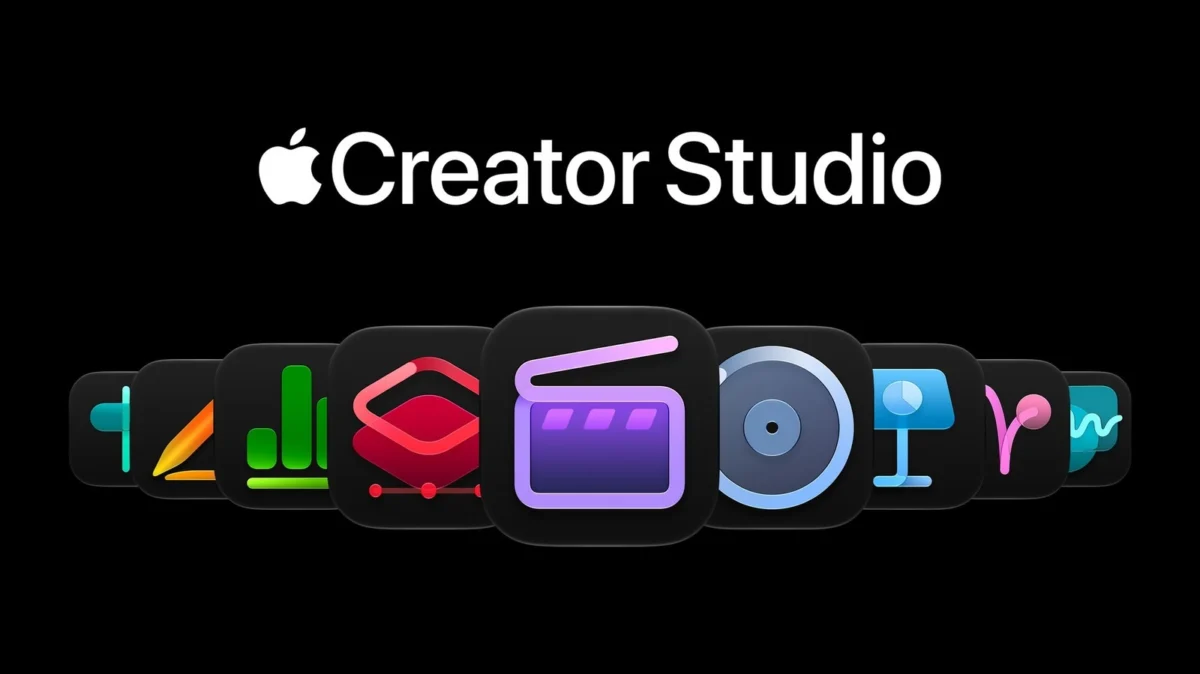
In a move signaling a definitive shift in the professional creative landscape, Apple has unveiled a massive update to its Apple Creator Studio suite. Timed strategically to coincide with the rollout of the M6-powered iMac and 14-inch MacBook Pro, this update represents the most significant overhaul of Apple’s professional software ecosystem in recent memory. By integrating the recently acquired MotionVFX technology directly into Final Cut Pro and weaving advanced generative AI across the entire suite, Apple is positioning itself as a formidable, singular destination for creative professionals.
The Evolution of the Workflow: Key Features and Updates
The centerpiece of this update is the deep integration of MotionVFX into Final Cut Pro. Since Apple’s acquisition of the company earlier this year, creators have waited with bated breath to see how these professional-grade tools would be implemented. The wait is over.
Editors now have native access to a vast library of high-end graphics, cinematic titles, and sophisticated transitions. Perhaps most importantly, the update includes specialized rotoscoping and color-grading tools that previously required third-party plugins. By centralizing these features, Apple is significantly reducing the "friction" that editors face when switching between applications.
Breaking the Timeline Barrier
In a long-awaited quality-of-life improvement, Apple has finally addressed the most persistent grievance among Final Cut Pro users: the rigid primary timeline. Editors can now unlock and disconnect clips from the primary storyline, allowing for free-form placement. This change fundamentally alters the editing experience, moving away from the "magnetic" constraints that have defined Final Cut Pro since its controversial 2011 redesign.
Cross-App Interoperability
Apple has also tightened the integration between its suite of apps. Users can now pull an asset directly from a Final Cut Pro timeline into Pixelmator Pro for advanced image manipulation. Any changes made in Pixelmator Pro are reflected in real-time within the video project, eliminating the tedious export-and-reimport cycle that has historically bogged down professional workflows.
Chronology: From Acquisition to Integration
The path to this update has been marked by strategic acquisitions and iterative development:
- Early 2026: Apple officially acquires MotionVFX, sparking speculation about a massive overhaul of the Final Cut Pro ecosystem.
- Mid-2026: Apple begins beta testing the "Creator Studio" umbrella, consolidating its professional software branding.
- October 2026: Official announcement of the M6-powered hardware lineup, alongside the preview of the massive software suite update.
- November 2026 (Scheduled): Public release of the software update for existing subscribers, coinciding with the launch of macOS 27 "Golden Gate."
The AI Transformation: Intelligence Everywhere
Perhaps the most ambitious aspect of this update is the pervasive integration of artificial intelligence. Apple is no longer treating AI as a novelty; it is being treated as a core component of the creative process.
Generative AI in Visual Design
Both Final Cut Pro and Pixelmator Pro have received robust text-to-image and generative editing tools. In Pixelmator Pro, the workflow has been simplified to a "select and prompt" paradigm: users simply circle an area of an image and describe the desired change. The AI handles the complex masking, lighting matching, and texture generation, providing near-instant results.
The Logic Pro OpenAI Partnership
In a surprise move, Apple has teamed up with OpenAI to introduce an AI assistant into Logic Pro. This assistant is not merely a chatbot; it is a creative collaborator. It can suggest song structures, assist in generating vocal tracks from text prompts, and perform tedious tasks like drum-part swapping using the enhanced "Stem Splitter" feature.
Productivity AI
Beyond media creation, the AI assistant is now accessible in Keynote, Pages, and Numbers. These tools are designed to handle mundane administrative tasks, such as animating complex slide decks, formatting long-form documents, or automating data organization in spreadsheets.
Supporting Data: Requirements and Compatibility
The power of these new features comes with hardware expectations. The AI-driven capabilities—particularly those powered by the new OpenAI-integrated assistant—are hardware-intensive.
- Operating System: Users must be running macOS 26.6 or later for general compatibility, while the advanced AI assistant in Logic Pro requires the upcoming macOS 27 "Golden Gate."
- Hardware: Apple has clarified that several Final Cut Pro features are exclusive to Apple Silicon. To fully leverage the suite’s capabilities, an Apple Intelligence-supported Mac is strongly recommended.
- Pricing: The Apple Creator Studio suite remains priced at $13 per month or $129 per year. For those who prefer a modular approach, individual licenses for Final Cut Pro ($300), Logic Pro ($200), and Pixelmator Pro ($50) remain available.
Official Responses and Strategic Intent
In an official press release, Apple’s software division emphasized that the goal of this update is to "empower the creator, not replace them."
"We are providing professional editors and musicians with rapid, frictionless access to tools that were once gated behind complex, third-party plugin environments," an Apple spokesperson stated. "By integrating MotionVFX and advanced AI into the core of the suite, we are removing the technical hurdles that keep creators from realizing their vision."
Industry analysts have noted that this move is a direct challenge to the Adobe Creative Cloud dominance. By offering a comprehensive suite that leverages proprietary hardware-software integration, Apple is attempting to capture the mid-to-high-tier market that values stability and performance over the browser-based, subscription-heavy model of their competitors.
Implications for the Creative Industry
The implications of this update are profound. For the solo creator and the small production house, the cost of entry for high-end post-production just plummeted. Features that previously required expensive specialized software or dedicated VFX artists—such as advanced rotoscoping—are now accessible at the click of a button.
However, the rapid integration of AI also raises questions about the future of creative labor. With Logic Pro’s ability to generate vocal tracks and Pixelmator Pro’s capability to perform complex edits via text prompts, the industry will likely see a shift in the role of the editor. The job description is evolving from "technician" to "director of AI," where the primary skill set is prompt engineering and iterative refinement rather than manual frame-by-frame adjustment.
Furthermore, by locking these features behind the Apple ecosystem, the company is doubling down on its "Walled Garden" strategy. While this ensures a seamless experience for those who own the latest M6 hardware, it further alienates users who rely on cross-platform workflows.
Conclusion
As the creative community prepares for the November rollout, the message from Apple is clear: the future of content creation is faster, more intelligent, and increasingly automated. Whether this update marks the end of the traditional "manual" era of video and audio editing remains to be seen, but one thing is certain—Apple has fundamentally raised the bar for what a professional software suite can do. For creators willing to embrace the M6 architecture and the new AI-augmented workflow, the tools to build the next generation of digital media have never been more potent.
