

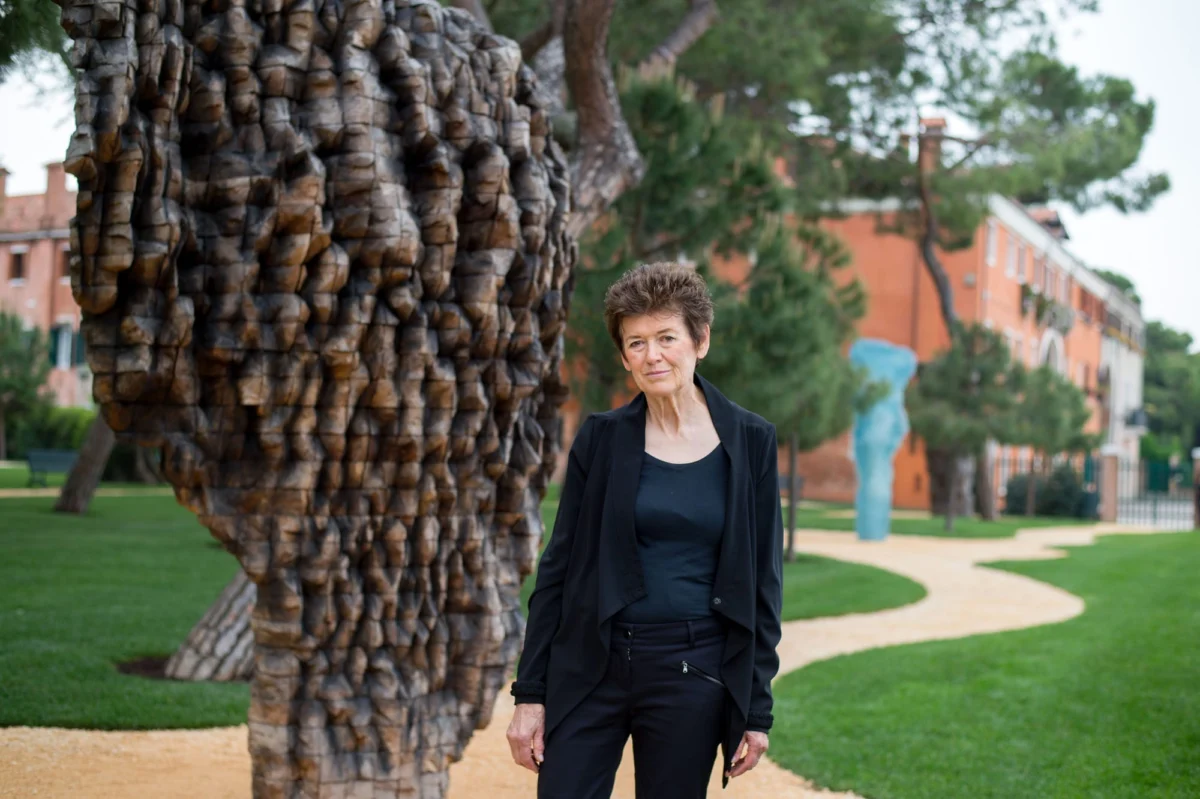
Ursula von Rydingsvard, a towering figure in contemporary sculpture whose massive, labor-intensive cedar works blurred the line between the organic and the architectural, passed away on the morning of October 27, 2026, at her home in Manhattan. She was 84.
The artist’s passing was confirmed by her studio manager, Courtney Childress, who noted that the cause of death was related to complications from Alzheimer’s disease. With her death, the art world loses one of its most distinctive voices—a sculptor who transformed the humble medium of industrial cedar beams into emotional, psychological landscapes that seemed to pulse with the weight of memory and trauma.
A Legacy Carved in Wood: The Core Facts
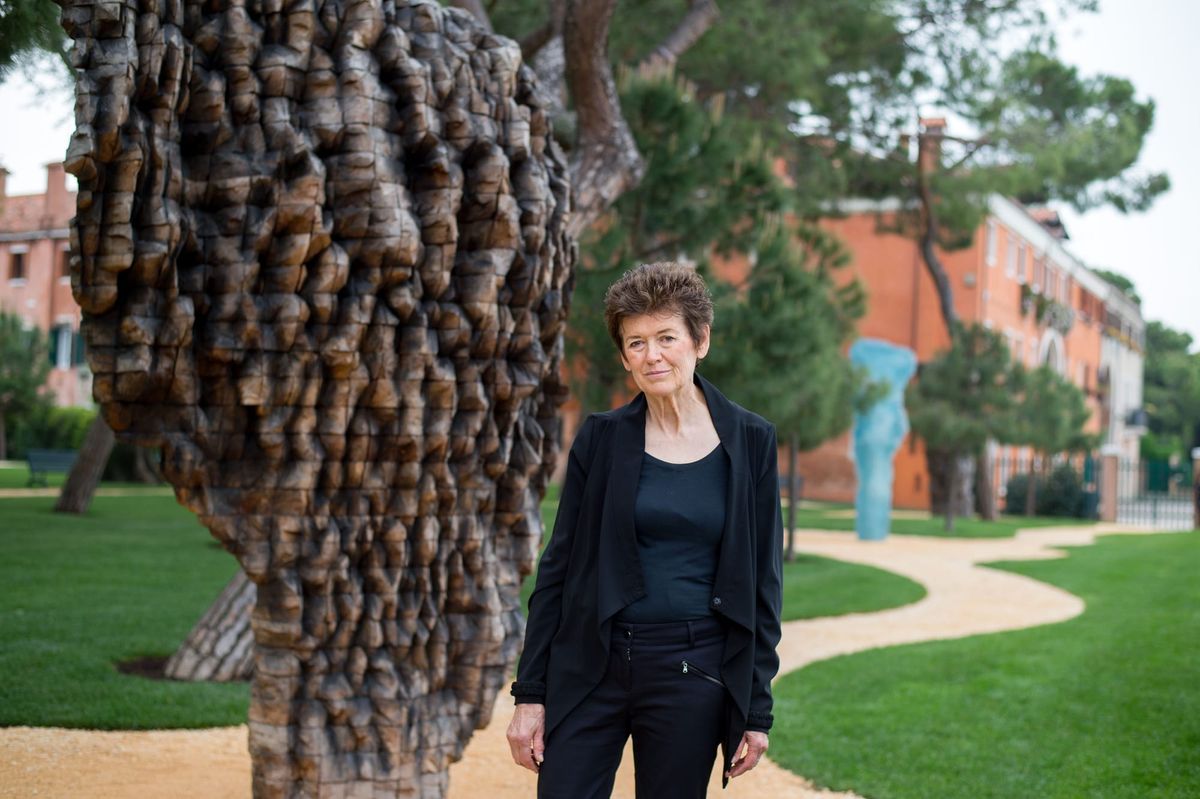
For over five decades, Von Rydingsvard maintained a rigorous practice that defied the traditional scale of gallery work. While many sculptors favored steel or stone, she found her voice in 4×4 cedar beams. She treated the wood not as a static material, but as a malleable, emotive skin. She would stack, glue, and carve these beams into monumental, gravity-defying forms—cones, bowls, jagged towers, and sprawling, root-like structures that felt as though they had emerged from the earth itself.
Her work was never merely about the material; it was about the process. She famously employed a method of layering, cutting, and grinding, often coating the final surfaces with graphite to give them a metallic, shimmering sheen that contradicted their soft, wooden origins. Her sculptures, some weighing thousands of pounds, stood as physical manifestations of the human condition: vulnerable yet resilient, complex yet deeply rooted in the history of the materials she chose.
Chronology: From Refugee Camps to Global Acclaim
To understand the gravity of Von Rydingsvard’s work, one must look to her harrowing origins. Born Ursula Karoliszyn in 1942 in Deensen, Germany, her life began in the shadow of total war. Her mother was Polish and her father Ukrainian, and her earliest memories were defined by the displacement inherent in the Nazi era.
Following the Allied victory in 1945, the young Ursula and her family of nine were funneled through a series of eight different Nazi slave-labor and postwar refugee camps. These formative years were defined by instability, poverty, and the sensory trauma of living in transient, improvised spaces. In a 2017 interview with Art21, she spoke candidly about how these environments—the rough-hewn barracks, the smell of damp earth, and the feeling of being an outsider—would later inform the textures and shapes of her sculpture.
In 1950, her family boarded a military ship to the United States, settling in Plainville, Connecticut. The transition was jarring, yet it provided the backdrop for her eventual artistic awakening. She did not immediately turn to art; she studied education and later received her MA from Wayne State University and her MFA from Columbia University in 1975. It was in the vibrant, experimental art scene of 1970s New York that she discovered the medium that would define her career. By the 1980s, she had become a fixture in the sculptural landscape, eventually gaining international recognition with major commissions and exhibitions at the Venice Biennale, the Yorkshire Sculpture Park, and the Museum of Modern Art.
The Physicality of Memory: Supporting Data
Von Rydingsvard’s career is punctuated by works of extraordinary ambition. Her sculpture Ona, a massive, tornado-like structure, remains one of her most famous achievements. Standing 17 feet tall and composed of 15,000 pounds of carved cedar, the work serves as a testament to her endurance and her refusal to compromise on scale.
While cedar was her signature, she was a restless innovator. Her catalog includes experiments with:
- Bronze: Allowing her to cast the organic textures of wood into more permanent, weather-resistant forms.
- Textiles: Using lace and fabric to explore softness and concealment.
- Animal Intestines: A visceral, challenging material that she used to evoke the fragility of the human body.
Her work is held in the permanent collections of some of the world’s most prestigious institutions, including the Metropolitan Museum of Art, the Whitney Museum of American Art, and the San Francisco Museum of Modern Art. Her ability to translate personal grief into universal, monumental forms ensured that her work resonated far beyond the borders of the art world.
Official Responses and Personal Reflections
The loss of such a vibrant, kinetic force has sent ripples through the creative community. Speaking with Hyperallergic in a phone interview, Courtney Childress, her longtime studio manager, offered a poignant window into the artist’s personality.
"She was like the sun. She was this force that pulled people in and kept them orbiting around her," Childress remarked. "She moved through the studio like her hair was on fire, and could never slow down. Even as her health began to decline, the sheer drive to create—the need to keep pushing that wood—never faltered. She was, in every sense of the word, an artist until the very last moment."
Critics and curators have echoed this sentiment, describing her as a "sculptor’s sculptor." Her ability to imbue industrial lumber with such deep, resonant emotional weight made her a singular figure in contemporary art. Where other Minimalists of her generation sought to strip art of its narrative, Von Rydingsvard insisted that art must be filled with the ghosts of the past.
Implications: The Future of the Monumental
The death of Ursula von Rydingsvard marks the end of an era for physical, labor-intensive sculpture. As the art world increasingly shifts toward digital media and conceptual installations, the image of an artist working with saws, glue, and heavy timber feels like a profound, necessary anchor.
Her legacy will be preserved not just in the thousands of tons of cedar she shaped, but in the precedent she set for artists working through trauma. She proved that one’s history—no matter how painful—could be sublimated into physical beauty. By creating monuments that felt like dwellings, vessels, or even organs, she invited viewers to step inside the architecture of her own experience.
The immediate future for her estate and her studio will focus on the cataloging of her extensive archives and the preservation of her monumental works, many of which remain in public spaces across the globe. There is already talk of a major retrospective to honor her contributions, a move that will likely cement her status as one of the most significant sculptors of the 21st century.
As the dust settles on her studio floor, the art world is left to contend with the absence of a woman who viewed the world as something to be shaped, refined, and ultimately, made whole. She was, as Childress noted, a force that could never be contained—a sun around which the art world happily, and reverently, orbited.
