

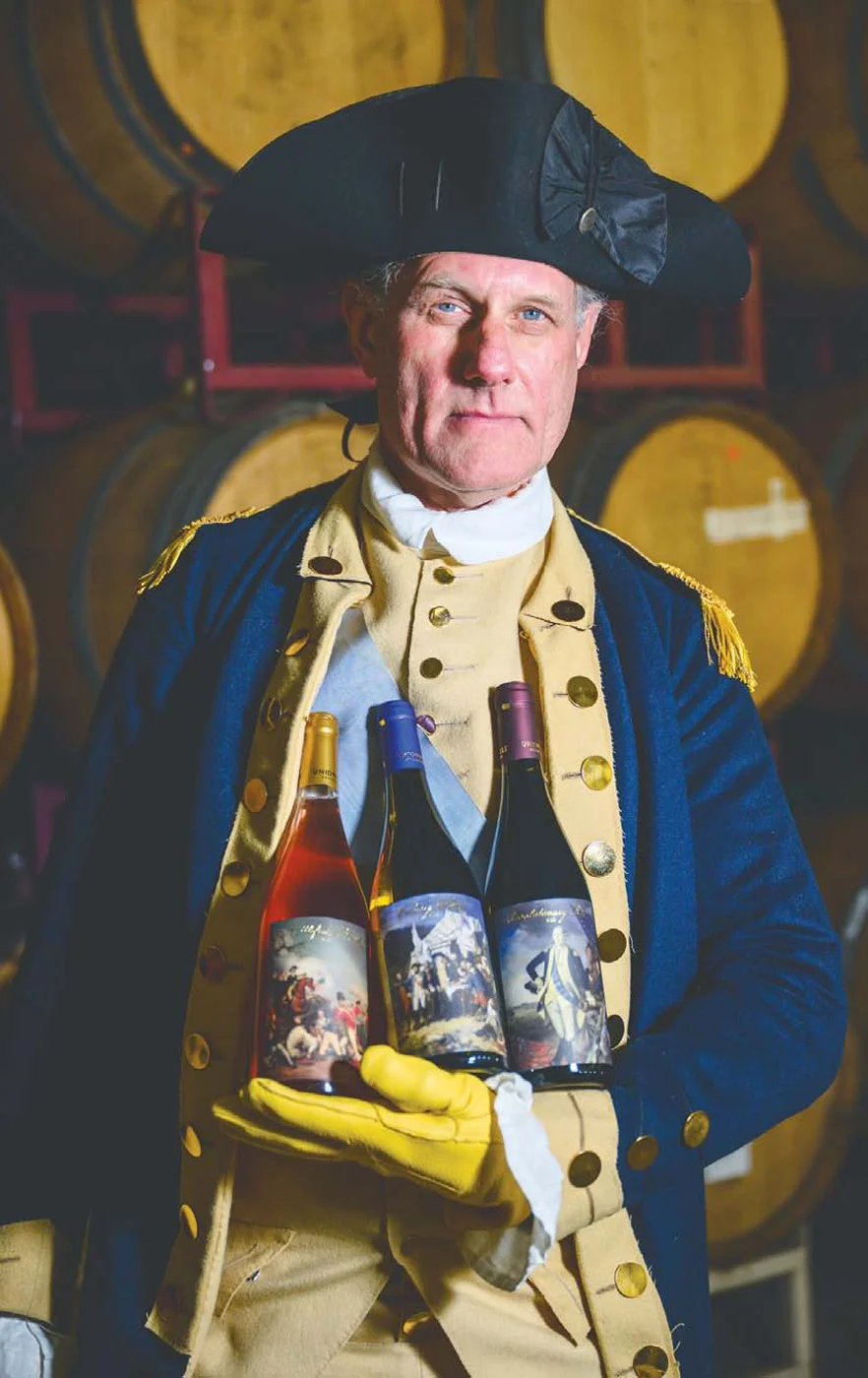
As the United States gears up for the monumental milestone of its 250th anniversary in 2026, the spirit of the American Revolution is being uncorked in the heart of Hunterdon County, New Jersey. At Unionville Vineyards in Ringoes, history is not merely a subject relegated to textbooks or museum exhibits; it is a living, breathing component of their viticulture. With the recent launch of the "Washington Collection," the winery has masterfully bridged the gap between the terroir of the present and the strategic military maneuvers of the past.
The Intersection of Viticulture and Valor: The Main Facts
The Washington Collection, a trio of wines meticulously curated to honor the winery’s profound connection to the American Revolution, represents a bold step in celebratory branding. This initiative, launched late last December, serves as a precursor to the nation’s semiquincentennial celebrations.
For many oenophiles familiar with the region, Unionville’s Pheasant Hill Chardonnay is already a staple. However, the revelation that these vines are rooted in soil that hosted the highest echelons of the Continental Army adds a layer of narrative depth to every sip. The Hunt House, a historic structure dating back to at least 1762, stands as the centerpiece of this historical alignment. Situated directly on the Pheasant Hill Vineyard site, the property is not just an architectural relic; it is a site of immense geopolitical significance.
On June 24, 1778, the house served as the staging ground for a pivotal Council of War. Thirteen generals of the Continental Army gathered within its walls to deliberate, ultimately setting the stage for one of the most consequential engagements of the Revolutionary War.
A Chronological Journey: From the Hunt House to Monmouth
To understand the weight of Unionville’s latest offering, one must look back to the sweltering summer of 1778. The American Revolution was at a critical juncture. The British Army, under the command of Sir Henry Clinton, was retreating from Philadelphia toward New York City. General George Washington, keen to capitalize on the British movement, sought to harass the rear guard.
The Council of War (June 24, 1778)
The Hunt House, then owned by the Hunt family, became the sanctuary where the American high command converged. The strategic decisions made in that room were not made in a vacuum; they were informed by the topography of the region and the necessity of keeping the British force off-balance. The thirteen generals present were tasked with weighing the risks of an all-out offensive against the risks of inaction.
The March to Monmouth (June 28, 1778)
Following the council, Washington and his troops moved toward the engagement that would be immortalized as the Battle of Monmouth. The battle, fought in the heat of a New Jersey summer, proved the effectiveness of the Continental Army’s training, largely influenced by Baron von Steuben. By claiming that the battle was essentially "planned" at what is now Pheasant Hill, Unionville Vineyards is drawing a direct, tangible line between the vineyard’s soil and the formation of the modern American military identity.
Terroir and Tactics: Supporting Historical Data
The synergy between the land and the history is what John Cifelli, General Manager of Unionville Vineyards, emphasizes as the "soul" of the project. The Hunt House sits a mere 50 yards from the rows of Chardonnay grapes that produce the winery’s signature vintage.
In the world of wine, "terroir" refers to the complete natural environment in which a wine is produced, including factors such as soil, topography, and climate. For Unionville, the historical context is a vital, intangible component of that terroir.
- The Proximity Factor: The 50-yard distance between the Council of War site and the active vineyards provides a unique storytelling platform that few wineries in the world can replicate.
- Archival Integrity: The Hunt House remains a focal point for local historians. Its preservation within the vineyard ensures that the physical evidence of the 1778 Council of War is maintained for future generations, rather than lost to suburban development.
The Voice of the Vineyard: Official Perspectives
During the launch event, John Cifelli addressed guests with a blend of historical reverence and viticultural pride. "They encountered the rear guard of the retreating British, and that became the Battle of Monmouth," Cifelli remarked. "So, it is not a stretch to say that the Battle of Monmouth was planned at the Pheasant Hill Vineyard."

Cifelli’s sentiment captures the essence of the winery’s mission: to move beyond simply selling a product and toward fostering an experience. By framing the wine as a "dram of history," the winery invites consumers to become active participants in the preservation of local lore. This approach is increasingly common among boutique wineries seeking to differentiate themselves in a crowded market by offering "experiential consumption."
Implications for Heritage Tourism and the Semiquincentennial
The launch of the Washington Collection has significant implications for how New Jersey—and the nation at large—will approach the 250th-anniversary celebrations in 2026.
A New Model for Historical Engagement
Unionville’s strategy suggests that the most effective way to engage the public with history is to make it accessible and pleasurable. By tying the 250th celebration to a consumer product like wine, the winery is reaching a demographic that might not otherwise seek out a traditional museum or lecture series.
Community Integration
The winery’s upcoming "Great American Vineyard Cookout," scheduled for July 4th, serves as a microcosm of this strategy. By blending the serious (a live reading of the Declaration of Independence by a Thomas Jefferson reenactor) with the communal (picnic fare, patriotic music, and sparklers), Unionville is positioning itself as a central hub for civic celebration. This is not merely a sales event; it is a community-building exercise that leverages the patriotic fervor of the 250th anniversary to drive foot traffic and local interest.
Economic and Cultural Impact
The integration of historical site management with commercial agriculture provides a sustainable model for the preservation of historical structures. By generating revenue through the Washington Collection, Unionville can continue to invest in the maintenance of the Hunt House. This "preservation through commerce" model could prove to be a blueprint for other historic sites across the Mid-Atlantic region that are struggling with the costs of upkeep.
Looking Ahead: The Semiquincentennial and Beyond
As we move toward 2026, the narrative surrounding the American Revolution is shifting toward a more nuanced, inclusive, and regional understanding of the war. Unionville Vineyards is ahead of the curve by highlighting the specific, often overlooked, local contributions to the broader national struggle.
The Washington Collection is not just a commemorative release; it is an invitation to revisit the past. Whether one is sipping the Pheasant Hill Chardonnay or exploring the grounds where generals once debated the fate of a nascent nation, the experience serves as a reminder that history is not behind us—it is all around us, waiting to be rediscovered.
For those wishing to partake in this historical journey, the wines are currently available for purchase both at the Ringoes estate and via the winery’s online portal. As the calendar edges closer to the nation’s birthday, these bottles offer a unique way to toast to the resilience of the American spirit and the enduring legacy of the land that witnessed its birth.
Visit Unionville Vineyards
- Location: 9 Rocktown Rd., Ringoes, NJ
- Contact: 908.788.0400
- Online: unionvillevineyards.com
As the nation prepares for its semiquincentennial, Unionville Vineyards stands ready to serve as a cornerstone of local pride and historical reflection, proving that some of the best stories are aged to perfection.
